






















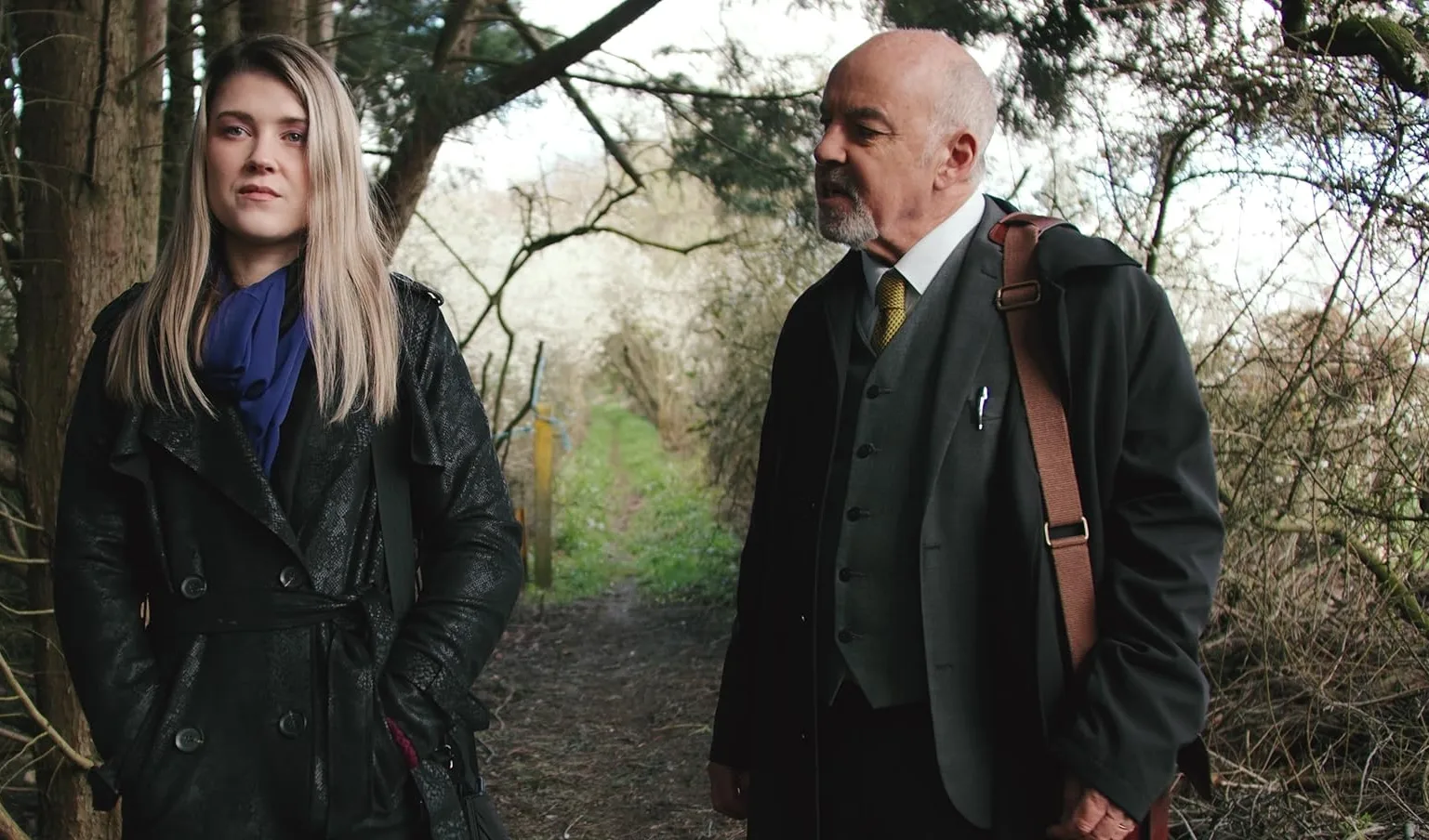

The roads into Haxanbury are photographed as if they have already seen the crime and decided silence is safer. Wooded lanes narrow around the frame, old brickwork presses against the edges, and the crumbling inn appears half-consumed by the forest behind it. James Smith finds a useful visual contradiction here. The village is picturesque, yet the compositions keep turning shelter into concealment.
Donna Revan arrives carrying a question whose answer is hardly hidden. Her twin sister Sybil was found in the lake two years earlier, bound to a chair, and the local law firm connected to her death reacts to Donna with immediate panic. Stanley Montagu-John nominally runs the business, while Toby Vass behaves like its true authority, barking orders, humiliating colleagues, and treating murder as an administrative expense. The firm’s concern is expansion. Its method is intimidation. Its moral code seems to have been drafted during lunch.
Samron, the village mechanic, warns Donna that Haxanbury dislikes “their kind.” The phrase is left suspended. Donna may be a witch, Sybil returned, or something the village has encountered before and failed to bury properly. Daggers Inn gains its strongest charge from that uncertainty.
Guilt Without Shadow
A mystery needs darkness around culpability. Here, guilt stands under the office lights and announces the next meeting. Toby and his associates repeatedly discuss removing Donna, then send Mr. Robbins and Mr. Pugh to threaten her. Both men return dazed, their aggression dissolved by an influence the film never defines. These encounters should shift the story away from Sybil’s killers and toward Donna’s nature. Instead, the screenplay keeps returning to the firm’s internal feuds, vulgar insults, and declarations of intent.
That choice drains pressure from the plot. The audience already knows where the violence came from, so each fresh conversation among Stanley, Lauren, Toby, and Bethany confirms information the previous scene supplied. The film has no need for a whodunit structure, yet it keeps wearing one like an inherited suit.
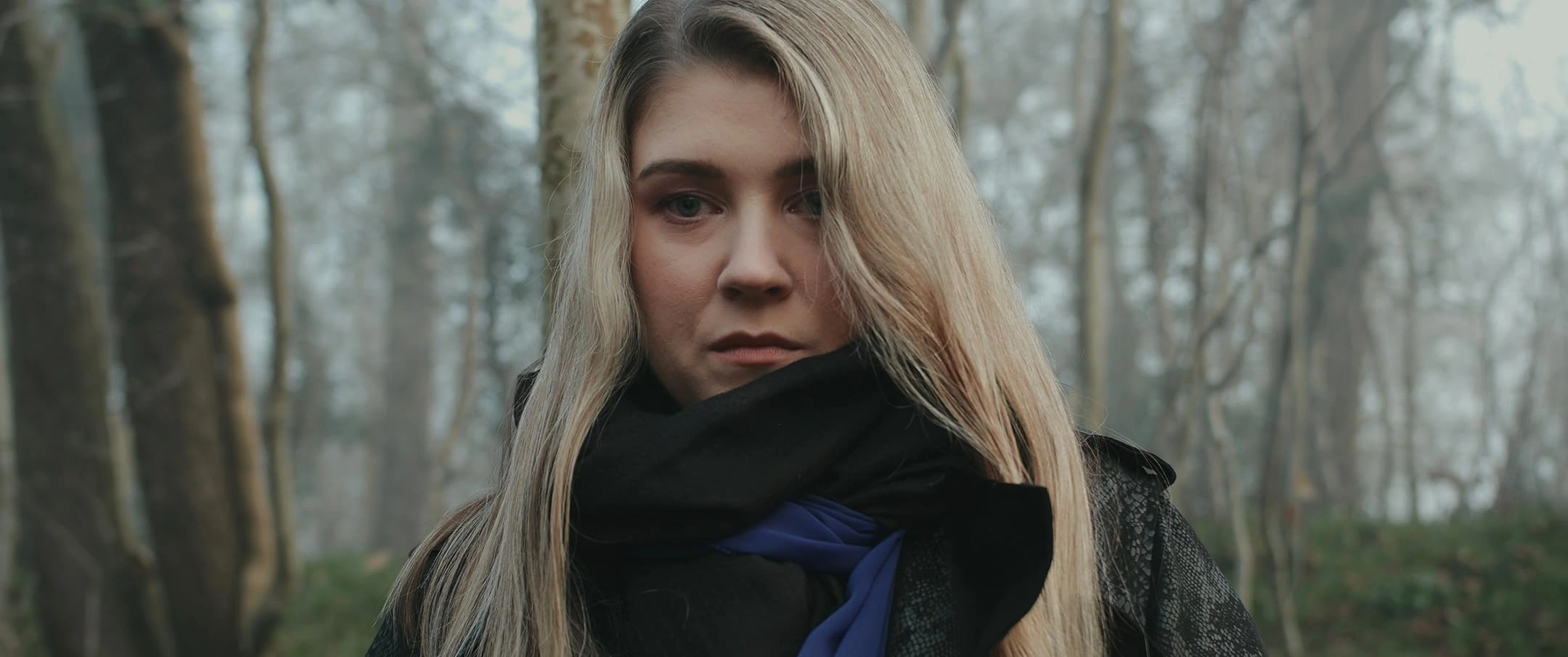
Donna’s restraint offers a better source of tension. Anna Danvers rarely overplays her character’s authority. She watches, waits, and lets other people reveal their fear. When Robbins or Pugh emerges from an encounter with her in a bewildered state, the absence of an explanation is more effective than a flash of light or a shouted incantation would have been. Power sits in the blank space.
Witchcraft at the Edge of Frame
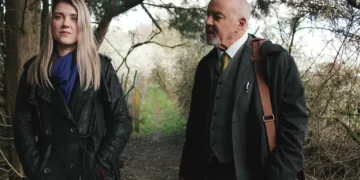
Smith’s camera is most persuasive outdoors. The empty streets and rolling fields make Haxanbury feel less like a living village than a preserved crime scene. The title location, leaning into woodland decay, carries the weathered menace the script keeps trying to manufacture through dialogue.
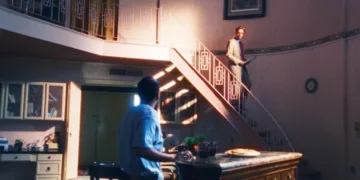
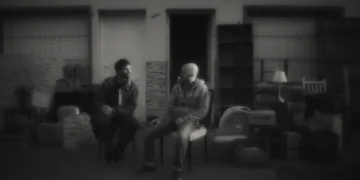
Interior spaces tighten that unease. Boardrooms, tea shops, and small offices are framed with limited depth, keeping characters close to walls and furniture. The restricted geography is plainly tied to the budget, yet it occasionally works in the film’s favor. Corruption feels cramped here. Nobody has enough room to step away from it.
The sound design follows the same restrained principle. Smith avoids burying Donna’s appearances beneath a shrieking score, allowing pauses and quiet reactions to hold the scene. That modesty matters. Low-budget horror often treats volume as proof of danger. Daggers Inn understands that a character returning from a failed attack with his mind slightly rearranged can be unsettling without orchestral assistance.
The visual pattern stops evolving, though. Repeated framings of the same locations flatten the village’s geography, and Donna’s supernatural influence rarely alters the camera’s behavior. A stronger film might have shifted focus, light, or composition as her control spread. Here, the occult remains a rumor at the edge of otherwise static images.
Bodies That Refuse the Camera
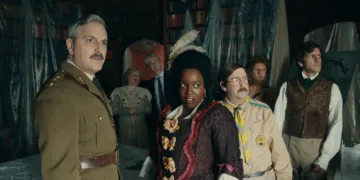
The performances occupy incompatible worlds. Danvers plays Donna with controlled severity, while James Hamer-Morton attacks Toby’s dialogue with theatrical cruelty. David J. Biscoe and David Streames bring a clumsy comic rhythm to Robbins and Pugh. Those approaches can work within the same film, but the direction seldom builds a stable tone around them.
The blocking causes deeper damage. Several conversations place actors shoulder to shoulder, staring vaguely forward while exchanging supposedly hostile or intimate lines. Eye contact is one of cinema’s simplest instruments of power. Refusing it can suggest shame, fear, or emotional distance. Here it usually suggests that nobody agreed where to stand.
Physical violence fares worse. One confrontation ends with a character lightly dragged or pushed into a tree and dying immediately. The impact has no weight, the camera offers no convincing angle, and the editing cannot disguise the gentleness of the contact. Death arrives as a production note.
The dialogue has similar problems. Lauren’s sexually explicit insult about Stanley aims for a savage corporate barb, yet the scene provides no rhythm or reaction capable of supporting it. Toby’s threats sound like approximations of executive villainy, delivered in rooms that already expose the scale of the operation. Smith can make stone, fog, and narrow interiors look morally contaminated. Once people begin moving through those spaces, the shadows lose their authority.
Daggers Inn is a gothic murder mystery feature film that premiered at the Southend Film Festival on June 8, 2025. Set against the eerie backdrop of a remote English village, the film follows an enigmatic young woman investigating the dark secrets behind her sister’s unsolved death. Viewers can discover updates regarding distribution and streaming availability through independent film platforms and festival circuits.
Where to Watch Daggers Inn (2025) Online









Full Credits
Title: Daggers Inn
Distributor: House of Film, Raya Films
Release date: June 8, 2025
Running time: 90 minutes
Director: James Smith
Writers: Caroline Spence, James Smith
Producers and Executive Producers: Caroline Spence, James Smith
Cast: Anna Danvers, James Hamer-Morton, Terry Bamberger, Gavin Gordon, Charlie Bond, David Streames, Martin W. Payne, David J. Biscoe, Julian Clapton, Eve Kathryn Oliver, Lutricia Norris
Director of Photography (Cinematographer): James Smith
Editors: James Smith
Composer: James Smith
The Review
Daggers Inn
Daggers Inn finds its most persuasive menace in Haxanbury’s empty lanes, decaying masonry, and rooms that seem to close around Donna. James Smith’s restrained handling of her unexplained influence gives the village a faint occult charge. The spell breaks whenever the villains resume their repetitive plotting, actors stare past one another during conversations, or a brush against a tree becomes instantly fatal. The camera can locate guilt in a landscape. The script keeps pointing at it with both hands.
PROS
- Eerie Essex locations
- Restrained supernatural hints
- Atmospheric interior framing
- Donna’s controlled presence
CONS
- Mystery exposed too early
- Repetitive villain conversations
- Unconvincing physical action
- Awkward scene blocking
- Unconvincing physical action
- Weak final payoff