












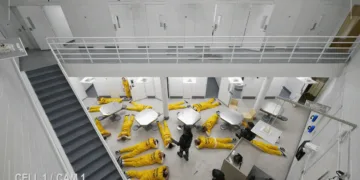

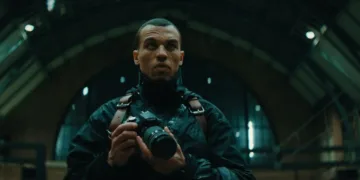











The third season’s first cut is from catastrophe to “Six Months Earlier,” and the edit does half the season’s interrogating before anyone speaks. The cold open gives Joe McNamara and her team a consequence. The rewind asks who created it, who failed to see it coming, and how many briefing rooms were involved.
That structure marks the cleanest change the series has made. The first season built its tension around Cruz Manuelos entering the private circle of a terrorist financier’s daughter. The second placed Josephina Carrillo inside a cartel operation tied to her own father. Season 3 skips the recruitment stage. Cruz and Josie are already field-tested, already scarred, and already embedded in Joe’s unit. Nobody needs the tour.
The change frees the drama from repeating the same initiation arc with a third operative. It also alters the central threat. Earlier seasons placed one woman behind enemy lines while Joe watched from an uneasy distance. Here, the full team becomes exposed. A foreign operation reaches American soil, and the people accustomed to entering other families’ homes discover how unpleasant the reverse arrangement can be.
The nonlinear setup works because the earlier timeline has momentum of its own. It is not a long explanatory pause between two gunshots. Joe’s unit is sent into Ukraine to extract a valuable asset, while Kaitlyn Meade and Byron Westfield manage the political pressure surrounding the mission. Each decision carries the shadow of the opening attack. Even a safe return home feels temporary. Television loves a mystery box. This one contains ammunition.
War From Above
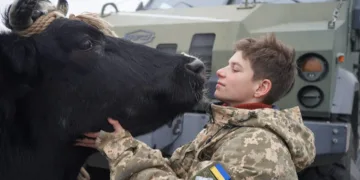
The Ukraine extraction gives the season its largest early set piece, yet scale is not the only trick. Michael Friedman directs the battlefield as a collision between old war and remote war. Soldiers move through trenches and smoke while drones hover above them, turning every patch of open ground into a possible kill zone. One operative describes the scene as World War I meeting science fiction. The images make the line sound almost restrained.
Cool blue photography flattens the landscape into mud, fog, and muzzle flashes. Drone point-of-view shots then restore a terrible clarity. From the air, people become heat signatures and moving targets. On the ground, Bobby, Tucker, Two Cups, Randy, Tex, Cruz, and Josie are separated by function, position, and risk. Friedman keeps the geography readable, which matters when the sky has developed opinions.
Ian Bohen’s Grady enters as a Delta Force operator and K9 handler, giving the sequence another source of tension. The dogs are tactical assets, living creatures, and obvious targets. Their movement changes how the soldiers cross the terrain, and their danger lands before anyone pauses to explain why viewers should care.
Taylor Sheridan’s Cody Spears brings worn authority to the mission. His remark about old soldiers surviving for a reason fits the season’s treatment of experience. Training keeps people alive, then convinces them they can return to places designed to kill them. Sheridan plays Cody with enough dryness to keep the character from becoming a recruitment poster with a beard.
The action gains force from the moments that follow it. Orders are questioned, political costs are calculated, and the extracted asset becomes part of a chain that may lead back to Joe’s home. The series has staged louder firefights. Few have left such a long echo.
Home Is a Target
Joe has always treated domestic life like a room she can enter after removing her body armor. Season 3 finally calls the bluff. Once violence reaches her family, secrecy stops looking protective and starts looking like a second threat.
Zoe Saldaña plays that shift through control rather than volume. In supposedly safe rooms, Joe scans doors, measures distance, and holds her body as though an alarm might sound between sentences. During a brutal captivity sequence, Saldaña separates pain from panic. Joe is frightened, calculating, furious, and physically compromised, often within the same close-up. The scene is hard to watch because the performance never offers the comfort of collapse.
Her strongest early material comes when Joe speaks to her family after the attack. She explains her work with the blunt certainty of someone who has repeated the argument internally for years. Saldaña keeps the voice steady while her eyes register what the speech costs. Joe believes honesty should repair the damage. Neal and the children hear proof that their lives were built around information they were never allowed to possess.
Dave Annable benefits from material that lets Neal move beyond the patient husband holding breakfast and resentment. His objections now have evidence scattered across the house. The recurring cycle between Joe and Neal has become familiar: reunion, intimacy, phone call, departure, argument.
The series knows the rhythm so well it could set a kitchen timer by it. Season 3 makes the pattern uglier by removing Neal’s ability to dismiss his fears as anxiety. Joe can survive interrogation, battlefield fire, and institutional reprimand. Can her marriage survive being proven right?
Suits With Ammunition
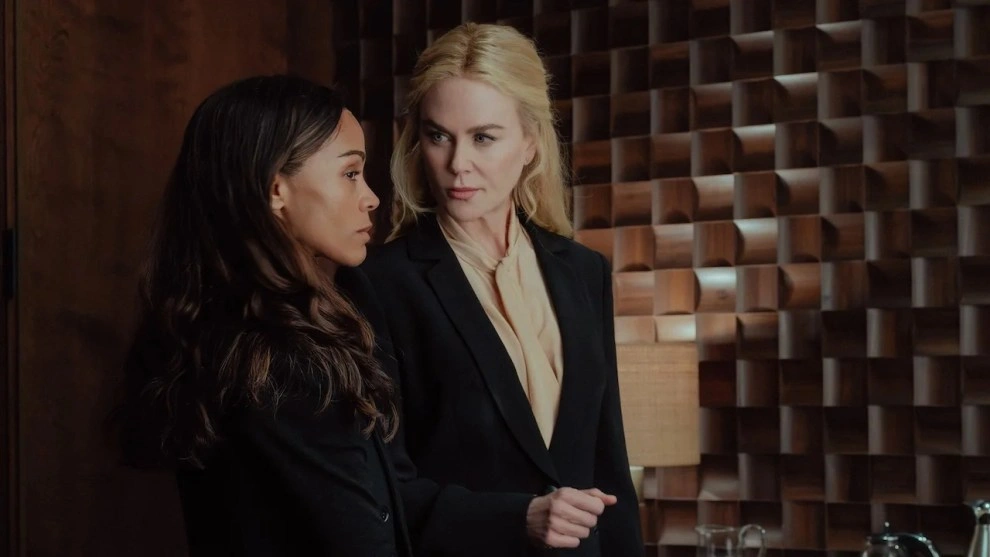
The series still enjoys putting powerful people around polished tables, but Season 3 gives those scenes teeth. Michael Kelly’s Byron Westfield conducts a quiet restaurant confrontation with Russian representatives, lowering his voice until every sentence sounds like a weapon placed gently beside the cutlery. The scene works through pacing. Pauses extend half a beat past comfort, reactions arrive late, and nobody raises the volume because nobody needs to.
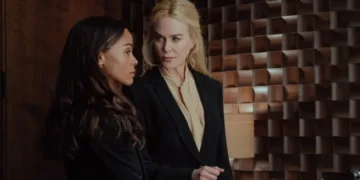
Nicole Kidman’s Kaitlyn remains composed enough to make stillness look classified. The crisis moves her beyond the familiar function of listening to Joe’s objections before approving the mission anyway. She travels, assesses, and applies pressure with a calm that suggests panic has been delegated to another department.
Morgan Freeman’s Edwin Mullins remains positioned at the political summit, where battlefield deaths become policy language. His authority is useful, though the season’s early episodes give Westfield and Kaitlyn the livelier material. Martin Donovan keeps stealing smaller scenes as Errol Meade, who delivers financial and geopolitical analysis over morning coffee with the tone of a man discussing lawn care. Civilization may be wobbling, but the patio furniture is excellent.
Sheridan’s dialogue can strain under its own confidence. Chess metaphors, strategic slogans, and threats dressed as lectures occasionally sound prepared for a trailer. The cast usually rescues them. Kelly cuts a speech into controlled pieces. Kidman lets silence finish the thought. Saldaña makes blunt declarations feel like choices made under pressure rather than lines waiting for applause. The show’s best political scenes understand that power rarely shouts. It confirms the reservation.
The Pride Takes Shape
Removing the new-recruit plot creates space for Cruz and Josie to function as finished members of the unit. Laysla De Oliveira carries Cruz’s history without needing flashbacks to explain every guarded reaction. Genesis Rodriguez gives Josie a steadier presence than she had during her divided loyalties in Season 2. Sharing the field lets both characters feel like consequences of Joe’s past decisions rather than former seasonal devices brought back for attendance.
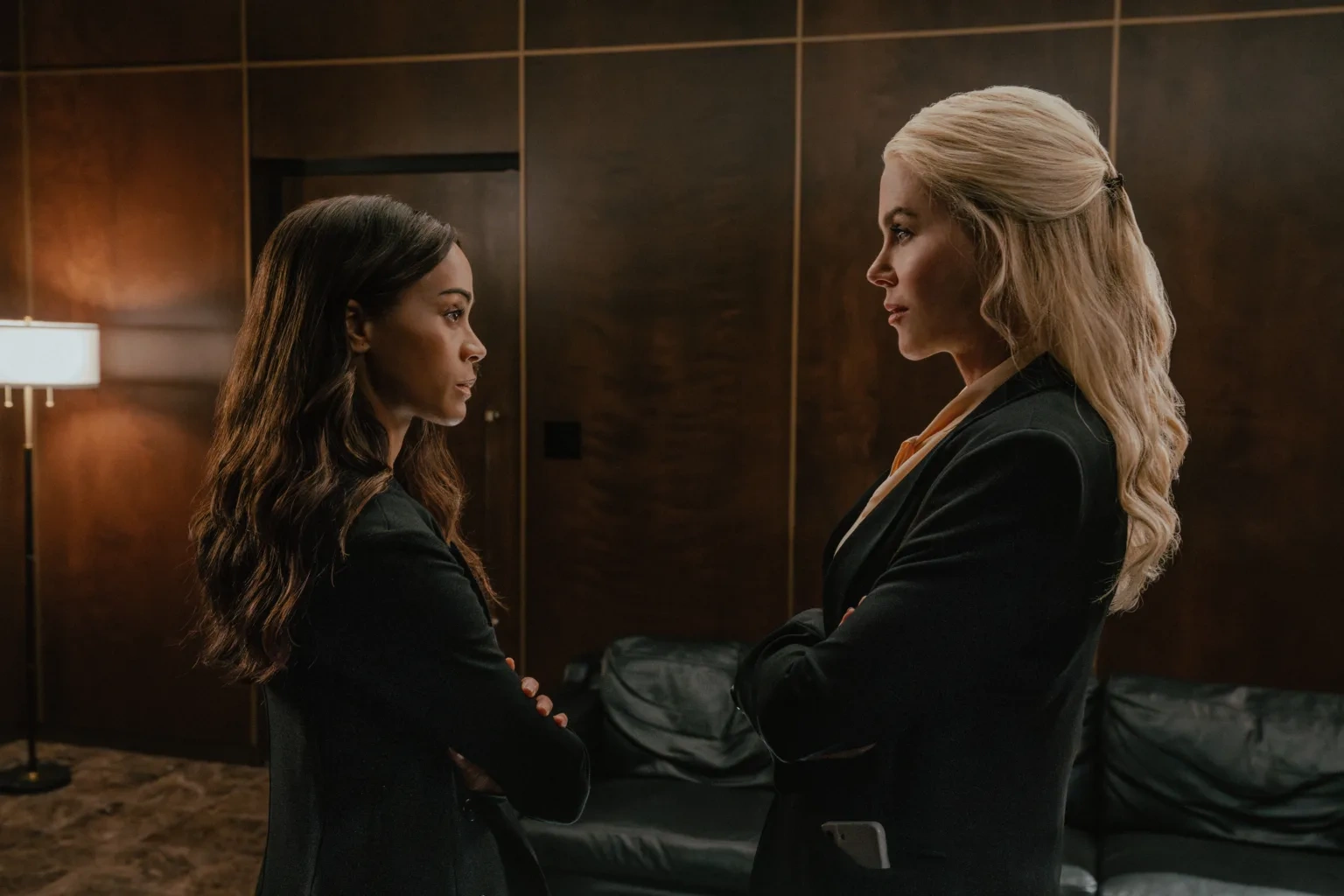
Jill Wagner’s Bobby remains the most clearly defined QRF member outside Joe. During the Ukraine operation, her authority appears in positioning, timing, and the way others respond when she gives an order. The series trusts Wagner to communicate command through behavior. It is a welcome choice in a genre that often mistakes rank for shouting.
The wider team receives better visibility during combat, though personality still arrives mainly through banter. Tucker, Two Cups, Randy, and Tex are easy to place in a firefight and harder to describe away from one. Their jokes sell shared history, yet the rhythm can make several voices sound interchangeable. A little domestic detail would help. Nobody needs a tragic childhood monologue. A hobby would do.
Elizaveta Neretin’s international operative arrives with enough mystery to suggest a larger role in the network closing around Joe. Grady’s K9 work gives him a clear battlefield identity. Cody’s veteran presence supplies rough institutional memory. The pieces fit because the season has stopped treating supporting characters as equipment stored between missions.
The title once referred to a specific undercover function. By Season 3, it describes the unit, the women shaped by it, and the family Joe keeps trying to defend from the life paying for the mortgage. The pride is finally assembled. Now someone has found its address.
Lioness Season 3 is an intense espionage thriller television series that premieres on Paramount+ on August 2, 2026. The series follows CIA station chief Joe McNamara as she navigates high-stakes covert operations, dangerous foreign threats, and personal betrayals. Viewers can stream all episodes exclusively on Paramount+.
Where to Watch Lioness Season 3 Online










Full Credits
Title: Lioness Season 3
Distributor: Paramount+
Release date: August 2, 2026
Rating: TV-MA
Running time: 45 minutes
Director: Taylor Sheridan, John Hillcoat, Anthony Hemingway
Writers: Taylor Sheridan
Producers and Executive Producers: Taylor Sheridan, David C. Glasser, Zoe Saldaña, Nicole Kidman, Ron Burkle, Bob Yari, David Hutkin
Cast: Zoe Saldaña, Nicole Kidman, Michael Kelly, Morgan Freeman, Laysla De Oliveira, Genesis Rodriguez, Dave Annable, Jill Wagner
Director of Photography (Cinematographer): Paul M. Sommers, Christina Voros
Editors: Chad Galster, Gautham Raju
Composer: Brian Tyler, Breton Vivian
The Review
Lioness Season 3
Lioness Season 3 blows up its recruitment formula before the formula can become a rut. The fractured timeline, Ukraine extraction, and attack on Joe’s home turn professional danger into personal exposure, while Zoe Saldaña makes every silence feel like a classified document. Sheridan’s dialogue still occasionally arrives wearing tactical body armor, and several QRF members remain names attached to rifles. Yet the action is sharply staged, the political confrontations bite, and the ensemble finally feels like the premise rather than its support crew.
PROS
- Saldaña’s tightly controlled performance
- Gripping nonlinear structure
- Excellent Ukraine combat sequence
- Stronger ensemble dynamics
- Chilling political confrontations
CONS
- Some overworked dialogue
- Thin QRF characterization
- Familiar Joe-Neal conflict