




















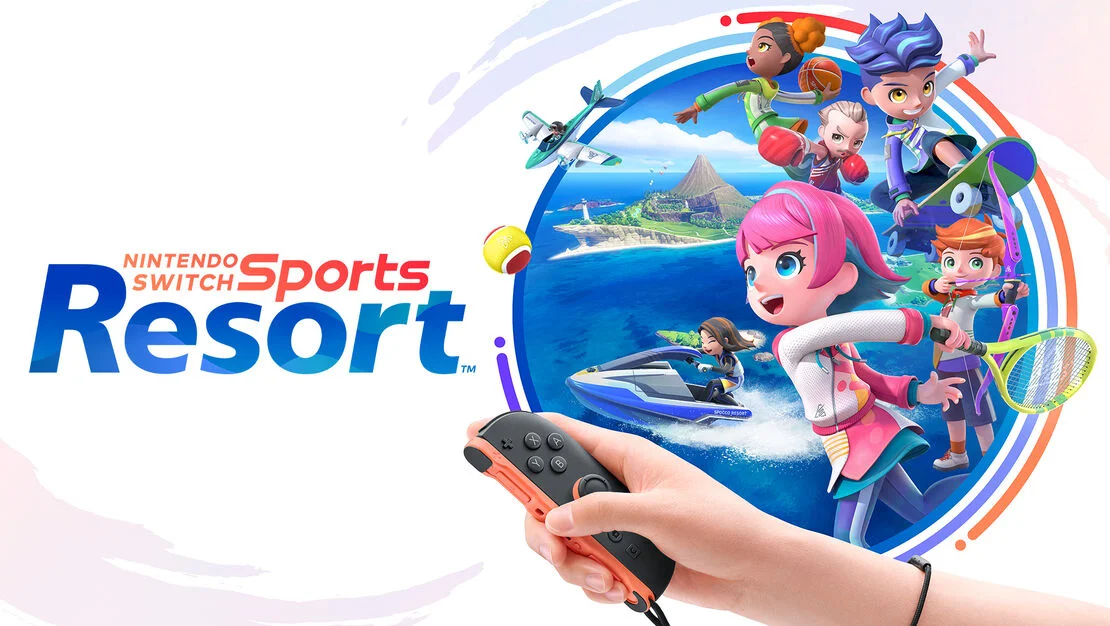

Drawing a bow in Nintendo Switch Sports Resort involves a small negotiation between an action you recognize and equipment you have never held this way. One Joy-Con becomes the bow, the other its string; extending one arm and pulling the other back makes the relationship legible before a conventional button diagram could.
The vibration suggesting tension helps complete the illusion. Then wind and distant targets complicate that initial understanding. Archery’s achievement is the room it leaves between recognizing the gesture and executing it well. Hidden targets extend that pleasure into discovery, giving a group something to investigate together beyond the scoreboard.
Basketball and Volleyball make the translation less gracefully. Their component actions are recognizable, but play divides them into prescribed phases, each demanding a different response. Volleyball asks players to receive, set, attack, and block as the sequence requires.
Familiarity with the sport offers limited help in learning this choreography, and the introductory explanation can interrupt a gathering’s momentum. Coordination does become satisfying once teammates understand their responsibilities. Still, the rhythm variant of Volleyball and Basketball’s shooting challenges provide a cleaner invitation: their narrower demands let players find a shared tempo sooner.
This negotiation between familiar activity and unfamiliar apparatus belongs to Nintendo’s particular history as a Japanese company making household entertainment for international audiences. The Wii Sports inheritance survives through actions that reduce dependence on established controller skills. It would be careless to call those actions universal.
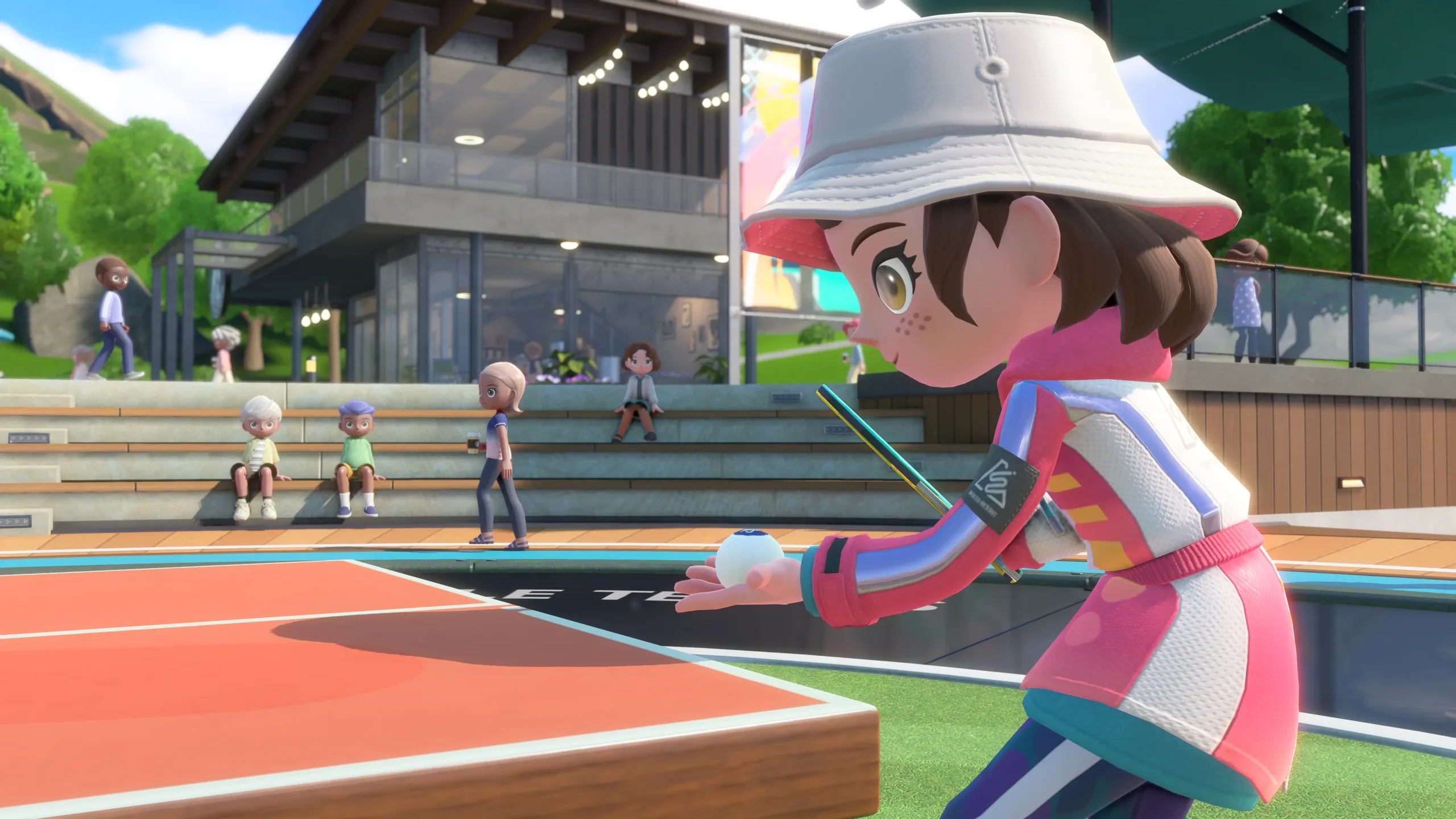
Sporting knowledge, physical ability, and comfort with public silliness vary, and Resort works best when recognition starts a learning process. Table Tennis demonstrates this neatly. Its restrained wrist movements demand control, and a poorly directed return can fly off the table. Being easy to explain gives the contest a welcoming entrance without removing the satisfaction of improving.
The Switch 2 collection’s twelve activities become most inventive when they draw on another kind of familiarity: playing with toys. Prop Plane has you hold a controller like a miniature aircraft, turning and tilting your hand to direct its flight.
Skateboarding uses mouse mode, with a sliding movement supplying propulsion and lifts or flicks producing tricks. These are persuasive acts of make-believe. Neither requires the player to possess the corresponding real-world skill. Nintendo lets the hand suggest an activity, then supplies the scale and consequences on screen. Skateboarding’s physical connection to a surface makes its movement especially pleasing.
Wuhu Island gives these gestures somewhere worth going. From the air, sporting venues remain active, boats cross the water, and people occupy beaches and public spaces. These details make the island feel available to activities beyond the one currently selected.
Spotting a court during a flight changes its status when you later play there: it belongs to a place you have seen from another angle. Archery’s movement through fields, coastal scenery, and volcanic terrain serves a similar purpose. The resort connects its sports through geography, allowing a collection selected from menus to acquire the continuity of a destination.
Its holiday imagery also travels easily: beaches, sightseeing, recreational vehicles, and the freedom to spend an afternoon without accomplishing much. That recognizability suits a game accommodating both competition and idle exploration. Photographing landmarks offers a reason to look closely, while Skateboarding and Power Cruising add competitive courses for players who want direction.
The leisure label does conceal some awkwardness. Holding imaginary jet-ski handlebars out for sustained stretches can tire the arms, and the absence of CPU opponents in leisure races leaves a gap between solo sightseeing and competitive play. The island offers several ways to move through it, with uneven support for turning those movements into lasting activities.
Competition changes again when another person is physically present. Volleyball’s required coordination becomes a conversation between teammates; Archery’s hidden targets can turn separate attempts into a collective search. The pleasure includes watching someone learn, hearing their explanation for a miss, and recognizing the instant they become dangerous.
These exchanges help account for the series’ endurance beyond the original novelty of motion control. Resort supplies rules simple enough to become shared reference points, then leaves the people in the room to establish the tone of the afternoon.
Island Crown sensibly supports the hours between those gatherings. Across the nine non-leisure sports, escalating CPU opposition gives practice a direction, with champions contributing commentary and victories yielding cosmetic rewards. Cooperative support in Tennis, Volleyball, and Basketball allows that progression to become a joint undertaking. It supplies continuity without reproducing the social feedback of a roomful of players.
Online opponents offer another form of company, though returning through the lobby when changing sports adds friction. Local play has its own practical qualifications: some simultaneous contests need extra controllers, Skateboarding requires mouse-capable Joy-Con 2 hardware, and tabletop multiplayer is unavailable. Arranging a casual session can require preparation the gestures themselves seem to promise away.
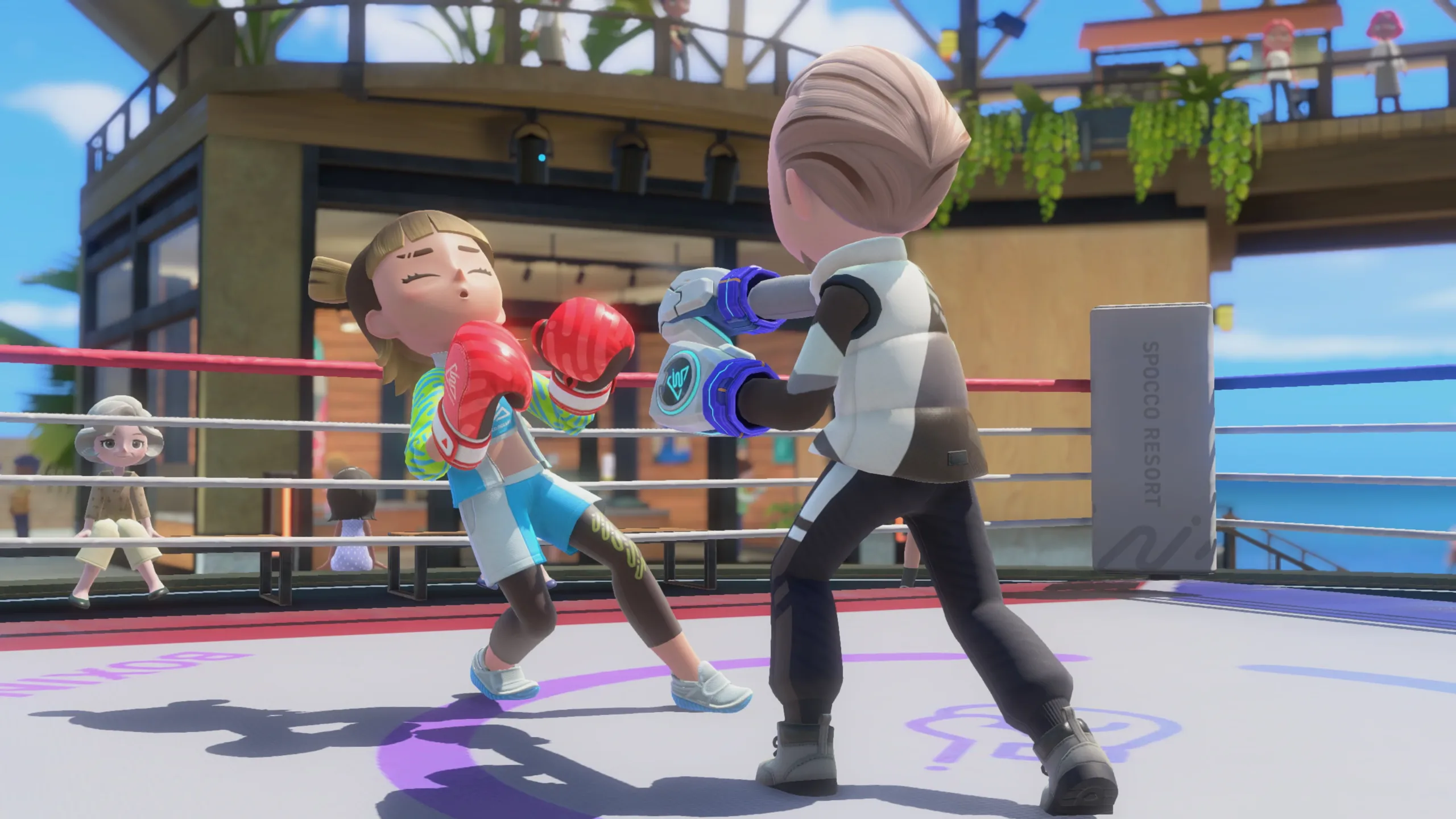
The question of who can join becomes personal in the avatar system. Miis preserve the series’ earlier, loosely drawn way of putting familiar people on screen. Sportsmates provide a more detailed alternative, with much of the clothing selection favoring them. Keeping both is valuable, especially alongside the option to populate CPU contests with Miis. Yet the unequal cosmetic support makes the choice less neutral than it appears. A player attached to the older visual language receives a narrower wardrobe, while the newer figures benefit from the game’s expanding emphasis on dress and equipment.
Earning that wardrobe is substantially better integrated into ordinary play. Offline and local activity now contribute currency, so participation need not be directed toward online competition to produce rewards. Island Crown and achievements supply additional routes to items.
The rotating shop complicates this generosity by awarding random pieces from themed collections instead of letting players select the particular object they want. No real-money purchase is involved, which keeps the criticism proportionate, but the system still inserts repeated play between a preference and its expression. Choosing a hat should be a modest act of authorship; here, it becomes an uncertain reward for continued attendance.
The character creator places a sharper limit on that authorship. Its Black male hairstyle choices are confined to two variations on dreadlocks, without a plain buzzcut. For a Japanese-made game addressing an international public, this is a specific failure to carry the invitation through to the people accepting it.
Sporting gestures receive careful attention to their recognizable details; personal appearance receives a much narrower account of the possibilities. Players can collect elaborate clothing, select sporting equipment, and establish outfit presets for different activities. A Black man trying to give his Sportsmate an ordinary close haircut cannot make that selection.
The Review
Nintendo Switch Sports Resort
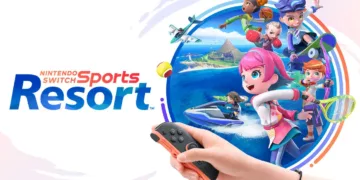
Nintendo Switch Sports Resort carries Nintendo’s household sports tradition forward through persuasive physical play. Archery rewards precision, Skateboarding makes inventive use of mouse controls, and Wuhu Island connects competition with the pleasures of a holiday destination. Island Crown gives solo practice useful direction. The invitation becomes less convincing through choreographed team sports, equipment restrictions, and avatar options that inadequately reflect an international audience. Its strongest activities leave room for people to learn together and make the occasion their own.
PROS
- Archery balances intuitive gestures with precision.
- Inventive Prop Plane and Skateboarding controls.
- Wuhu Island gives activities geographical continuity.
- Island Crown supports meaningful offline progression.
CONS
- Team sports require cumbersome phase-specific learning.
- Controller requirements and tabletop restrictions complicate gatherings.
- Random cosmetic rewards limit purchasing choice.
- Uneven avatar support and limited Black hairstyles.