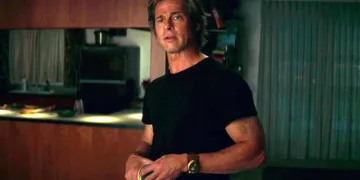


















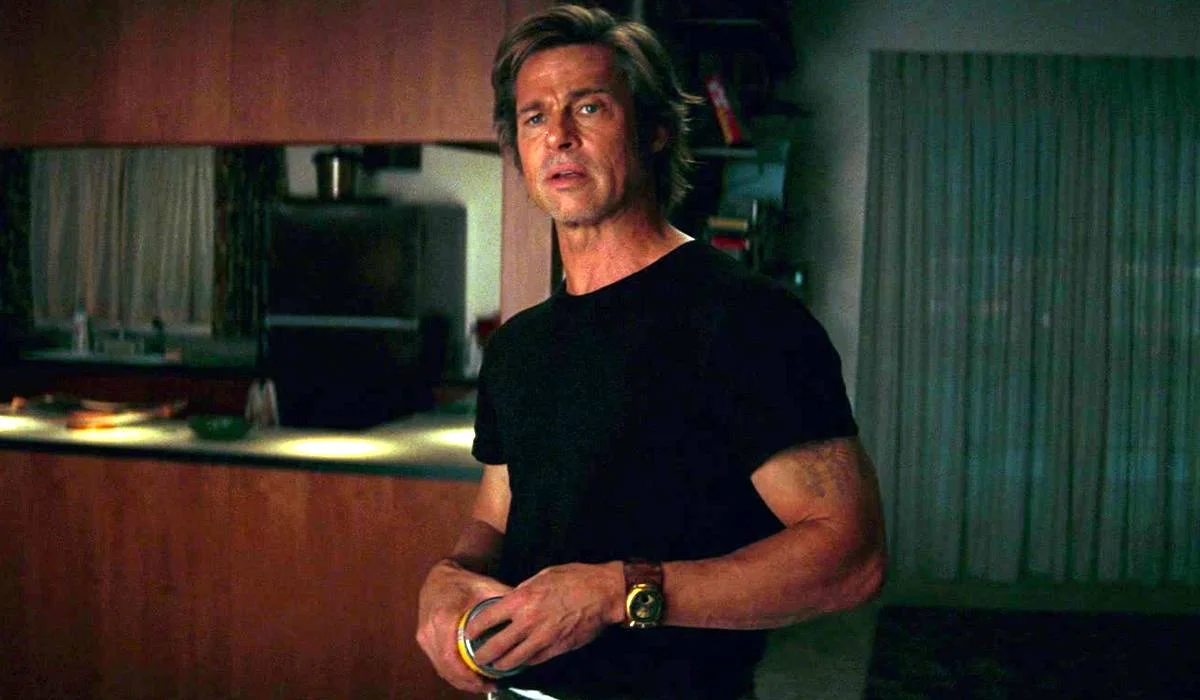

Director David Fincher cut about 60 pages from Quentin Tarantino’s script for “The Further Mis-Adventures of Cliff Booth,” trimming a 230-page first draft into a film of roughly two hours and 20 minutes, Fincher told Empire.
“It was essentially two movies,” Fincher said of the draft he first read. The finished runtime sits well under the two hours and 41 minutes of “Once Upon a Time… in Hollywood,” the 2019 film that introduced Brad Pitt’s Oscar-winning stuntman. Fincher described the edit as a search for the overlap between what Pitt, Tarantino and he each wanted from the story.
Tarantino wrote the screenplay but chose not to direct it. Pitt helped bring Fincher aboard, Variety reported. The actor has worked with Fincher on “Se7en,” “Fight Club” and “The Curious Case of Benjamin Button.” Tarantino and Fincher had never collaborated before.
The sequel takes place in 1977, eight years after Booth’s brush with the Manson family in the earlier film’s alternate history. Tarantino told Empire that this story departs from the first, which he called a hangout movie headed toward the Cielo Drive killings. He described the new script as a crime story with the flavor of an Elmore Leonard paperback, a touchstone that recalls his 1997 adaptation of Leonard’s “Rum Punch,” “Jackie Brown.” Fincher said the material attracted him because it works like a tale told around a bonfire, driven by how characters collide in Hollywood’s back alleys instead of by plot.
The cuts leave some of Tarantino’s work unused. A Tarantino-written Cliff Booth novel is due later this year, according to one report, which gives the excised material a possible second home.
Netflix acquired the film. It arrives for a two-week IMAX run Nov. 25 and reaches the streaming service Dec. 23, according to one report that Netflix has not confirmed in the coverage reviewed. Neither Tarantino nor Fincher has said how much of the removed material might resurface.
The pairing carries unusual stakes. Tarantino has praised directors who adapt his scripts, pointing to Tony Scott’s “True Romance,” while Fincher is known for precise, heavily controlled filmmaking. Critics will weigh whether the result bears more of one filmmaker’s imprint than the other’s.