






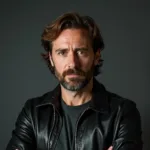
Justin Hardy asks his half-brother Dominic to help examine their father’s recovered papers because he does not want to face them alone. That reluctance gives Children of the Wicker Man a useful starting condition. Justin has inherited access to the making of a celebrated film, but curiosity cannot be taken for granted. His father, Robin Hardy, directed the 1973 folk-horror film The Wicker Man, and Justin’s memories of its creation include abandonment and financial ruin. Before the papers can become film history, someone has to agree to read them.
The documents give that difficult undertaking a practical shape. Scripts and correspondence allow the brothers to trace professional decisions alongside their domestic consequences. Letters preserve Robin defending his position and protecting his film, while the family account records what his determination required from other people.
Caroline, Justin’s mother, committed her inheritance to the production and lost the security it had provided. The familiar sequence of troubled production, commercial failure and eventual rediscovery becomes inadequate once her contribution enters the account. A film finding its audience does little for someone who never recovered her money or lived to enjoy that vindication.
Justin, Dominic and co-director Chris Nunn are most persuasive when they follow this connection between the production and the household. Papers, accompanying sketches and visits to filming locations give the inquiry tangible material, but the discoveries matter because they alter the brothers’ understanding of their own past. Caroline’s financial involvement changes the question Justin is pursuing.
Recognizing his mother’s contribution gives him something to recover from a film he has associated with her suffering. This provides a stronger line of development than a succession of revelations about Robin’s difficult behavior: Justin can acquire a fuller account of his mother without first having to reach a favorable judgment of his father.
The brothers’ differing dispositions keep that inquiry from settling into a single accusation. Justin’s anger is close to the surface, breaking into an explicit denunciation when he encounters his father’s self-pitying words. Dominic, raised in Canada by another mother, brings greater distance and a more forgiving curiosity.
Their responses carry the weight of different childhoods. Dominic’s composure does not make him the authoritative interpreter of Robin, and Justin’s fury does not disqualify his account. The documentary gains dramatic tension from allowing both men to work on the same history without pretending they experienced the same father.
That relationship becomes less orderly when Dominic goes missing during filming and Justin vents his frustration to the producers. The episode briefly interrupts the investigation with the practical problem of getting its participants into the same place. It is awkward, faintly comic and valuable because the brothers cease to function as an arranged pair of contrasting perspectives. They have become people trying to make a film together. Reading this as evidence that Dominic repeats their father’s behavior would be an excessive diagnosis. The immediate friction is sufficient, exposing how easily a shared project can accommodate different assumptions about responsibility.
The film’s concentration on these two sons does, however, create limits that its emotional candor cannot remove. Other siblings are absent, leaving little opportunity to test how far Justin and Dominic’s experiences extend across the family. Their testimony remains substantial on its own terms. Trouble arises when the account approaches a fuller explanation of Robin, whose motives must be reconstructed through documents and recollections. His letters preserve how he argued for himself. They cannot settle everything that the people receiving those arguments might have understood differently.
The selection of outside witnesses makes this limitation harder to ignore. Author Allan Brown features in anecdotes without appearing, while Bill Paterson receives considerable interview space despite having almost joined the original cast rather than appeared in the finished film. An almost-cast actor is an unusual person to keep on hand while closer perspectives remain unavailable.
The issue is the balance of explanatory weight: some voices are discussed without being heard, while a tangential connection receives room that the family investigation could use. Robin’s fractured relationship with screenwriter Anthony Shaffer also has to be assembled without either man available to respond. These constraints leave parts of the portrait less developed than the brothers’ own encounters.
The later visit to Malta shifts the film toward a different kind of encounter. The brothers join people conducting a cliffside ritual and open sealed letters their father left during a health scare in the 1970s. This brings the investigation’s accumulated evidence into contact with a private act of reading. The letters have significance because of who opens them and what has preceded the occasion. Their presence does not require every grievance to acquire an answer. After the professional correspondence and financial losses, the documentary makes room for the sons to receive something addressed to them.
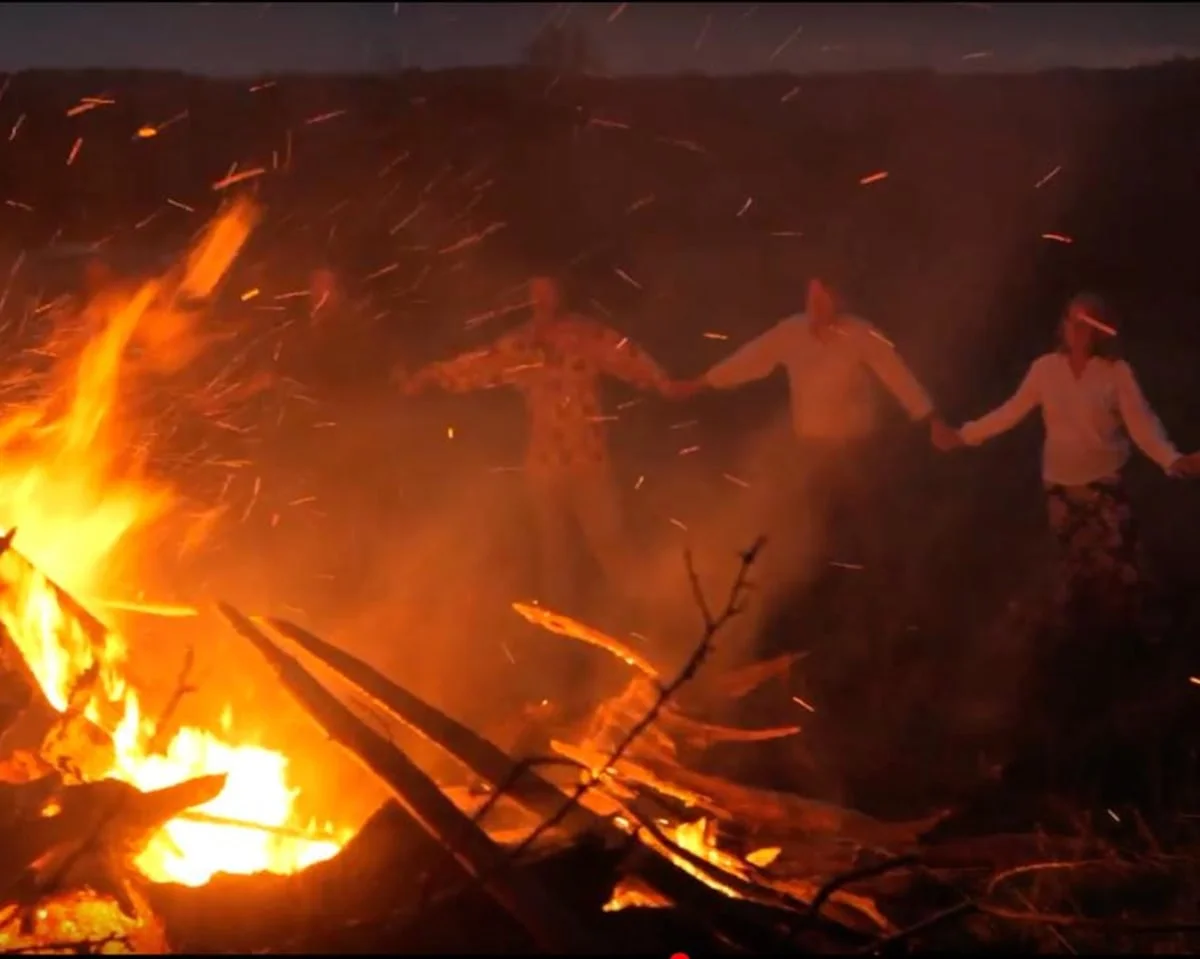
The bonfire celebration back in England then gives the film a direct formal connection to its subject. Fire and communal ritual return in a setting where the brothers can participate, changing their position in relation to imagery their father helped make famous. The connection risks making the ending appear tidier than the preceding inquiry warrants, yet it also supplies a concrete action for a relationship that has largely been conducted through old papers. The brothers can attend the celebration together while retaining different judgments of Robin.
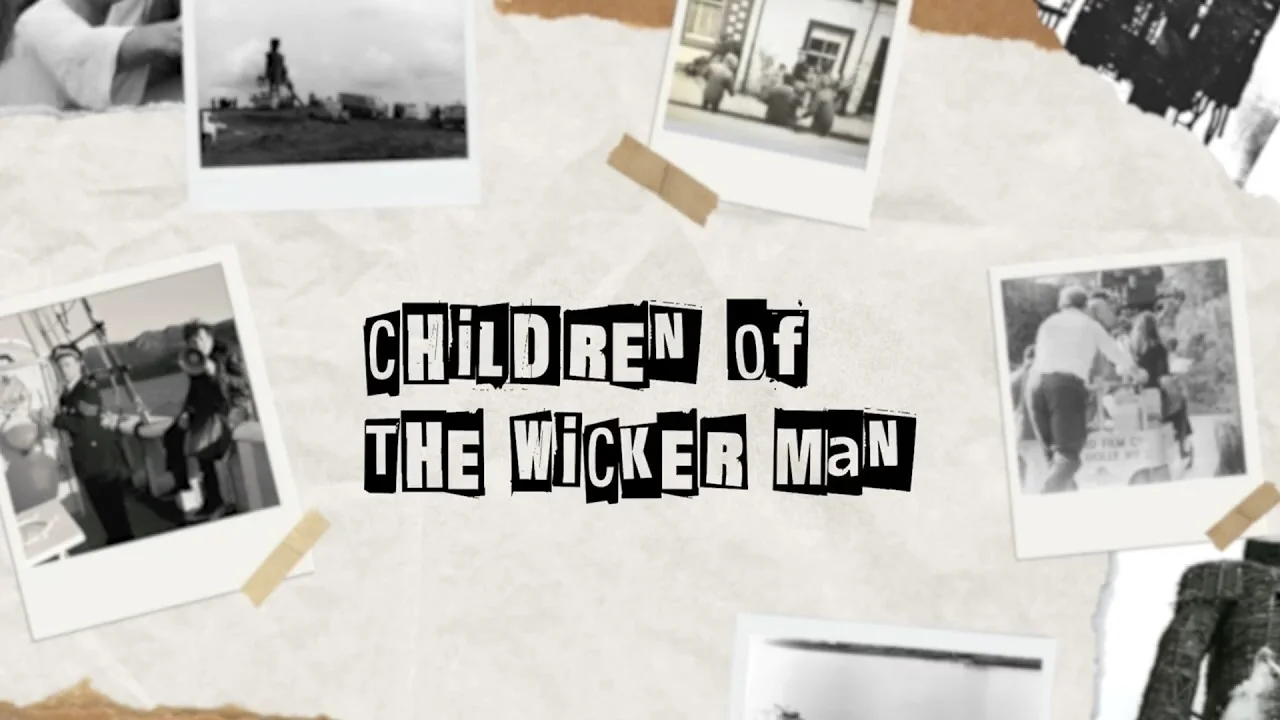
Children of the Wicker Man premiered at the FrightFest London Film Festival on August 23, 2024, and is distributed on home video by Severin Films. Directed by Justin Hardy, Dominic Hardy, and Chris Nunn, the personal feature documentary explores the complex legacy of director Robin Hardy through his newly discovered lost papers, as his sons embark on a journey to uncover the true history behind the 1973 folk-horror classic The Wicker Man and its impact on their family.
Full Credits
Title: Children of the Wicker Man
Distributor: Severin Films, Hardy Pictures
Release date: August 23, 2024
Running time: 1 hour 34 minutes (94 minutes)
Director: Justin Hardy, Dominic Hardy, Chris Nunn
Writers: Justin Hardy, Dominic Hardy, Chris Nunn
Producers and Executive Producers: Chris Nunn, Alison Palmer
Cast: Justin Hardy, Dominic Hardy, Robin Hardy, Caroline Hardy
Editors: Chris Nunn
The Review
Children of the Wicker Man
Children of the Wicker Man gives its recovered archive a strong dramatic purpose: tracing how one film’s production shaped two sons’ lives. Justin and Dominic’s differing responses sustain the investigation, while the recognition of Caroline’s contribution gives it direction. Uneven witness selection limits the portrait of Robin, and the final rituals suggest a neatness the evidence cannot quite support. The brothers’ changing understanding remains persuasive without requiring a complete explanation of their father.
PROS
- Archival discoveries carry tangible family consequences.
- The brothers’ differing perspectives sustain dramatic tension.
- Caroline’s contribution gives the investigation emotional direction.
CONS
- Uneven witness selection leaves significant gaps.
- Closing rituals risk overstating emotional resolution.