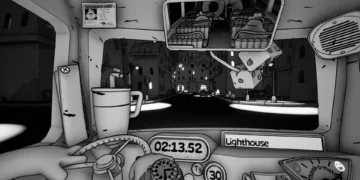




























Crazy Taxi is the useful starting point for understanding Thank You Bus Driver: timed deliveries, shortcuts, and the pleasure of learning how to cross a town quickly. Double Fine changes the job by making the people inside the vehicle a continuing responsibility. Getting passengers to their stop earns “Thank Yous,” which replenish the clock, but the amount of gratitude available depends on keeping those passengers happy. A well-chosen route can lose its value while somebody behind the driver clips their toenails.
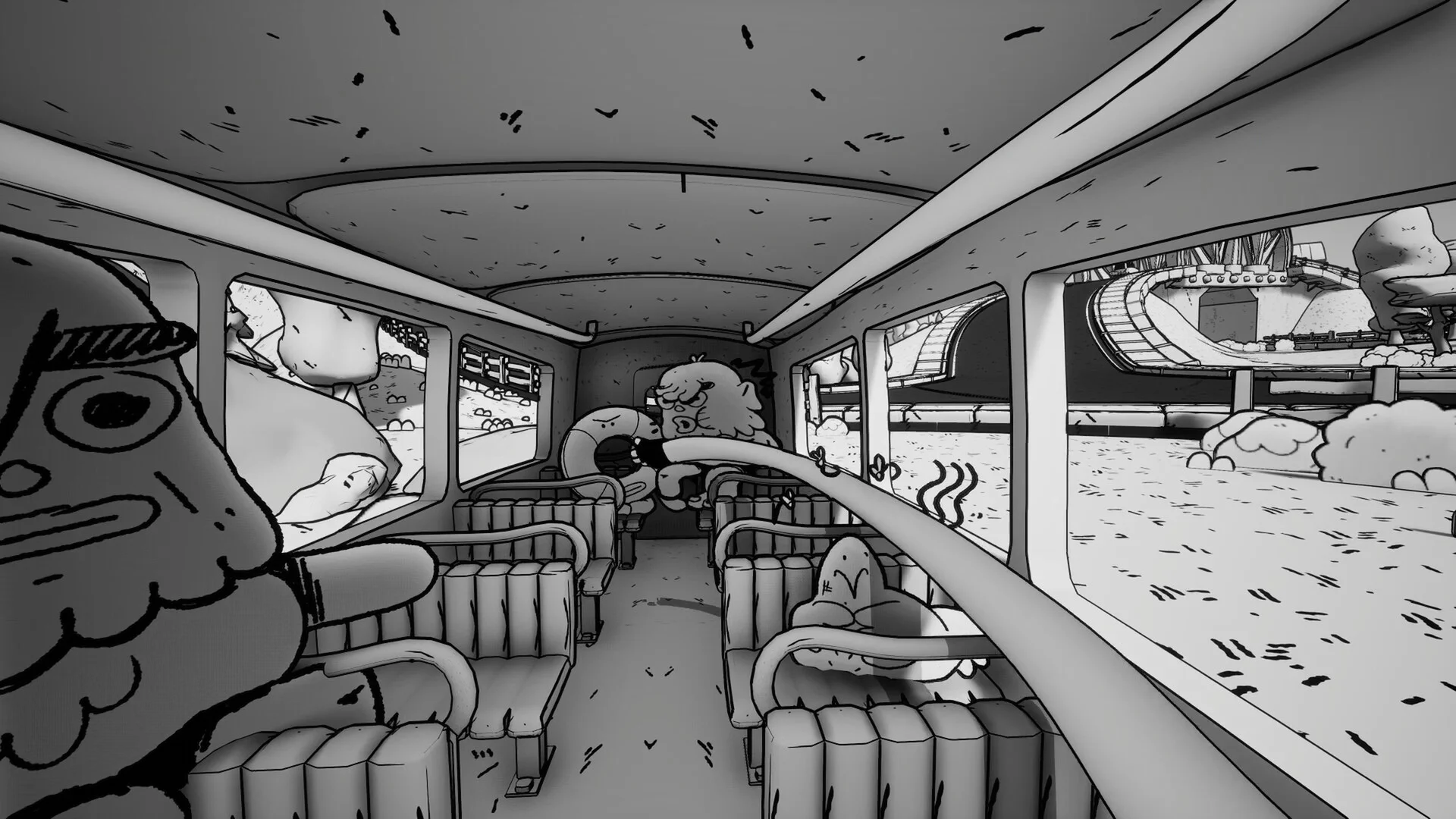
The rules accumulate during a shift, gradually expanding the list of behaviors that require intervention. Eating, sleeping, loud phone calls, and unpleasant smells can all upset neighboring riders. Turning toward the cabin allows the driver to slap an offender with a wonderfully elastic arm or throw them off the bus.
Ejection carries a useful cost: the troublesome passenger can no longer contribute a Thank You. Keeping them aboard preserves that reward but risks further disruption. A repeat offender makes the decision harder, since every correction requires attention that could be spent reaching the next stop.
This gives the familiar transport loop a different rhythm. Route knowledge still matters, and the responsive steering and forgiving physics make searching for shortcuts enjoyable. Yet the first-person view repeatedly pulls attention away from the street.
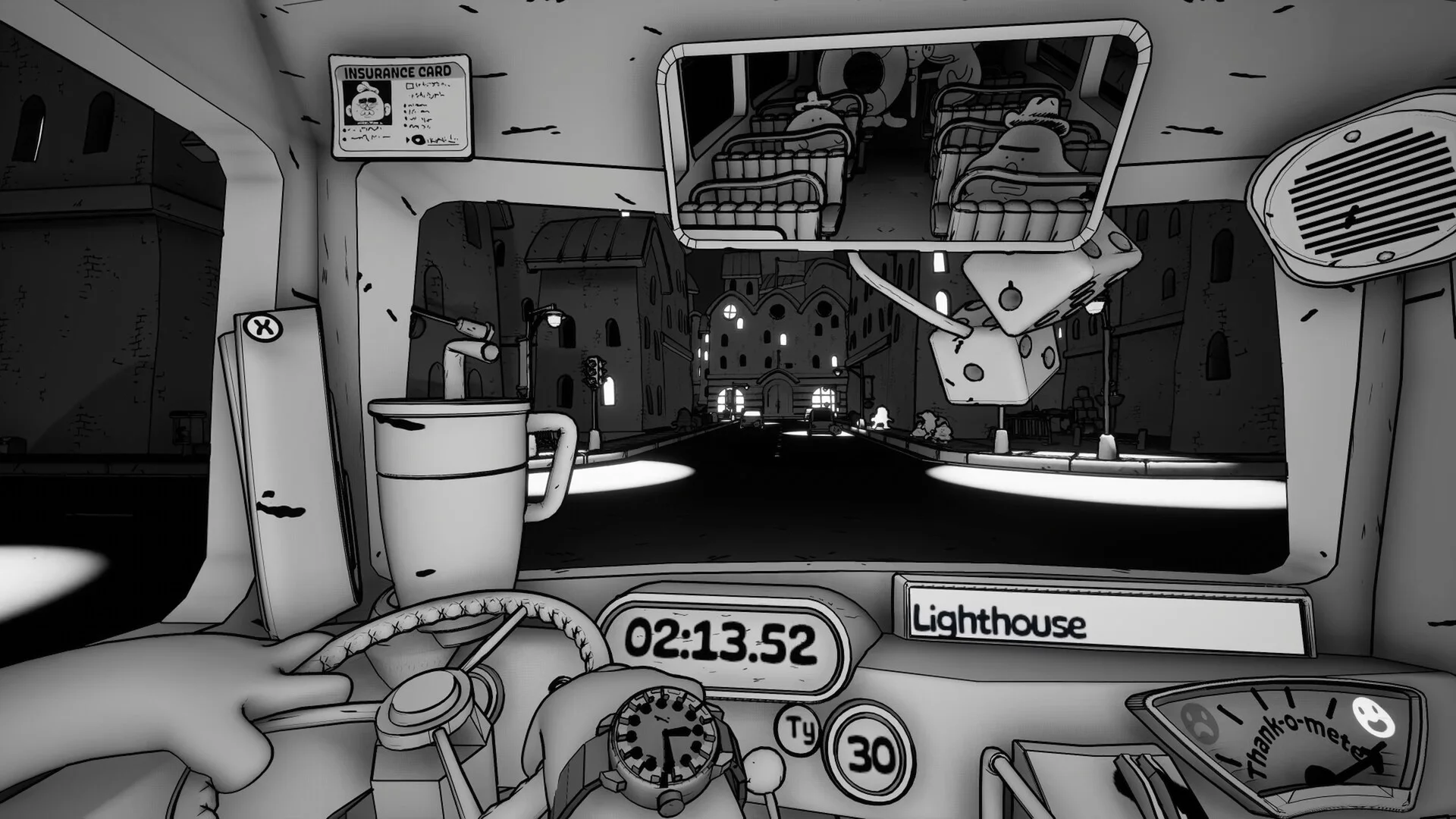
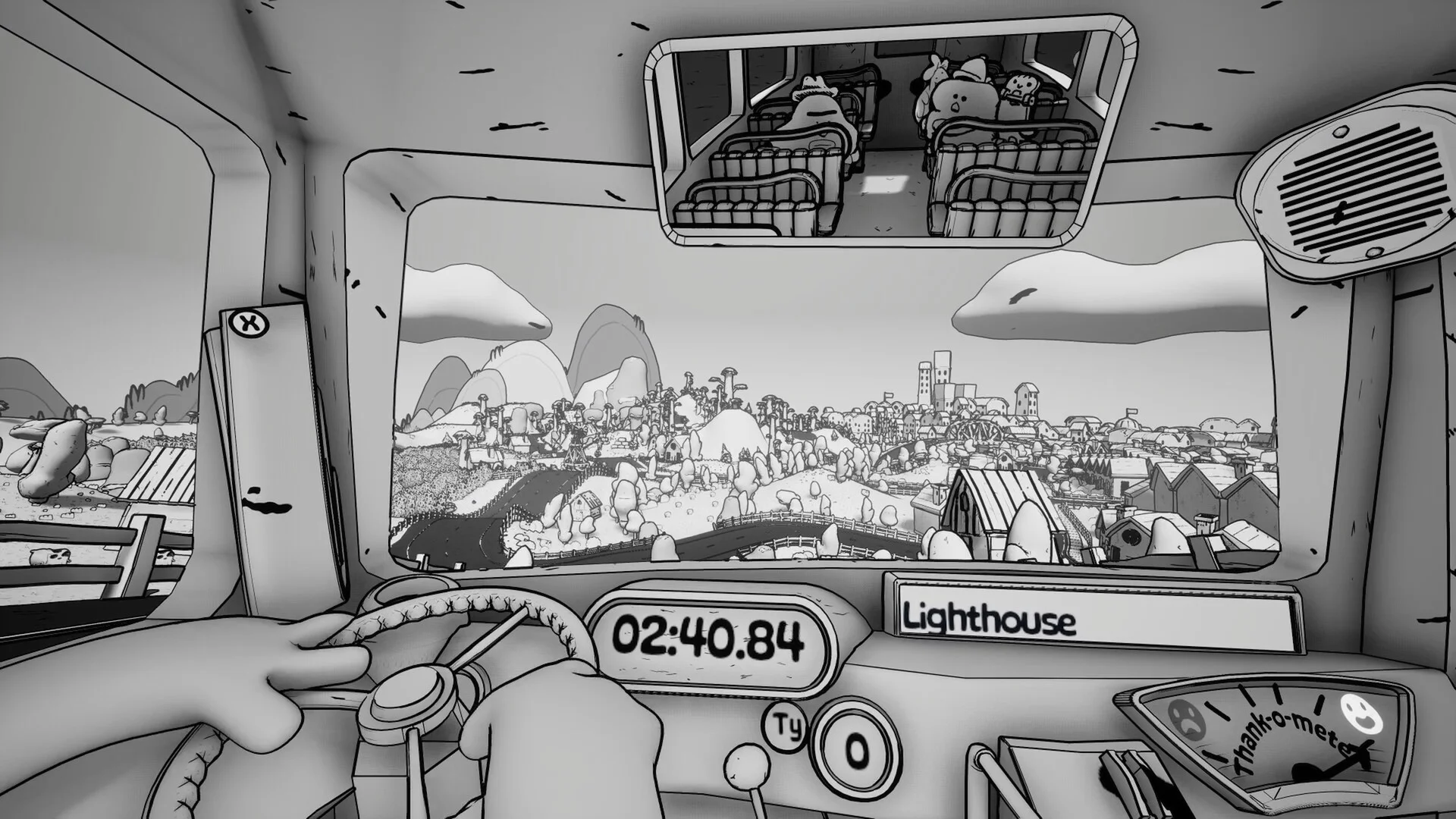
The rearview mirror helps monitor passengers, while the dashboard Thank-O-Meter registers their collective mood. Consulting the map creates another interruption because it occupies valuable screen space without pausing the timer. Learning the town gradually reduces that particular problem, leaving greater attention available for the increasingly difficult cabin.
The bus can keep moving while the driver disciplines passengers, so stopping is a tactical choice with a time cost. Continue driving and a missed turn or collision can consume the seconds the intervention was supposed to protect. That is an effective complication of the Crazy Taxi foundation. Speed now depends partly on judging when the road can safely receive less attention. The absurd passenger priorities help sell it: reckless driving is acceptable, but snoring becomes an urgent threat to the service.
Selecting the passenger who needs correcting is less successful. On a crowded bus, directing the outstretched arm toward the intended target can be awkward, particularly with a controller. The distinction matters because identifying a problem and successfully acting on it are separate challenges.
Looking away from the road creates a decision; struggling to highlight someone after making that decision delays the response. Striking an innocent passenger can then sacrifice potential gratitude, making an imprecise selection costly within a system already charging for every second.
The monochrome presentation contributes to that difficulty, even as it gives the game much of its appeal. Pencil-and-ink scenery, rubber-hose movement, sentient trash cans, and land dolphins make this an entertainingly ridiculous place to operate public transport.
The stretching arm belongs comfortably in that world, and passenger discipline reads as cartoon slapstick. However, the black-and-white palette can make both environmental cues and crowded riders harder to distinguish quickly. The same visual treatment that unifies the town can hinder the rapid recognition its driving and management tasks demand.
Perks offer some relief and give individual runs a little room for adjustment. The trench-coated vendor’s Big Chug Turbo improves acceleration, while driving gloves help with cornering. Other items address the cabin directly: a pine air freshener neutralizes smelly passengers, and a disco ball counters loud phone calls.
These choices affect different parts of the workload. Faster acceleration helps recover time on the road; removing a passenger nuisance reduces the need to turn around in the first place. The latter can be especially valuable because it protects driving time without requiring another interruption.
The better shift variants let those items interact with the town. Trash Days scatter obstacles through the streets, but an appropriate perk can turn rubbish into a source of speed. Night shifts reduce traffic while making passengers more troublesome, changing the balance between road pressure and cabin pressure.
Those are worthwhile adjustments to the central task. Rain and the busier convention-day conditions add further variation, though the underlying routine remains recognizable. None introduces another town or substantially changes the process of reaching stops and policing riders.
Persistent progression supplies a reason to attempt another shift after a disappointing run. Earned Thank Yous continue contributing toward unlocks, including additional items, filters, and shift conditions. The thin narrative gives that accumulation a suitably silly destination: a rival driver has collected 1,499 Thank Yous, so the target is 1,500.
There is little need for further storytelling around a goal this direct. Time extensions tighten as progression continues, keeping the clock relevant as the available perks expand. The trade-off is that familiarity and accumulated options do not necessarily make later shifts feel easier.
The larger limitation is how quickly the single town becomes familiar. Discovering shortcuts initially creates the satisfaction expected from an arcade driving game, but established routes eventually become repeated solutions. Perks change the circumstances around those routes without replacing them.
Roughly four to five hours is a reasonable scale for completing this compact progression, though the loop can become familiar before every reward has arrived. Continued score pursuit then has limited support: each shift finishes after fifteen stops, with neither an endless mode nor a high-score leaderboard to give those learned streets another purpose once the unlocks are exhausted.
The Review
Thank You Bus Driver
Thank You Bus Driver gives the Crazy Taxi formula a worthwhile complication: keeping passengers happy while finding the quickest route across town. Responsive driving, cartoon slapstick, and useful perks make that divided attention entertaining. Awkward passenger targeting sometimes interrupts the fun, and one small town limits how long the variations remain interesting. It works best as a compact arcade diversion, with a clear ceiling on what route mastery can offer after the unlocks run out.
PROS
- Responsive steering and forgiving driving physics.
- Passenger management creates meaningful decisions.
- Perks change driving and cabin priorities.
- Expressive cartoon designs and slapstick.
CONS
- Awkward passenger targeting, particularly on controller.
- Monochrome visuals can hinder quick recognition.
- Repeated routes and limited incentives after completion.