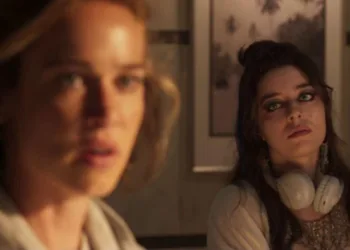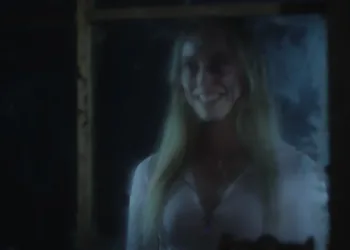























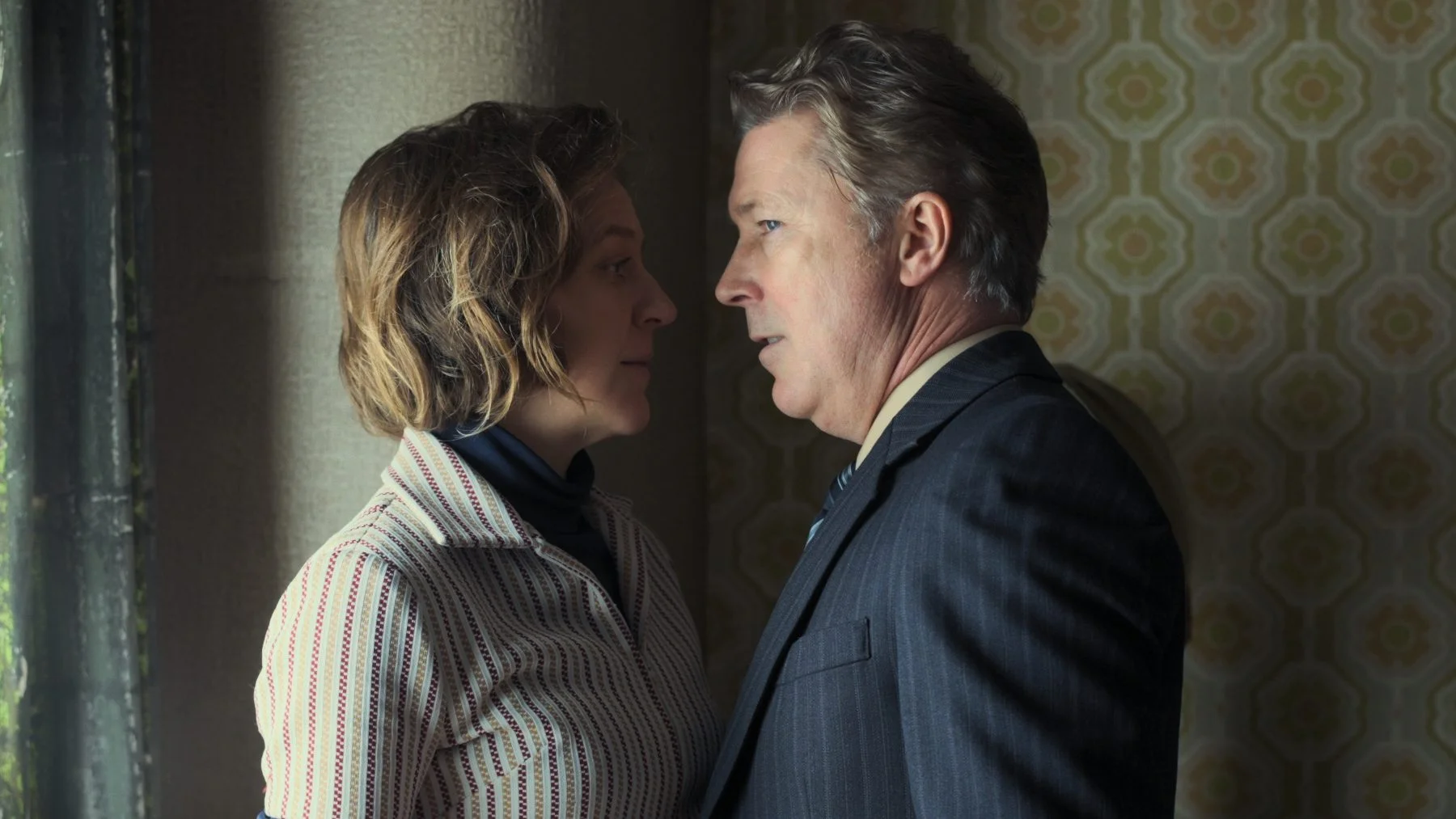
Ann and her mother can still make each other laugh, which makes the speed of their descent into accusation difficult to bear. During a conversation in Carol Morley’s 7 Miles Out, sarcasm becomes shouting, then gives way to sorrow and a bruised accommodation.
The earlier amusement remains close enough to remember. Gemma Whelan lets Bryn’s anger belong to the same woman who was capable of teasing her daughter a moment ago; neither state feels like a disguise. Listening to them, one begins to dread the next change of tone without wanting the conversation to stop.
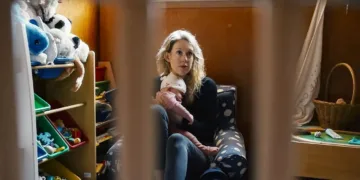
Bryn has a daughter to raise while her own capacity to endure keeps changing. After her husband’s death, the family’s financial security disintegrates, and she and Ann eventually exchange their home for a boarding house. Whelan gives the mother’s resentment an uncomfortable independence from Ann’s suffering. She needs things herself. She can be exhausted by the person who needs her most. The movement from joking to recrimination makes their intimacy feel crowded: affection, grievance and the practical business of continuing to live together must all find room in the same exchange.
Adapted from Morley’s semi-autobiographical 2015 novel, the film returns to Stockport in the late 1970s and early 1980s, tracing Ann from childhood into young adulthood. Its earlier family scenes establish how little a child can know about the people upon whom her world depends.
Young Ann, played by Amelie Hughes, interviews her father for an imaginary radio programme. Aidan Gillen’s Ronald sits smoking in his armchair, still dressed for work, participating in the small ceremony of her curiosity. His reserve admits tenderness without becoming transparent. Ann has his attention; the audience has reasons for unease that she cannot share.
Ronald’s suicide leaves her with a loss that the surrounding shame makes difficult to name. She tells people he died in a car crash. The explanation allows an encounter to proceed without exposing what happened, while placing another small distance between her experience and everyone else’s understanding.
Morley is attentive to this peculiar loneliness. Ann is surrounded by people and still has to edit the central fact of her childhood before speaking. Gillen’s brief appearance continues to trouble the film because the affectionate father remains recognizable inside the man whose despair his daughter could not read.
The domestic world retains texture after it loses security. Subdued colours and worn, modest interiors give the rooms a familiarity that poverty does not erase, while Agnès Godard’s intimate photography resists turning these surroundings into a display of historical deprivation.
The boarding house can contain warmth and remain somewhere Bryn hates having to live. That friction matters. A comforting surface does not settle the question of how safe a life feels from within it. Ann’s bullying and expulsion from school further diminish the places available to her, leaving friendship to carry an increasing share of her daily expectations.
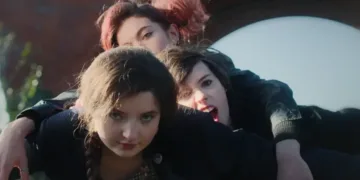
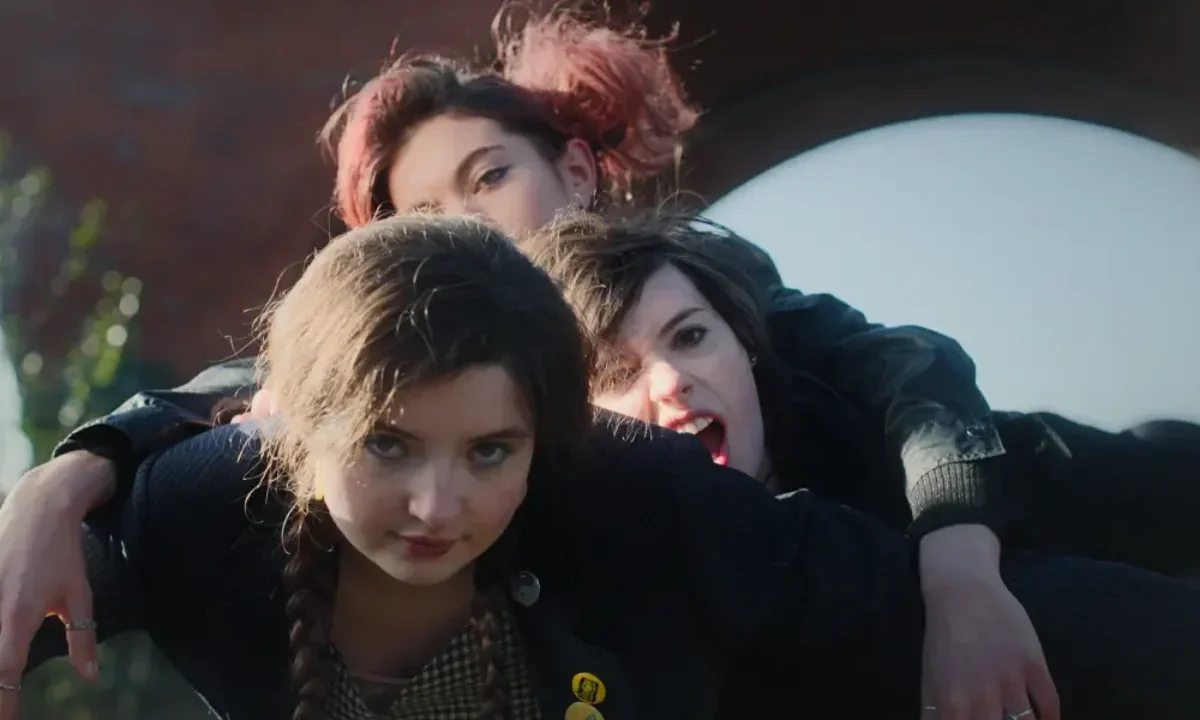
Lucy Halliday’s teenage Ann finds a different ease with Hel, played by Leila Entwistle. Their rapport has the casual assurance of people who can make plans together without first accounting for everything wrong at home. Hel’s mother drinks and her father is absent; neither girl arrives at the friendship from secure circumstances.
Yet Morley allows their shared enthusiasm to occupy the foreground. They love music, want to see bands, imagine forming one themselves. Halliday and Entwistle give those ambitions the pleasure of being spoken aloud to someone who takes them seriously. Their companionship makes an uncertain future temporarily available for discussion.
Manchester is seven miles away, and a Joy Division ticket costs £1.50. The smallness of both measurements becomes painful beside the girls’ inability to get where they want to go. Their schemes to attend a concert have the energy of an adventure conducted against a nearly empty purse.
When Tony Wilson refuses them entry, the music scene acquires a door and someone empowered to keep it closed. Morley gives longing a practical obstruction. Ann can recognize something of herself in the records and still be left outside the room where the music is happening.
Joy Division and The Fall give the soundtrack a restless pressure, with music offering a form for feelings Ann struggles to discuss. Her attempt to write lyrics and make a band with Hel extends that attachment into the possibility of answering back. Ian Curtis’s suicide then brings the music into terrible proximity with the death at home.
Ann’s refuge cannot remain untouched by what she sought relief from. Morley preserves the discomfort of that collision without making artistic sensitivity an explanation for suicide. Hel’s changing plans further disturb Ann’s imagined future, which has depended upon another person remaining beside her.
The episodic construction is often well suited to these unstable attachments. A concert scheme can absorb the girls completely without becoming the event that explains their lives; a quarrel can feel decisive until another encounter changes the emotional weather. Yet the later jumps leave some experiences insufficiently inhabited.
Hel and Dawn receive less sustained attention, and Ann’s movement into adulthood becomes harder to understand through the relationships that once gave her such presence. Their reduced place in the film may register separation, but it also deprives the later passages of opportunities to show how Ann behaves as those bonds change. The years pass with greater clarity than her developing choices.
Her musical life suffers a related thinning. We hear too little of the work she is making and spend too little time with its creation to feel the gradual emergence of a musician. The late singing sequence carries genuine force: after so much listening, concealment and frustrated access, Ann has something of her own to give voice to.
I wanted longer in the uncertain work that precedes that moment, in the attempts through which expression might become a practice. Still, the performance leaves room for a feeling the intervening years have not made easy to articulate. Ann can sing without being required to explain how much of the past she has managed to live with.
7 Miles Out had its world premiere at the BFI London Film Festival on October 17, 2026. Written and directed by Carol Morley as an adaptation of her semi-autobiographical novel, the British coming-of-age drama follows a young woman navigating grief, first love, and self-discovery amidst the vibrant 1970s and 1980s Manchester music scene after the tragic death of her father.
Full Credits
Title: 7 Miles Out
Distributor: Cannon and Morley Productions, Revolution Films
Release date: October 17, 2026
Running time: 2 hours 7 minutes (127 minutes)
Director: Carol Morley
Writers: Carol Morley
Producers and Executive Producers: Cairo Cannon
Cast: Lucy Halliday, Aidan Gillen, Gemma Whelan, Kasper Hilton-Hille, Hannah McIver, Clare Grogan, Elizabeth Meadows, Misha Mond, Daisy-Mai Foden
Director of Photography (Cinematographer): Agnès Godard
Editors: Raluca Petre
Composer: Carly Paradis
The Review
7 Miles Out
Morley finds grief inside the changing temperature of ordinary conversation, where affection can become accusation before either person is ready. Whelan’s wounded, volatile mother and the ease between Halliday and Entwistle give Ann’s world an intimacy that survives its losses. Later episodes leave her adult identity and musical development less fully inhabited, yet the film’s warmth never requires her pain to disappear. Its late singing sequence permits expression without demanding recovery.
PROS
- Whelan’s emotionally complex performance.
- Halliday and Entwistle’s natural rapport.
- Comedy and grief coexist within individual scenes.
- Intimate, convincingly lived-in period settings.
CONS
- Later time jumps leave adult Ann insufficiently developed.
- Too little attention to Ann’s creative process.