

























Cleaning a cinema is an unexpectedly persuasive reason to spend time in Odd Town. Credits roll across the screen while you work, giving a money-making chore the quiet atmosphere of a place carrying on after its main event. Your character is stranded in Saint Sectaire after a punctured tire interrupts their drive, but taking this job briefly makes staying feel agreeable. The wage has practical uses. The setting gives the work a small pleasure of its own, an opportunity to participate in local life without investigating or threatening anyone.
Outside, the streets offer another kind of invitation. Stairs, tunnels, bridges, and narrow passages stack routes above and below one another, making this compact French town feel substantial without requiring vast distances. Getting familiar with it becomes satisfying because confusion has useful limits.
Street names and maps help restore your bearings, while elevation supplies a rough memory of where things belong. You can forget the correct turning and still remember that your destination lies uphill. Shops and restaurants become reference points, gradually turning an intimidating arrangement of streets into somewhere you recognize.
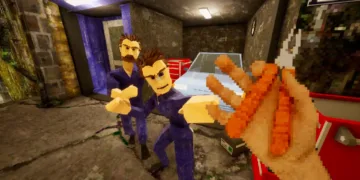
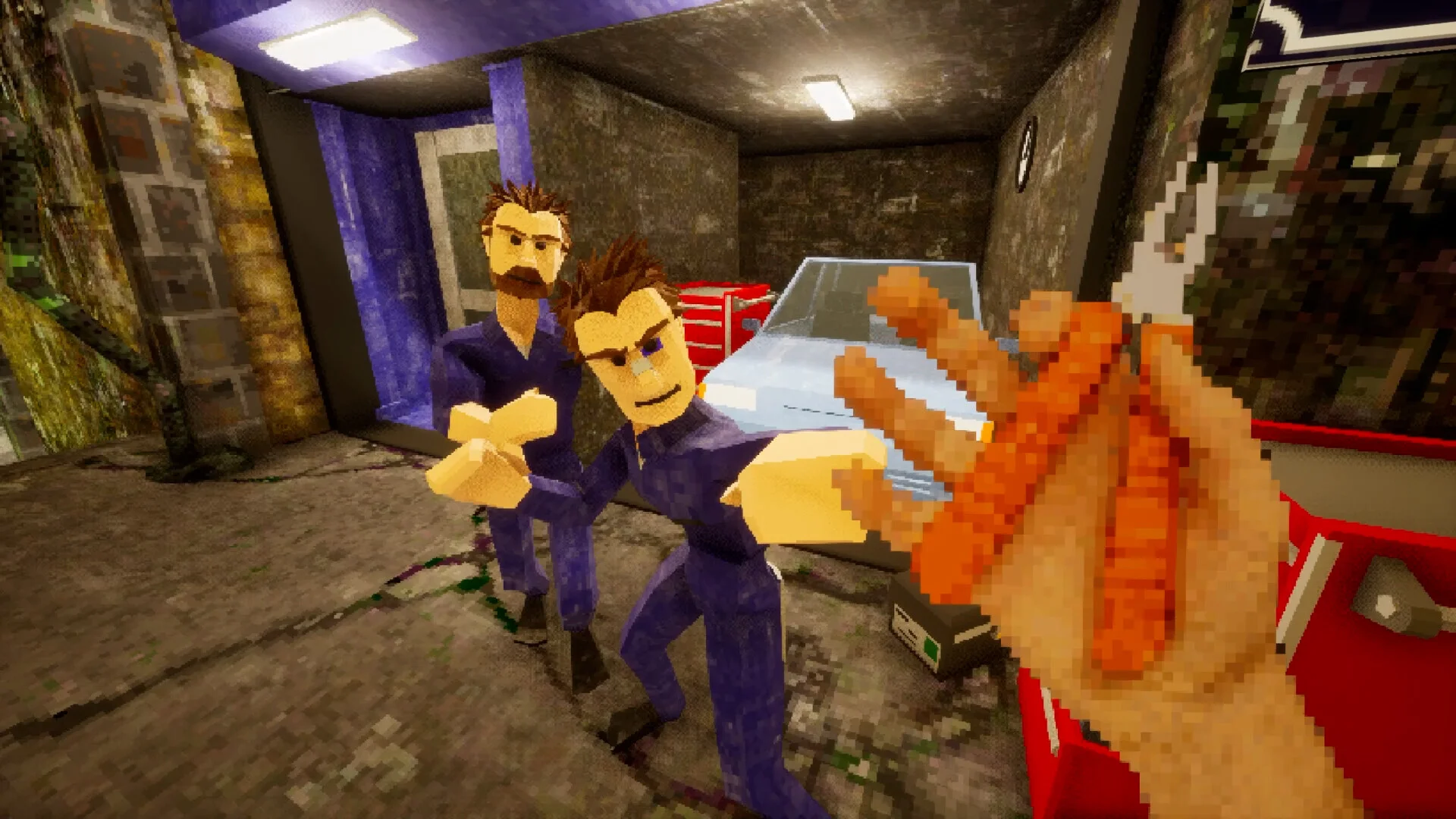
The low-poly scenery supports that affection. Dirty pixel textures and chunky buildings give Saint Sectaire a slightly shabby solidity, while windows frame views that reward looking beyond the immediate task. The heavily pixelated first-person animations have an almost filmed quality against the artificial surroundings, an appealing mismatch that makes ordinary actions feel peculiar.
There is care in how this place presents itself at different distances: the awkward gesture close to the camera, the crowded passage ahead, the skyline visible through a window. Its visual character survives familiarity because the arrangement remains enjoyable to examine.
Earning money connects that sightseeing to practical curiosity. Tools open access to places, food restores health, and clothing offers a way to shed wanted status. Baking and cinema work provide legitimate income; burglary and shakedowns accommodate less patient visitors.
These activities give an inaccessible location a place in your immediate plans. You have something to work toward, and work sends you back through streets you are learning. Robbing a shop introduces a particularly good complication: it loses its usual services the following day. The business you treat as a source of quick money may be one you later need.
That local consequence suggests a pleasingly troublesome relationship with the town. The problem is how cautiously Odd Town can make you approach it before its rules become clear. Cigarettes are used to save progress, adding another demand to a budget already covering equipment and recovery.
Three early resistance assignments introduce exploration and item use, yet understanding individual actions does not immediately explain how all these expenses and risks fit together. Curiosity becomes difficult to indulge when an experiment might cost tools, money, or the progress since your last save. The comedy of bad decisions needs enough clarity for those decisions to feel like yours.
Police pursuit intensifies that uncertainty. The officer’s speed and quick reactions leave little room to recover from hesitation, and arrest can strip away tools you worked to obtain. Jail offers an escape, but those opportunities are limited.
Changing your shirt to lose wanted status is a nicely ridiculous solution, though reaching safety and arranging that change can make the joke feel laborious. The issue is the shrinking space for improvisation. When trouble repeatedly leads to running, capture, and rebuilding your position, being a nuisance starts to feel like accepting another maintenance task.
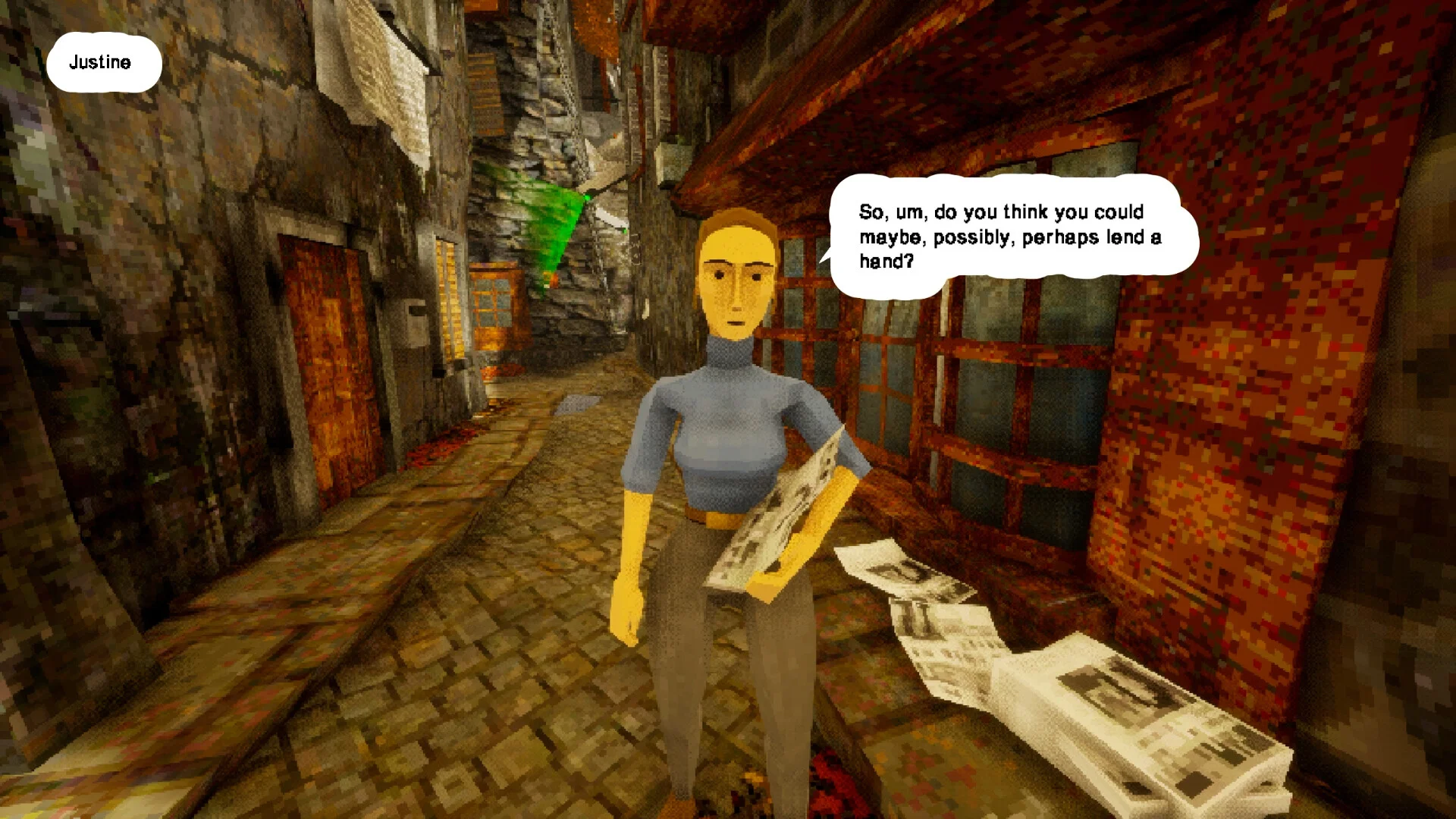
The conspiracy provides direction when the side activities begin to repeat. A payphone caller recruits you into an investigation involving disappearances, surveillance, and suspicious locals, with a small resistance team supplying assignments. Moving from a handler to another team member, then investigating or intimidating a target, keeps the adventure legible and gives exploration a purpose.
There is enough forward motion to sustain some curiosity. Yet the same sequence also limits the sense that discoveries are changing your relationship with Saint Sectaire. Another contact often means another instruction, followed by another person who needs confronting.
Its awkward inhabitants can be amusing company without becoming people whose situations matter very much. Conversations with many residents remain limited, and antagonists receive little presence before their confrontations. The mission handoffs keep emphasizing what people need you to do rather than allowing much acquaintance to develop between errands.
This is where the town’s physical familiarity exposes a weakness in the adventure. Recognizing a route or remembering a useful shop creates continuity; meeting another functional contact does less to deepen the stay. The conspiracy gives you reasons to enter places, but its narrow development produces little emotional return on that accumulated familiarity.
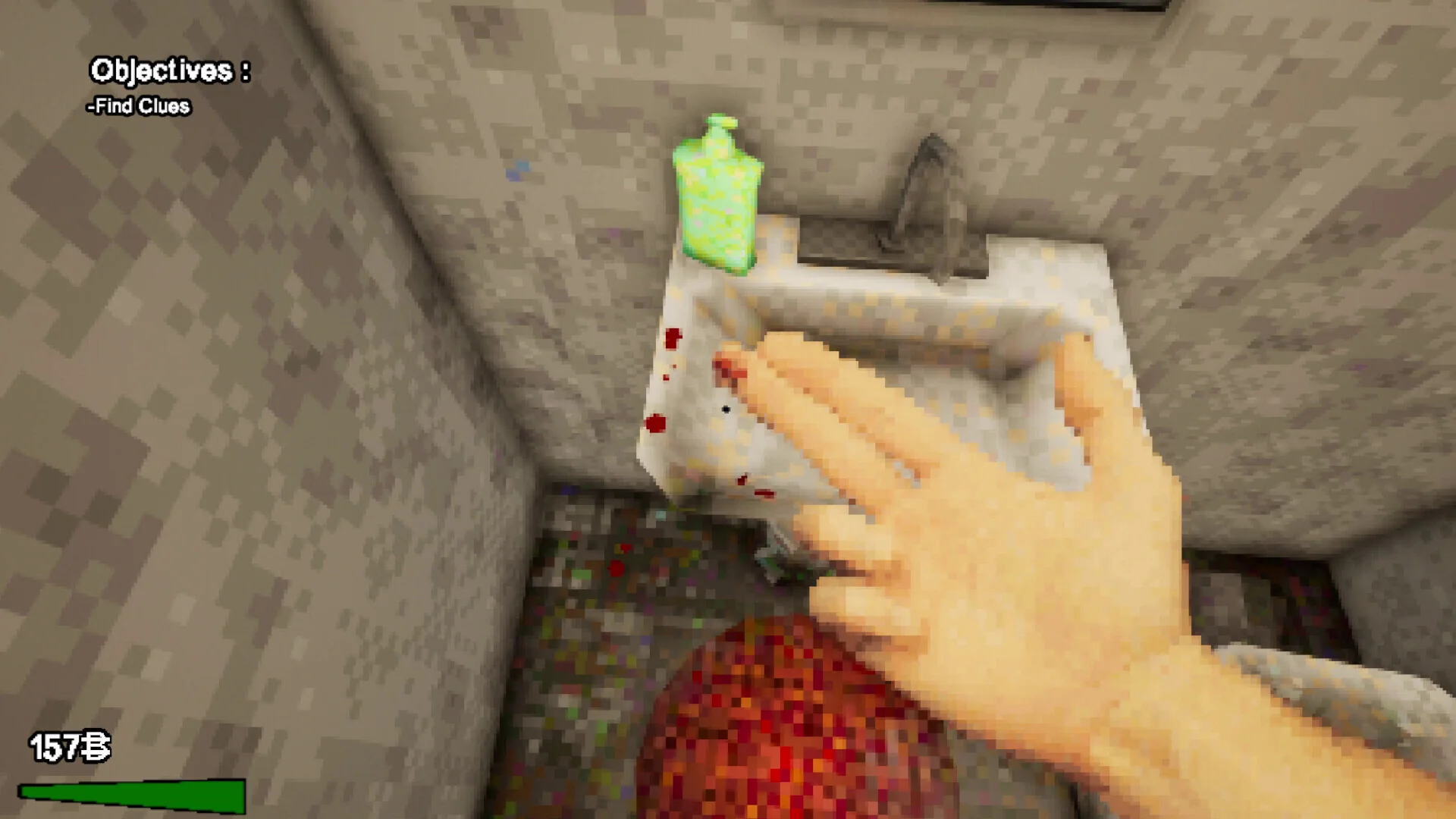
Violence makes those errands harder to enjoy. Left punches, right punches, and kicks supply the basic vocabulary, with neither fist landing directly in the middle of the screen. The fighting offers little clear encouragement to move beyond hurried combinations of attacks.
Eating to recover health or reloading allows another attempt, but repetition needs informative feedback if it is going to build confidence. Here, surviving a confrontation can feel detached from understanding it. That uncertainty is especially wearing in a game where defeat also threatens the resources that make exploration possible.
The late missions then demand quicker reactions and greater precision from these rough interactions. Invisible barriers restrict movement, and the room to pause, assess, and find a comfortable approach contracts. This changes the quality of the frustration.
Earlier, learning the streets gives uncertainty a satisfying response: look around, check a map, remember the slope, try another route. The final stretch increasingly asks for immediate execution without comparable support from the controls or encounter design. A failed attempt sends attention back to timing and positioning, leaving the unanswered mystery waiting while the player tries to get through the same obstruction again.
The Review
Odd Town
Saint Sectaire earns affection through its tangled streets, shabby scenery, and the simple pleasure of working a cinema shift. Odd Town gives you reasons to feel at home, then makes staying increasingly tiring. Unclear rules discourage experimentation, its residents rarely develop beyond their assignments, and late precision challenges strain the rough controls. There is a small adventure worth appreciating here, especially for players who enjoy learning a place, but that affection has to survive too much repetition and recovery.
PROS
- Compact, layered town rewards growing familiarity.
- Expressive pixelated visuals and first-person animations.
- Ordinary jobs create a welcome sense of local life.
- Shop burglaries carry practical consequences.
CONS
- Unclear systems make experimentation costly.
- Repetitive errands limit discovery.
- Thin characterization weakens the conspiracy.
- Rough combat struggles with late precision demands.