




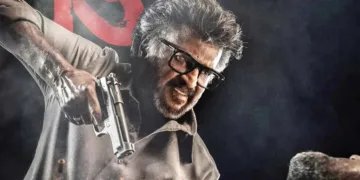


















Studio Trigger and CD Projekt Red have given a substantial part of their return to Night City to a mercenary who can no longer perform his old job. Weak Kingsley survives cyberpsychosis, loses his cyberware, and discovers that his reputation offers little protection without the machinery that earned it. People recognize him; he still gets beaten down. Cyberpunk: Edgerunners 2 spends time with the uncomfortable aftermath of technological power, when the body remains alive but the identity built around its capabilities has become unusable.
Talia Yang approaches the same problem from another direction. Her extensively modified body is deteriorating, yet modification is also bound up with her efforts to exercise control over her life. Her corporate parents and the chrome-obsessed Maelstrom gang offer competing forms of authority around that body.
Returning to parental supervision cannot simply stand in for freedom, and further enhancement cannot guarantee it either. Placing Talia beside Weak makes the season’s interest in autonomy considerably sharper: losing access to technology and pursuing it can leave people trapped within the same economy of physical worth.
Their relationship gives that argument a human scale. Weak takes on the task of retrieving Talia at the request of Avida, his former lover, and finds a purpose in protecting someone after losing the abilities that once defined him. There is tenderness here, but the rescue premise carries its own difficulty.
Talia’s wish to determine what happens to her body remains significant even when her choices frighten the people around her. The writing is strongest when her vulnerability and her resistance coexist, leaving Weak with someone to care for whose desires cannot be reduced to his need to feel useful.
This is a worthwhile use of the anthology format. The ten-episode continuation, directed by Kai Ikarashi, retains connections to the earlier series and Cyberpunk 2077 while shifting attention toward different experiences of their shared world. Familiarity enriches those connections without being an entrance requirement.
The production allows an established property to accommodate physical decline, dependence, and compromised care instead of supplying another version of David Martinez’s ascent. A franchise can apparently recognize its setting without requiring every protagonist to apply for the same vacancy.
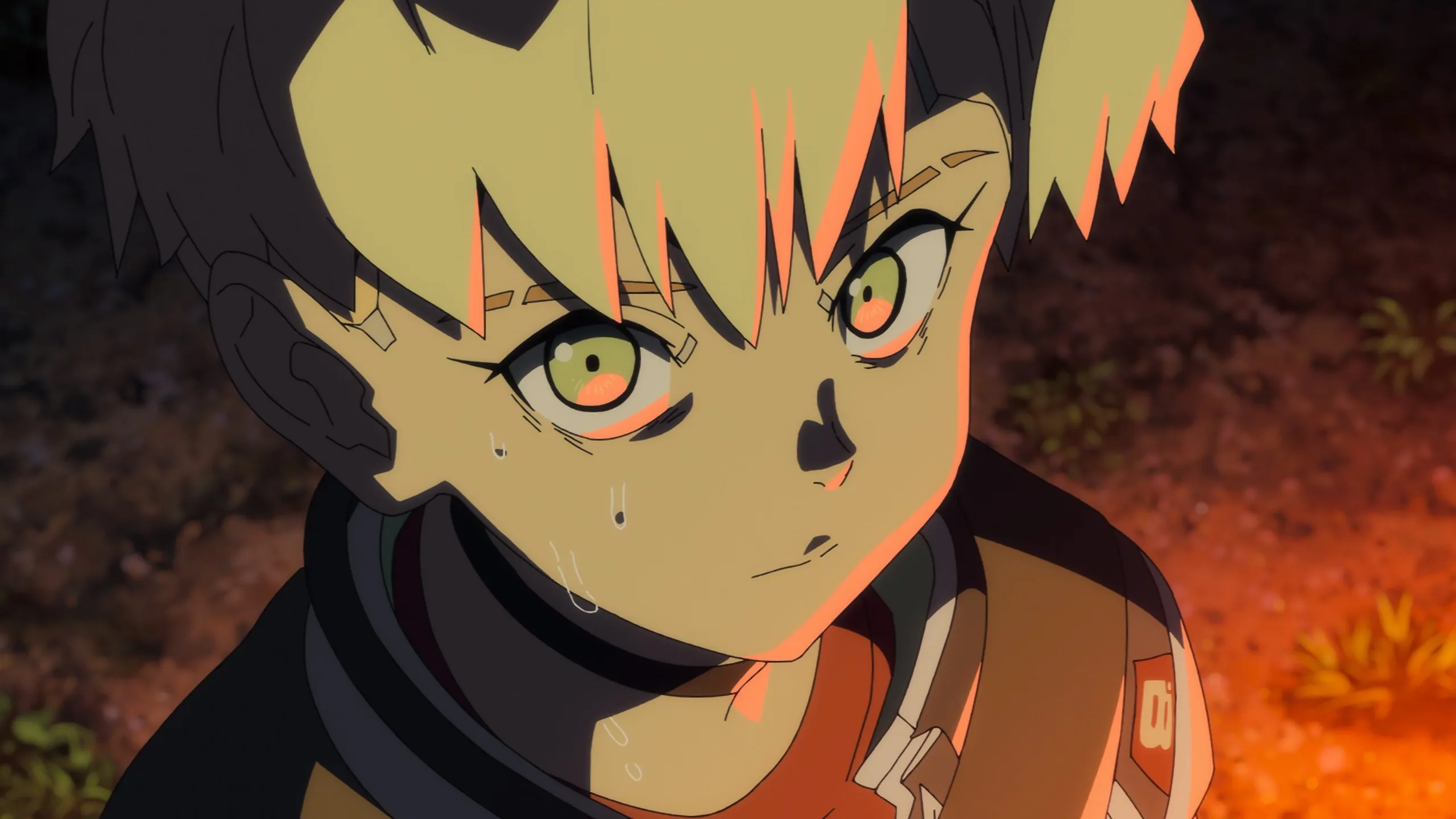
The other principal pairing brings the politics of representation into the story itself. Twelve-year-old Roman Carax wants to make films, favoring images selected and arranged by a filmmaker over braindances, which reproduce recorded experience from a participant’s perspective.
His preference concerns the value of somebody directing attention. Yet the series gives this young defender of artistic choice an economically compromised beginning: he accepts a job filming Maelstrom in exchange for a camera. Before he can establish his principles, he needs equipment, and the people offering it have their own uses for his labor.
Roman’s footage subsequently becomes a way for others to encounter themselves. Talia can recognize beauty in a body otherwise surrounded by anxiety, judgment, and demands for intervention. That is a meaningful change in the terms through which she is seen.
D, a netrunner seeking revenge for the destruction of his nomad community, finds a different attraction in recorded images of his actions. The camera can encourage his sense of power. These effects prevent Roman’s filmmaking from becoming a simple argument that art makes everyone better. An image can restore someone’s self-regard or feed an appetite already becoming destructive.
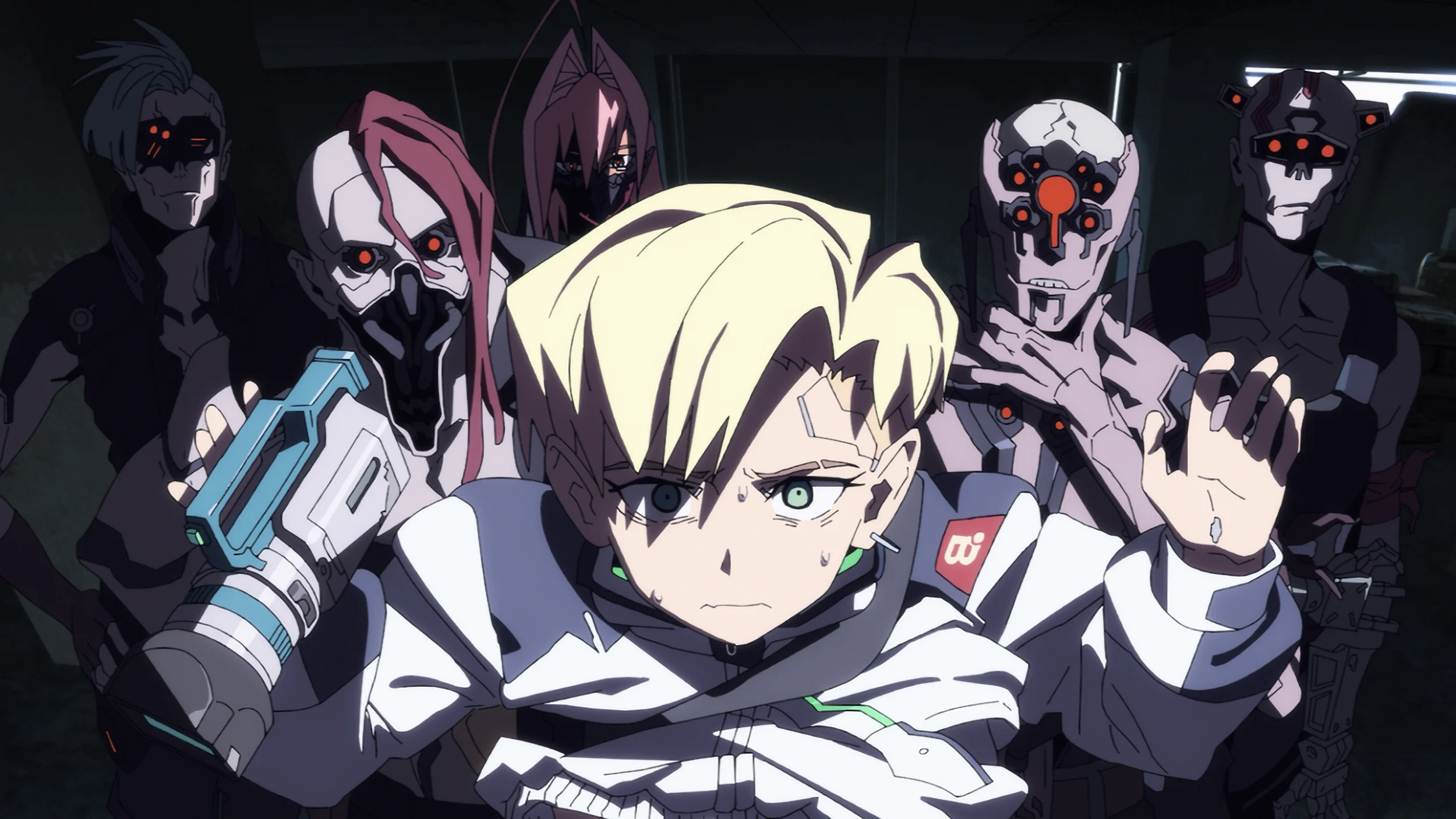
There is an appealing tension in a game adaptation taking such an interest in authored images. The series draws on recognizable material while insisting that the manner of looking matters. Ikarashi’s direction supports that interest through retro textures, sharp silhouettes, and passages where color and framing shift with a character’s perception. Minimalism can interrupt the visual density, giving shadows and shapes expressive weight. The animation’s changing styles make Night City feel subject to interpretation rather than available as a single, stable franchise picture. Its people do not all inhabit the same version of their surroundings.
Roman’s importance to this argument does not entirely solve the limitations of his characterization. His recordings affect Talia and D, so dismissing him as a passive observer would overlook something the story actually dramatizes.
Still, his position as witness and connector sometimes supplies a clearer function than a personal direction. The season gives him strong beliefs about filmmaking and places him close to consequential events, but the effects of his camera on other people can become easier to grasp than his own development. The child artist carries a substantial portion of the show’s thinking about art.
The separation between the two pairings creates a related structural problem. D and Roman spend much of the season apart from Weak and Talia, allowing each strand its own concerns but postponing the work of making their relationships matter together.
Their thematic connections are legible early: bodily control, the search for purpose, the uses people make of one another. Dramatic continuity develops less evenly. When the threads converge, the season has considerable plot information and emotional distance to negotiate within the same stretch of television. A shared corporate enemy explains their proximity faster than it establishes intimacy.
Capri, the powerful digital entity drawn into D’s revenge, pushes the series toward a different scale. Her abstract pink-and-green appearance gives power an unstable visual form beside the vulnerable, heavily modified human bodies. Through her, questions of digital consciousness connect personal vengeance to the property’s larger mythology.
The animation makes that expansion exhilarating, particularly as bodily destruction becomes increasingly extravagant. Yet D’s access to greater power complicates his purpose without automatically deepening it. The spectacle is easiest to admire when it makes dangerous capability visible; its implications for revenge require attention beyond the size of the damage.
That late expansion also places pressure on the smaller experiences the anthology has made room for. Corporate schemes and intersecting dangers give the separate stories a common destination, but the final stretch moves quickly through material that could sustain longer encounters between these people.
Weak’s care and Roman’s image-making have already established distinct ways of responding to exploitation. As the conflict grows, there is less time to watch those responses affect one another, or to remain with Talia as someone whose struggle over her body continues inside the emergency everyone now shares.
Cyberpunk: Edgerunners 2 arrives on Netflix on October 20, 2026. Produced by Studio Trigger and CD Projekt Red, the animated cyberpunk series presents a brand new standalone story set in Night City, following a fresh group of outcasts trying to survive in a futuristic metropolis obsessed with technology and body modification.
Where to Watch Cyberpunk: Edgerunners 2 Online


Full Credits
Title: Cyberpunk: Edgerunners 2
Distributor: Netflix
Release date: October 20, 2026
Rating: TV-MA
Running time: 25 minutes per episode (10 episodes)
Director: Kai Ikarashi
Writers: Masahiko Otsuka, Bartosz Sztybor
Producers and Executive Producers: Bartosz Sztybor, Rafał Jaki, Hiroyuki Imaishi
Cast: Valeria Rodriguez, Kentaro Tone, Koki Uchiyama, Akari Kito, Clancy Brown, Nazeeh Tarsha, Kimoy Lee
Director of Photography (Cinematographer): Shunsuke Saida
Editors: Masato Yoshitake
Composer: Akira Yamaoka
The Review
Cyberpunk Edgerunners 2
Cyberpunk: Edgerunners 2 gives its franchise room to examine dependence, bodily autonomy, and the power of images. Weak and Talia’s relationship supplies tenderness, while Roman’s filmmaking complicates the distinction between recognition and exploitation. Trigger’s expressive animation makes these concerns visually tangible. The ensemble connects less persuasively on an emotional level, and escalating spectacle leaves some personal development unfinished. This is a thoughtful expansion of Night City whose intimate encounters often carry greater weight than its converging conspiracies.
PROS
- Nuanced treatment of bodily autonomy
- Tender relationship between Weak and Talia
- Filmmaking given meaningful, contradictory consequences
- Expressive shifts in animation style
CONS
- Roman’s personal development feels limited
- Uneven emotional connections between storylines
- Revenge gains spectacle faster than depth