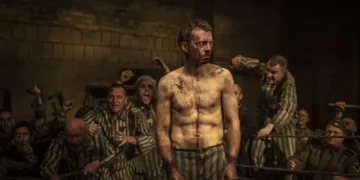























Teddy’s conversation with Janek about boxing’s origins and the first Olympics gives him an identity that imprisonment cannot entirely erase. He knows something, and a younger person wants to hear it. In Maciej Barczewski’s Polish drama The Champion, Tadeusz “Teddy” Pietrzykowski is a Warsaw boxer imprisoned at Auschwitz in 1940, played by Piotr Głowacki with an attention to physical competence that also shapes these quieter exchanges. Talking about the sport places him within a history extending beyond the camp. For a little while, his relationship with Janek has the ordinary shape of knowledge passing between generations.
The camp’s boxing contests subject that inheritance to a different use. German officers want entertainment; Teddy needs the additional food he can earn by fighting. His fellow prisoners acquire an interest in the bouts that exceeds the guards’ intentions, especially when he shares his bread. Barczewski gives the same activity several meanings without making any of them cancel the others. The spectators can recognize a Polish prisoner’s skill, but the authorities still determine the circumstances under which he performs. Even the food distributed after a victory originates in an arrangement controlled by his captors.
Głowacki makes that arrangement credible through the distinction between strength and expertise. Teddy’s evasive movement in his first contest allows him to survive an encounter that physical condition alone would make difficult to believe. Avoiding a punch becomes evidence of a life lived before imprisonment, of habits the body retains after its circumstances have changed. The extended passages of fight choreography let us follow his movement rather than accept an edited assertion of prowess. Barczewski’s confidence in the actor pays off here: the boxing has a readable physical logic, giving the prisoners’ investment in Teddy something tangible to attach itself to.
This is also where the film finds a language that travels easily beyond its Polish subject. Preparation, successive opponents, punishment, and sporting achievement belong to a familiar international boxing narrative. Barczewski uses that recognition to bring viewers close to an individual whose historical circumstances may initially seem inaccessible.
The training montage offers the pleasure of watching ability become purposeful, while the orchestral score encourages anticipation and release around the contests. Familiarity has a practical dramatic value. We can understand what Teddy is trying to do with his body before the film asks us to consider what others need his success to mean.
His reluctance to continue fighting complicates that accessible progression. Teddy questions the activity’s sporting purpose when food and medicine are its rewards; Janek urges him to consider what the bouts give the prisoners watching. The disagreement puts pressure on the usual connection between an athlete’s desire and an audience’s encouragement.
Here, other people’s need can become another demand placed upon an already exhausted man. Jan Szydłowski gives Janek an appealing sincerity, and their earlier conversation about boxing helps the persuasion feel personal. Still, the boy carries considerable responsibility for explaining Teddy’s communal importance, leaving less space for interests that exist independently of his older companion.
The sharing of food develops their attachment with greater economy. Teddy’s care becomes an action with an immediate cost, since he gives away something he needs himself. Such exchanges are persuasive enough to make some of the screenplay’s larger emotional gestures feel unnecessarily arranged. Barczewski is less assured when extending sympathy toward the officers.
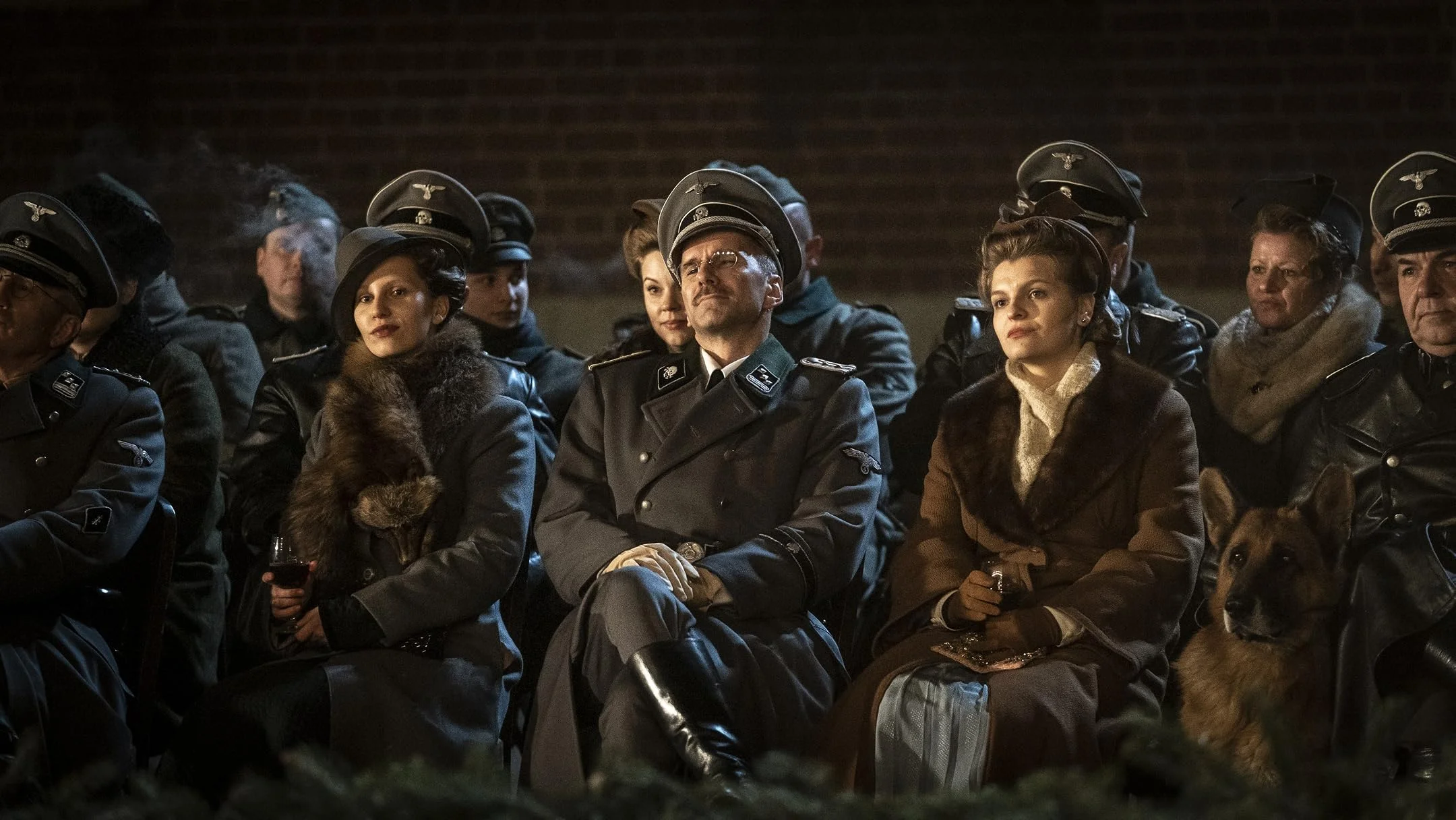
The death from typhus of an officer’s child introduces private grief. The subplot relies heavily on the immediate recognition that a parent has lost a child, but the child has received too little attention for the relationship to support the weight suddenly placed upon it. The objection lies in the preparation: grief arrives before the film has given us much experience of the people grieving.
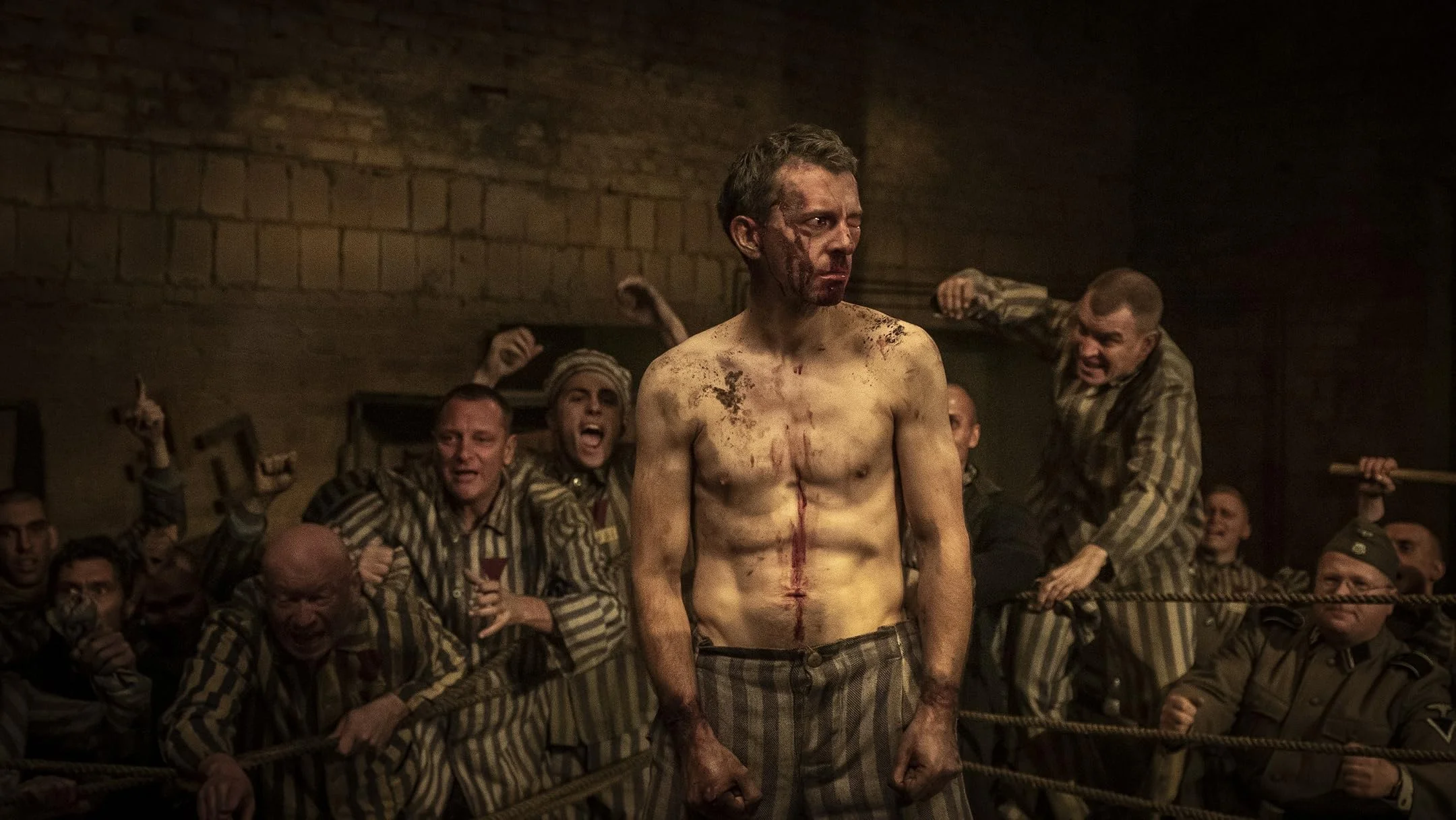
Witold Płóciennik’s largely desaturated photography gives those spaces a visual continuity. The bouts do not suddenly enter a separate, glamorous sporting world; the depleted surroundings remain part of their appearance. That continuity helps resist the suggestion that athletic achievement can suspend the camp’s conditions. The score is more willing to offer emotional release, swelling with the satisfaction of a victory.
The image and music pull in slightly different directions, making it possible to feel the prisoners’ excitement while remaining conscious of the environment in which it occurs. At times the musical encouragement settles the response too readily, particularly when the situation itself permits so little reassurance.
The treatment of killing through offscreen cries preserves a harsher limit on that reassurance. Those voices give a presence to people whose suffering Teddy’s story cannot contain. They also change the scale on which his achievements can be understood. A bout has an opponent, a duration, and an outcome that spectators can recognize. The violence heard elsewhere in the camp offers none of that sporting order. Barczewski’s decision to let sound carry these passages keeps the film from treating Teddy’s visible struggle as a sufficient account of everyone around him.
The punishment Głowacki absorbs in the final Auschwitz bout brings these competing scales into the same performance. His exertion sustains the immediate drama of a boxer trying to prevail, while his vulnerability makes the prisoners’ dependence upon him uncomfortable to watch.
They have invested in an ability the officers have permitted them to witness, under conditions those officers can still control. The contest gives the spectators a shared occasion to recognize Teddy’s skill and support him. It also requires them to watch another prisoner expose his body to injury so that such recognition can take place.
The Champion premiered at the Gdynia Film Festival before being released theatrically on August 27, 2021, and is available to stream on platforms including Netflix. Directed by Maciej Barczewski, the Polish historical sports drama tells the true story of pre-war boxing champion Tadeusz “Teddy” Pietrzykowski, who fights for survival and becomes a symbol of hope for fellow inmates after arriving at the Auschwitz concentration camp in 1940.
Where to Watch The Champion (2020) Online










Full Credits
Title: The Champion (Polish: Mistrz)
Distributor: Galapagos Films, Parkland Entertainment, Well Go USA Entertainment
Release date: August 27, 2021
Running time: 1 hour 31 minutes (91 minutes)
Director: Maciej Barczewski
Writers: Maciej Barczewski
Producers and Executive Producers: Krzysztof Szpetmański, Leszek Starzyński
Cast: Piotr Głowacki, Jan Szydłowski, Grzegorz Małecki, Marcin Bosak, Marcin Czarnik, Marek Kasprzyk, Piotr Witkowski, Marian Dziędziel
Director of Photography (Cinematographer): Witold Płóciennik
Editors: Krzysztof Szpetmański
Composer: Bartosz Chajdecki
The Review
The Champion
Głowacki gives The Champion the physical credibility its difficult premise demands. Barczewski carries a Polish prisoner’s experience into the familiar language of boxing cinema, finding genuine feeling in practiced skill, shared food, and companionship. Thinly developed supporting relationships and an overly reassuring score sometimes simplify that experience. The strongest passages preserve the uneasy relationship between sporting achievement and the authorities who permit it.
PROS
- Głowacki’s convincing physical performance
- Clear, sustained fight choreography
- Sporting tradition grounded in personal relationships
- Offscreen sound preserves suffering beyond Teddy’s story
CONS
- Janek’s role leans heavily on supporting Teddy
- Officer’s family tragedy lacks dramatic preparation
- Score sometimes offers reassurance too readily