








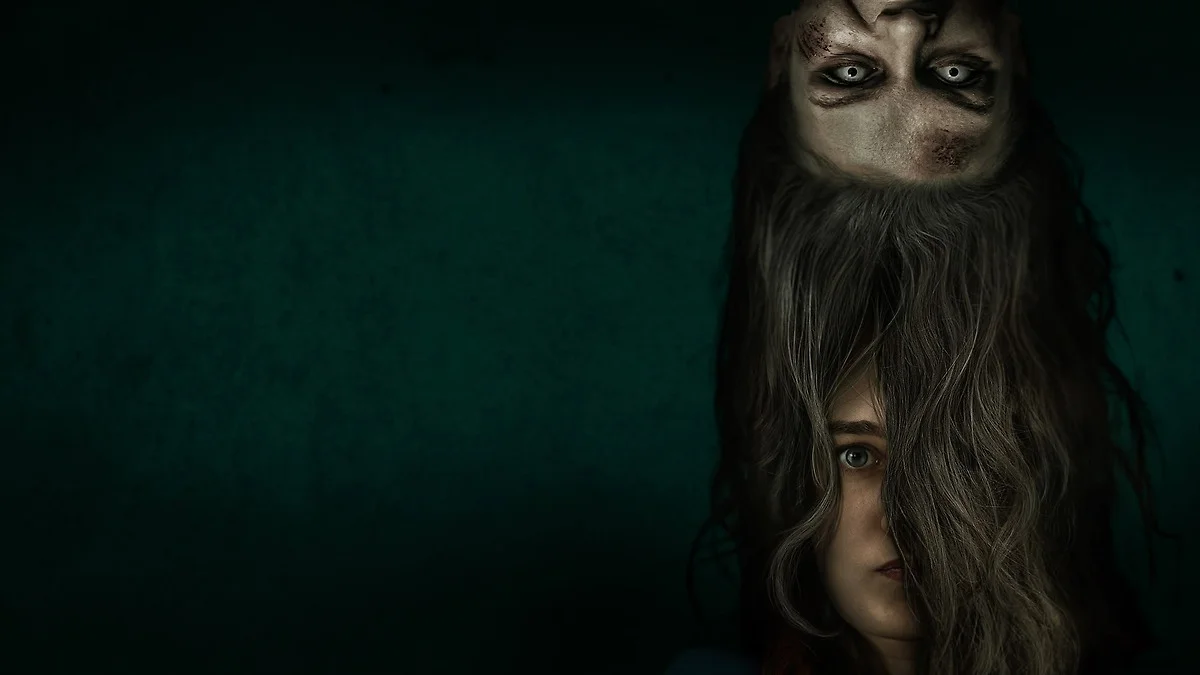

Olivia and Aurora’s childhood pact places a considerable burden on whoever survives: if one dies, the other must try to bring her back. Aurora dies. Olivia keeps her promise, with supernatural complications that make the agreement look rather poorly drafted. Bruce Wemple’s My Best Friend’s Dead finds Olivia living in isolation with an attachment she has refused to surrender. The resurrection gives that refusal a dangerous physical presence. Death has interrupted the friendship, yet recovering it leaves Olivia with very little room to live.
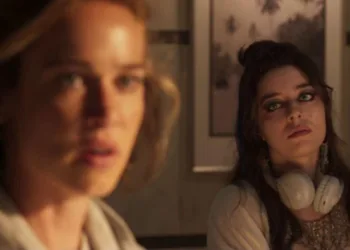
That restriction becomes concrete when Olivia reconnects with a high-school acquaintance and meets Amanda, played by Catherine Daddario. Aurora responds to the possibility of another attachment with jealousy, making Amanda a target. Someone outside the original promise now bears its cost.
This is where the film’s account of grief acquires moral friction: Olivia’s desire to preserve a relationship exposes another person to harm. Amanda’s presence also changes the meaning of Aurora’s companionship. Affection begins to resemble a condition imposed on Olivia, with her continued isolation serving as evidence of loyalty.
Caitlin Duffy makes Olivia’s dependence understandable without turning every expression of distress into an appeal for pity. Her performance rests on depletion. The subdued anguish suggests someone whose capacity to imagine another life has worn thin, which gives Aurora’s continued presence a persuasive emotional use.
Access to Olivia’s inner monologue brings the audience close to that need. We receive the survivor’s account of her predicament while watching its consequences spread beyond her. The film gives us good reasons to sympathize with Olivia, then introduces a person whose safety makes that sympathy uncomfortable.
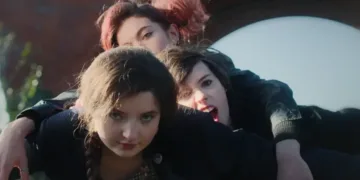
Anna Shields, who also wrote the screenplay, supplies the instability on the other side of the relationship. Her Aurora moves between tenderness, vulnerability, manipulation, and threat, keeping affection available even as possessiveness becomes harder to ignore. The chemistry between Shields and Duffy matters because departure must involve a genuine loss.
An entirely repellent Aurora would make Olivia’s attachment seem like a screenwriting convenience. Shields preserves enough warmth to explain why Olivia remains susceptible, while the jealousy directed toward Amanda exposes how little freedom that warmth permits. Comfort and coercion occupy the same relationship, sometimes without an obvious change of emotional register.
The comedy complicates this arrangement usefully. Olivia’s troubled inner narration and the film’s lightly self-aware treatment of its premise make the pair tolerable company, even appealing company, when a solemn treatment could have reduced them to illustrations of unhealthy attachment.
The humor allows some pleasure to survive inside the friendship. That pleasure has an ethical function: it keeps the audience invested in something whose dangers are becoming plain. Wemple’s modest horror-comedy can be breezy without making Olivia’s predicament negligible. At roughly 80 minutes, it also gives this small circle of dependency a suitably compact dramatic space.
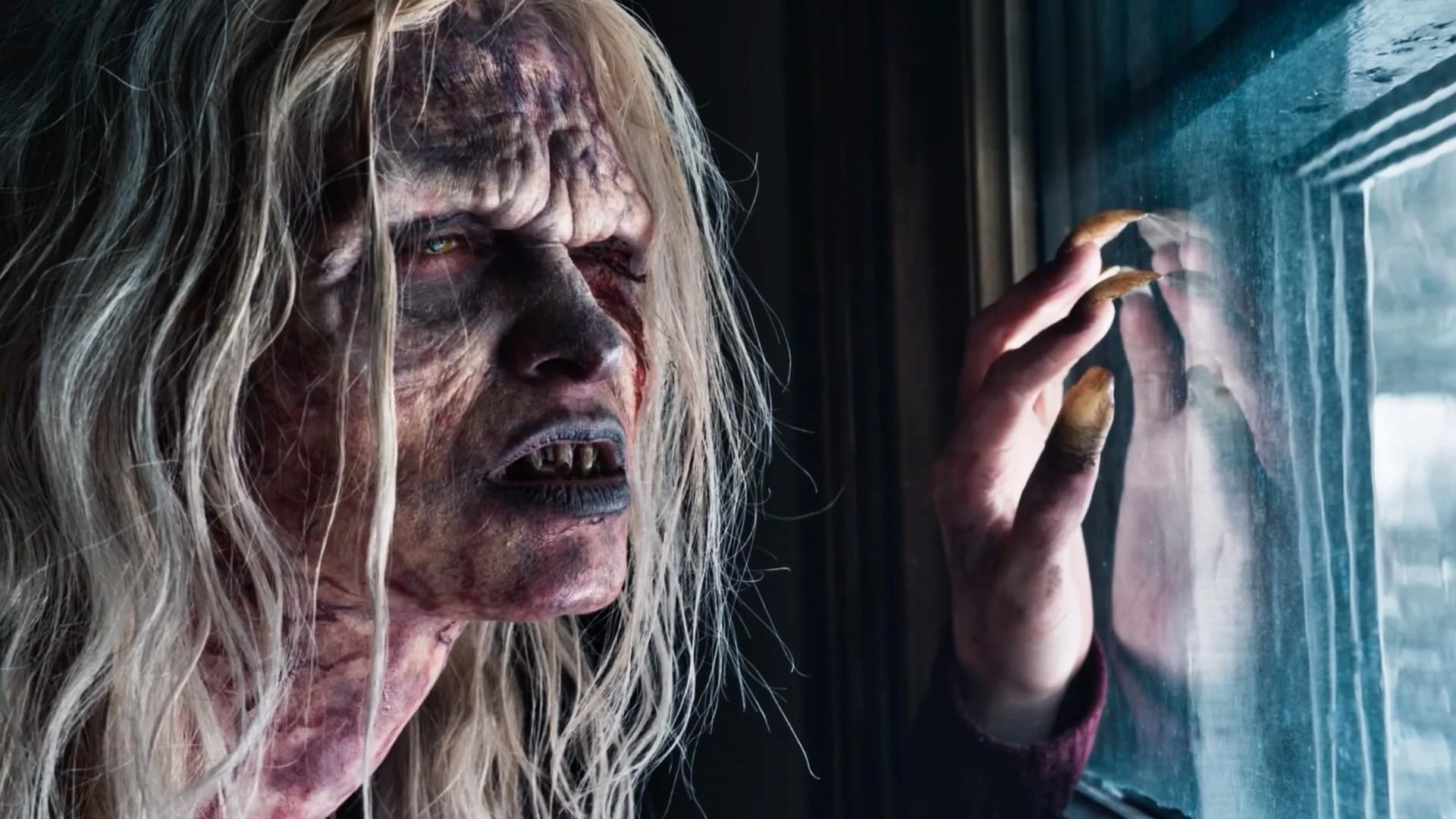
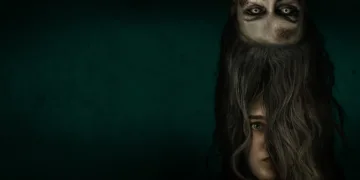
Jared Balog’s practical creature and makeup effects push the damage into visible form. Their rough physicality belongs to a film operating with limited resources, but the work has a purpose beyond demonstrating what can be accomplished cheaply. A demonic body gives the threat an existence independent of Olivia’s explanations.
Her grief may organize our access to the story; it cannot contain everything that story puts before us. The makeup gives destructive attachment an ugly material presence, forcing the intimate drama to accommodate danger that other people can encounter. Its effectiveness comes from that intrusion, rather than technical polish.
The supernatural explanation is less assured. Aurora’s return, the demonic presence, and the danger surrounding them remain loosely connected, leaving the emotional situation easier to read than the mechanism producing it. Some uncertainty suits a story filtered through a distressed survivor.
Still, ambiguity about causation becomes a limitation when the film asks us to consider responsibility. Olivia attempts the resurrection, and Aurora reacts possessively to Amanda, but the relationship between a person’s desires and the force acting through that person needs firmer definition. Additional lore would earn its place by clarifying those choices.
Shields’s performance makes this imprecision especially noticeable. The movement from affection to menace suggests an intimate knowledge of how to keep Olivia close, while the demonic element offers a possible explanation that could diminish Aurora’s agency.
Those possibilities carry different moral weights. Being unable to release someone, choosing to control her, and becoming the vehicle for a hostile force are distinct predicaments. The film gives them a convincing shared face through Shields, then leaves their separation uncertain. Her vulnerable moments retain their pull, even when it is difficult to judge how much trust they deserve.
My Best Friend’s Dead was released on digital and VOD platforms by Lionsgate on May 26, 2026, where it is available to stream on services like Amazon Prime Video. Directed by Bruce Wemple, the horror-comedy follows a young woman in a remote town who attempts to resurrect her murdered best friend, accidentally unleashing a malevolent demon that terrorizes their isolated farmhouse.
Where to Watch My Best Friend’s Dead (2023) Online








Full Credits
Title: My Best Friend’s Dead
Distributor: Lionsgate Films
Release date: May 26, 2026
Rating: R
Running time: 1 hour 21 minutes (81 minutes)
Director: Bruce Wemple
Writers: Bruce Wemple
Producers and Executive Producers: Mason Dwinell, Phillip B. Goldfine, Roger M. Mayer
Cast: Caitlin Duffy, Anna Shields, Grant Schumacher, Catharine Daddario, Chance Gabriel, Dylan Grunn
The Review
My Best Friend's Dead
My Best Friend’s Dead makes restored companionship feel appealing enough to explain Olivia’s dependence, then lets Aurora’s jealousy expose its cost. Duffy and Shields give the friendship warmth worth losing, while the practical effects make its dangers physical. The supernatural rules remain too loose to clarify where Aurora’s affection ends and the hostile force begins. That uncertainty limits an otherwise engaging horror-comedy whose intimacy gives its modest means a persuasive purpose.
PROS
- Persuasive chemistry between Duffy and Shields.
- Grief and possessiveness grounded in character.
- Effective physical creature makeup.
- Humor preserves the friendship’s appeal.
CONS
- Loose supernatural rules blur Aurora’s agency.