



























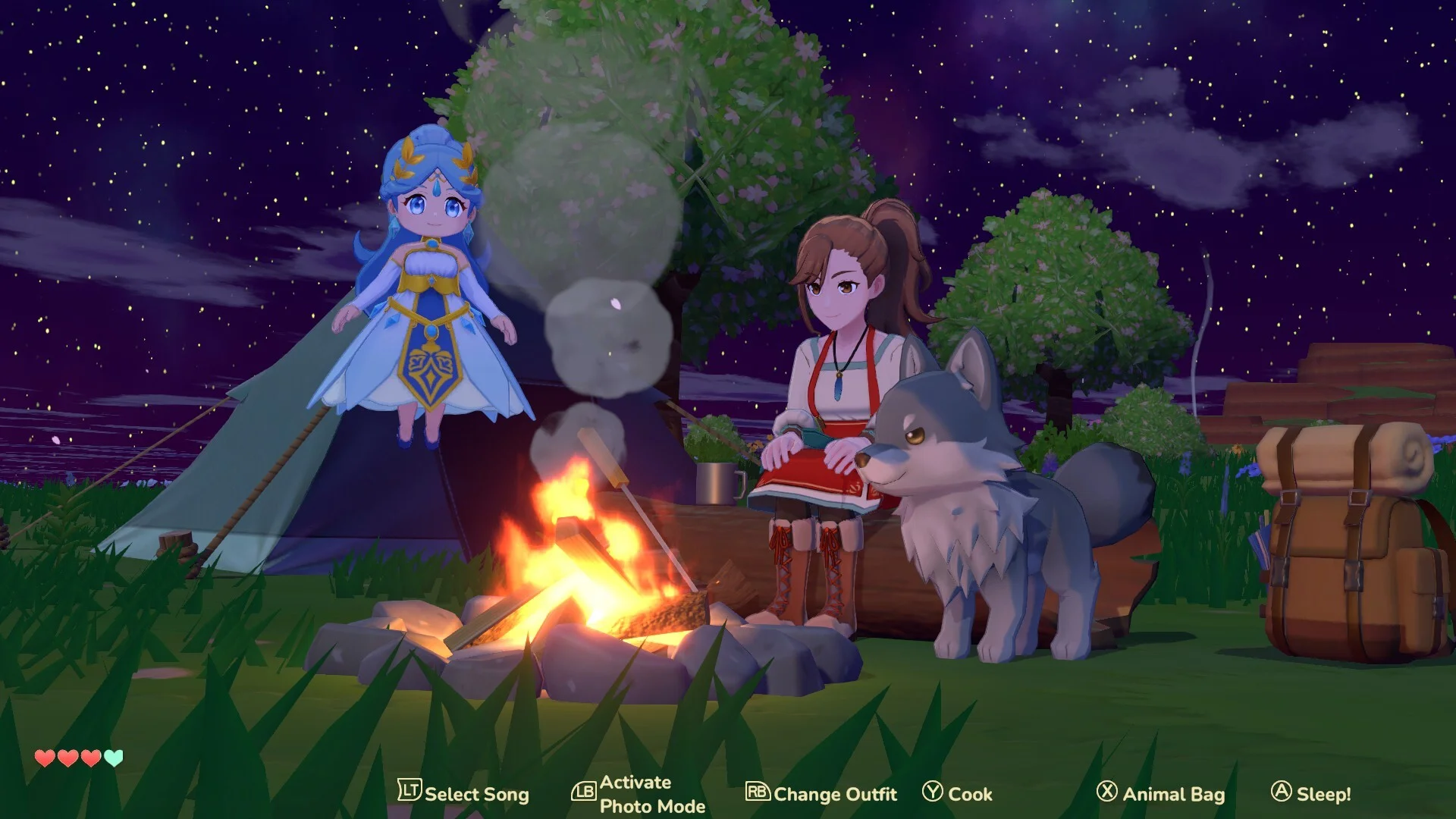
Rescuing the cockatiel in Harvest Moon: Echoes of Teradea eventually changes the economics of leaving home. The delivery service lets an owl carry items back to the farm for a fee; the cockatiel provides a free delivery function. That gives an early act of kindness a practical consequence across later expeditions.
Carrying discoveries home becomes easier, and keeping the bird nearby acquires a purpose beyond collecting an agreeable little follower. Animal care feeds directly into the decisions involved in exploring, with benefits that remain useful after the introductory rescue has passed.
Those decisions become sharper around hostile wildlife. Wolves and other intimidating animals drain stamina, and being overwhelmed can send the player home without their carried items. Food provides a distraction, careful approaches allow opportunities for petting, and repeated attention can turn a threat into a companion.
Other animals learn abilities through use, helping with larger jumps, difficult terrain, or discouraging predators. There is no combat system to master here. Preparing food and choosing an animal supply the means of handling danger, making familiarity with the world and its inhabitants valuable forms of protection.
Exploration gives those preparations somewhere worthwhile to lead. Maplehill’s high mesas and the Eye of the Storm islands create destinations that demand some attention to routes and supplies. Away from the roads, rewards include rare animals, forage, chests, and statues offering Power Wisp Fruits.
Some statues require interpreting a photographic clue or finding torches to light, introducing small changes of method between stretches of travelling and gathering. Spending the fruits on stamina or practical abilities then improves subsequent outings. Discoveries can change what the player is equipped to attempt next, keeping the map from functioning merely as a large collection checklist.
Farming uses a similar division between straightforward actions and decisions with longer consequences. Contextual tool selection handles tilling, planting, and watering without constant equipment changes. Repeated inputs remain, though the business of selecting the correct implement largely disappears.
The planning sits in soil quality, climate preferences, fertilizer, and the higher-grade produce required by certain requests. Repeated cultivation depletes a field, while fertilizer and leaving it unplanted help restore its condition. The Soilbot makes that condition visible. These systems give the easy controls something substantial to operate: maintaining reliable production requires attention beyond putting another seed in the ground.
The competing uses for that production are especially effective. Food can become income, a gift, help with befriending an animal, a request delivery, or fuel for an expedition. Early stamina limits make these allocations restrictive, particularly because sprinting consumes energy. Mounts, meals, and permanent stamina improvements gradually ease the pressure.
An upgrade therefore changes the value of other resources: needing fewer meals for personal recovery leaves produce available for other purposes. Cooking and crafting draw directly from storage, removing repeated inventory transfers while preserving the decision about what to make. The farm remains involved in exploration even during stretches when travelling feels like the main attraction.
Camping extends that freedom, allowing an outing to continue without a return to bed. The tropical islands that cannot be left after 7 p.m. give staying overnight a specific geographical function. Teradea is less accommodating toward players whose preferred project is designing a home.
Farm plots have fixed layouts, and interior decoration relies on swapping furnishings or using a limited set of spaces. Production and preparation offer considerably greater room for experimentation than construction. The player can develop an efficient routine without gaining equivalent freedom to rearrange the place where that routine begins.
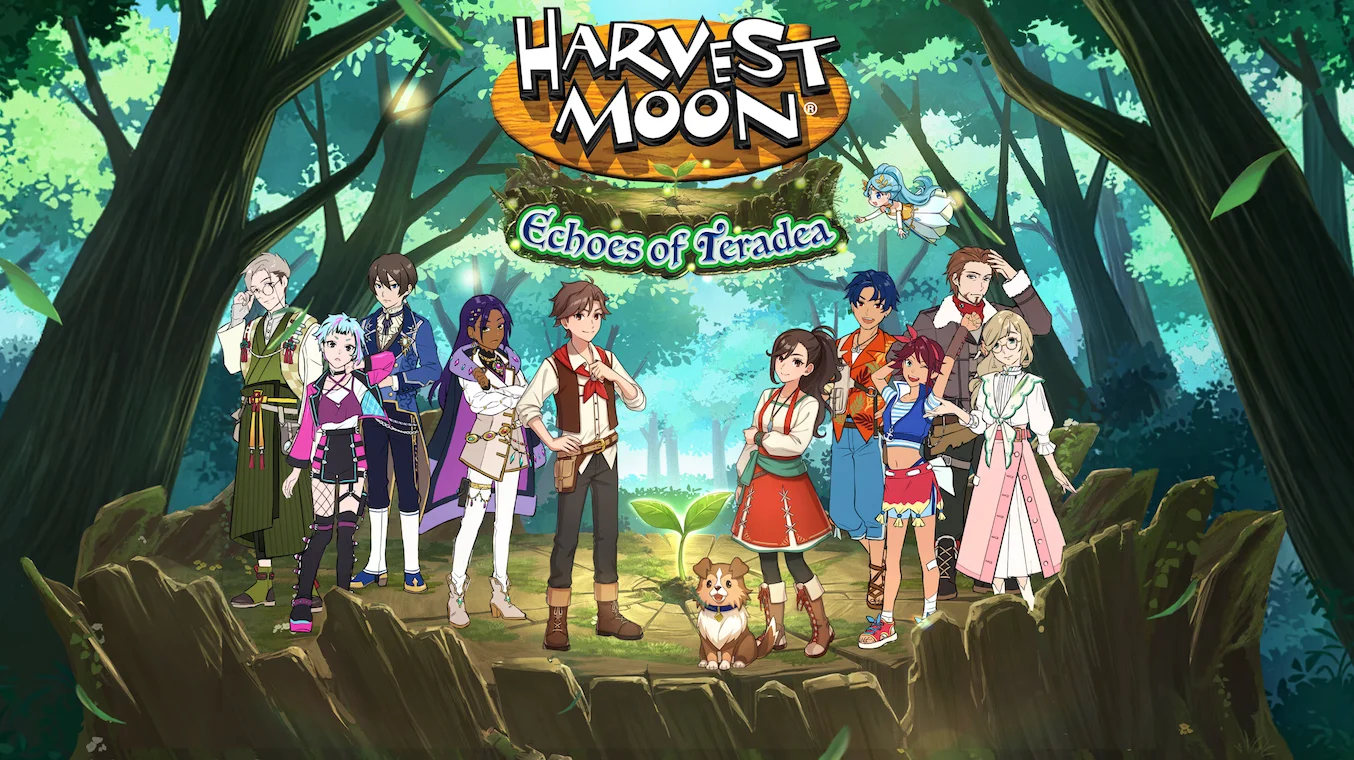
The restoration story makes those routines useful to other people. Starting in Bloomfield, the player helps the Harvest Goddess revive regional Spirit Trees while mist and hostile wildlife restrict movement. Requests earn regional Happilia, linking farming, gathering, cooking, and other activities to recovery.
Bloomfield provides a particularly readable chain: a remembered preparation of warm milk helps awaken Lupo, and accumulated Happilia restores the Spirit Tree of Spring. Tidewind connects its restoration to relief from destructive storms. Deliveries gain a visible destination beyond their immediate reward, although placing a shipwreck rescue and a child’s flower request within the same task economy can flatten their very different levels of urgency.
Personal relationships progress on a slower schedule. Conversation, gifts, and completed requests fill musical-note indicators, with character records revealing preferences as familiarity grows. That transparency makes attention purposeful rather than dependent on guessing the correct present. Dating, however, opens after the main story’s credits, leaving players interested primarily in courtship waiting behind the restoration campaign.
Ten candidates are available regardless of the player character’s gender, but access and pacing are separate considerations. The conversations themselves also suffer from the protagonist’s stiff, repeated gestures, which make exchanges visually mechanical even as the friendship indicators record steady progress.
Elsewhere, the information supporting a decision becomes much less dependable. The journal allows three tracked quests, yet a marker can point toward the recipient without explaining where the required resource comes from. Requests can also depend on other tasks or later story progress without communicating that dependency clearly.
Around Bloomfield, the surrounding mist can suggest that every obstruction needs clearing before departure, despite an available exit. These are costly ambiguities in a game organized around planning days. Searching for an ingredient can be satisfying; searching without knowing that its prerequisite remains unavailable gives the player little basis for choosing another task.
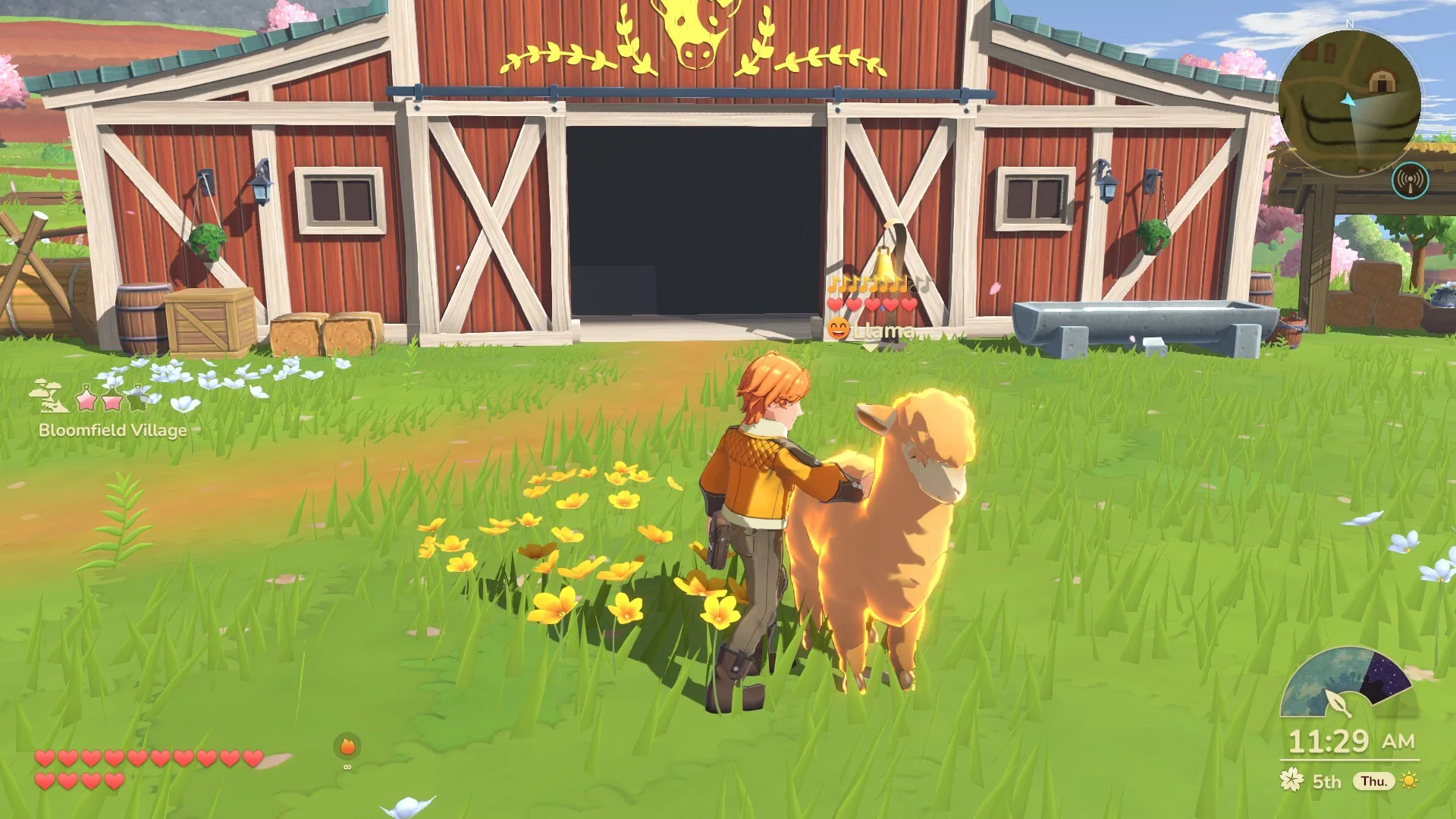
Movement occasionally creates a similar mismatch between visible possibility and permitted action. Ladders, vines, and designated jumping spots give the vertical landscape routes to discover, but small changes in elevation can stop passage that appears perfectly manageable.
Finding the intended route then replaces a seemingly obvious step down. Warp statues reduce long trips without always resolving the final stretch, including the walk back toward home in Bloomfield. Camping helps with distant expeditions, while awkward local access remains a recurring expense paid in time and stamina.
Technical interruptions impose further costs. Building transitions can bring three-to-five-second loading pauses, and closely spaced scenes suffer when entering and leaving interiors repeatedly interrupts their momentum. Switch 2 performance can also falter during movement and weather effects, with shadow problems making terrain harder to read.
The severity varies, so the evidence does not support treating every outing as equally disrupted. Reported crashes raise a separate concern with the save schedule: automatic saves concentrated around sleeping and waking can leave much of a day unprotected. Manual saving becomes necessary insurance when an evening failure can erase the crops tended, requests completed, and discoveries made since morning.
The Review
Harvest Moon Echoes of Teradea
Harvest Moon: Echoes of Teradea makes care productive across an appealing network of systems. Animal friendships change exploration, farming supports expeditions, and village requests lead to visible restoration. Discovering how these activities support one another provides its strongest satisfaction. Unclear prerequisites and restrictive movement sometimes undermine that planning, while technical interruptions and unreliable automatic saving demand caution. There is considerable pleasure in preparing for another outing, provided the game communicates what is possible and preserves the work already done.
PROS
- Animal companions meaningfully change exploration.
- Accessible farming retains resource-management depth.
- Varied discoveries fund useful upgrades.
- Everyday tasks contribute to regional restoration.
CONS
- Unclear quest requirements and progression dependencies.
- Restrictive jumping and awkward warp placement.
- Limited farm and home customization.
- Loading interruptions and Switch 2 performance issues.
- Reported crashes expose gaps between automatic saves.