



























Chiara and Jay have barely met before Masterplan changes the terms of their acquaintance. Their flirtation at a mansion gives way to the discovery that they share a father, the veteran thief Roger Cavendish, who arranged their meeting. That should require some adjustment in the way they speak to each other. Yet Chiara continues making suggestive jokes about Jay’s “hammer” and proposes strip poker. The revelation alters their biographies much faster than it alters the scenes they occupy.
Roger wants his newly assembled offspring to help steal the Mona Lisa from the Louvre. He has recruited a cybersecurity specialist and an explosives expert through a criminal jobs platform, turning a family reunion into a staffing exercise. Their reasons to distrust him are built into the invitation.
There is room here for cooperation complicated by resentment, or for professional reliance to develop ahead of personal affection. Thomas Vincent’s film hurries into bickering and preparation, treating the family connection as an established source of comedy before giving these strangers much chance to discover what it means to them.
Stanley Tucci makes Roger’s confidence an effective starting point. His cultivated English diction and untroubled composure suit someone accustomed to controlling an encounter before anyone else understands its purpose. When Roger reads The Single Dad’s Survival Guide, the joke briefly gives that control a useful limit.
The expert planner needs elementary instruction in dealing with his children. It is an appealing opening for the performance, but the writing rarely develops the uncertainty beneath the gag. Tucci can make Roger entertaining company; establishing him as a father requires responses and adjustments that a polished delivery cannot supply.
Victor Belmondo and Simona Tabasco bring enough energy to keep the exchanges moving. The difficulty is the assignment those exchanges give them. Jay and Chiara’s continued sexual teasing preserves the rhythm of their initial encounter while the story asks us to accept a sibling bond developing alongside it.
The discomfort could have become a subject in itself. Instead, the dialogue mostly proceeds as if the revelation has supplied permission for a different set of jokes. Their ability to trade lines keeps individual moments buoyant, but the relationship struggles to acquire a recognizable direction.
The early demonstrations of criminal skill provide a clearer model of development. Jay uses small explosives to open a safe and blast an escape through a wall. A specialty becomes understandable through a task, a method, and a visible consequence. Later, Roger narrates a visualization of the proposed Louvre robbery over brisk music, and an onscreen countdown establishes a short preparation window. The film supplies the familiar pleasures of watching specialists assemble a difficult operation. Its trouble lies in defining that difficulty closely enough for their solutions to register as achievements.
Retina-scan cloning and “VR intrusion” give Chiara impressive capabilities, while a conveniently available tunnel assists the physical side of the operation. An extravagant caper can accommodate all of this. What weakens the suspense is how little purchase we get on the restrictions governing such tools. Knowing that someone can defeat a security measure creates a different kind of anticipation from knowing the conditions under which they can do it. With the technological limits loosely drawn, complications tend to invite another capability rather than make us reconsider the plan we have been shown.
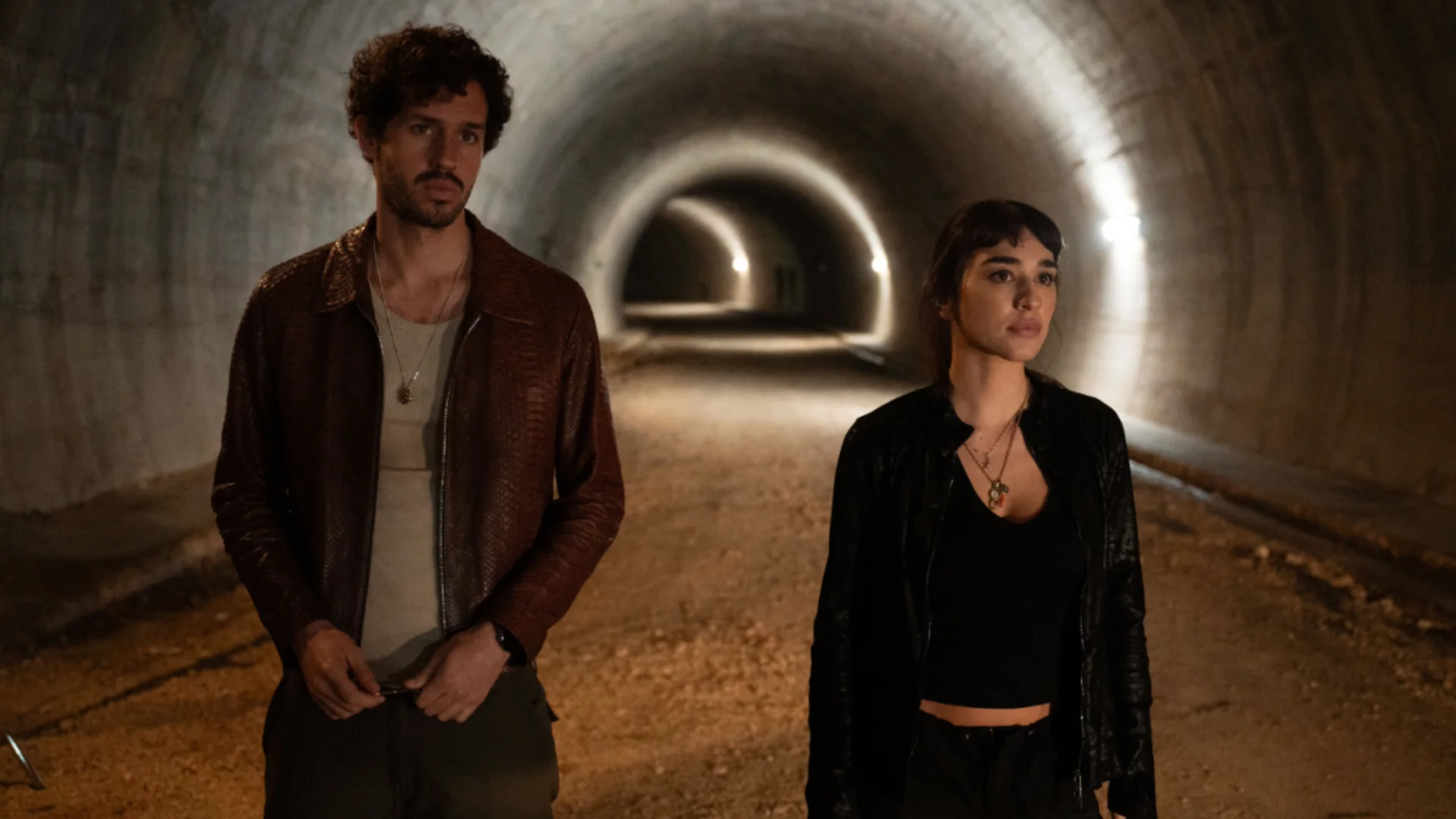
Vincent keeps the preparation visually active through scouting disguises and frequent swipe transitions. Those flourishes place Masterplan close to the stylish ensemble caper associated with Ocean’s Eleven, although the small crew gives its family friction particular importance.
The cutting helps move us between tasks; it cannot give those tasks weight by itself. Likewise, the countdown records passing time without making each lost day feel costly. There is plenty happening, but limited space to understand how a practical setback changes the crew’s choices or how working together changes their opinion of Roger.
The final stretch does improve the supply of narrative interest. After the principal robbery, further reversals change the apparent meaning of earlier events, reopen questions of trust, and give Chiara’s hacking renewed importance. There is pleasure in having to reconsider an arrangement that seemed settled.
The film becomes livelier as an interpretive exercise, even as its chain of double-crosses grows increasingly farcical. The placement is frustrating: much of the preparation and execution has already passed before this shifting perspective becomes the principal attraction. Quick scene changes have kept the film moving without bringing its strongest uncertainty forward.
That uncertainty places a fresh demand on the family story. Each revelation about what can be trusted asks Jay and Chiara to reassess a man whose recruitment already gave them reason for suspicion. The attempted emotional resolution needs some accumulated understanding to survive those reassessments.
Yet the earlier scenes have spent so much time preserving banter and assigning jobs that affection has had little opportunity to become credible. As the late plotting keeps rearranging the terms of their cooperation, the children are still being asked to accept Roger’s place in their lives before the film has developed their own reasons for keeping him there.
Masterplan premiered globally on Amazon Prime Video on October 16, 2026. Directed by Thomas Vincent, the action comedy-thriller follows a legendary master thief who recruits two talented young strangers for an ambitious Louvre heist targeting the Mona Lisa, only to stun them by revealing they are long-lost siblings and he is their father.
Where to Watch Masterplan (2026) Online


Full Credits
Title: Masterplan
Distributor: Amazon Prime Video
Release date: October 16, 2026
Running time: 1 hour 49 minutes (109 minutes)
Director: Thomas Vincent
Writers: Giacomo Durzi, Alessandro Fabbri, Alberto Vignati
Producers and Executive Producers: Not publicly specified
Cast: Stanley Tucci, Victor Belmondo, Simona Tabasco, Mark Ivanir, Bruno Bilotta, Philippe Uchan, Eliott Margueron
The Review
Masterplan
Masterplan gives Stanley Tucci an agreeable opportunity to manipulate everyone around him, then neglects the relationships that should make those manipulations matter. The sibling revelation changes the setup without sufficiently changing the dialogue, while loosely defined technology weakens the robbery’s suspense. Late reversals provide welcome interest, but the film has already spent too long preparing a theft and too little time developing the family expected to give it emotional weight.
PROS
- Tucci’s composed authority suits Roger’s manipulative charm.
- Belmondo and Tabasco keep individual exchanges lively.
- Late reversals invite fresh interpretations of earlier events.
CONS
- Family relationships receive insufficient development.
- Poorly defined technological limits weaken suspense.
- The strongest narrative uncertainty arrives too late.