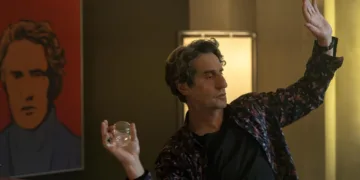





























Ulises Verón is supposed to accept an award for being good at his job. Instead, the therapist played by Ricardo Darín questions the value of the profession that has gathered to celebrate him. It is a useful reversal of the usual career tribute: public recognition arrives precisely when private confidence has failed. In Hernán Goldfrid’s Therapy Done Right, that loss of faith becomes permission to try something increasingly invasive. Ulises decides that talking to patients has accomplished too little, and begins arranging changes in their lives himself.
The film gives this decision an appealing practical momentum. When a patient describes her unhappy marriage, Ulises approaches her husband in a restaurant and encourages him to leave. The patient’s satisfaction then supplies the reassurance he needs.
Notice how neatly the sequence recruits the audience: an apparently difficult problem produces a direct intervention, followed by a grateful response. We can see why Ulises finds this satisfying without accepting his right to make the decision. Goldfrid establishes a comic situation in which success keeps postponing the question of consent.
A blocked novelist gives this confidence somewhere dangerous to go. Martín Bouchard, played by Diego Peretti, drinks before writing and reviews the results sober the next morning. Alcohol has become entangled with his understanding of his own talent, damaging his life while retaining its privileged place in his working routine.
Ulises’s solution is to enter Martín’s home secretly and replace the writing with pages of his own. The novelist wakes to find evidence of an ability he thought he had lost. His therapist has manufactured that evidence, then left him to interpret it as recovery.
The best comic development comes when Martín dislikes the substituted prose. He brings his complaints to Ulises, unaware that the person listening wrote the material under discussion. This is dramatic irony, the gap between what an audience knows and what a character understands, put to wonderfully awkward use.
Martín thinks he is assessing his own work; Ulises has to absorb an unsuspecting critic’s objections while maintaining his therapeutic authority. His response is to revise. For a while, treatment proceeds according to the patient’s literary preferences, and the doctor becomes an author trying to satisfy a reader who cannot know he exists.
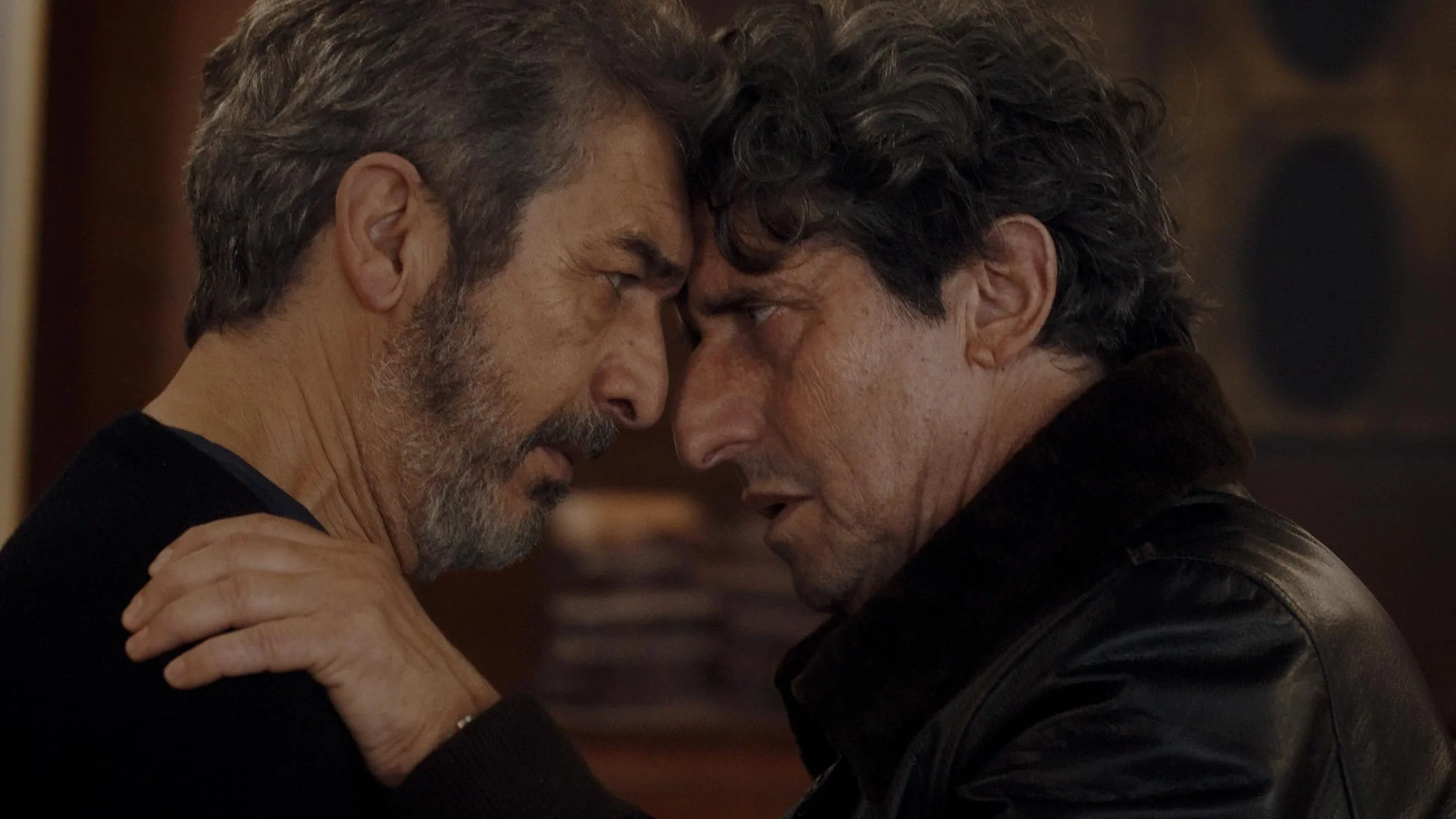
I enjoyed how this arrangement changes the stakes of their conversations. A report of progress can flatter Ulises twice, confirming his confidence as a therapist and rewarding his ambitions as a writer. A complaint can injure both. Darín’s assured manner suits a man who keeps giving himself reasons to continue, even as his personal investment becomes difficult to disguise. The revision process exposes something that his professional explanations leave conveniently vague: he wants his own work to succeed. His patient’s supposed breakthrough gives him an audience and keeps him protected from direct scrutiny.
Peretti makes Martín an effective partner because the writer retains an evaluating intelligence throughout the deception. He can need help and still have firm opinions about the quality of the help he believes he has given himself. His criticism prevents the relationship from settling into a simple arrangement of clever manipulator and grateful beneficiary.
Later, his distress at discovering that the achievement belongs to someone else gives the scheme an emotional consequence. Being able to publish a successful novel offers little reassurance if he cannot trust it as evidence of his ability. The actors make these shifts between consultation, collaboration, and rivalry the film’s chief pleasure, even when the screenplay leaves their deeper frustrations lightly sketched.
Ulises’s daughter Paula, played by Antonia Bengoechea, offers another way to examine his confidence. She works alongside him, yet he repeatedly avoids dealing with her. Beside his eager involvement in patients’ private affairs, that avoidance is telling: he chooses the relationships in which he can claim expertise and determine the terms of assistance. Paula could keep testing that preference through ordinary contact, away from the excitement of his schemes. Her diminishing presence leaves this contradiction with limited development, just as the central deception begins generating increasingly elaborate trouble.
The publication of Martín’s book marks a change in how the film organizes its consequences. Earlier, the interventions build upon one another, allowing us to follow Ulises’s growing conviction. After this apparent triumph, reversals arrive with much less room between them.
Successes become failures, and his professional position deteriorates at a speed that weakens our sense of the individual steps. Fast storytelling can create panic, but here the acceleration also makes the screenplay’s change of direction conspicuous. Ulises goes from having his methods repeatedly validated to having them dismantled before the film has fully developed what each failure means to him.
The late suspense complications offer activity and some playful surprises, but they pull attention toward escape from exposure. That shift reduces the space available for the unease already present in the manuscript exchanges. Those scenes made a small professional conversation carry two incompatible understandings of the same achievement.
The eventual rescue depends on a more convenient rearrangement of circumstances. A comic resolution is welcome, and Ulises hardly needs a punishment calibrated to every transgression. What feels missing is time with the damage his apparent success has done to Martín’s ability to recognize his own work.
The ending’s ease is especially noticeable because the novel leaves the two men with different problems. Ulises knows he can produce something that satisfies the writer whose career he has commandeered. Martín knows that public approval can attach to his name without confirming anything about his talent.
The final maneuver gives them a way to proceed, but the deception has changed the meaning of their future consultations. Any assurance Ulises offers now comes from someone who has already demonstrated how convincingly he can manufacture proof.
Therapy Done Right premiered on digital streaming platforms on October 16, 2026. Directed by Hernán Goldfrid, the Argentine dark comedy-drama follows a disillusion psychoanalyst who abandons conventional methods to help an uninspired novelist, inadvertently pushing every professional and personal boundary.
Where to Watch Therapy Done Right (2026) Online


Full Credits
Title: Therapy Done Right (Spanish: Vi får avrunda här / Terapia alternativa)
Distributor: Netflix, Star distribution
Release date: October 16, 2026
Running time: 1 hour 37 minutes (97 minutes)
Director: Hernán Goldfrid
Writers: Emanuel Diez
Producers and Executive Producers: Ricardo Darín, Chino Darín, Federico Posternak
Cast: Ricardo Darín, Diego Peretti, Antonia Bengoechea, Inés Efrón, Andrea Politti, Eugenia Alonso, Miriam Odorico, Carlos Santamaría, Gonzalo Urtizberéa
Director of Photography (Cinematographer): Rodrigo Pulpeiro
Editors: Andrés Quaranta
Composer: Roque Baños
The Review
Therapy Done Right
Darín and Peretti make the secret collaboration in Therapy Done Right a pleasure to untangle. The manuscript exchanges turn therapeutic confidence and literary vanity into sharp comedy, with each man misunderstanding what the other needs. Goldfrid loses some of that precision as reversals accelerate and the ending supplies an easy escape. An enjoyable pairing carries a film whose best ideas receive less development than its plot complications.
PROS
- Darín and Peretti’s shifting comic rapport
- Clever dramatic irony in the manuscript exchanges
- Early interventions establish Ulises’s growing confidence
CONS
- Rushed transition from success to professional collapse
- Paula’s relationship with Ulises receives limited development
- Convenient resolution softens the deception’s consequences 1.