


























Hunting Captain Price as Gaz in “Gone Dark” changes the meaning of a familiar Call of Duty assignment. The target inside the dark hotel is the man who previously supplied direction and reassurance. Price warns Gaz and Ghost to back away, then makes clear that their history might not stop him killing them. Modern Warfare 4 gives the player no authority over that rupture. It gives them the controls on the other side of it, turning trust accumulated across earlier games into apprehension about the next encounter.
Price’s own missions make his anger playable through proximity. Timed blocks create openings for punches and knife attacks, with heavy impacts keeping the violence uncomfortably close. His pursuit of Makarov and the Archer after Soap’s death becomes a sequence of physical acts performed by the player. The system is simple, yet its limited vocabulary suits a man increasingly committed to forcing answers from people. That simplicity becomes a weakness in the final confrontations, where brief, undemanding fights supply too little resistance for their dramatic importance.
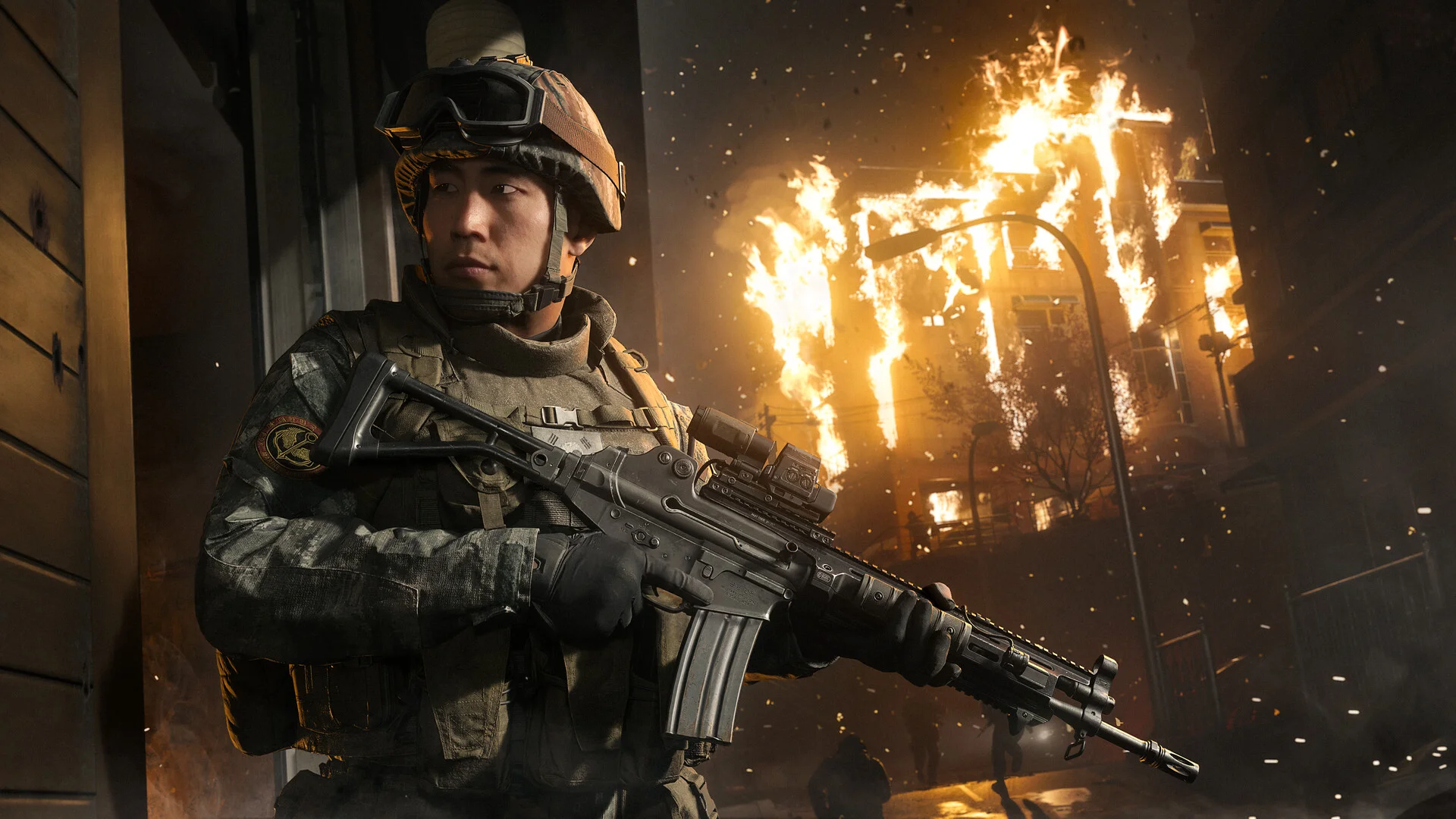
The campaign’s other major perspective belongs to Park Hyun-jun, a South Korean conscript confronting an invasion he never chose to fight. In “Mayhem,” squad banter gives way to bombardment, desperate movement through the city, and a stadium defense against arriving enemy troops. The changing demands establish Park’s position efficiently. Survival comes before comprehension. Where Price chooses to pursue violence beyond his former authority, Park has to function inside violence that has arrived at home. My assessment covers this campaign and DMZ; competitive multiplayer sits outside its scope.
Responsive aiming and clear impact feedback help those frantic engagements remain manageable. The weight of the weapons supports the spectacle without making basic control feel cumbersome, while nearby gunfire and explosions sustain pressure beyond the immediate target. That relationship between reliable input and overwhelming surroundings matters. Park can appear frightened without the controls having to become unreliable on his behalf.
“Following Orders” tests participation differently. Playing a North Korean soldier investigating civilians, you can attempt reassurance, intimidate through dialogue, or threaten someone with a gun. Those approaches do not redirect the larger story. Their value lies in the conduct the player adopts within an imposed assignment. The scene makes room for reluctance without granting the power to dismantle the situation. It is a restricted form of expression, and its discomfort survives the absence of branching outcomes. The cost of preparing
“Stranded” gives Park’s squad a different problem: equipment. Behind enemy lines in a snowy region, three main objectives sit within an explorable map containing supplies, patrols, puzzles, and optional locations. Scavenging feeds weapon repairs and equipment preparation. A suppressed weapon changes the demands of a mountain stealth objective; night vision makes an underground bunker easier to approach. Exploration earns its place when the material collected alters the next task.
Fast travel complicates that relationship usefully. Players can bypass much of the gathering and head directly to the objectives, accepting a thinner loadout. Preparation becomes a choice about time and difficulty, though its effect varies across the assignments. The option preserves momentum for anyone impatient with resource collection. Staying to search can still interrupt the urgency established by the surrounding campaign, particularly once the immediate need to survive settles into repeated supply runs.
The mission’s technical failures are harder to accommodate. Squadmates following a recon drone instead of remaining near the controlled soldier undermine the purpose of reconnaissance: gathering information before committing the group. A save-and-resume fault that disables interaction and requires a mission restart destroys progress for reasons unrelated to any decision. Entering underprepared is a legitimate risk. Losing functional controls after loading a save gives the player nothing useful to reconsider. What survives extraction
DMZ makes preparation persist across deployments. Up to 60 players enter Hajin in trios, pursue objectives among hostile players and computer-controlled forces, then attempt to extract before irradiated gas overtakes the map. The interesting decisions begin beforehand, at the walkable Forward Operating Base. Looted resources supply a 3D printer for equipment such as armor and backpacks, and a firing range lets players test weapons while teammates prepare. With no Buy Stations in the field, omissions in the loadout must be addressed through scavenging.
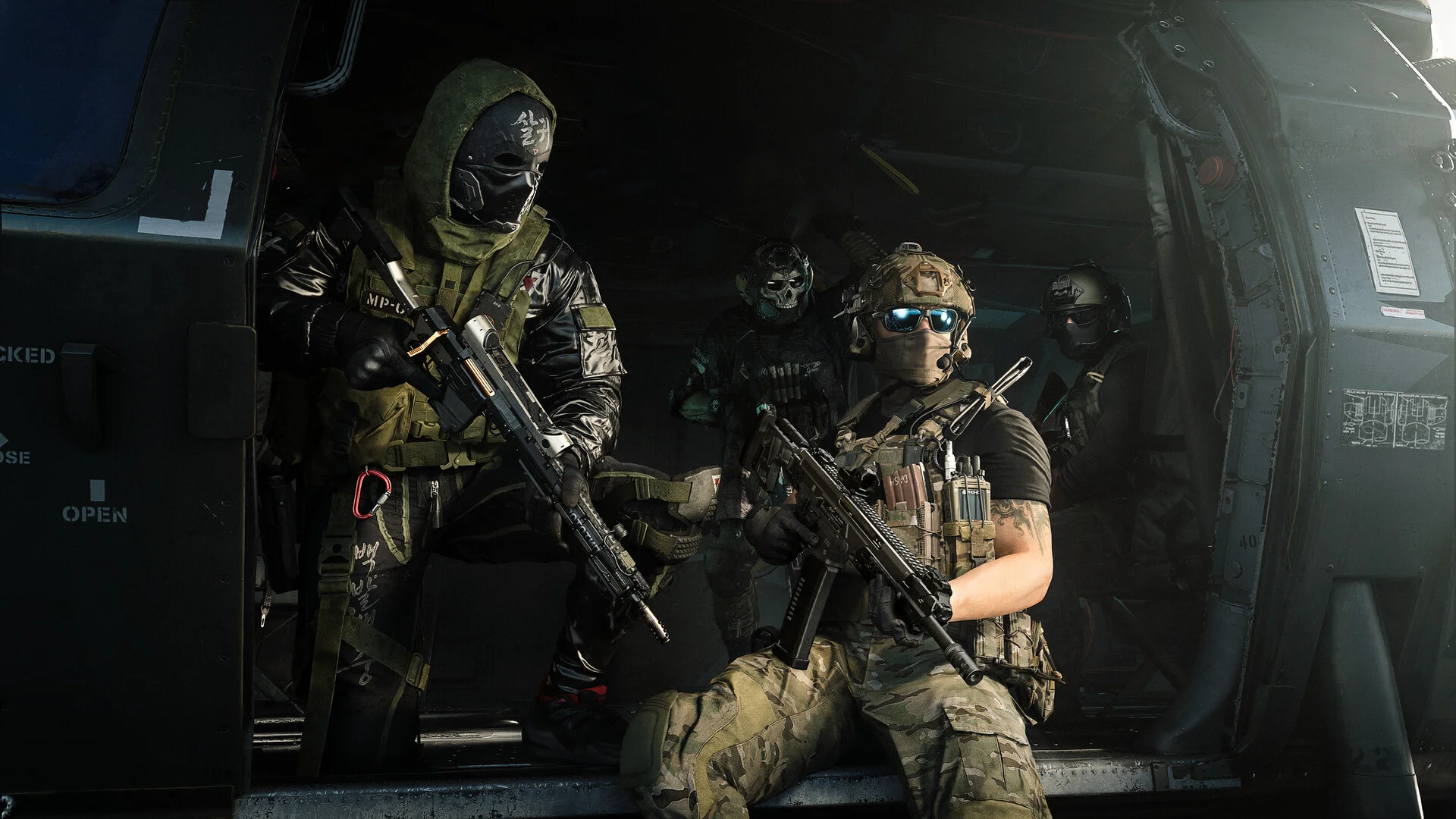
Weapon customization makes that commitment tangible. The Gunsmith unlocks at DMZ level 10, with manuals expanding the available weapons and separate in-game costs attached to guns, attachment slots, and attachments. A carefully assembled weapon represents several investments exposed to the same failed extraction. Entering with a free basic loadout reduces that exposure while leaving the squad less equipped. The appeal comes from deciding how much capability the next mission warrants, then trying to bring that investment home.
Loss has several distinct forms. Operators develop through Warfighter, Scout, and Survivalist trait trees, but a lost operator can be recovered by paying an evacuation cost. DMZ experience remains earned after an unsuccessful extraction. Failure can therefore remove equipment, preserve level progress, and create a recovery expense simultaneously. Those distinctions keep a bad deployment consequential without making every setback erase the evening’s work. Recovering an experienced operator becomes another demand on the resources the next deployment might produce.
That economy makes the Vault edition’s additional operator slot and consumable equipment worth examining. They provide practical benefits around preparation and replacement, even without guaranteeing success in a fight. Their presence is unwelcome in a mode now included in a premium game rather than offered free. The criticism should remain attached to those existing benefits: extra equipment and capacity alter the resources available around deployment. They do not establish that victories can be purchased.
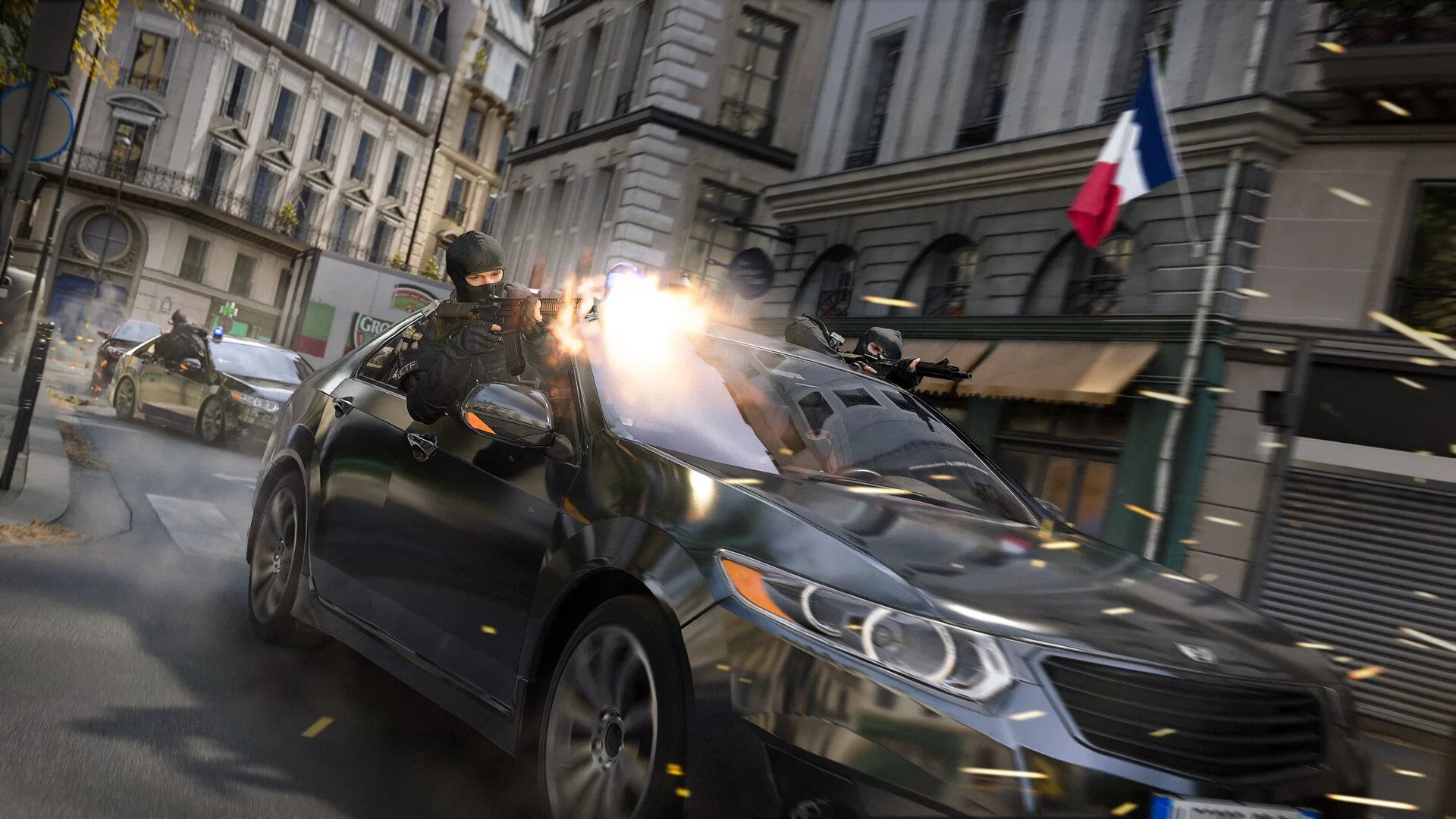
Hajin supplies reasons for an expensive plan to change. Localized fog can conceal movement while reducing the squad’s ability to inspect its surroundings. Rain and water make footsteps audible, adding a cost to a route that might otherwise seem safe. Patrols, drones, armored enemies, and a roaming tank create overlapping hazards without demonstrating exceptional enemy intelligence. The variety works through competing demands on attention. Concealment can help a squad escape one threat while making the next harder to identify.
Player aggression produces another consequence through heat and bounties. Killing operators increases a player’s visibility as a target; bounty boards let others purchase information about wanted players, while cash can reduce the aggressor’s heat. This gives hunters reasons to pursue one another and attaches an expense to repeated attacks. Peaceful squads remain vulnerable, however. Avoiding kills keeps them out of that particular tracking system rather than reserving a safe passage through the map.
The tutorial does too little to prepare newcomers for these relationships, concentrating on basic actions while leaving mission categories and deployment terminology confusing. There are also only six main story missions, limiting the authored variety beneath the changing encounters. The casino heist gives squads cash to remove before gas spreads through a vault. The hospital rescue replaces portable loot with a hostage handcuffed to a gurney. Getting that person to extraction requires the group to protect and move an objective while enemy forces obstruct the route, making the act of leaving a coordinated task of its own.
The Review
Call of Duty Modern Warfare 4
Modern Warfare 4 makes familiar actions carry fresh weight: hunting Price changes an old relationship, while DMZ makes a customized weapon an investment worth protecting. Responsive shooting supports both modes, and persistent progression keeps extraction failures from erasing every gain. Weak final fights, disruptive bugs, and uneven sandbox pacing limit the campaign; DMZ needs clearer teaching and additional story missions. Across the campaign and DMZ, the strongest design connects what players bring into danger with what they stand to lose.
PROS
- Perspective shifts give familiar relationships new tension.
- Responsive gunplay with forceful feedback.
- DMZ connects preparation, loss, and recovery.
- Weather and bounties complicate extraction decisions.
CONS
- Brief, undemanding final confrontations.
- Scavenging can interrupt campaign momentum.
- Squad behavior and save faults undermine reliability.
- DMZ explains its systems poorly.
- Only six main DMZ story missions.