

























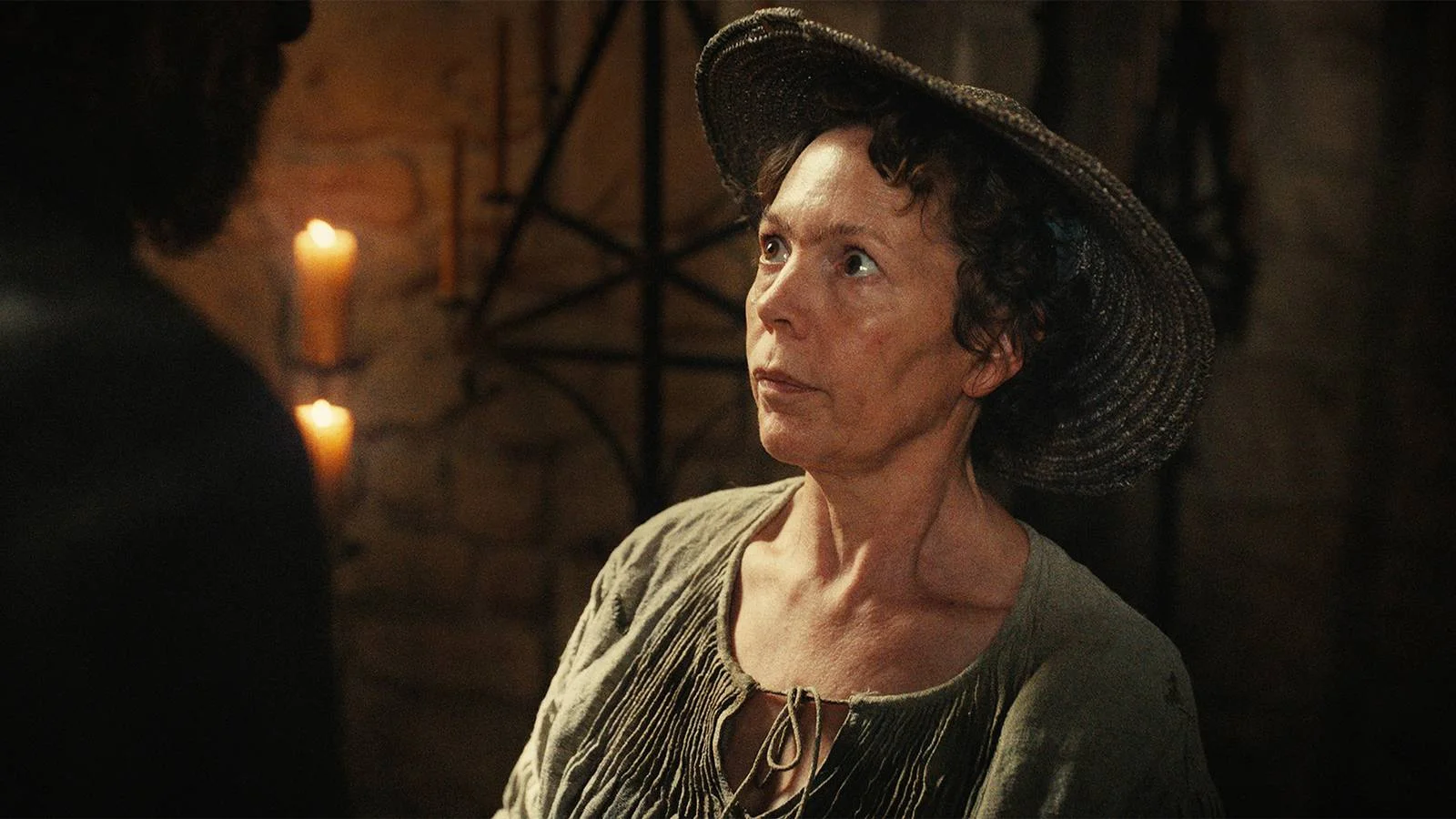

Fisherwoman keeps going to work after she marries. Her husband stays home, repairs things, and attends to the household. In the village of Wicker, this arrangement causes considerable distress, particularly among men whose wives have begun noticing the alternatives.
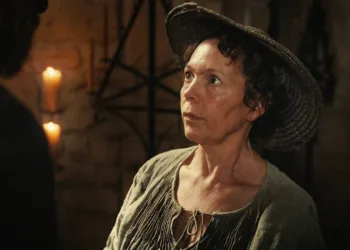
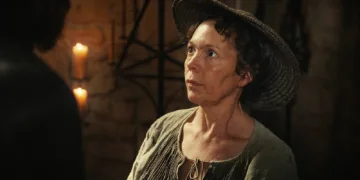
The husband’s unusual construction supplies a less urgent problem. Commissioned from a basket maker by a woman tired of being mocked, he arrives with a body of woven branches and an aptitude for consideration. Olivia Colman’s Fisherwoman continues catching and selling fish, but her neighbors can no longer use her solitary existence to reassure themselves about their own.
Their resentment acquires a wonderfully indecorous soundtrack. Fisherwoman and her new spouse have sex with sufficient enthusiasm to keep breaking their bed, making her pleasure difficult for the village to ignore. Eleanor Wilson and Alex Huston Fischer, adapting Ursula Wills-Jones’s short story The Wicker Husband, understand the social force of this joke.
A middle-aged woman previously dismissed as dirty and undesirable has become conspicuously satisfied. Her neighbors must account for that satisfaction while going home to their own husbands. The repeated destruction of furniture eventually loses comic force, but its initial offense is exact: Fisherwoman is enjoying a body the community has taught itself to ridicule.
Marriage already gives that community an unusually candid vocabulary of possession. Brides receive iron collars, while women’s names identify their relationships to men. Doctor’s Daughter becomes Tailor’s Wife; the transfer preserves the principle. Fisherwoman’s occupational name records a different relationship to the world, one founded on work she performs herself.
Yet economic usefulness buys little respect. She catches, cleans, and sells the food her neighbors consume, and remains available for public humiliation. When a wedding custom predicts her own marriage, the villagers respond with mockery. Their rituals can accommodate an unmarried woman as long as she remains the joke.
Elizabeth Debicki’s Tailor’s Wife takes particular care to preserve that arrangement. Her beauty, family connections, and marriage give her authority among the women, which she exercises through ridicule and manipulation. Debicki’s controlled superiority makes cruelty look like the administration of good manners. This is also a woman whose husband restricts her and whose father dismisses her abilities.
The hierarchy rewards her enough to secure her allegiance while withholding the independence that might make allegiance unnecessary. Fisherwoman’s marriage threatens the worth of those rewards. Someone she has treated as inferior has obtained affection without acquiring the approved appearance or accepting the approved domestic role.
The confrontations between Debicki and Colman give this conflict a welcome emotional untidiness. Fisherwoman’s abrasive self-possession becomes less secure under the other woman’s attacks; Tailor’s Wife’s performance of contentment begins to look effortful. Their exchanges suggest familiarity that predates the present hostility, giving each woman some access to the other’s vulnerabilities.
The film returns to this relationship too intermittently. Its suggestions of a shared past create expectations that the later plotting does little to satisfy. Tailor’s Wife becomes easier to use as an instigator than to examine as someone who has learned to convert her own restrictions into authority over others.
Against such practiced social aggression, Alexander Skarsgård’s Wicker Husband offers a disarming physical presence. Wētā Workshop’s construction gives his body intricate surfaces and moving parts without sealing the actor inside an immobile curiosity.
Wicker shifts around his features; finer strands form hair and beard. Andy Neil’s sound design lets the material strain and stretch, giving tenderness an audible texture. These details matter because the romance requires a body that can be approached, touched, and desired. The workmanship allows the film to remain frankly interested in sex while making this improbable partner feel physically vulnerable.
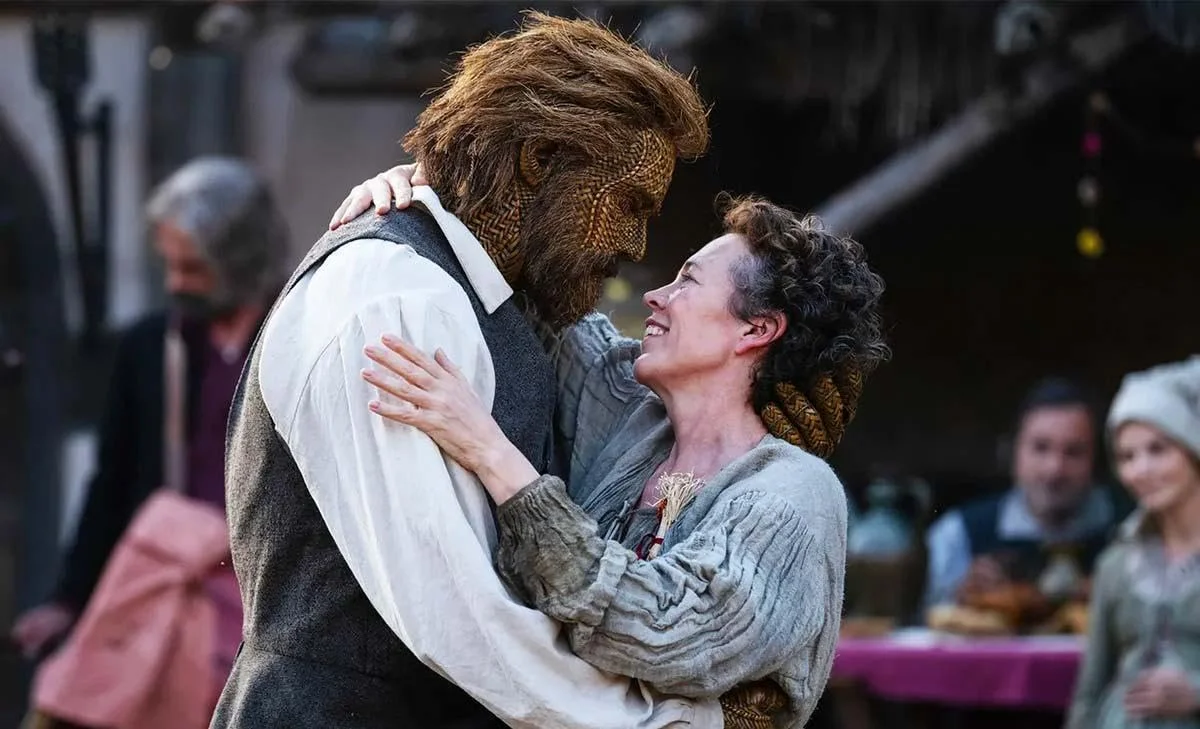
Skarsgård’s measured delivery suits a character who approaches ordinary exchanges without the village’s elaborate defenses. He listens, asks questions, and offers affection with little embarrassment. Colman supplies the emotional risk that his composure can obscure.
Fisherwoman’s willingness to trust him involves surrendering some of the protection afforded by expecting very little from anyone. Her loneliness does not invalidate her independence, and Colman keeps the distinction alive: receiving care can be frightening for someone accustomed to managing without it. The couple’s domestic ease has feeling beneath the sexual commotion.
The circumstances of his creation remain harder to reconcile with the film’s ideal of partnership. The Basket Weaver, played with genial gravity by Peter Dinklage, assures Fisherwoman that his creation possesses free will. The story offers far less dramatic testing of that freedom than of his usefulness.
His labor, devotion, and sexual appetite align so neatly with her wishes that reciprocity becomes difficult to assess. This does not establish that he lacks consent or independent feeling. It does leave the assurance carrying weight that a choice, disagreement, or desire of his own might have carried more persuasively. The romance has been given a convincing body and a comparatively untested autonomy.
A fable can leave its magic unexplained. Wicker gains much of its comic assurance from accepting occupational names, elaborate gestures against bad luck, and bodily frankness as the ordinary language of its invented world. The difficulty arrives when dramatic uncertainty receives the same compressed treatment.
As envy hardens into conspiracy and suspicion enters Fisherwoman’s marriage, the movement toward disaster becomes easier to anticipate than to feel developing. Repeated demonstrations of the villagers’ resentment occupy space that could have made her changing trust more legible. The extended moral resolution then explains a lesson already visible in the household repairs, the public mockery, and the husbands’ complaints at the inn.
The neglected exchanges between the two women make that explanatory finish especially frustrating. Their antagonism contains questions that punishment and reconciliation cannot readily settle. Tailor’s Wife has learned to seek recognition through a father and husband who diminish her, then to demand deference from women with less standing.
Fisherwoman can reject that bargain and still be wounded by the woman who enforces it. When Colman’s defensive manner cracks during their verbal sparring, the film briefly gives social cruelty the intimacy of an old acquaintance knowing where to press. That relationship needs time in which neither woman can be reduced to the lesson she helps deliver.
Wicker premiered at the Sundance Film Festival on January 24, 2026, and opens in theatrical release across the United States on October 23, 2026, via Black Bear Pictures. Directed by Alex Huston Fischer and Eleanor Wilson, the fantasy romantic comedy centers on a ridiculed, solitary fisherwoman in a conservative seaside village who sarcastically commissions the local basket weaver to craft her a husband out of wicker, sparking unexpected romance, local jealousy, and community upheaval when the creation comes to life.
Where to Watch Wicker (2026) Online
Full Credits
Title: Wicker
Distributor: Black Bear Pictures, Roadshow Films
Release date: January 24, 2026 (Sundance Film Festival), October 23, 2026 (United States)
Rating: R
Running time: 1 hour 45 minutes (105 minutes)
Director: Alex Huston Fischer, Eleanor Wilson
Writers: Alex Huston Fischer, Eleanor Wilson
Producers and Executive Producers: Ed Sinclair, Tom Carver, Olivia Colman, Justin Lothrop, Brent Stiefel, Brad Zimmerman, David Michôd, Andrea Cornwell, Oliver Kassman, Tim Headington, Lia Buman, Ryan Heller, Michael Bloom
Cast: Olivia Colman, Alexander Skarsgård, Peter Dinklage, Elizabeth Debicki, Marli Siu, Nabhaan Rizwan, Richard E. Grant, Ben Ashenden, Gustav Lindh
Director of Photography (Cinematographer): Lol Crawley
Editors: Sofi Marshall
Composer: Anna Meredith
The Review
Wicker
Wicker makes domestic consideration a threat to an entire village, giving its marriage satire warmth through Colman’s guarded vulnerability, Skarsgård’s tenderness, and beautifully tactile effects. Its ideal partnership remains insufficiently tested, particularly where the husband’s freedom is concerned. Repeated jokes and an extended moral resolution occupy time that the charged relationship between Fisherwoman and Tailor’s Wife deserved. The romance persuades emotionally while leaving some of its richest questions underdeveloped.
PROS
- Sharp satire grounded in work, marriage, and social standing.
- Colman and Skarsgård give the improbable romance emotional credibility.
- Expressive practical effects and textured sound design.
- Debicki’s controlled cruelty sharpens the women’s confrontations.
CONS
- Wicker Husband’s independence receives little dramatic testing.
- The women’s shared history remains underdeveloped.
- Repeated sexual jokes and a prolonged moral resolution weaken momentum.