












In the Chinese pear orchards visited by Fredi Devas’s How to Live on Earth, people carry pollen between blossoms because pesticides have devastated the bees. It is laborious work, and its very existence complicates the familiar distinction between human productivity and nature’s supposedly passive presence. The bees were doing a job. We noticed the employment arrangement after dismissing the workforce.
Drones offer another way to complete the task. From the farmer’s position, replacing exhausting manual work makes sense; crops need pollinating before humanity finishes reconsidering its relationship with the biosphere. Yet the proposed efficiency leaves the original damage sitting there. We have become clever enough to mechanize a service we previously received from living creatures. Calling that progress requires a fairly selective accounting system.
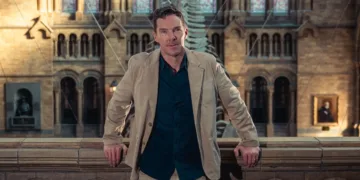
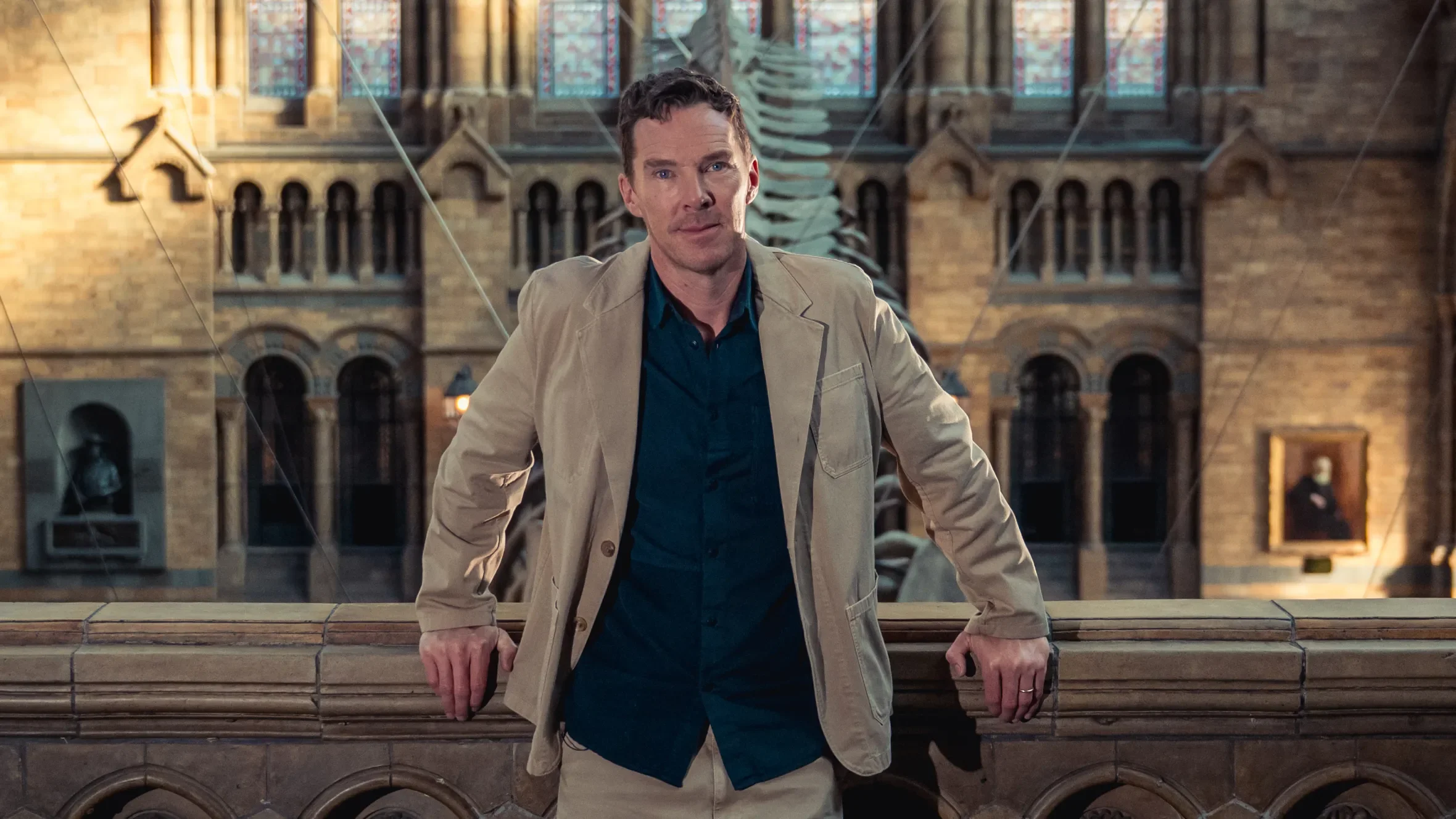
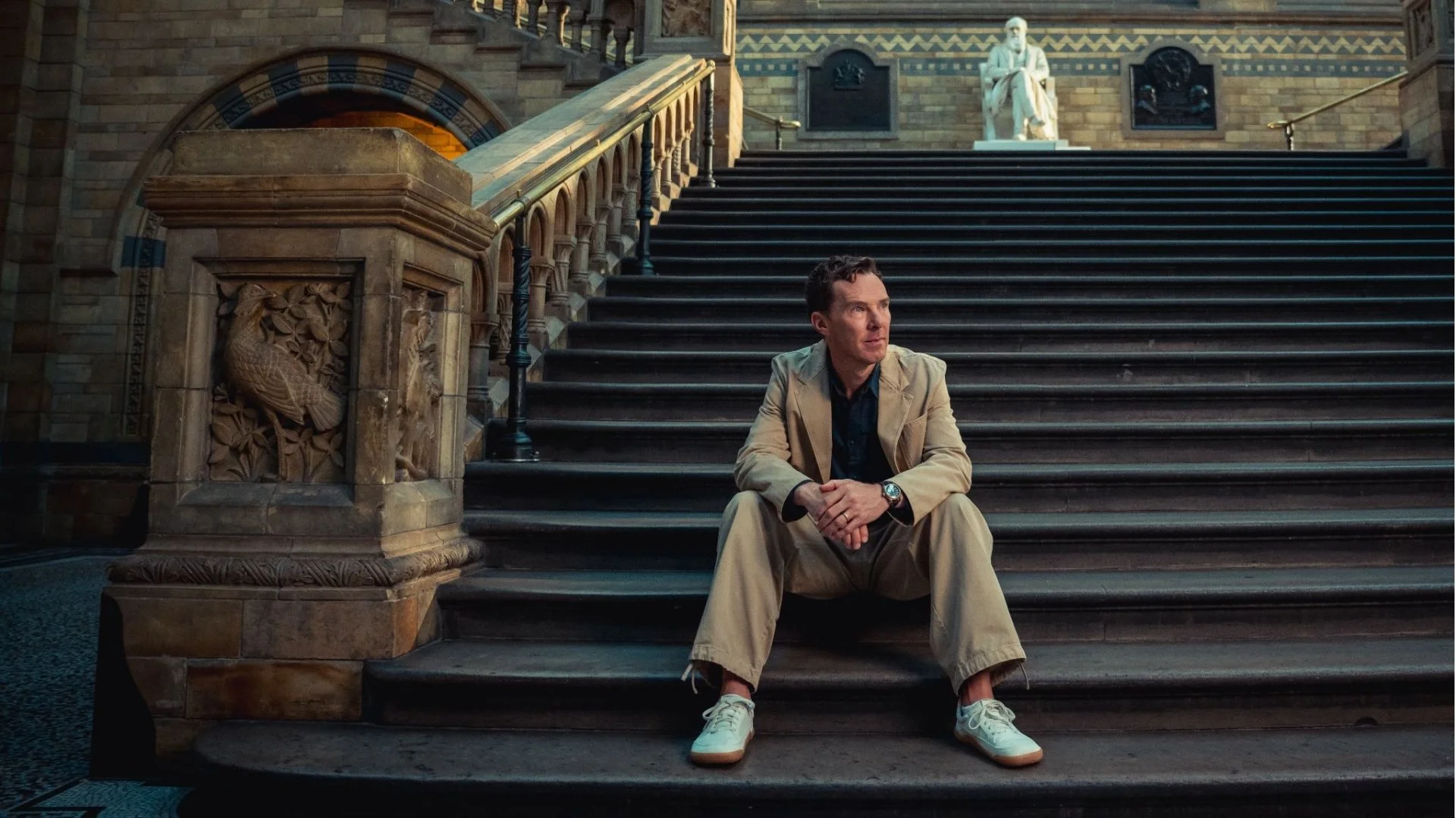
Devas gives this gap between ingenuity and judgment an accessible philosophical framework. Presenting from London’s Natural History Museum, Benedict Cumberbatch describes intelligent life reaching a dangerous developmental stage: capable of transforming its planet, insufficiently wise to understand the consequences. Wisdom is the next possible chapter. Surrounded by the remains of other species, he makes the proposition sound both intimate and faintly absurd. Humanity appears to be experiencing adolescence with access to industrial pesticides.
Cumberbatch’s conversational delivery helps. His warmth gives the film permission to explain without making every explanation feel like a reprimand. Through questions about food, economic value, and our psychological dependence on nature, Devas assembles an international survey of people trying to change the conditions under which environmental destruction becomes ordinary business. The film’s hope rests on examples already taking shape, rather than asking reassurance to survive on the narrator’s charm alone.
My initial response to the pollination material was suspicion of technological substitution: destroy something complicated, manufacture a replacement, congratulate ourselves. The food sequences make that reaction harder to sustain. Rainforest cleared for cattle establishes a destructive demand for land. When former White House chef Sam Kass visits chef Greg Baxtrom to investigate alternative ingredients, the relevant question becomes what a new process might allow us to stop doing.
Solein, a protein produced using microbes, enters experiments with replacements for eggs, milk, and butter. Mycelium offers possibilities for producing something resembling meat with far less land and time. These are interventions in biological processes, too. Dismissing them because they are engineered would confuse ecological care with a preference for things that look reassuringly traditional. Cattle pasture can look pleasantly pastoral after the forest has disappeared.
The admission that taste and texture still need work gives these passages credibility. An unfinished substitute has to persuade someone to eat it. That mundane obstacle is useful resistance to the documentary’s larger enthusiasm, keeping desire and habit inside a discussion that could otherwise become a parade of technical capabilities. A successful experiment establishes a possibility. Getting it onto dinner tables is another problem.
The film becomes less searching when the proposed transformation concerns finance. Economist Ralph Chami explains how a tree acquires legible market value as timber, while its continuing ecological activity remains economically obscure. It is a persuasive diagnosis of a system that can record extraction with exquisite precision while treating the conditions that sustain life as background.
The elephant material in Chad gives this argument physical substance. Protecting elephants helps preserve the savannah processes in which they participate, including keeping waterholes open and controlling vegetation. Their value cannot be understood by considering an isolated animal. The film asks us to recognize relationships, then introduces financial models intended to make those relationships count.
Douglas Eger’s ecosystem investment proposals have an obvious practical attraction. If functioning nature can generate returns, protecting it gains leverage within institutions that already respond to financial incentives. I can see the appeal without feeling reassured by the terms. Who receives those returns? What position do the people maintaining an ecosystem occupy? And what protects a place whose ecological importance proves difficult to convert into an attractive investment?
Those questions arise from the remedy itself. The tree example exposes the inadequacy of market recognition; making biodiversity investable then asks market recognition to become the instrument of repair. That could produce worthwhile protection. It also leaves profitability with considerable authority over what deserves attention. Devas moves too comfortably from the diagnosis toward confidence in the business opportunity, giving the proposal less friction than the food experiments receive from an imperfect texture.
The presentation encourages that comfort. Cumberbatch’s approachable explanations and the surging score make difficult changes feel emotionally available. There is value in that invitation, particularly when the alternative is paralysis. Still, the music’s confidence can arrive before an argument has earned equivalent certainty. The film makes it easy to move from understanding a proposal to sharing its excitement, with less time spent considering the decisions between the two.
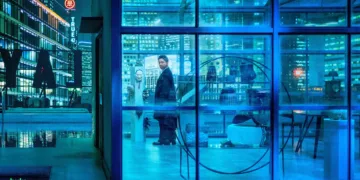
Its attention to human well-being provides a different reason to care. South Korean forest-healing programmes treat access to woodland as a response to psychological strain. In Singapore, naturalist Dan O’Neill encounters greenery incorporated into buildings and public space. Here, ecological responsibility becomes something people might actively enjoy inhabiting. The appeal is immediate: a city can give its residents contact with living things during an ordinary day.
O’Neill’s delight matters because the place offers an answer to the assumption that environmental repair must feel like surrender. Yet the visit leaves a practical distance between admiring that environment and understanding how another city could create it. Land, planning, public investment, and maintenance sit behind the apparent ease. Beside the urban stream, otters pass through a space people have made room for them to use. Elsewhere, making that room will require decisions about what currently occupies it.
How to Live on Earth premiered at London Climate Action Week on June 22, 2026, before opening in UK cinemas on June 26, 2026, via Together Films, with streaming distribution following on YouTube. Presented and executive produced by Benedict Cumberbatch, the visionary environmental documentary showcases cutting-edge solutions, indigenous knowledge, and global grassroots initiatives demonstrating how humanity can partner with nature to tackle climate change and ensure a sustainable future.
Full Credits
Title: How to Live on Earth
Distributor: Together Films, Open Planet Studios
Release date: June 26, 2026
Rating: PG
Running time: 1 hour 35 minutes (95 minutes)
Director: Fredi Devas, Jonnie Hughes
Writers: Fredi Devas, Jonnie Hughes
Producers and Executive Producers: Fredi Devas, Jonnie Hughes, Benedict Cumberbatch
Cast: Benedict Cumberbatch, Xiye Bastida, Sam Kass, Nemonte Nenquimo, Hindou Oumarou Ibrahim
- Composer: Imogen Heap
The Review
How to Live on Earth
Devas makes ecological repair feel desirable, with Cumberbatch’s warmth and the food experiments giving his optimism substance. I found the imperfect meat substitutes reassuring: someone admits there is still work to do. The financial proposals receive less scrutiny, while the swelling score occasionally supplies confidence the argument has yet to earn. An engaging invitation to rethink our habits, with some difficult questions left waiting outside the investment meeting.
PROS
- Cumberbatch’s warm, accessible presentation.
- Food experiments that acknowledge practical obstacles.
- Concrete examples of ecological interdependence.
- Urban greenery presented as an appealing everyday possibility.
CONS
- Ecosystem investment proposals receive insufficient scrutiny.
- Hopeful scoring sometimes outpaces the argument.
- Limited examination of how successful examples could be replicated.