



















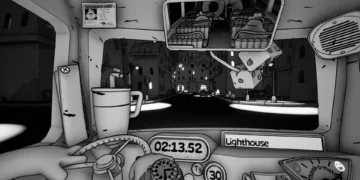


Walking on water should give a player something extraordinary to imagine doing. Jesus Simulator puts a timed button prompt between the player and that possibility. Attention settles on the input, because that is the part requiring a response, while the miracle becomes something to watch after completing the task. There is little opportunity to feel the strangeness of the act itself. A sequence that might invite trust or wonder instead produces the familiar concentration of waiting for a cue, pressing a key, and seeing what happens next.
That distance becomes harder to ignore when the miracles involve helping someone. Healing a leper and reviving Lazarus also pass through quick-time activities, with the person’s recovery arriving as the reward for completing an input sequence. Such simple actions can carry feeling, particularly when they draw attention toward another person’s needs.
Here, the prompts supply a task without making much of the relationship behind it. The player has a clear procedural responsibility, but the emotional connection between that responsibility and the person receiving help remains thin. Completing the activity gives little sense of having participated in an encounter.
The frustrating part is that the earlier, smaller tasks suggest a promising approach. Before controlling Jesus, players spend time as Mary collecting water and preparing dinner for Joseph, then as Joseph building a chair. These are ordinary needs attached to figures often encountered through religious images or familiar readings.
Having something practical to do offers a possible route toward seeing them as people occupying a household. Joseph’s chair-building uses a quick-time sequence too, but the modest scale of the task suits a modest interaction. Making something by hand provides an understandable reason to ask the player for a physical response.
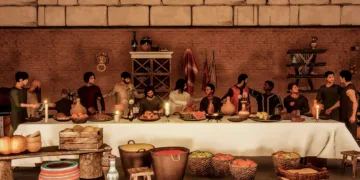
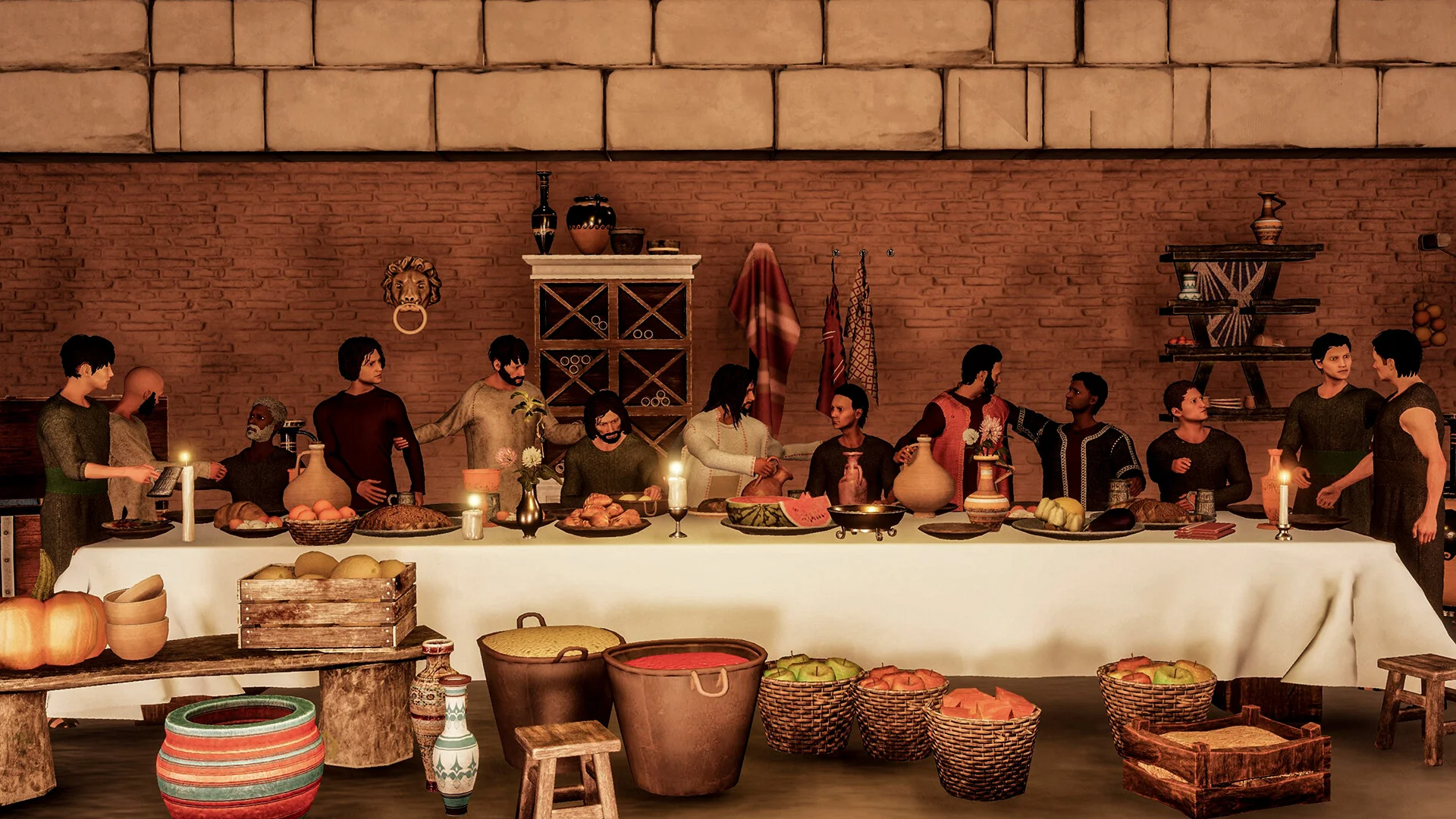
VRCFORGE Studios builds its Gospel-inspired retelling around these changes of perspective, combining narration, conversations, limited exploration, and short activities. Mary, Joseph, Jesus, and disciples give the narrative several points of entry.
That is a worthwhile choice for a story whose central events many players already know. A fixed outcome need not prevent involvement; following the needs of someone within that story can create its own attachment. The search for shelter in Bethlehem has precisely that potential. Somewhere to spend the night is an immediate concern that requires no theological knowledge to understand, giving newcomers and familiar readers a shared way into the scene.
Yet even this straightforward need becomes tangled in the effort of getting the game to respond. Bethlehem’s darkness makes searching difficult, while the lack of a map or clear directions leaves progress uncertain. Approaching a resident can require repeated attempts before a conversation starts. The attention that could belong to the search for shelter shifts toward checking position and repeating an interaction. Slow movement stretches that uncertainty across the space between encounters.
The controls are simple to understand, with familiar movement keys and basic contextual actions, but ease of understanding cannot compensate for unreliable execution. Quiet movement and patient observation could leave room for thought; repeatedly attempting to start a conversation occupies that room with troubleshooting. The inability to skip story sequences further limits control over the rhythm.
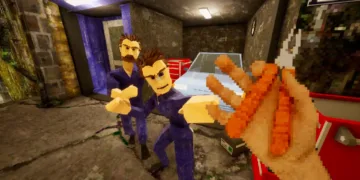
The brief activities do provide welcome interruptions to extended speech. Spacebar inputs and connection puzzles change what the player is doing, and the temptation sequence supplies an especially memorable example of that relief. Resisting Satan involves repeatedly pressing Enter until a resistance meter fills.
Spiritual resolve has acquired a measurable keyboard workload. There is accidental amusement in watching temptation yield to sufficient tapping, but the joke exposes how little the action expresses about the encounter. The meter tells us how close the task is to completion without bringing us closer to the experience of refusing what Satan offers.
With interaction contributing so little intimacy, the voices have a great deal of emotional work left to do. Their unnatural delivery makes that burden painfully apparent. Narration and dialogue carry the teachings, encounters, and transitions, yet the artificial sound of the speech makes it difficult to hear a person addressing another person.
In a healing scene, that matters as much as the simplicity of the prompt: care needs some audible presence if the physical action offers little expression of it. Extended passages give the listener plenty of time to notice the delivery, with too little human warmth to sustain attention.
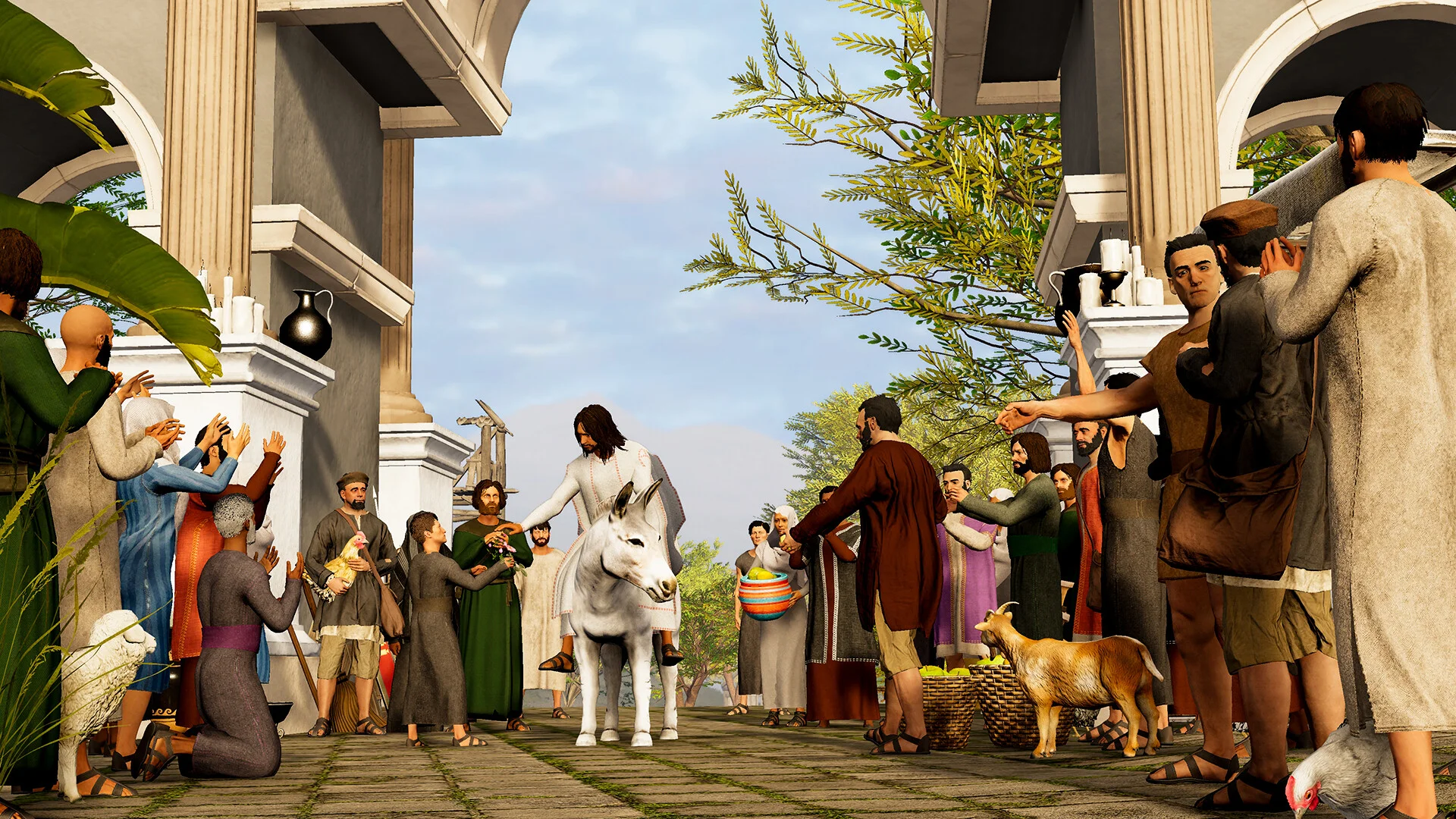
The surrounding presentation offers limited support. Stiff character movement restricts the sense of people responding to one another, while sparse activity in the environments leaves long stretches feeling uninhabited. Limited ambient sound and repetitive music also reduce the world’s ability to hold attention between lines.
Lavish scenery would be unnecessary for this approach, but some sense of life around the conversations could help them feel situated. Here, speech often has to supply both the meaning of an event and nearly all the energy of the scene. Its weaknesses become increasingly difficult to tune out.
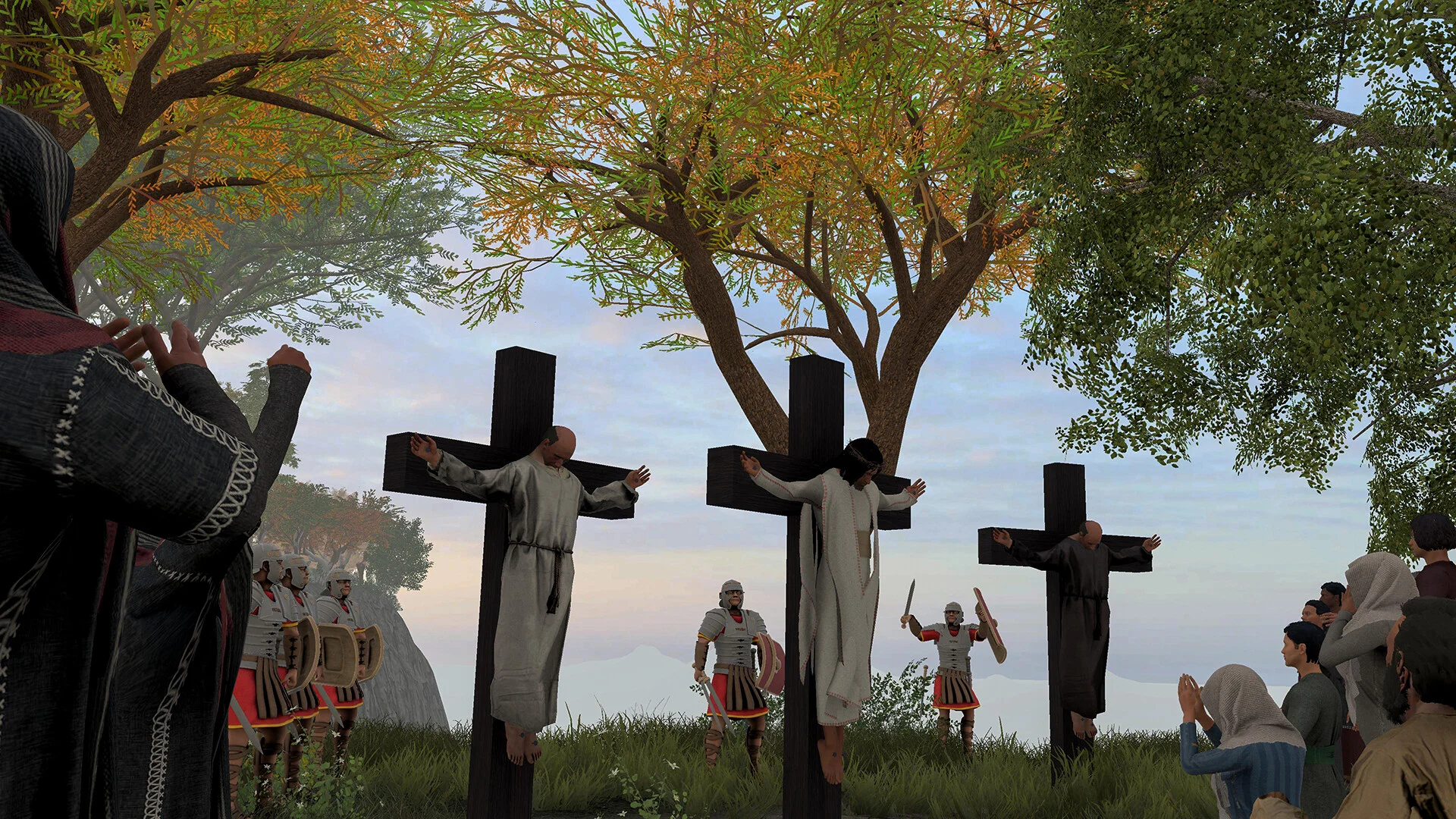
The allocation of time produces a separate problem. The Sermon on the Mount lasts close to half an hour, while the crucifixion passes in under twenty seconds. Giving substantial space to teaching makes sense in a narrative interested in communicating the Gospels, but the unbroken delivery demands patience without finding much expressive variation within it.
The rapid treatment of the crucifixion then leaves scarcely any room to register the sacrifice. For someone encountering these events through the game, the shift asks for an emotional response to suffering almost as soon as it has presented it, after allowing so much time simply to listen.
The Review
Jesus Simulator
Jesus Simulator offers a promising way to approach familiar sacred figures through ordinary needs and changing perspectives. That closeness rarely survives the experience of playing. Miracles become input exercises, conversations struggle to respond, and unnatural voices leave long passages without the warmth they need. The small domestic tasks suggest how participation could make these lives feel immediate. Too often, the game asks for patience while giving players little emotional connection to sustain it.
PROS
- Multiple playable perspectives widen the story’s human focus.
- Domestic tasks offer an approachable point of connection.
CONS
- Miracle interactions convey little emotional meaning.
- Unclear guidance and unreliable interactions disrupt progress.
- Unnatural voices weaken dialogue and narration.
- Sparse environments offer little supporting atmosphere.
- Teaching and sacrifice receive badly uneven pacing.