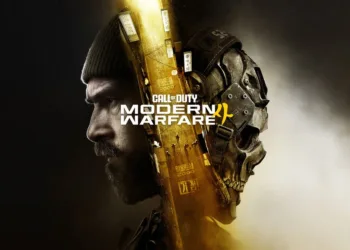




















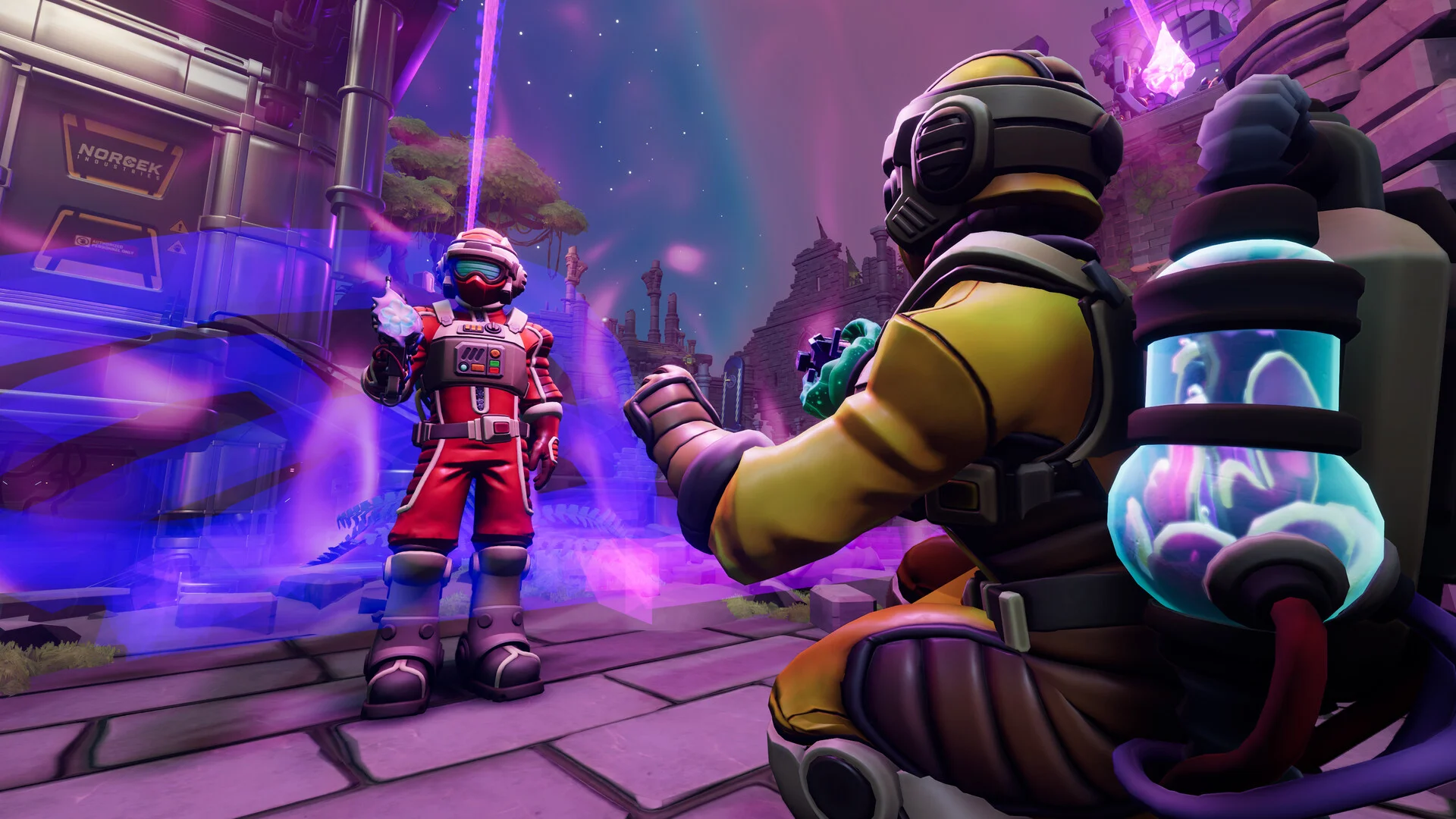
Earlier We Were Here games made a partner indispensable by giving them information you lacked. We Were Here Tomorrow adds a persistent difference in what each person can do. One explorer carries a stretchy tether that grabs distant objects, pulls switches, and transfers electrical energy. The other fires solid blocks that become platforms, keys, or charged components. Total Mayhem Games keeps the two-player dependence that defined its medieval puzzle chambers, then gives each half of the partnership a toolkit with applications extending across the campaign.
Those tools change how the pair divides its work. Describing a distant lever establishes the problem; operating it still requires the explorer with the tether. Creating a platform belongs to the partner with the block gun, whose equipment can make an otherwise inaccessible position usable. Specializations are chosen at the outset and shape the routes players take through the puzzles. This makes cooperation more physically specific, though it also keeps the solutions tightly authored. Players discover how their assigned capabilities fit together within arrangements built for those roles.
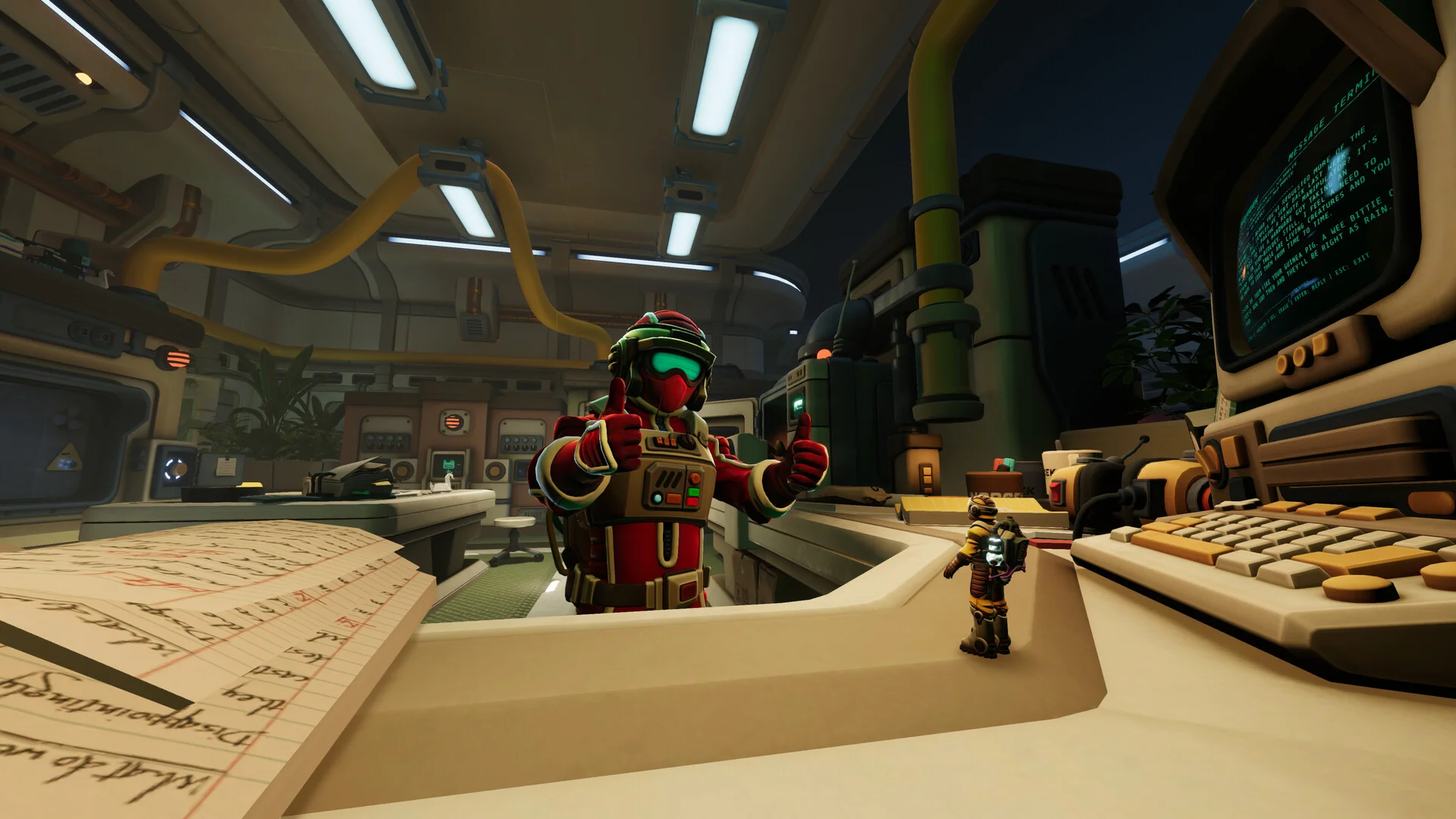
The move from Castle Rock’s gothic spaces to an Antarctic research facility provides a useful reason for these new capabilities to exist. After waking from cryogenic hibernation, the explorers find themselves inside the Norček complex, surrounded by machinery they must learn to operate. The strongest demonstration involves shrinking one player and sending them inside a machine while their full-sized companion remains outside.
The smaller explorer manipulates internal components; the larger partner interprets information unavailable from within. The pair occupies the same apparatus at different scales, turning a familiar series arrangement into a different kind of spatial problem. That sequence understands something the series has long done well: describing a puzzle can be part of solving it. The satisfaction comes from gradually making those partial accounts agree, until an initially confusing machine becomes something the pair understands together.
The surrounding challenges give that principle several useful variations. Gravity-altering rooms place explorers on different surfaces, complicating their shared sense of direction. Battery systems demand attention to connections and the order in which power reaches equipment.
The basic tool functions arrive early enough to become familiar before later situations combine them with additional rules. Returning players will recognize the process of describing, testing, correcting, and trying again, but the new equipment supplies extra actions for that conversation to organize. There is still room for familiar symbol work without making every room feel like the same exercise.
Communication itself has received a sensible adjustment. Nearby partners can speak directly, with radios reserved for situations where distance makes them necessary. Compared with the series’ stricter reliance on walkie-talkies, this makes conversation fit the explorers’ physical relationship more naturally. Separation still matters because partners lose access to each other’s surroundings. Reuniting now relaxes one restriction without making their different capabilities disappear, so a shared room can demand cooperation through its machinery instead of imposing the same verbal obstacle everywhere.
The expanded spaces are less consistently disciplined about directing attention. Repeated assets and numerous objects unrelated to a solution can send players searching through details that have little practical value. Some uncertainty is essential to this format, particularly before the partners establish which clues correspond. Searching a larger room for the relevant objects asks for a different kind of patience. Tomorrow is strongest when an observation changes the pair’s understanding; it becomes slower when the main task is eliminating another stretch of scenery from consideration.
Its new surroundings do offer pleasures beyond the puzzle apparatus. Fluorescent control rooms, monitor banks, and enclosed plant environments give the research complex different textures, while train rides through snowy mountains provide intervals between concentrated bouts of problem-solving. The earlier games’ stone chambers supplied a tighter gothic identity, but Tomorrow earns its change of setting through the possibilities of scale, power, and gravity. The quieter travel sections help too. They allow the facility to belong to a larger place without requiring players to keep processing another set of instructions.
The narrative has a harder time finding that balance. Director Kathleen Bowe guides the explorers through the complex, while documents and audio records fill in the research surrounding them. These elements give the rooms a common purpose and create a reason to question the instructions arriving from elsewhere in the facility.
Extended conversations can still interrupt the pace established by the puzzles. Learning how to operate a machine already creates an active relationship with this place; stopping for another explanation is less engaging when the dialogue has little immediate bearing on the task. The setting carries the story most effectively when its mysteries remain attached to something the pair is doing.
Technical failures are a much sharper interruption. A missing component inside the miniature-machine sequence, an access-card slot that refuses an interaction, or a paired lever without an activation prompt can halt progress regardless of the players’ reasoning.
Such problems are especially damaging here because uncertainty is built into the design. Each partner has good reason to believe the other might have missed a clue. A broken interaction can therefore consume time twice: first while the pair revises a valid solution, then while they restart and repeat the necessary steps. The interruptions vary in frequency, but even an isolated failure can make the next difficult room harder to trust.
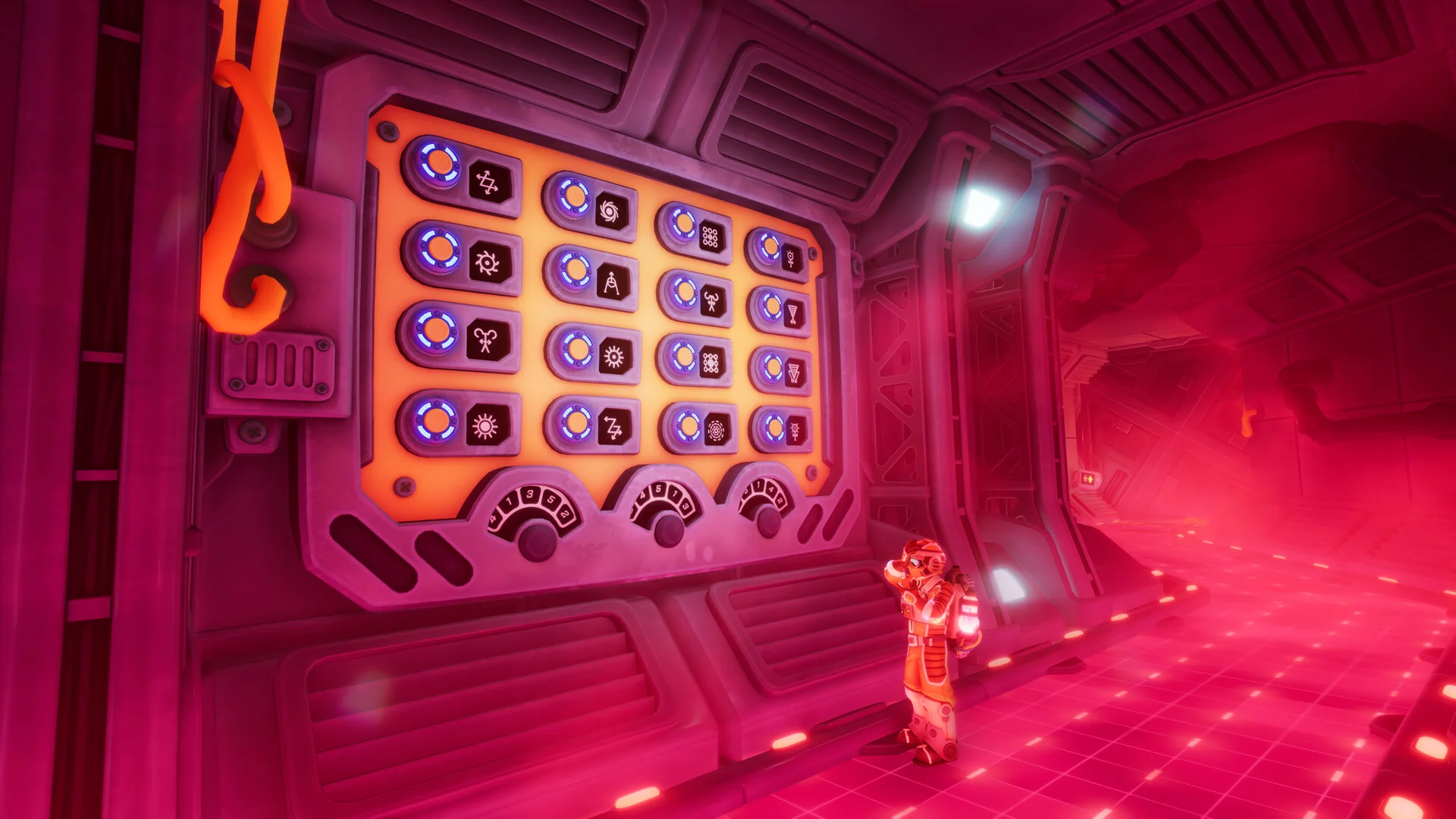
Radio transmission problems interfere with the series’ defining exchange just as directly. An external voice call provides a practical workaround, though it removes communication from the equipment and distances the game has arranged. That is a significant qualification for a campaign that can occupy roughly 12–15 hours, depending heavily on the pair’s solving pace. Both players also need their own copy, since there is no Friend Pass. The required commitment makes the distinction between an absorbing evening of deduction and an evening spent troubleshooting particularly consequential.
Switching roles offers a reason to return beyond completing the same route faster. The explorer who previously supplied instructions can take on the internal work, while the partner who handled components can discover how the guiding information was presented. Familiar solutions will limit the surprise, so this is a different attraction from recovering the first playthrough’s uncertainty. It gives players access to the other half of an experience they helped complete, including the observations and small practical decisions that never needed to be spoken over the radio.
The Review
Total Mayhem Games
We Were Here Tomorrow gives the series’ familiar partnership a productive new division of labor. Specialized tools and puzzles built around scale and gravity make its science-fiction setting earn its place beside Castle Rock. The expanded environments sometimes obscure useful clues, and exposition can interrupt the solving rhythm. Progression bugs are the sharper concern: a game built around incomplete information needs dependable interactions. Returning pairs have good reasons to explore these new roles, with technical interruptions qualifying the recommendation.
PROS
- Distinct tools deepen cooperative roles.
- Scale and gravity produce inventive puzzles.
- Proximity chat improves communication.
- Swapping roles offers a worthwhile second perspective.
CONS
- Progression bugs and unreliable radios disrupt cooperation.
- Environmental clutter obscures relevant information.
- Extended exposition slows the puzzle rhythm.