




















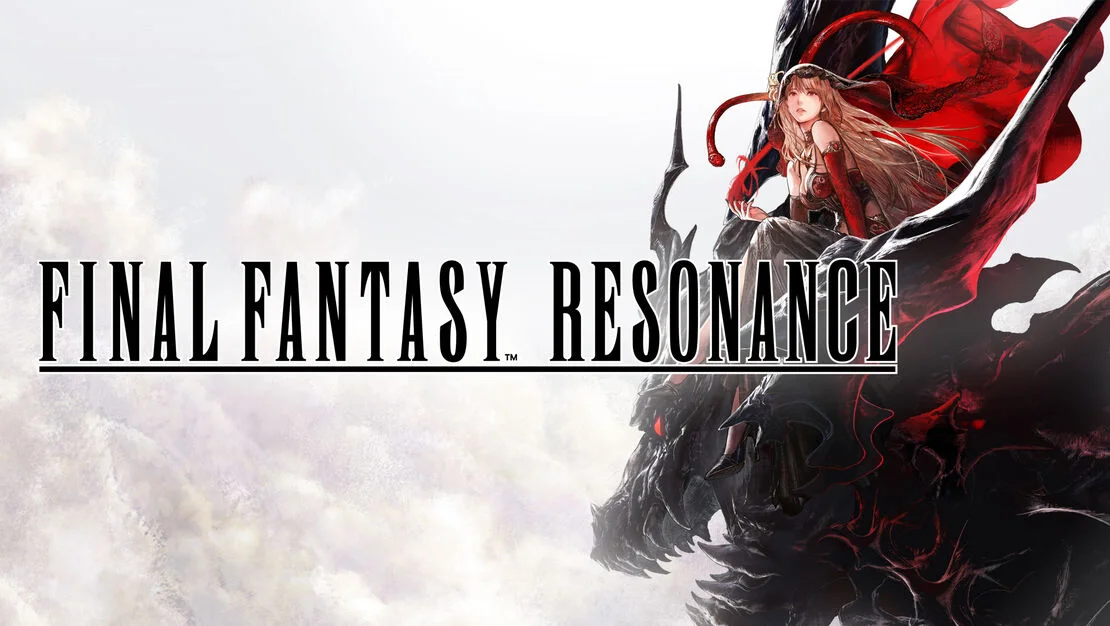

Finding Cloud in Final Fantasy Resonance gives you a set of decisions about somebody else. His lightning attacks and critical-hit abilities can strengthen a party member’s existing specialty or fill a gap in their repertoire. Master those abilities and some remain available after another Vision takes his place. In Final Fantasy Brave Exvius, Visions were separate units acquired through gacha rewards. Here, they are discovered at shrines and equipped as interchangeable skill sets. That change gives the familiar faces a useful relationship with characters whose names you might still be learning.
Final Fantasy V provides the clearest reference for the pleasure of carrying learned abilities between configurations, while VI helps explain the character specialties underneath. Rain’s protective skills and Lasswell’s aptitude for staggering enemies give them identities before customization begins. You can reinforce those roles or take them elsewhere. Combining a passive that halves MP costs with another that increases spell costs while doubling their effectiveness produces a particularly satisfying mage build. The appeal lies in assembling that interaction over time: an earlier choice keeps contributing after its original equipment has been replaced.
Resonance adapts Brave Exvius’s first season into a standalone RPG without gacha purchases or microtransactions, and this progression system makes a persuasive case for the conversion. The borrowed heroes have limited participation in the central drama, so anyone anticipating Dissidia-style exchanges should adjust their expectations. Their strongest contribution happens in the ability menu, where recognition becomes a reason to reconsider an established party.
Combat gives those decisions an immediately readable purpose. A visible timeline establishes turn order, with no Active Time Battle gauge or timed button press demanding attention. Each enemy has health and stagger meters, and elemental weaknesses accelerate the depletion of the latter.
Stagger cancels the target’s remaining actions for that round, increases its vulnerability, and awards the responsible character a bonus action. Stagger every opponent and Sweeping Stagger grants the entire party extra actions, followed by an equipped Vision’s Resonance attack. A carefully arranged round can deny an enemy its attack and create room for several of your own.
Octopath Traveler is a useful comparison for the attention paid to weaknesses and the timing of an opening, though Resonance develops its own rhythm around the full-party sweep. The finishing move introduces another decision. The Warrior of Light supplies protective effects alongside his attack, while White Mage Leah offers party recovery. You are planning both the burst and the condition in which it leaves your team. Later and optional encounters, with harder hits and disruptive status ailments, give resistance equipment, buffs, and recovery a welcome share of that planning.
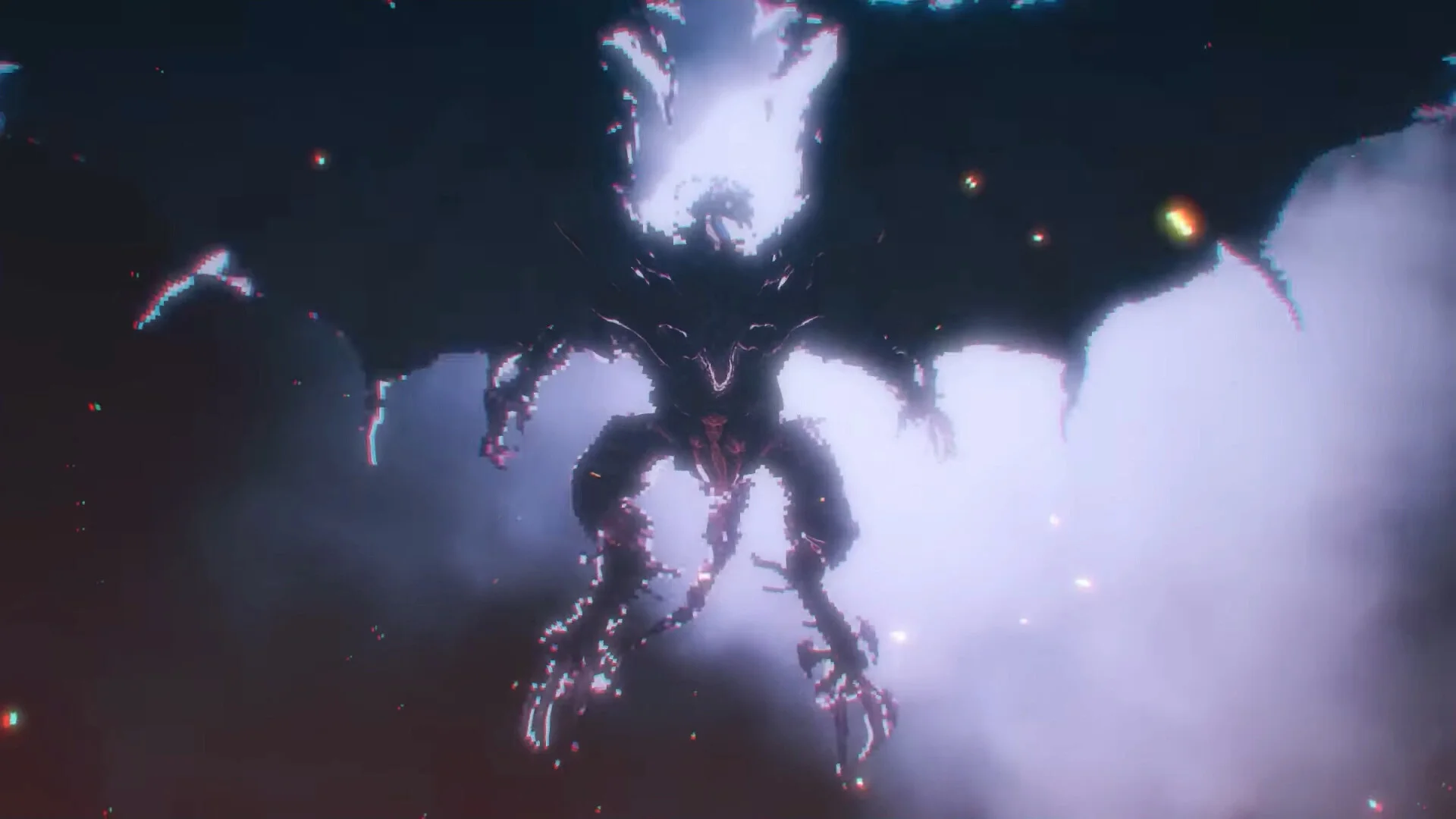
The routine fights are less dependable. A water-themed boss readily answered by an electric-focused setup exposes the limit: identifying the right loadout can settle much of the encounter before it starts. Other enemies sustain the weakness-and-stagger cycle through high health rather than an interesting interruption.
You cannot swap Visions or party members mid-fight, which makes preparation consequential but can turn an unsuitable loadout into prolonged repetition. Battle acceleration helps with elapsed time. It cannot supply a new decision. The strongest encounters make the Vision system feel worth studying; the ordinary ones sometimes ask you to demonstrate the same lesson again.
The story’s familiar components also depend on what happens between them. Grandshelt knights Rain and Lasswell investigate the Earth Crystal, encounter an overwhelmingly powerful armored warrior, and discover a threat to the crystals sustaining Lapis. Fina, an amnesiac girl connected to the larger conflict, joins their effort to stop the Sworn Six. These are recognizable Final Fantasy foundations, and there is nothing inherently exhausted about them. Rain’s impulsive optimism and Lasswell’s discipline give the pair different ways of acting on shared loyalties. Their upbringing together makes disagreement carry a personal cost.
That relationship supplies a steadier emotional line than the expanding mysteries. Fina’s developing identity also gives the conflict a human scale, while the Sworn Six’s grievances complicate the duty to defeat them. Rain can understand something of their position without accepting their actions. Yet the regional adventures do not always leave enough behind.
A city can be engulfed by floodwater and return to something close to ordinary life once its immediate problem is solved. The issue is the weak aftermath: the player has witnessed a catastrophe that the setting seems able to absorb with little lasting disturbance. An adventure about saving a world needs that world to register what nearly happened to it.
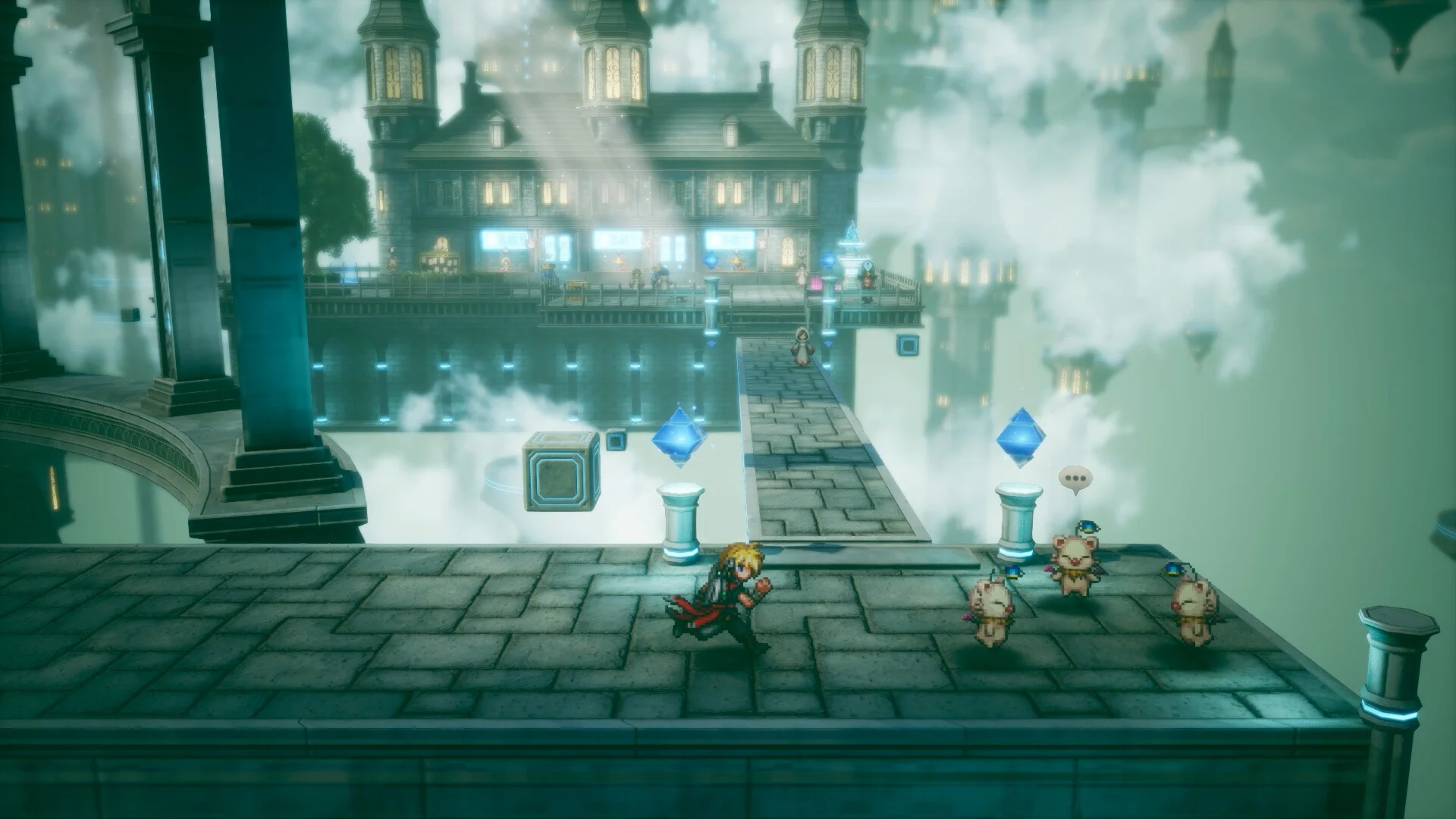
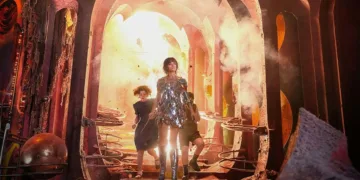
The HD-2D direction makes these limitations frustrating because it supplies expressive tools the script does not always match. The opening battlefield establishes the ambition through animated action and effects, and later cutscenes use camera movement and cuts to give sprites a stronger physical presence.
Compared with the more restrained staging associated with earlier HD-2D games, gestures and movement here have greater dramatic responsibility. Voice performances, including Alejandro Saab’s Lasswell, add another expressive channel. The presentation can communicate urgency without requiring another explanation of the stakes.
Exploration provides a different kind of momentum once the airship expands access to optional destinations. The comparison with Final Fantasy VI is useful here: new freedom changes the relationship between the next story objective and the places you choose to investigate first.
Additional Visions, unusual equipment, hidden Espers, and demanding optional battles give those detours practical value. Fast travel and quest tracking ease the return trip. The attractive environments can be less helpful at ground level, where fixed town cameras obscure routes or treasure, but the wider world offers reasons to look beyond the marked destination.
The franchise celebration becomes most interesting at its shrines, where a familiar musical cue can identify a hero before the historical questions do. Y’shtola’s association with “Tomorrow and Tomorrow” gives recognition time to arrive through sound. The questions then connect that recognition to her story, and acquiring the Vision carries it into combat.
There is an awkward visual break when a Resonance attack shifts from sprites to elaborate CGI, though those sequences are skippable. The shrine recaps present a less easily dismissed cost: they can reveal significant events from games a player has yet to experience. For a returning fan, the music recalls a history already lived through. For someone meeting Y’shtola here, the dialogue may give away part of the story that made the song matter.
The Review
Final Fantasy Resonance
Resonance carries Final Fantasy V’s pleasure of transferable abilities into a rewarding reinvention of Brave Exvius. Visions make familiar heroes useful to a new cast, and the strongest battles reward thoughtful combinations. Routine encounters too often repeat the same solution, while the story’s catastrophes leave surprisingly little lasting damage. Expressive HD-2D staging and worthwhile exploration help sustain an adventure whose mechanical inheritance feels better developed than its dramatic consequences.
PROS
- Flexible Visions with lasting ability rewards
- Satisfying stagger timing and challenging optional battles
- Expressive HD-2D cutscene direction
- Exploration that expands party-building options
CONS
- Repetitive tactics in routine encounters
- Major story events lack lasting consequences
- Fixed town cameras obscure routes and treasure
- Shrine recaps spoil earlier games