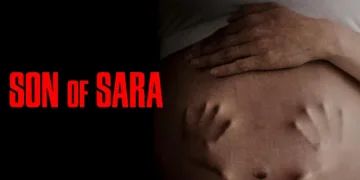
















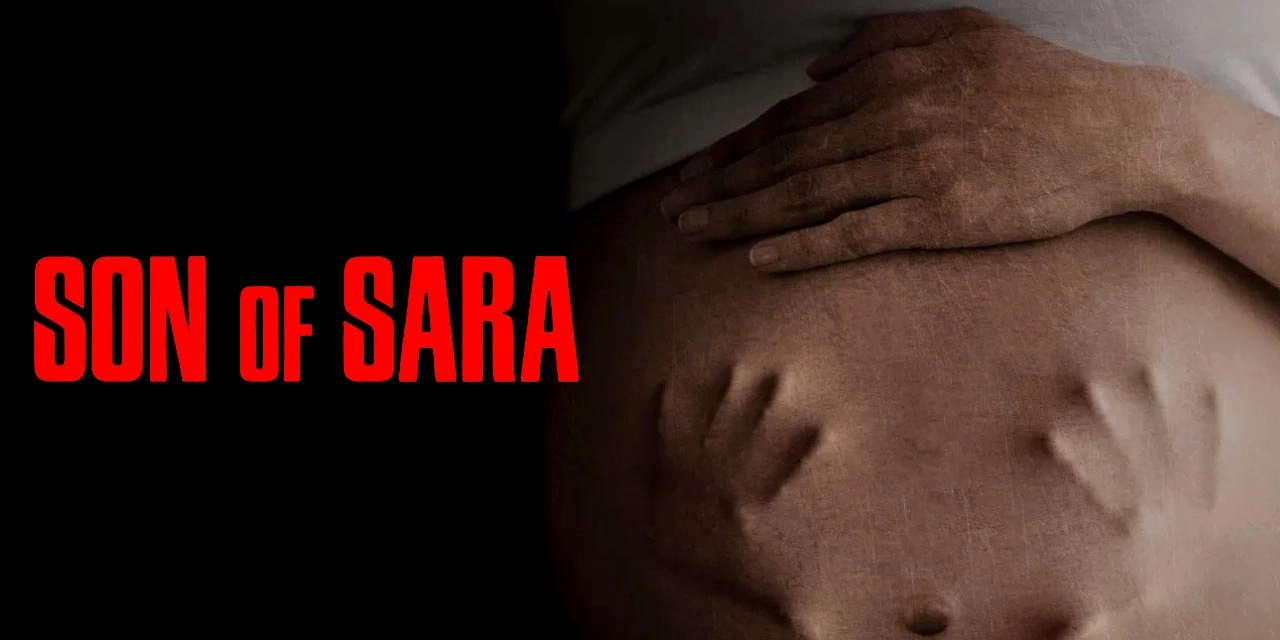

Sara’s body tells the truth long before anyone around her understands what is happening. She is days past her due date, exhausted by contractions, unable to keep food down, and drawn toward raw ground beef with a hunger that frightens her. Houston Bone’s Son of Sara gains its strongest emotional hold by staying close to those sensations. Sweat, trembling, nausea, and sudden pleasure become the film’s language.
Chloe Van Landschoot plays Sara with total physical commitment. When Sara secretly spoons raw meat into her mouth, her cheeks fill and her eyes roll back with relief. The scene is disgusting, intimate, and strangely tender. She looks less possessed than starved. That distinction matters. The horror comes from something inside her demanding nourishment, yet the film never treats pregnancy itself as a punishment.
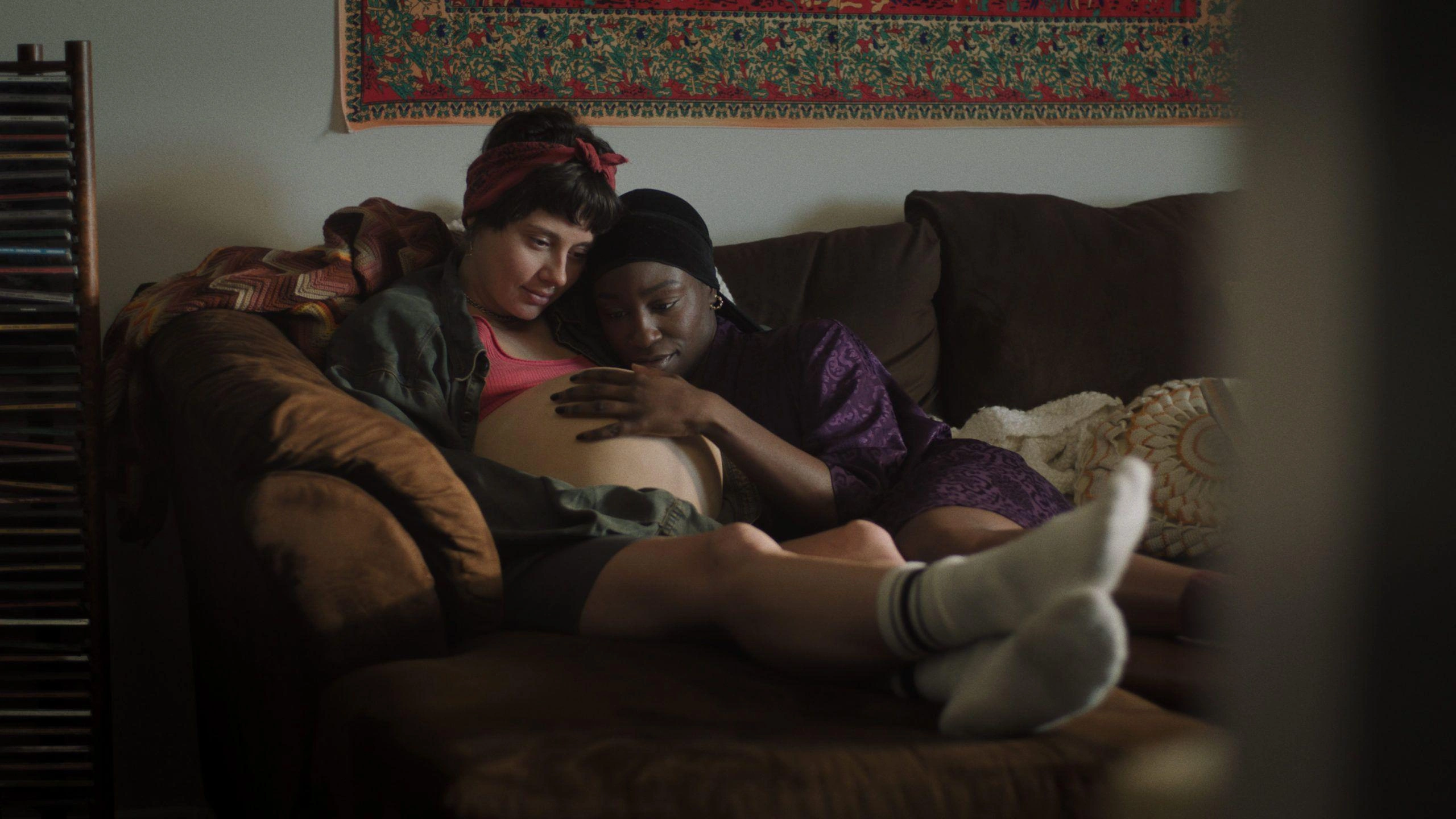
Sara lives with Carol, her attentive girlfriend, while Troy, the child’s father, has disappeared after their brief encounter. Carol notices Sara’s changing appetite, comforts her through physical pain, and responds to her body without fear or judgment. Their relationship gives the opening act a warmth that keeps the grotesque material grounded. These are two people preparing for a child while something ancient presses against their domestic life.
Hunger, Pain, and Intimacy
The practical effects give Sara’s condition a weight that digital imagery would have struggled to create. She vomits plugs of hair, suffers violent contractions, and slips into hallucinations that leave her unsure of her surroundings. Each effect looks wet, uncomfortable, and close enough to touch. Bone’s modest production works in its favor here. The body horror feels handmade, which makes it harder to dismiss.
Van Landschoot carries these scenes through posture and breath. Sara moves with the caution of someone whose body has become unpredictable, then suddenly gives herself to a craving or Carol’s touch. Pain and pleasure arrive through similar movements. Her skin glistens, her muscles tense, and her face briefly softens before another contraction takes control. The performance places us inside her discomfort instead of asking us to observe it from a safe distance.
Tymika Tafari brings a quieter sensitivity to Carol. Watch how she studies Sara before speaking, especially when Troy’s name enters the conversation. Her concern is practical rather than possessive. She senses danger, questions Sara’s decision to reconnect with him, and still tries to respect her agency. The film loses something precious when it leaves this shared space. Sara and Carol feel like the emotional story. The screenplay soon decides that the satanists have better dinner plans.
Dinner with the Wrong Family
Sara’s accidental reunion with Troy shifts the film into a far less convincing shape. Garrett Hnatiuk plays him as an oily mixture of nervousness and entitlement, yet Sara accepts his apology with surprising speed. She allows him into her apartment, listens to his invitation, and agrees to visit his mother’s farmhouse while dangerously overdue. The plot needs her in that house. Her character provides little reason to go.
The farmhouse dinner introduces Agnes, Troy’s domineering mother, and Jane Moffat attacks the role with gleeful force. Agnes insults her son, invades Sara’s personal space, speaks openly about the grandchild she expects to claim, and treats ordinary conversation like a ritual already in progress. Moffat’s performance is broad, funny, and threatening. She makes every smile feel like preparation for surgery.
That energy creates a sharp tonal break. The opening traps us inside Sara’s body. The farmhouse asks us to watch an eccentric mother and her weak son perform a satanic family comedy. Some of the jokes land, particularly when Agnes humiliates Troy with casual cruelty, yet the unease becomes less personal. Troy and Agnes are clearly dangerous from their first shared scene, so the occult revelations carry little surprise.
The story also withholds too much about their history and beliefs. Rituals appear, a demonic entity enters the picture, and the child receives a hellish destiny, yet the rules remain foggy. A later sequence of unexplained nudity adds noise where the film needs focus. Sara begins the film as a person whose physical state shapes every frame. At the farmhouse, she risks becoming cargo in someone else’s mythology.
Control Disguised as Care
The clearest idea in Son of Sara lies in the difference between Carol’s care and Agnes’s control. Carol listens to Sara’s body and choices. Agnes decides what the pregnancy means, what the child belongs to, and what Sara must endure. Both women speak about protection, yet only one leaves room for Sara to remain herself.
Bone handles Sara and Carol’s queerness with welcome ease. Their relationship requires no defense, tragic explanation, or identity crisis. The danger comes from people who believe their desire for the child grants them authority over Sara. That threat gives the satanic material a recognizable emotional shape. Many horror films turn pregnancy into something alien. Here, the frightening force is the certainty of outsiders who think they know what should happen to her body.
The final act regains energy through practical gore, morbid humor, and Brendan Stevenson’s imposing appearance as Satan. Bone lets the ritual become messy and strange, giving the climax a physical charge missing from the middle stretch. Van Landschoot remains the anchor, fighting to restore Sara’s agency after the screenplay has spent too long handing it away.
The subtitle Volume 1 promises another chapter. Sara deserves one, especially if the next film remembers what made her first scenes so powerful: hunger felt in the mouth, fear carried through the muscles, and love expressed by someone willing to listen.
Son of Sara: Volume 1 is a psychological horror film that premiered in late 2025. Haunted by strange urges and visions, a pregnant woman named Sara accepts an invitation to dinner that spirals into a bloody, demented nightmare. Viewers can watch the film through independent film festivals and specialized platform distributors.
Where to Watch Son of Sara (2025) Online



Full Credits
Title: Son of Sara: Volume 1
Distributor: Visit Films, Black Elephant Productions
Release date: September 2025
Rating: Unrated
Running time: 85 minutes
Director: Houston Bone
Writers: Houston Bone
Producers and Executive Producers: Houston Bone, Martine Brouillet, Victoria Long
Cast: Chloe Van Landschoot, Tymika Tafari, Garrett Hnatiuk, Jane Moffat, Tony White, Brendan Stevenson, Raevv’n Leedham, Allan Cooke
Director of Photography (Cinematographer): Dmitry Lopatin
Editors: Houston Bone
Composer: Spencer Creaghan
The Review
Son of Sara
Son of Sara feels most alive when Sara’s hunger, pain, and pleasure fill the frame. Chloe Van Landschoot gives every contraction and craving a disturbing physical charge, while the practical effects make the body horror stick. The farmhouse section loses that intimacy, replacing it with predictable occult plotting and choices that strain belief. Jane Moffat’s ferocious Agnes and the gleefully strange final act restore some energy. The film’s best ideas deserve a steadier shape, yet its queer perspective and tactile horror leave a mark.
PROS
- Van Landschoot’s physical performance
- Strong practical body horror
- Warm Sara and Carol dynamic
- Jane Moffat’s wild comic menace
- Refreshing queer perspective
CONS
- Unconvincing farmhouse setup
- Abrupt tonal changes
- Underwritten occult mythology
- Uneven editing and pacing