






















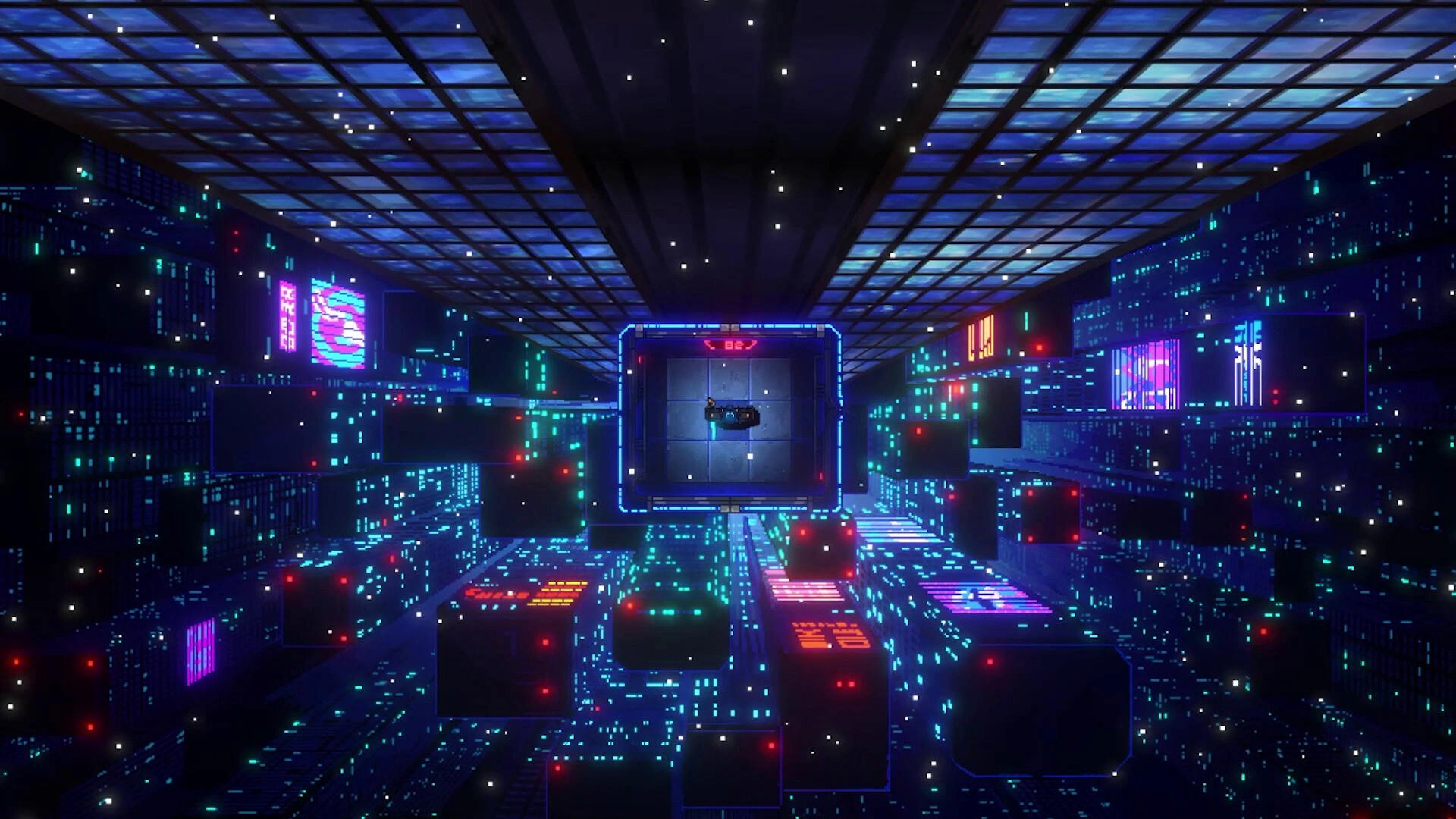

Every room in Kusan: City of Wolves asks the same brutal question: how quickly can Jin read the geometry of violence before someone puts a bullet through him? CIRCLEfromDOT’s top-down action game answers through instant deaths, immediate restarts, and compact stages arranged like lethal diagrams. A gunman waits behind a desk, a knife-wielding thug patrols the corridor, and a weakened wall offers the fastest entrance. Hesitation is usually fatal.
The comparison to Hotline Miami is unavoidable. Both games use overhead perspectives, one-hit deaths, grotesque pixel executions, and enemy placements that must be memorized through repetition. Yet this Korean production gradually separates itself from its American influence.
Jin is a black panther mercenary whose cybernetic War-Hand can smash doors, punch enemies across rooms, and parry incoming projectiles. His mission to recover an escaped psionic test subject links the city’s criminal violence to military experiments, government paranoia, and a past he has tried to bury.
That cultural relocation matters. The game borrows a Western indie template, then rebuilds it through Korean urban imagery, hip-hop rhythms, and anxieties surrounding militarization and divided loyalties.
Violence as a Puzzle
A successful encounter often unfolds in seconds, though planning it may require several deaths. Jin can charge his War-Hand and launch a door into an enemy, throw his quantum knife into a second target, stun a gunman with his pistol, then sprint across the room before another attacker raises their weapon. The sequence feels improvised once executed, yet every movement depends on reading enemy positions and understanding how each tool controls space.
The War-Hand gives the combat its identity. Its standard punch kills at close range, while the charged version breaks doors and weakened walls. Later upgrades extend its reach and allow Jin to redirect bullets, rockets, and other projectiles.
The quantum knife covers short distances and initially needs to be collected after every throw. Installing the return module changes its rhythm, letting Jin attack from range while moving toward another threat. Firearms carry limited ammunition, so they function as tactical openings rather than permanent solutions.
Enemies steadily complicate this grammar. Charging bulls cross rooms with alarming speed. Shielded fighters punish familiar attack patterns. Mechanical blade dogs and flying drones close gaps that once felt safe. During stages where Ayn accompanies Jin, his periodic pistol shots can stun opponents or reveal dangers just beyond the visible area. Street missions and a motorcycle pursuit briefly widen the game’s spatial language beyond doors and corridors.
The ranking system gives aggression an economic purpose. Time, attack variety, parries, sustained combos, and risky engagements influence grades from C to SS. Higher grades produce additional bolts, linking stylish performance to character growth.
Precision occasionally slips. The parry window can feel poorly communicated, creating moments where a successful deflection appears accidental while an apparently correct input ends in death. Boss fights expose this weakness most clearly. The second encounter demands sharp defensive timing, while the final battle combines punishing patterns with attacks and hitboxes that can feel unreliable. Difficulty becomes irritation when the rules lose clarity.
Building the War-Hand
Progression arrives through a grid where weapons, passive bonuses, and combat modules occupy physical space. Installing extra ammunition may force the removal of a movement upgrade. Improving a firearm can enlarge its chip, making raw power compete with knife enhancements or War-Hand abilities. The system turns character development into spatial negotiation.
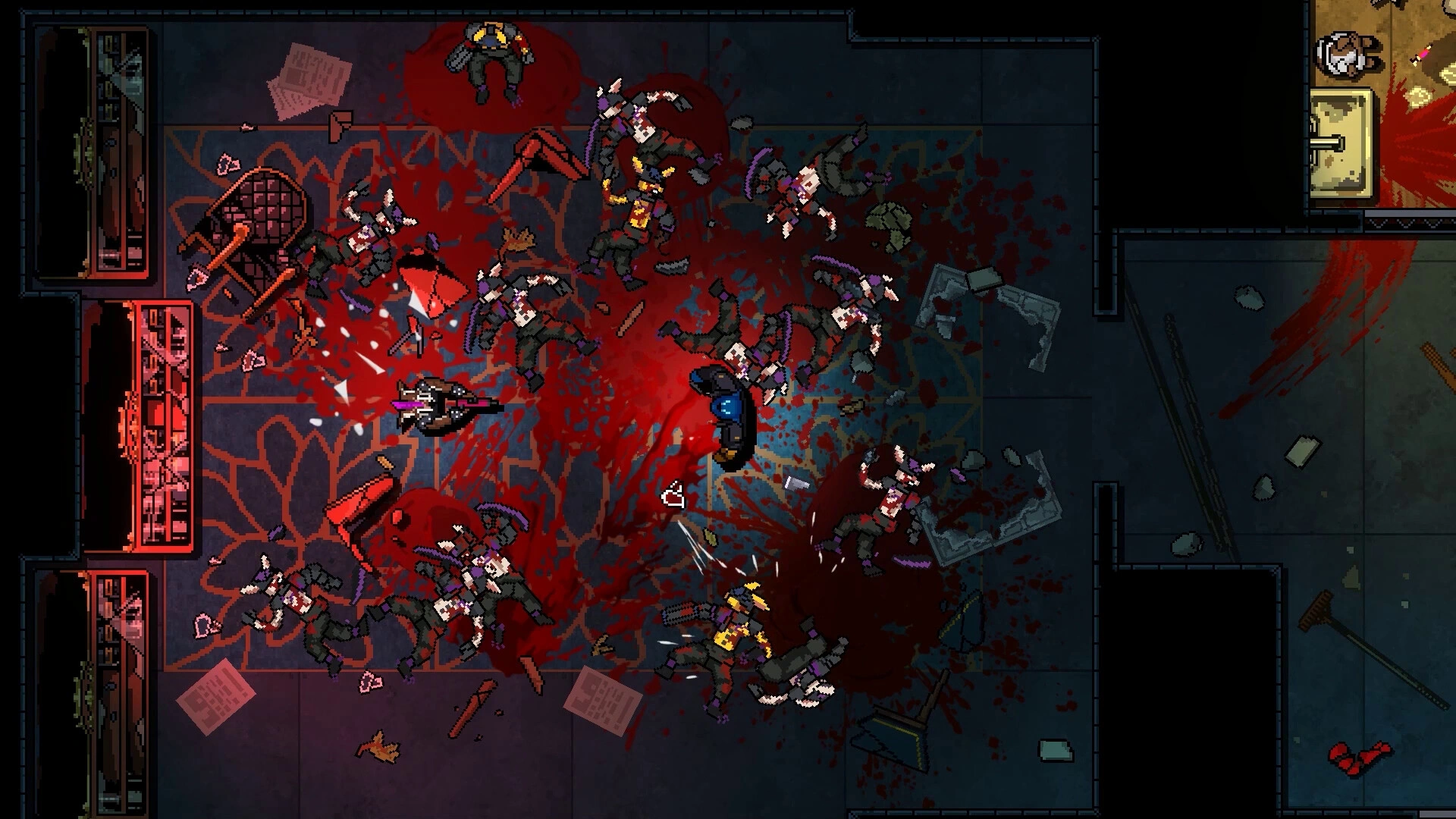
The grid reflects a design tradition visible across East Asian role-playing and strategy games, where equipment management often carries the same weight as direct combat. Here, that tradition sits inside a rapid Western-style action loop. The result is a useful tension between preparation and execution. Players may build Jin around speed and automatic knife recall, extend the reach of his punches, or equip projectile parries and explosive effects for robotic enemies.
Unlocking additional grid spaces with bolts or Limbus resources is often wiser than purchasing every available module. Certain weapons and abilities remain tied to grid expansion, so growing Jin’s capacity opens future options while preserving current flexibility. Since no build can hold everything, player expression comes from exclusion.
Chapter selection supports that experimentation after the campaign. Returning with later upgrades transforms earlier stages, revealing faster routes through rooms that once required caution. Missed Limbus collectibles, higher rankings, and bolt farming give repeated runs a practical purpose.
Neon Teeth
Kusan’s districts mix East Asian metropolitan density with exaggerated neo-noir decay. Nightclubs pulse beneath neon signs, laboratories hide institutional cruelty behind polished machinery, and highway stages turn traffic into another weapon.
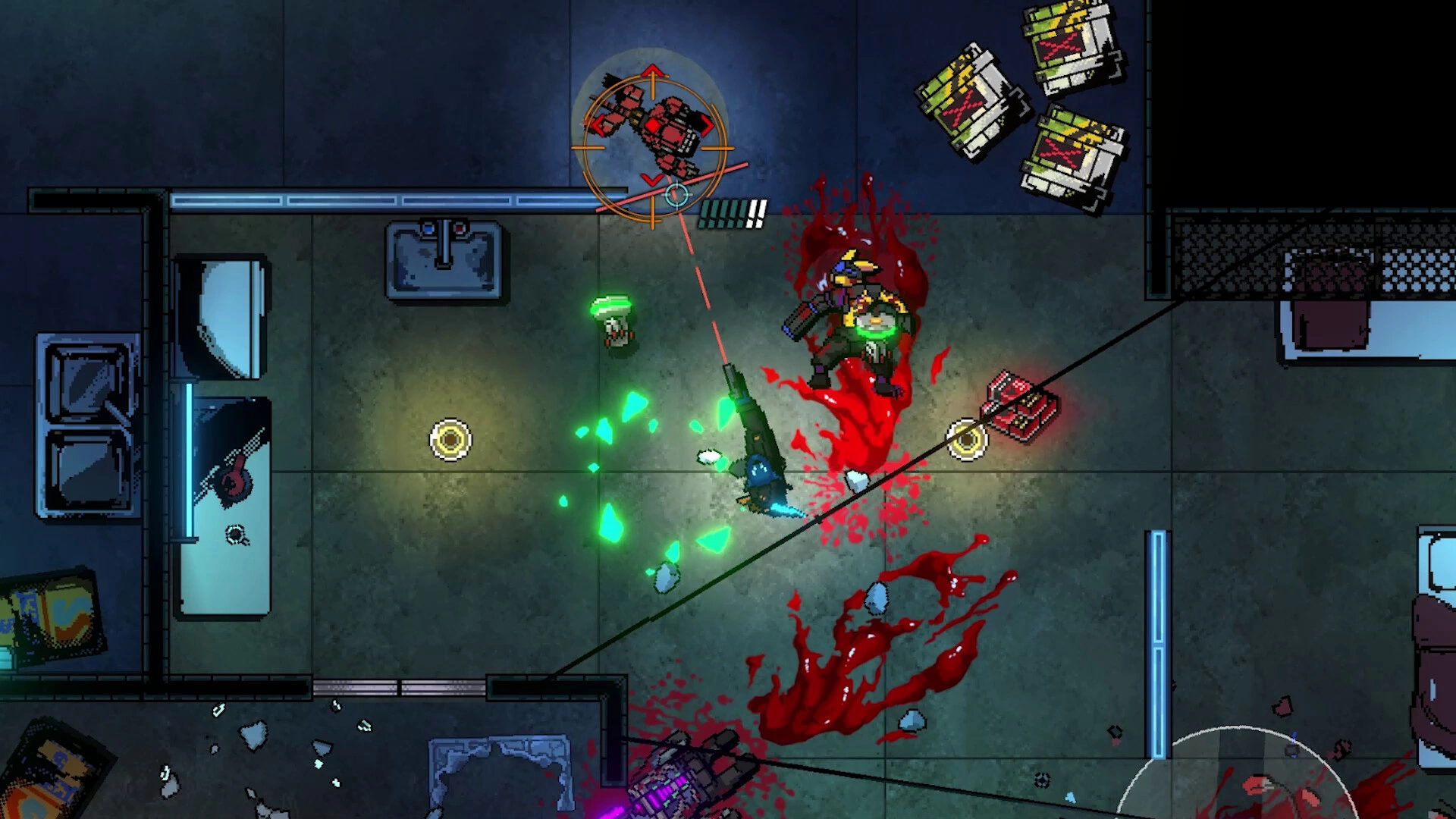
The anthropomorphic cast fits this world with surprising ease. Jin’s feline silhouette, Ayn’s Doberman severity, and the broader collection of gangsters, soldiers, and officials make animal identity part of the city’s visual hierarchy rather than a decorative joke.
Graphic-novel panels carry most of the narrative. Heavy shadows, bright color accents, written sound cues, and angular portraits lend conversations the texture of serialized Korean action comics. Flashbacks to Jin’s military service connect the current crisis to Wony, former comrades, and Project Origin. His bond with the escaped child gives the mission emotional force, while Limbus encounters expose victims trapped within the city’s experiments.
The storytelling sometimes struggles under its own exposition. Early scenes introduce psionic abilities, military history, political factions, and personal betrayals faster than the comic panels can organize them. Text-only exchanges and occasional wording problems make key revelations harder to follow, and the ending gives its surviving characters little space after the final confrontation.
The soundtrack communicates with greater confidence. Korean hip-hop influences appear through boom-bap drums, sampled textures, horns, and a calmer flute loop during upgrades. Gunshots, footsteps, engines, and the metallic crack of the War-Hand act as both atmosphere and warning. Kusan sounds like a city where every institution has failed, leaving rhythm and impact to impose the remaining order.
The Review
Kusan: City of Wolves
Kusan: City of Wolves takes the room-clearing brutality of Hotline Miami and filters it through Korean cyberpunk, hip-hop rhythm, and a city shaped by militarism and psychic experimentation. Jin’s War-Hand, quantum knife, and limited firearms create a combat language built on preparation, aggression, and repetition. The unclear parry timing and punishing bosses can turn precision into irritation, while dense exposition occasionally muddies the emotional stakes. Yet its modular progression, rapid restarts, graphic-novel presentation, and fierce audiovisual identity give this Korean action game a character independent of its Western reference point.
PROS
- Fast, demanding combat
- Flexible chip-grid progression
- Striking comic-panel storytelling
- Excellent Korean hip-hop score
- Strong replay and scoring incentives
CONS
- Unclear parry timing
- Uneven boss encounters
- Dense early exposition
- Abrupt final aftermath