

























Rock Springs, Wyoming, gives Allison Berg’s Time Warp its central contradiction. The town carries the slogan “Live and Let Live,” yet Kenny Starling’s plan to stage a shadow-cast performance of The Rocky Horror Picture Show draws complaints before the curtain rises. Berg does not treat that contradiction as a punchline. She treats it as a civic test.
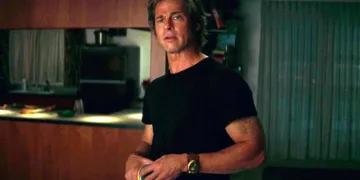
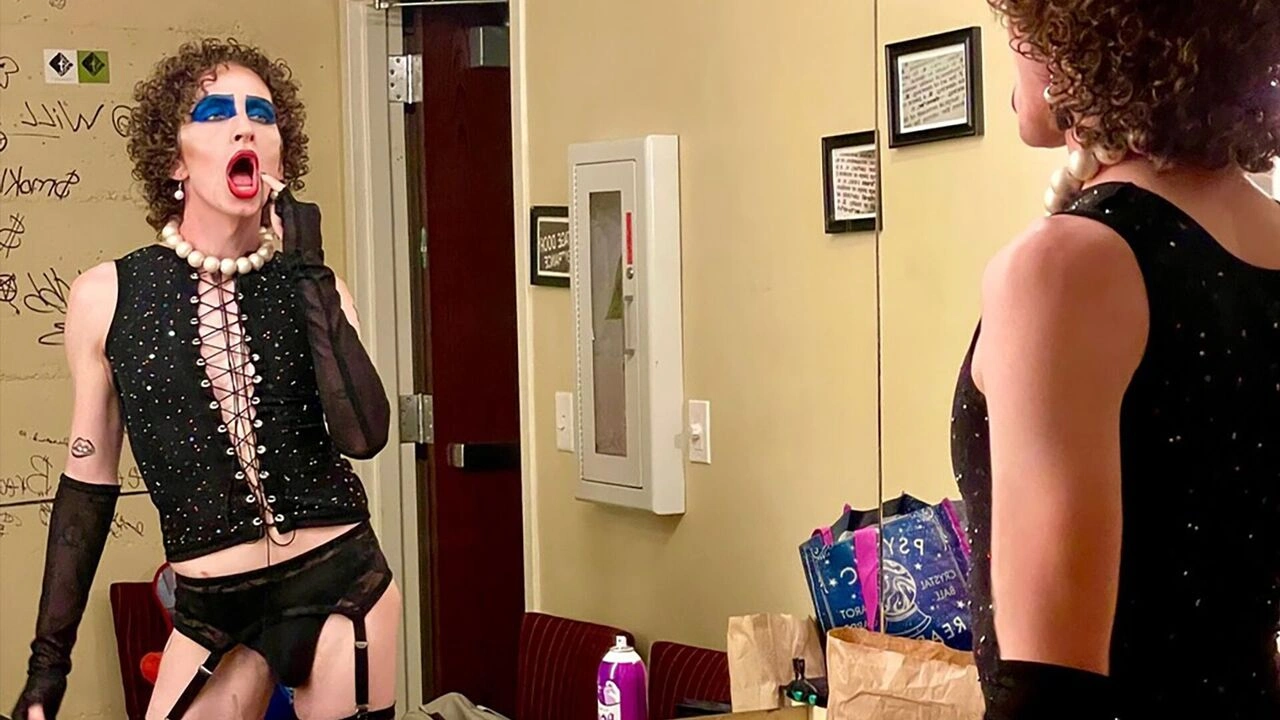
Filmed during the Starling Company’s 2022 production, the documentary follows Kenny, a 25-year-old nonbinary drag performer from South Carolina, as they direct the show and take on Dr. Frank-N-Furter. A shadow cast performs the movie live while the original film plays behind them, matching gestures, costumes, and musical cues. That format may sound like organized chaos, and it often is. Here, it also gives queer teenagers and older residents a place where expression has rules without becoming restrictive.
The strongest early material comes from that practical purpose. Several younger cast members hide their participation from their families. Others describe bullying, misgendering, and the quiet calculation required to decide which parts of themselves can safely appear in public. Kenny answers that pressure with rehearsals, hugs, costumes, and a stage.
Building a Company
Berg introduces the cast gradually, letting Rock Springs widen through the people who enter the theater. Bones and Megan, two high school friends, name each other as their support system during an interview interrupted by a passing train. Berg keeps the interruption. The sound makes their conversation feel rooted in this specific town, where freight keeps moving while two teenagers sit still long enough to describe what home does not give them.
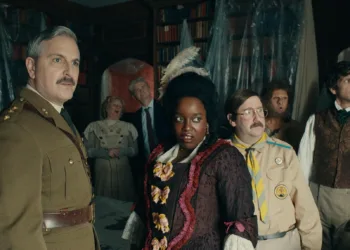
The ensemble resists easy sorting. A Black performer who left acting after receiving stereotypical school roles finds a new part that restores her interest. A city council member agrees to play Rocky, complete with the character’s revealing costume.
A former homicide detective joins the company. Another participant offers his real motorcycle for the show. Each detail matters because Berg keeps showing how theater turns strangers with little apparent common ground into collaborators solving the same problems: cues, entrances, makeup, props, nerves.
One small backstage ritual explains the group’s bond better than a speech could. Before the performance, the cast forms a circle and passes a squeeze from hand to hand, a warm-up known as “pass the heartbeat.” The technique is simple: physical contact gives performers a shared rhythm before they step into separate roles. In Rock Springs, that squeeze carries extra weight. It says the person beside you is present, listening, and ready.
A Town Watches Back
The city council sequence gives the documentary its sharpest public conflict. Residents question the production’s effect on children and treat drag as a political provocation. Kenny responds without shrinking the show into an apology. They explain who they are, why the production exists, and why queer residents need access to public space.
Berg’s camera stays patient during these exchanges. She avoids cutting every hostile remark into a villain reel, which allows uncertainty to remain visible beside prejudice. That choice becomes especially useful during her interview with a Trump-supporting veteran protesting near the theater. His rhetoric initially places him in a familiar documentary role.
Berg then asks about Rock Springs’ suicide rate and mental-health resources. His answer turns toward the loss of his brother. The scene does not erase his politics. It shows that grief can sit beside beliefs that cause harm, which is harder to film and harder to dismiss.
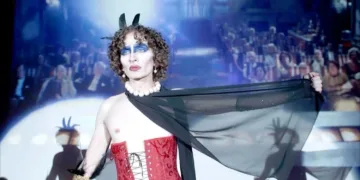
The promotional performance of “Sweet Transvestite” at a local bingo event tests the town in a different way. Kenny arrives in full costume, ready for resistance. The crowd cheers, sings, and applauds. Berg films the response without pretending one successful number has repaired Rock Springs. What changes is smaller and easier to trust: people encounter the performers directly, and the feared spectacle becomes a song performed by neighbors.
The Cost of Keeping Everyone
At roughly 113 minutes, Time Warp sometimes gives its generosity too much screen time. Berg and editor Frank Keraudren move among many cast members, rehearsals, civic debates, workplace conversations, and the final show. Some participants receive clear arcs, while others appear in fragments that never gain the same emotional shape. Rehearsal passages repeat information the interviews have already established.
The final performance also favors emotional momentum over strict musical chronology. Viewers who know Rocky Horror closely may notice songs and moments arranged out of sequence. This is an editorial choice rather than a production mistake. Berg is cutting for the cast’s experience, moving from fear to release, rather than documenting the stage show beat by beat.
That approach works best when the film focuses on concrete acts: umbrellas rising in the audience, a motorcycle entering the production, makeup applied backstage, and the cast gathering for the heartbeat exercise. These images explain the value of the show without turning art into an abstract cure. The production cannot solve family rejection, bullying, or poor mental-health support. It can give people a room, a role, and someone waiting beside them for the next cue.
Time Warp is a feature documentary film that premiered on June 6, 2026. The film follows a charismatic 25-year-old performer as he establishes a drag theater company in a conservative Wyoming mining town to stage a shadow cast production of The Rocky Horror Picture Show. Audiences can watch the film through film festival screenings, such as its debut at the Tribeca Festival, and independent distribution showcases.
Full Credits
Title: Time Warp
Distributor: Time Warp Films LLC
Release date: June 6, 2026
Running time: 112 minutes
Director: Allison Berg
Writers: Allison Berg, François Keraudren
Producers and Executive Producers: Allison Berg, Jen Chaiken, Susan Margolin, John Cameron Mitchell, Billy Porter, Josh Gad
Cast: Kenny Starling, Kaley Sikora, Gabriel Garcia, Dejanae Westbrook, Tim Robinson, Devin Manfull, Valerie McCoy, Tasha Seppie, Hana Tanaka, Em O’Lexey
Director of Photography (Cinematographer): Carrie Cheek, Bryan Donnell, Allison Walsh, Derek Wiesehahn, Melinda Binks, Alyson Spery, Ilie Mitaru, Ben Bloodwell
Editors: François Keraudren
Composer: T. Griffin, Dash Hammerstein, Jordi Nus, Elizabeth P.W.
The Review
Time Warp
Time Warp finds its strongest images in ordinary acts of theater: a hand squeezed during the cast’s heartbeat exercise, Kenny Starling stepping before a wary city council, and a bingo crowd cheering “Sweet Transvestite.” Allison Berg gives Rock Springs room to reveal kindness, prejudice, confusion, and change without forcing its residents into tidy categories. The large ensemble and 113-minute runtime occasionally blur individual stories, yet the final performance carries genuine emotional force because the documentary has shown what reaching that stage costs.
PROS
- Kenny Starling’s generous presence
- Intimate cast interviews
- Nuanced portrait of Rock Springs
- Joyful performance footage
- Compassionate direction
CONS
- Overextended runtime
- Uneven ensemble development
- Repetitive rehearsal passages
- Loose performance chronology