


















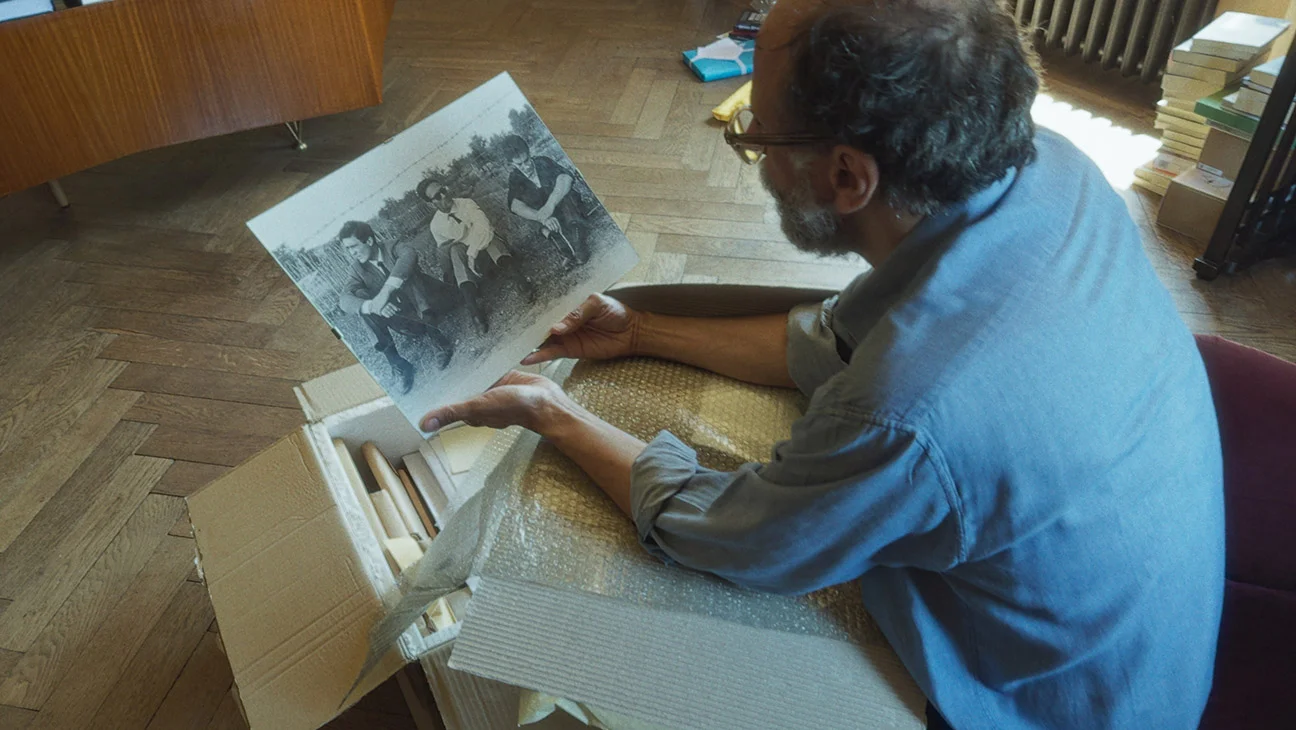

Seven hours is long enough for admiration to become atmosphere. Luca Guadagnino’s Joie de Vivre: Notes, Thoughts, Words, Reflections, Faces, Visions, Around Bernardo Bertolucci and the Cinephilia of the 20th Century That Is No More spends that time circling Bernardo Bertolucci, sometimes approaching him through individual films, sometimes through the people who loved or argued with his work, and sometimes through the rooms he left behind.
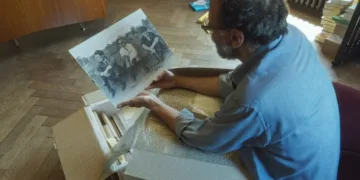
Guadagnino visits Bertolucci’s Rome apartment, moving past books, photographs, DVDs, and the residue of decades lived among images. The camera catches itself in mirrors. A boom microphone occasionally intrudes. Nothing here pretends that remembrance can be neutral.
The documentary therefore feels less like biography than séance. Guadagnino wants Bertolucci back, but he also wants back the culture that made directors such as Bertolucci possible: repertory screenings, arguments that lasted past midnight, cinema treated as something capable of reorganizing a life. Seven hours can make that longing physically tiring.
Beauty, Politics and the Butter Scene
The film becomes sharpest when devotion encounters something it cannot comfortably sanctify. The Conformist provides one such passage. James Gray describes the film’s union of melancholy and political spectacle while Guadagnino lets Bertolucci’s images carry much of the argument. Fascism appears through architecture, bodies, corridors, movement, and desire. Political submission becomes something sensual before it becomes terrifying.
Then comes Last Tango in Paris. Guadagnino shows the infamous butter sequence and gives considerable space to the dispute surrounding Maria Schneider’s treatment during production. Mark Cousins condemns Bertolucci’s decision to withhold part of the planned simulated assault from Schneider before shooting it.
Catherine Breillat offers a different reading of Schneider’s later feelings toward Bertolucci. The documentary also separates the persistent falsehood that an actual rape occurred from the ethical question that remains once that misconception is removed. What remains is ugly enough.
A 19-year-old actress entered a scene whose intended humiliation had been partly concealed from her by two powerful men. Bertolucci’s artistic intentions cannot erase that imbalance, and Guadagnino wisely allows the disagreement to remain unresolved. His own voice, curiously, becomes quieter here.
1900 extends the film’s fascination with transgression. Margot Robbie recalls its cocaine sequence with infectious excitement, while Guadagnino includes Donald Sutherland’s fascist character murdering a child with sickening casualness. These clips make Bertolucci difficult to domesticate. His cinema keeps returning to sex, violence, power, and bodies stripped of safety.
A Canon Built by Preference
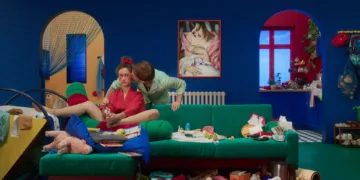
For a film this enormous, absence becomes strangely loud. The Dreamers receives almost nothing. This is especially peculiar because Guadagnino openly wants younger viewers to discover Bertolucci, and The Dreamers, with its Paris 1968 setting, erotic triangle, and obsession with the Nouvelle Vague, remains one of his most obvious bridges toward younger cinephiles.
Other films vanish or shrink according to Guadagnino’s personal taste. He admits his dislike of Stealing Beauty. Little Buddha, Partner, and Besieged drift around the margins. Meanwhile, La Luna receives sustained attention for its relationship between Jill Clayburgh’s opera singer and her heroin-addicted son, including the incestuous current running between them. Tragedy of a Ridiculous Man is excavated from comparative obscurity. Bertolucci’s final feature, Me and You, receives a generosity of attention that its modest reputation might never predict.
There is something appealing about this refusal to behave like an encyclopedia. Guadagnino is preserving his Bertolucci, with all the distortions that possessive pronoun implies. Yet the freedom has a cost. Conversations stretch. Francesca Manieri wanders through philosophical and gender-theory reflections across wintry landscapes. Mark Cousins, often perceptive, is allowed repeated excursions far beyond the films themselves. The second half begins to feel less like expansion than accumulation, one thought resting upon another until the structure bends beneath them.
Who Gets to Keep Cinema Alive?
The most revealing argument in Joie de Vivre may concern criticism itself. James Gray discusses the democratization of film opinion and jokes that nobody should value his thoughts about particle accelerators as highly as those of a physicist. Beneath the joke lies anxiety: if every response to art becomes interchangeable, what disappears with expertise, historical memory, patience?
Mark Cousins expresses the same fear in softer language when he describes cinema as a form of companionship, something that stays beside a person after love for it has taken hold. Guadagnino understands this almost bodily. He admits that, as a younger man, he was sexually attracted to Bertolucci. Elsewhere, his editing gathers moments of androgyny, homoeroticism, sexual ambiguity, and fluid desire across Bertolucci’s films, allowing recurring images to suggest questions that biography cannot settle.
Jeremy Thomas recalls the enormous production machinery behind The Last Emperor and The Sheltering Sky. Debra Winger brings the latter back through memories of its difficult Moroccan shoot. These recollections restore cinema as labor, conflict, geography, exhaustion.
Late in the documentary, a montage races through Bertolucci’s faces, landscapes, glances, bodies, violence, and desire. After hours of people explaining cinema, Guadagnino finally lets cinema answer for itself. For a few minutes, the dead seem very near.
Joie de vivre had its world premiere at the 83rd Venice International Film Festival on September 2, 2026. The documentary explores the life, cinema, and legacy of legendary Italian filmmaker Bernardo Bertolucci through archival insights, reflections, and critical commentary.
Full Credits
Title: Joie de vivre
Distributor: Festival release
Release date: September 2, 2026 (Venice International Film Festival)
Running time: Feature length documentary
Director: Luca Guadagnino
Writers: Luca Guadagnino
Producers and Executive Producers: Sila Berruti, Luca Guadagnino
Cast: Luca Guadagnino, Bernardo Bertolucci, Mark Cousins, Murielle Joudet
Editors: Walter Fasano
The Review
Joie de Vivre
Seven hours spent among Bertolucci’s images can feel like inhabiting a house whose rooms refuse to end. Guadagnino’s devotion gives Joie de Vivre its beauty and its burden. The passages on The Conformist, Last Tango in Paris, and 1900 confront desire, power, and moral decay with unusual patience, while the neglect of The Dreamers leaves a conspicuous absence. Its excess can exhaust, yet its belief in cinema as memory remains difficult to shake.
PROS
- Exceptional archival film material
- Searching discussion of Last Tango in Paris
- Rich reflections on cinephilia
- Strong contributions from James Gray and Mark Cousins
- Personal access to Bertolucci’s world
CONS
- Punishing seven-hour length
- Major gaps in Bertolucci’s filmography
- The Dreamers barely addressed
- Several overextended conversations
- Weaker, looser second half