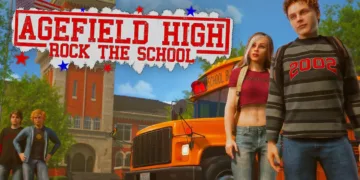



























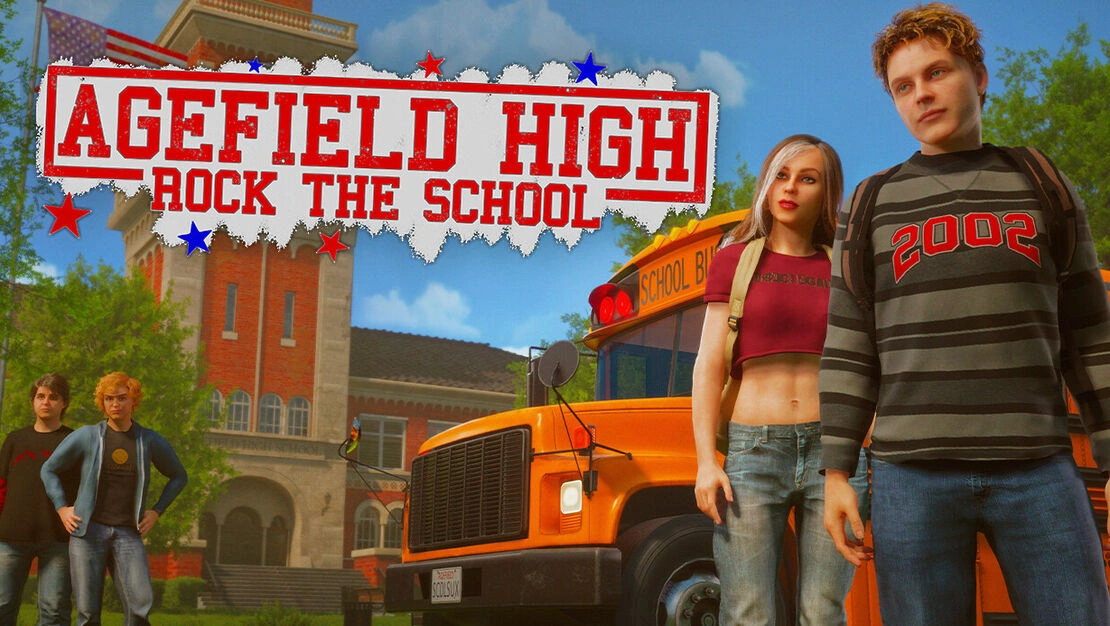

Agefield High: Rock the School wants you to feel like the troublesome kid Rockstar stopped making games about. Sam arrives in a small American town during his final months of high school, meets fellow outsiders Kale and Axel, and quickly gets pulled into schemes involving popular jock Seth, parties, girls, stolen property, and the inevitable march toward prom. The blueprint is unmistakably Bully, filtered through the raunchier teen comedies of the early 2000s.
That combination should create a playground built around adolescent bad decisions. Instead, Sam barely registers as the person making them. He can throw rocks through windows, help sabotage Seth’s party, replace failed tests, and participate in a panty raid, yet his flat delivery gives each incident roughly the same emotional temperature. Even meeting potential romantic partners feels oddly mechanical because the game has little social simulation beneath those relationships. Two endings exist, but story missions dictate most of Sam’s path.
Kale and Axel fare little better. Their obsession with sex and status fits the period being parodied, yet repeated crude jokes rarely reveal anything beneath the stereotype. The same problem reaches the adults, from the teacher connected to an adult-magazine errand to the stalker whose storyline becomes an extended trailing mission. The game keeps reaching for the energy of American Pie, then delivering scenes where stiff faces stare past each other while awkward pauses swallow the punchline.
Freedom Between Appointments
The strange thing about Agefield is that its small town initially feels pleasant to inhabit. Sam can leave home in the morning, ride through residential streets, stop at shops, buy clothes or tattoos, attend class, and ignore the main story for a while. Red-brick Agefield High, parks, stores, farmland, and suburban neighborhoods create a believable footprint for a compact school sandbox. Then the clock begins telling you what you cannot do.
Classes and missions operate during fixed hours, yet there is no convenient way to skip ahead through the day. Missing a mission window can mean wandering around until another appointment becomes available. The absence of fast travel makes that dead time especially noticeable when an objective requires crossing town, completing a tiny task, then heading back across the same streets.
School itself barely rewards attendance. Math, English, Geography, and similar subjects consist largely of multiple-choice questions, with good grades paying spending money instead of feeding into skills or character growth.
Music changes the format with a Guitar Hero-style minigame, but the button prompts do not properly connect with the notes being played. Skipping class carries little meaningful consequence, leaving the central fantasy of being a student strangely disconnected from the systems governing Sam’s life.
The BMX is one of the few mechanics that occasionally captures the carefree mood Agefield is chasing. You can summon bikes from racks and bunny-hop around town, turning a dull commute into a few seconds of improvised stupidity. Physics can ruin the pleasure just as quickly, sending Sam spinning after a minor bump or launching him when the bicycle clips scenery.
Mischief Without Momentum
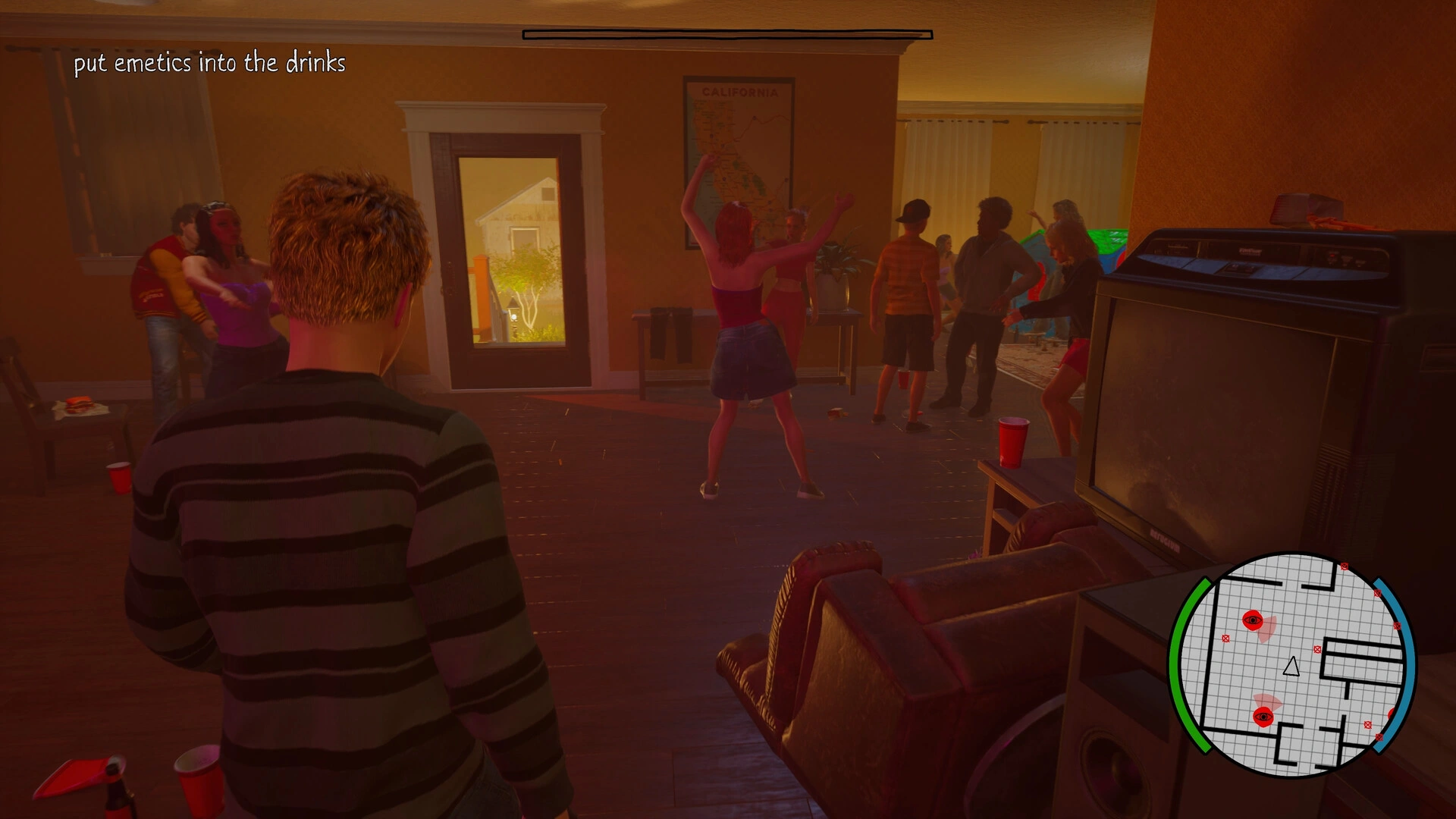
Most missions reduce that open-world promise to a handful of repeated actions. Sam tails Seth or another NPC, crouches around vision cones, retrieves an object, gets chased by authority figures, or fights another collection of jocks.
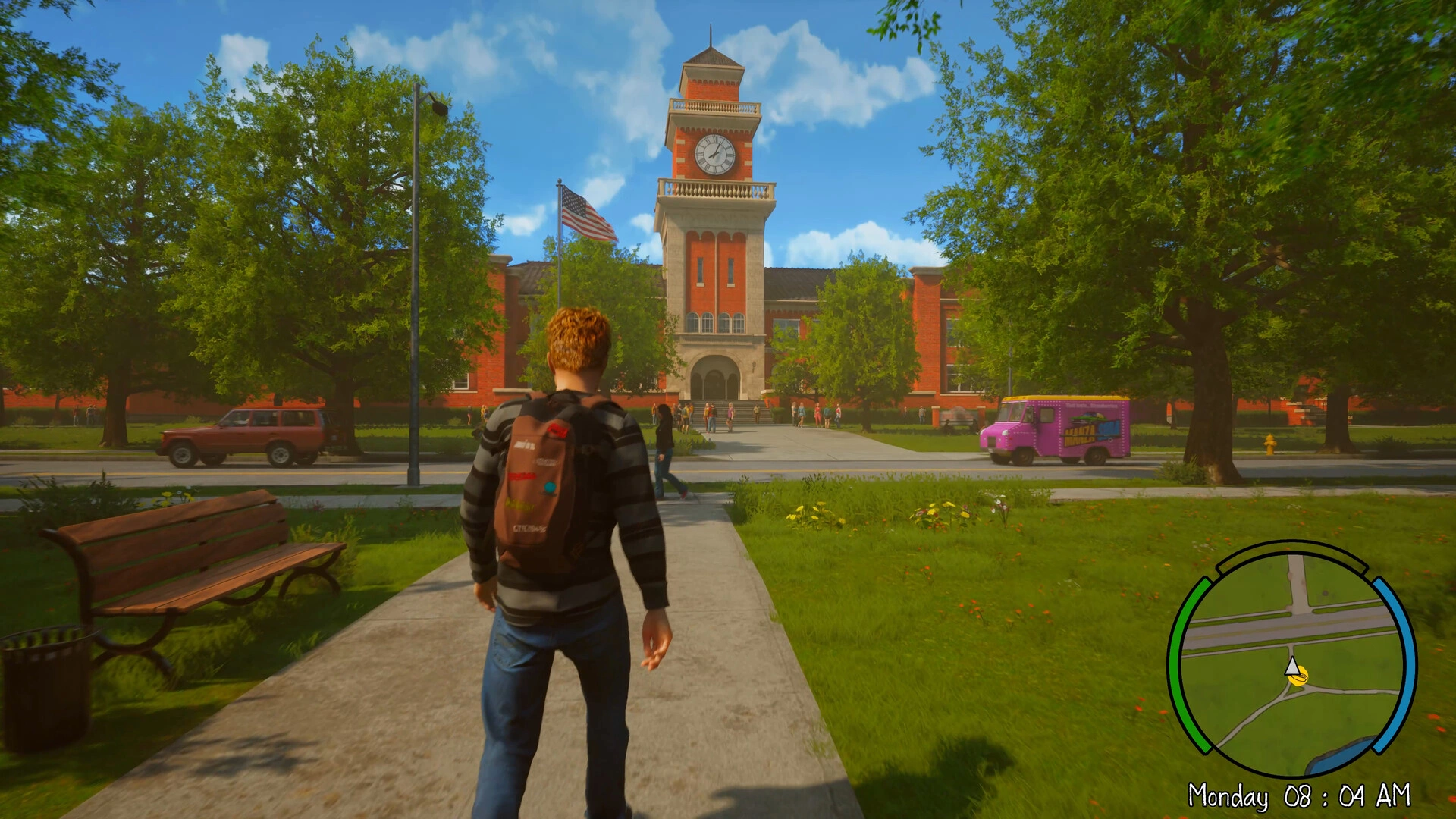
Stealth is especially brittle. NPC patrols can move without convincing patterns, so success often feels tied to waiting for pathfinding to cooperate. During chases, the same AI can become confused by fences, porches, or houses, letting Sam escape simply because his pursuer cannot solve the environment.
Combat has punch, kick, shove, block, jump, and lock-on commands, yet those pieces never form a satisfying rhythm. Attacks feel slow and unreliable, while enemies can keep swinging against Sam’s guard rather than opening themselves to a clean counter. Creating space and repeatedly kicking becomes safer than engaging with much of the move set. When forced fights appear again and again, that limited solution turns every confrontation into the same emotional beat.
The side activities cannot carry the gaps. Lawn mowing, deliveries, collectibles, and small jobs provide something to occupy Sam between missions, but none changes how the town responds to him. Punching civilians usually summons police or school staff, followed by a trip to the principal’s office and a minor penalty. A game selling teenage rebellion gives rebellion surprisingly little consequence.
When the Town Breaks
Technical problems make Agefield’s weakest moments feel harsher because they interfere with the few pleasures that survive. Character faces barely match spoken dialogue, eyes drift through conversations, and NPCs can clip into scenery or appear to hover rather than walk. Doors automatically swing open as characters approach, sometimes pinning Sam or disrupting movement through a room.
Bicycles are even less predictable. Clipping into an object can launch Sam from the seat, while small collisions can trigger exaggerated ragdoll behavior. Saving and returning later may place him back at home, creating trouble for activities tied to specific hours. Some players have encountered crashes severe enough to erase substantial progress.
Sound gives the town little help. NPCs repeat the same remarks, voice performances struggle with already awkward dialogue, and short guitar riffs recur until their intended early-2000s attitude becomes background noise. Long stretches of bicycle travel can pass with little music at all, exposing just how empty those journeys are.
That emptiness is the feeling Agefield High has the hardest time escaping. A BMX jump can be funny. A badly confused policeman can accidentally create a great slapstick moment. Then Sam lands, the next mission marker sits across town, and the clock says you still cannot start it.
The Review
Agefield High: Rock the School
Agefield High: Rock the School understands the fantasy of being the troublesome new kid far better than it understands what makes that fantasy fun to play. Riding a BMX through town can briefly produce the carefree mischief its premise promises, yet rigid schedules, repetitive stealth, limp combat, empty spaces, and technical problems keep interrupting that feeling. Its early-2000s teen-comedy attitude rarely survives the flat characters or recycled jokes. There is a school sandbox buried here, but reaching it feels like digging through unfinished systems.
PROS
- Coherent small-town setting
- BMX riding has flashes of fun
- Clear early-2000s teen-comedy ambition
CONS
- Repetitive mission design
- Weak combat and stealth
- Restrictive daily schedule
- Thin characters and crude writing
- Frequent bugs and technical jank