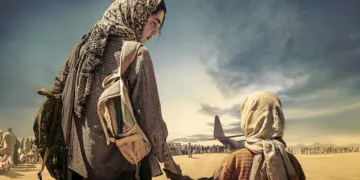

























The cruelest joke in Kabul is that paperwork still matters after the government behind the paperwork has effectively disappeared. A visa can say you are approved to leave Afghanistan. A Taliban checkpoint can say otherwise. Guess which document wins.
Created as a six-part European co-production and directed by Kasia Adamik and Olga Chajdas, Kabul drops into 15 August 2021, when Taliban forces enter the Afghan capital while American troops and their NATO partners prepare to withdraw. Writers Olivier Demangel, Thomas Finkielkraut and Joé Lavy treat the collapse as a series of clocks running simultaneously: embassies are closing, evacuation lists are changing, airport access is tightening and civilians are discovering that assurances made yesterday may expire before lunch.
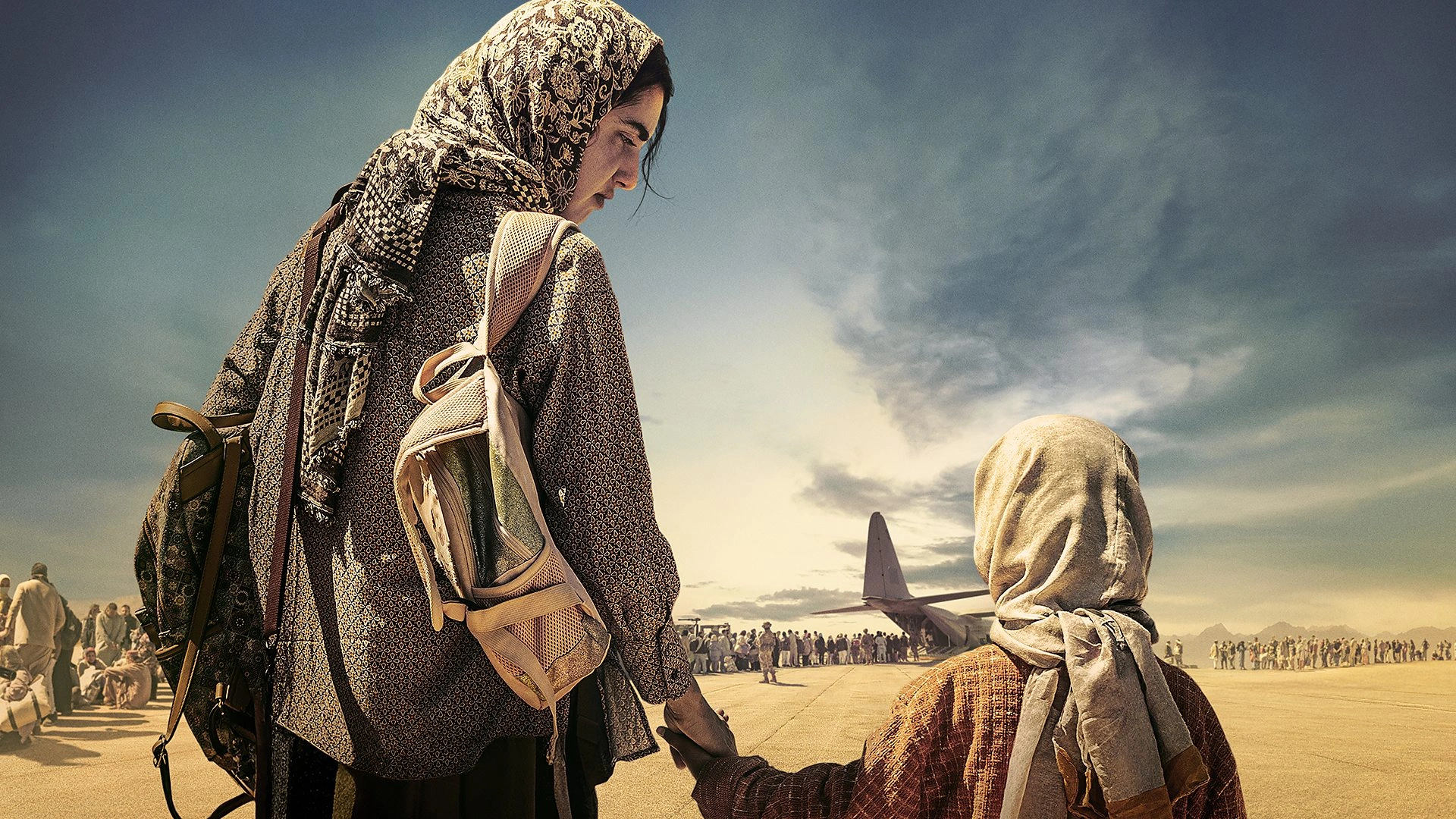
At the human end of that machinery sits the Nazany family. Prosecutor Zahara (Darina Al Joundi) has helped imprison Taliban members and now appears on their kill list. Her husband Baqir (Vassilis Koukalani) understands the danger before she fully accepts it. Their daughter Amina (Hannah Abdoh) works in a hospital and refuses to abandon her patients. Their son Fazal (Shervin Alenabi), an Afghan soldier, is stranded outside the city as the army disintegrates around him.
The structure is familiar crisis-thriller material. Kabul earns its urgency by making every practical problem worse than the previous one. First you need permission. Then transportation. Then a checkpoint lets you through. Then the airport gate needs to remain open. Apparently escaping a collapsing state comes with several administrative subplots.
A Family Pulled Apart
Zahara’s story finds its force early, when Baqir urges her to leave their home and gunfire outside abruptly ends the debate. Darina Al Joundi plays those moments without turning Zahara into an action-thriller heroine. Her prosecutor understands legal systems, procedure and evidence. None of those offer protection once armed men replace institutions.
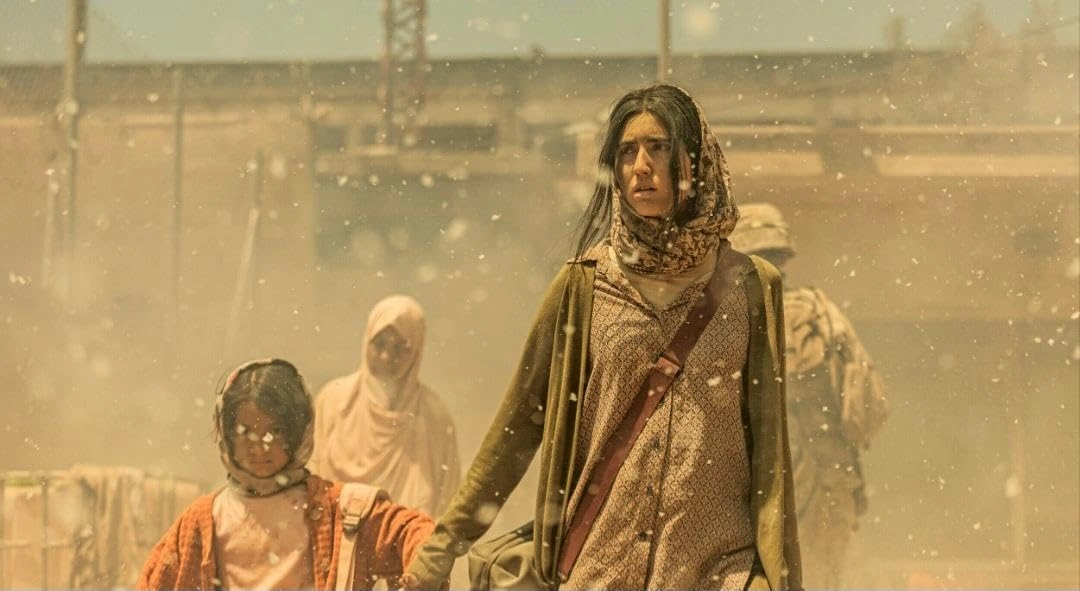
A harsher choice follows when Zahara must abandon an elderly colleague who cannot move quickly enough to reach the French embassy. The series does not stretch the scene for sentiment. Time itself becomes the antagonist. Staying is compassionate. Staying may also get both women killed. That dynamic gives Kabul one of its strongest dramatic rules: good decisions and moral decisions keep separating.
Amina initially offers another kind of resistance. Having recently completed her first transplant, she has little interest in treating Europe as an automatic salvation. She trained to care for Afghan patients and intends to remain with them. Then Taliban fighters enter the hospital, and the argument changes instantly.
The most effective detail is brutally simple. Workers begin constructing a cinder-block wall through the hospital so male and female patients can be physically separated. Medical need comes second to dogma. Later, a young girl calms herself by listening to music on Amina’s iPod until a Taliban fighter tears the device away because music is forbidden. No speech about women’s rights could communicate the threat with comparable efficiency. A wall goes up. A song stops.
Fazal’s strand pushes the series toward military and espionage territory. He abandons an Afghan army checkpoint once Taliban numbers make resistance futile, then seeks his former CIA contacts instead of heading directly toward Kabul. His route gives the series access to the collapse outside embassy compounds while tying him to Martin, an American intelligence operative. It is the most conventionally thriller-shaped branch of the family story. Amina gets a wall. Zahara gets a kill list. Fazal gets the CIA. Television knows its departments.
The Evacuation Machine
Once Kabul reaches the embassies and airport, suspense begins feeding on procedure. Gilles (Jonathan Zaccaï), working on French security, faces the ugly mathematics of evacuation: documents must be checked, names confirmed, vehicles found and routes protected while the Taliban tighten control street by street.
American soldiers control crucial access points around the airport, creating situations where diplomats technically possess authority to evacuate someone yet cannot physically get that person through a gate. That gap between policy and reality supplies some of the show’s best tension. A character can survive armed Taliban patrols, reach the airport and still lose because somebody moved a barrier.
Giovanni (Gianmarco Saurino) provides one of the lighter character transformations without turning the material breezy. An uncertain Italian administrator suddenly finds himself acting as consul and has to develop diplomatic nerve at roughly the speed normally reserved for software updates. His attempts to secure places for Afghan evacuees gradually reveal someone capable of acting under pressure rather than merely processing it.
His effort to reunite a lost child with the child’s mother inside the airport crowds works because it shrinks the geopolitical disaster to one comprehensible objective. Find one person. Keep one promise. For a few minutes, that feels almost achievable.
The fifth episode, “The Wait,” tightens the trap further when intelligence suggests a possible Daesh attack near the airport. American forces respond by restricting access. From a security standpoint, the logic is obvious. For civilians stranded outside, the distinction between protection and abandonment becomes painfully academic.
Adamik and Chajdas keep these strands moving through persistent cross-cutting. One character clears a checkpoint while another encounters a closed gate. Somebody receives good news while the audience already knows the route attached to that news is collapsing. The editing turns information into suspense because characters are rarely operating with the same information at the same time. The show understands a useful television truth: sometimes the scariest sentence in a thriller is “your documents are valid.”
Promises With Expiry Dates
Political anger runs underneath Kabul, yet the series is strongest when it lets physical situations carry that anger. Zahara is endangered because she prosecuted Taliban fighters under the legal order Western governments helped support. Fazal is endangered because he served in the Afghan army.
Amina watches the professional freedom she took seriously begin disappearing inside her own workplace. Another man desperately seeks evacuation because his sexuality could place his life at risk under the returning regime. These people followed, worked within or believed in systems that foreign governments spent two decades helping construct. Then the exits start closing.
The final episode makes the accusation explicit by playing George W Bush’s 2001 speech about America’s friendship with the Afghan people. Twenty years separate that promise from the evacuation, which is enough time for political language to acquire a very nasty echo.
Kabul does something smart with the Western characters here. Gilles, Giovanni and others are frequently sincere in their attempts to help. Their desperation prevents the series from flattening withdrawal into a lineup of cartoon bureaucrats twirling diplomatic moustaches. The individuals may want to honour commitments that the larger system can no longer fulfil. That distinction sharpens the criticism. A broken promise does not become less broken because the person standing at the gate feels terrible about it.
The huge European production structure carries its own mild irony. Eleven public broadcasters helped build a drama about international cooperation failing under pressure. The multilingual setting occasionally becomes awkward when French and Italian characters default to English while Afghan and Arab characters retain their own languages. For a project assembled across Europe, linguistic standardisation feels like an oddly timid choice. Still, the series keeps its best political arguments concrete. The Taliban do not need a manifesto when they can build a wall through a hospital.
Too Many Clocks
Six episodes give Kabul enough space to create scale without draining the emergency from events. The danger is that scale occasionally starts eating the characters. The Nazany family remains the emotional spine, yet embassy officials, soldiers, CIA personnel, diplomats, doctors, evacuees and Taliban figures all need screen time. Some supporting characters consequently arrive as functions before they become people. This person handles security. That person has intelligence. Someone else controls a gate. The crisis keeps expanding while individual interior lives struggle for oxygen.
Fazal’s CIA strand feels the strain most clearly. His connection to Martin supplies action and espionage momentum, yet its intersections with the wider evacuation plot can feel suspiciously tidy beside the surrounding disorder. Real chaos rarely has this much respect for ensemble casting.
The dialogue also occasionally loses faith in the images. Characters sometimes articulate political implications that scenes such as the hospital wall or blocked airport entrance have already made perfectly clear. The series has shown us the point. Then somebody arrives carrying the point in a speech, presumably in case it escaped.
Still, Adamik and Chajdas maintain formidable pressure by switching perspective before any single storyline becomes comfortable. The title sequence’s echoes of Homeland suit a production that mixes intelligence drama, political thriller and wartime procedural, while the Greek locations convincingly stand in for Kabul and the surrounding Afghan terrain.
The human material cuts deepest whenever genre machinery quiets down: Zahara leaving her colleague, Amina staring at that newly built wall, Giovanni searching the crowd for a child’s mother. Kabul can orchestrate checkpoints, intelligence threats and embassy logistics with impressive control. Then someone loses an iPod, and the whole war suddenly fits in one hand.
Kabul premiered on France 2 in March 2025 and is available for streaming on international platforms like Prime Video. Set against the chaotic backdrop of the U.S. military withdrawal from Afghanistan in August 2021, the geopolitical drama follows an Afghan family desperately trying to escape while international diplomats and soldiers scramble to execute a tense evacuation.
Full Credits
Title: Kabul
Distributor: Mediawan, France 2
Release date: March 31, 2025
Rating: TV-14
Running time: 52 minutes
Director: Kasia Adamik, Olga Chajdas
Writers: Olivier Demangel, Thomas Finkielkraut, Joe Lavy
Producers and Executive Producers: Fabienne Servan-Schreiber, Charlotte Ortiz, Matthias Weber, Thibault Gast
Cast: Shervin Alenabi, Darina Al Joundi, Jonathan Zaccaï, Eric Dane, Vassilis Koukalani, Jeanne Goursaud, Gianmarco Saurino, Thibault Evrard
The Review
Kabul
Kabul turns evacuation paperwork, hospital corridors and blocked airport gates into instruments of suspense, with its sharpest moments coming when bureaucracy becomes another form of danger. The Nazany family gives the political catastrophe a human pulse, while Giovanni's improvised diplomacy adds welcome texture to the international response. Too many intersecting plots occasionally leave characters functioning as crisis-management chess pieces, and some speeches say aloud what stronger scenes have already shown. Still, six episodes rarely loosen their grip. History supplied the nightmare. Television supplies the countdown.
PROS
- Relentless evacuation tension
- Strong Nazany family focus
- Effective hospital sequences
- Sharp procedural detail
- Excellent six-episode pacing
CONS
- Crowded ensemble structure
- Occasional speech-heavy dialogue
- Convenient plot intersections
- Uneven character depth