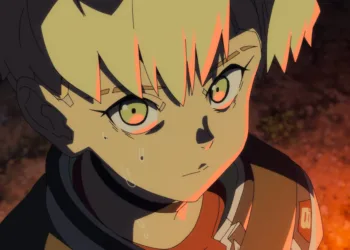


























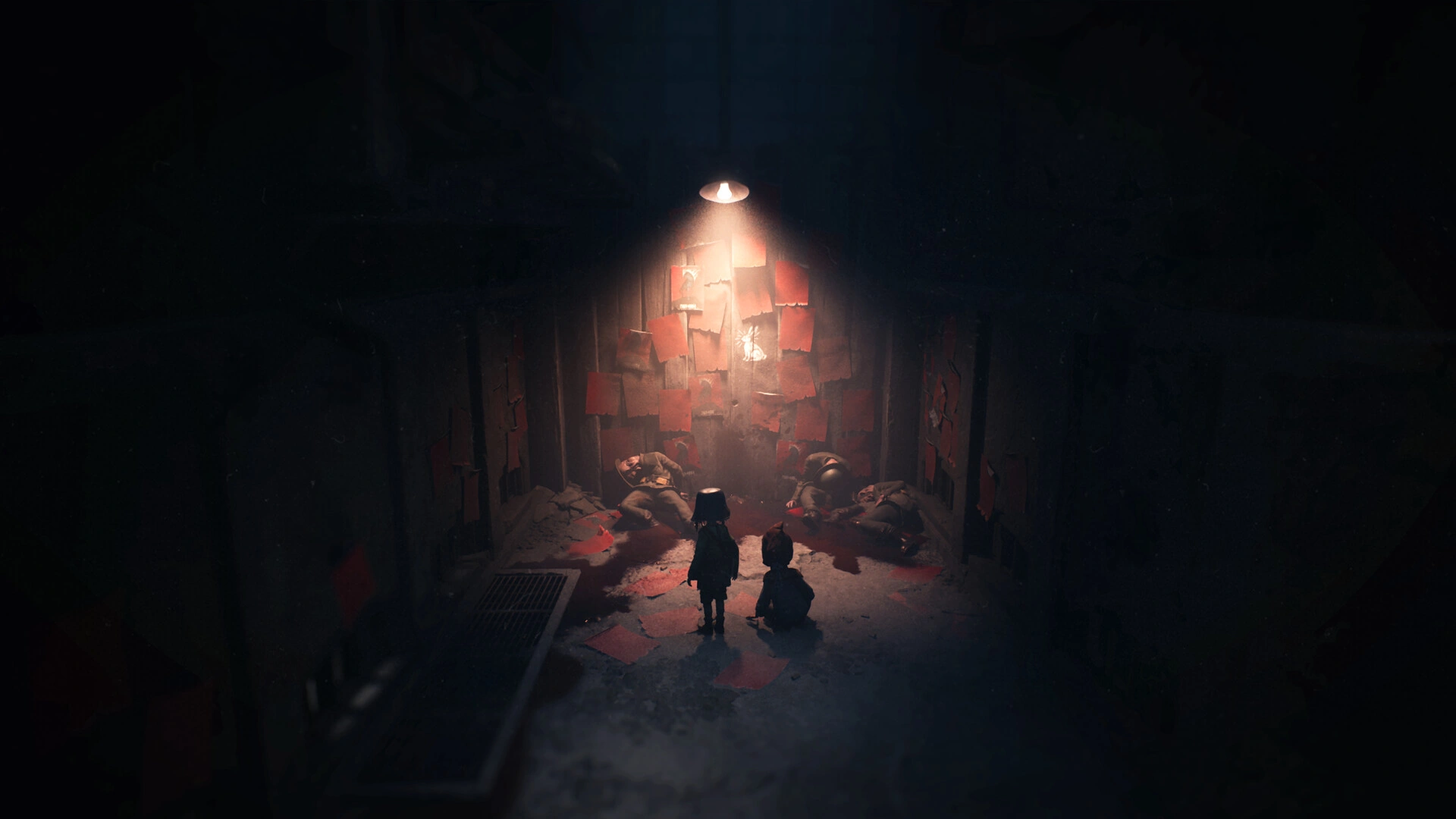

The most revealing choice in REANIMAL: The Prisoner is giving its two children names that sound like jobs assigned by adults. One is the Prisoner. The other is the Soldier. Neither appears to have had much say in the matter.
Tarsier Studios returns to the ruined city from REANIMAL for the first chapter of its three-part Expanded World DLC, placing these new protagonists inside the same war that scarred the original game. The connection is deliberate.
Returning players will recognize locations, enemies, and one familiar survivor, yet the perspective has shifted. The first game showed children moving through a monstrous world. The Prisoner makes the machinery producing that misery harder to ignore.
Do not expect explanations. Tarsier sticks to the storytelling method it used in REANIMAL and before that in Little Nightmares: environmental detail, fleeting dialogue, and implication. A line like “She had it coming” creates another theory instead of resolving one.
The identities of these children, their connection to the original protagonists, and their place in the wider conflict remain deliberately obscure. That approach works better across a full game than across roughly one hour. Here, mystery sometimes feels indistinguishable from postponement.
The Camera and the Axe
Veterans of REANIMAL will recognize the structure immediately. You explore, climb, hide, solve light environmental puzzles, survive one-hit threats, and occasionally fight when escape is no longer available. The Prisoner does little to revise that pattern.
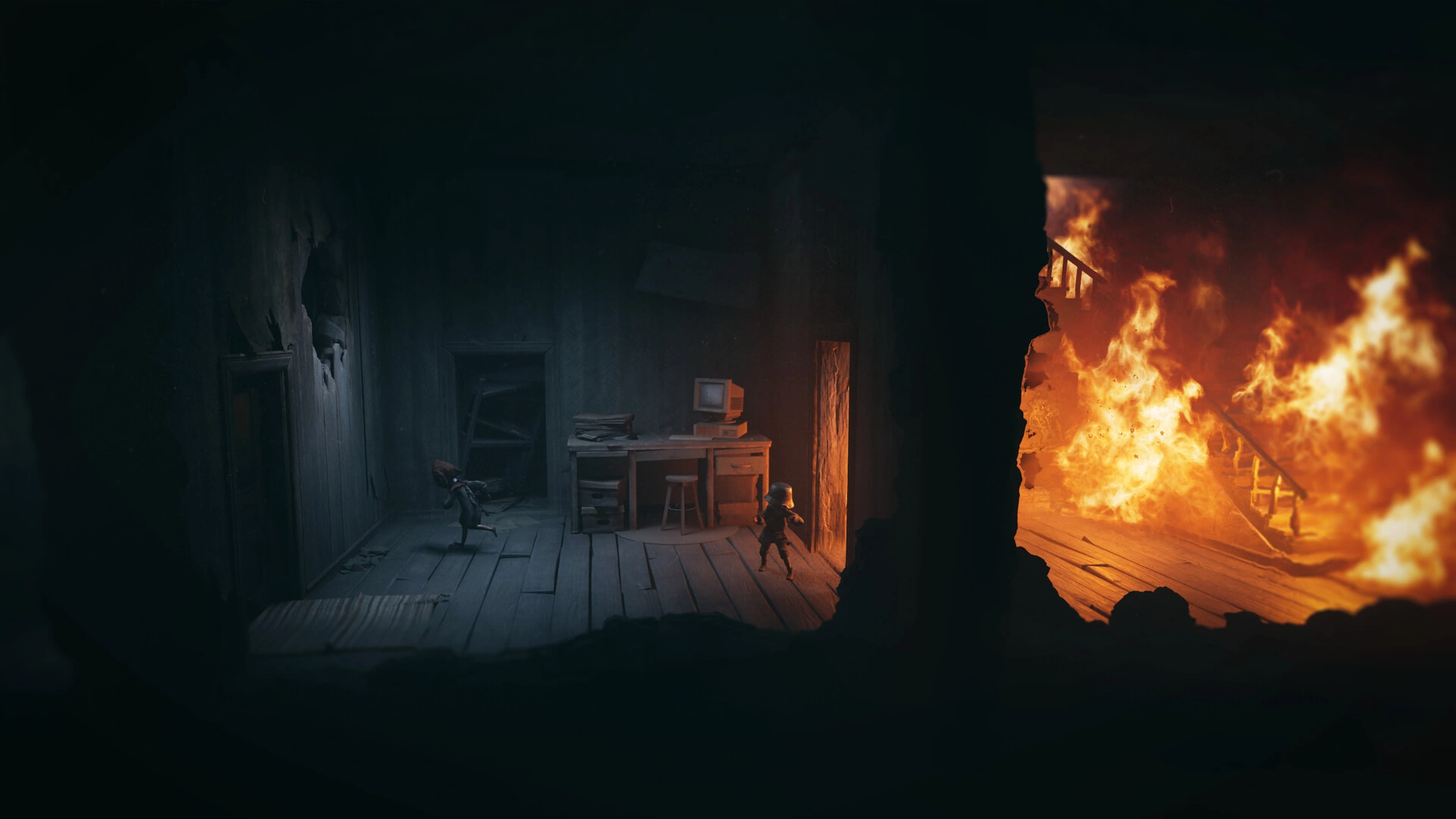
Its best mechanical idea is the division between the two protagonists. The Prisoner finds a Polaroid-style camera that can stun enemies, manipulate certain objects, and briefly illuminate dark spaces. Every photograph physically drops onto the floor, a small tactile detail that makes the device feel like an object rather than a supernatural button disguised as one.
The Soldier carries an axe. Combat therefore forms a simple cooperative sequence: the Prisoner interrupts an enemy, then the Soldier closes the distance and strikes. It gives each player a defined responsibility and creates brief moments of coordination under pressure. With another person controlling the second child, that rhythm becomes considerably livelier. Someone spots an opening, somebody else mistimes it, panic follows. REANIMAL has always benefited from shared mistakes.
The problem is that Tarsier rarely develops the idea past that initial arrangement. Puzzles seldom demand elaborate cooperation, and the camera never evolves into a system capable of changing how you approach the chapter. The axe can feel imprecise, too, with awkward swings making several confrontations harder to read than they should be. REANIMAL already established this cooperative template. The Prisoner gives it two new tools, then mostly leaves the architecture standing where it was.
War Changes the Scenery
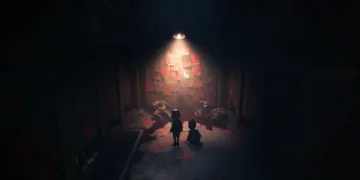
Where the DLC distinguishes itself is in the city itself. The original game had already taken players through this place, yet The Prisoner presents it during active destruction. Mines litter paths. Gunfire cuts through open areas. Explosions sound beyond the visible play space. Streets feel less like abandoned ruins and closer to terrain that could become lethal while you are crossing it.
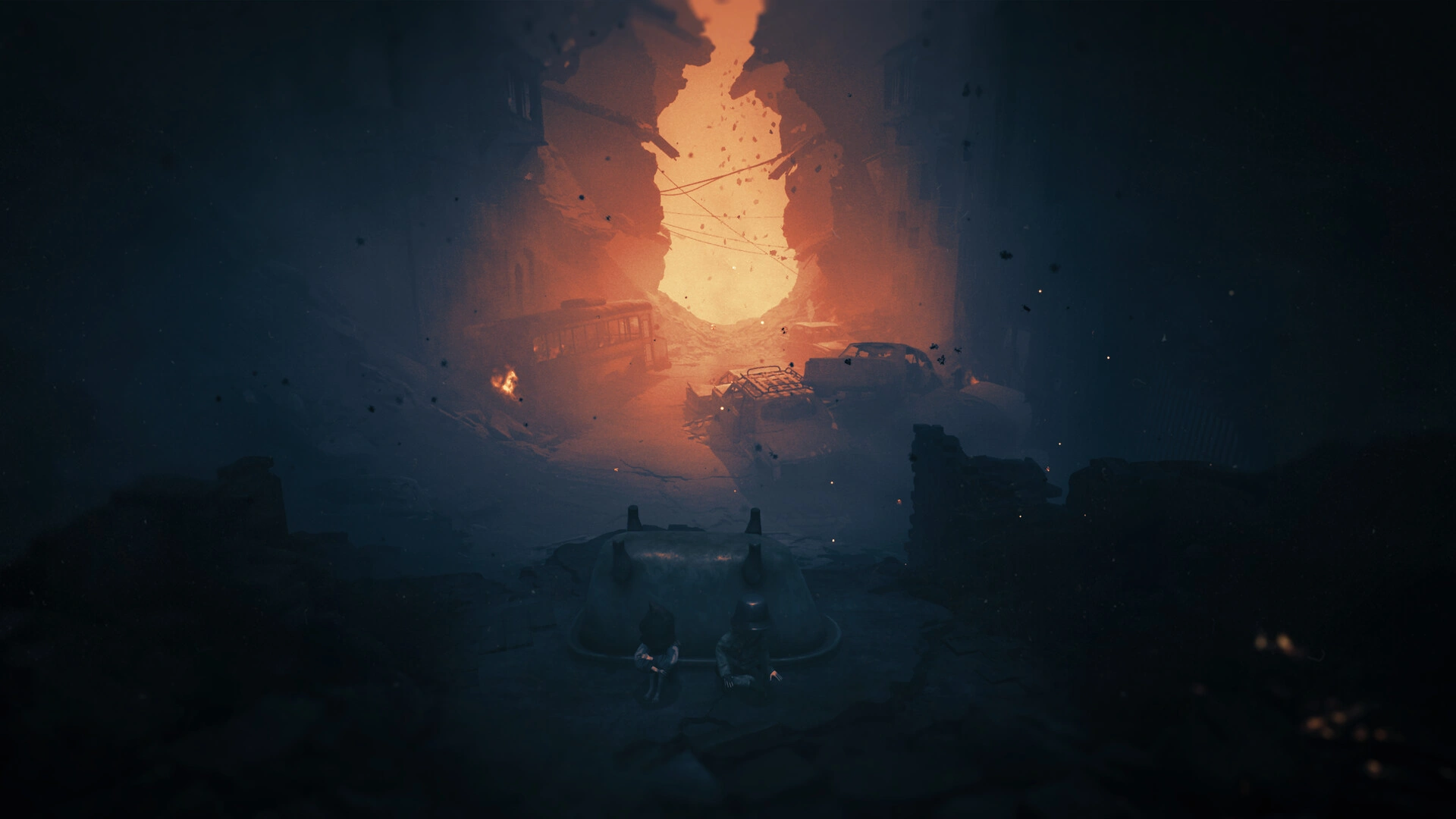
The flamethrower soldier is the clearest expression of that idea. He turns military imagery into a pursuit encounter, forcing the children through a sequence where fire becomes both visual spectacle and immediate threat. Movement can become unreliable during the chase, which weakens an encounter built around precise escape, but the character leaves a stronger impression than most of the chapter’s returning creatures.
That matters because asset reuse is noticeable. Ash-covered enemies return, along with a reanimated animal threat familiar from REANIMAL. Their presence makes geographical sense, yet familiarity blunts some of the shock. A newly teased creature suggests stranger material ahead, then disappears before it can reshape the chapter.
Tarsier compensates through presentation. REANIMAL’s blue-grey palette remains, with fire supplying much of the visual contrast once provided by red or artificial lighting. The choice suits this setting beautifully. Flames become the brightest objects in a world where brightness usually means something is burning. Sound does equally important work. Distant grenades, bullets, machinery, and combat noise remain present during quieter traversal. Even when nothing is chasing you, the city refuses to relax.
First Chapter Problems
The Prisoner and the Soldier are strongest as symbols before they fully work as characters. Two children occupy opposite positions inside a conflict constructed by adults, then discover that survival requires cooperation rather than allegiance. Tarsier never spells that idea out, which is wise. Their tools, surroundings, and circumstances already do enough.
The difficulty comes from the DLC’s episodic design. This chapter ends while its questions are still multiplying. The familiar survivor raises another mystery. The brief dialogue fragments point toward unseen relationships. The new creature receives a tease rather than a confrontation. Even the protagonists remain sketches awaiting later chapters.
That leaves The Prisoner in an awkward position compared with REANIMAL itself. The base game could let ambiguity accumulate because players knew they were progressing through a complete arc. Here, the cliffhanger openly hands responsibility to the next installment.
There are collectibles for players interested in searching the city again, but the straightforward puzzles and limited mechanical development provide little reason for a second run. Players primarily interested in the wider mythology will find plenty to speculate about. Anyone looking for a self-contained expansion may find that waiting for all three Expanded World chapters gives this opening piece the structure it currently lacks.
The Review
REANIMAL: The Prisoner
REANIMAL: The Prisoner preserves the base game's oppressive atmosphere while giving its familiar co-op formula two useful wrinkles through the Prisoner's camera and the Soldier's axe. The war-torn city, distant gunfire, mines, and flamethrower pursuit give this chapter an identity distinct from REANIMAL's earlier horrors. Yet compared with the base game, the mechanical progression is slight, familiar enemies return, and the one-hour runtime ends just as its mysteries gather momentum. As the first Expanded World chapter, it plants promising connections. Taken alone, it feels noticeably incomplete.
PROS
- Excellent war-zone atmosphere
- Camera-and-axe cooperation works well
- Strong environmental storytelling
- Effective sound design
- Interesting links to the base game
CONS
- Extremely short runtime
- Limited mechanical development
- Several reused threats
- Story stops at the setup stage