




























Three different games are hiding inside Defender of the Crown: The Legend Returns, and the smartest decision here is letting each one answer a different question. Retro asks how faithfully a 1986 strategy game can survive on modern hardware. Classic asks how much of that design can be cleaned up without rewriting it. Kingdom asks what happens when the old structure is rebuilt around cards, dice, and roguelike progression.
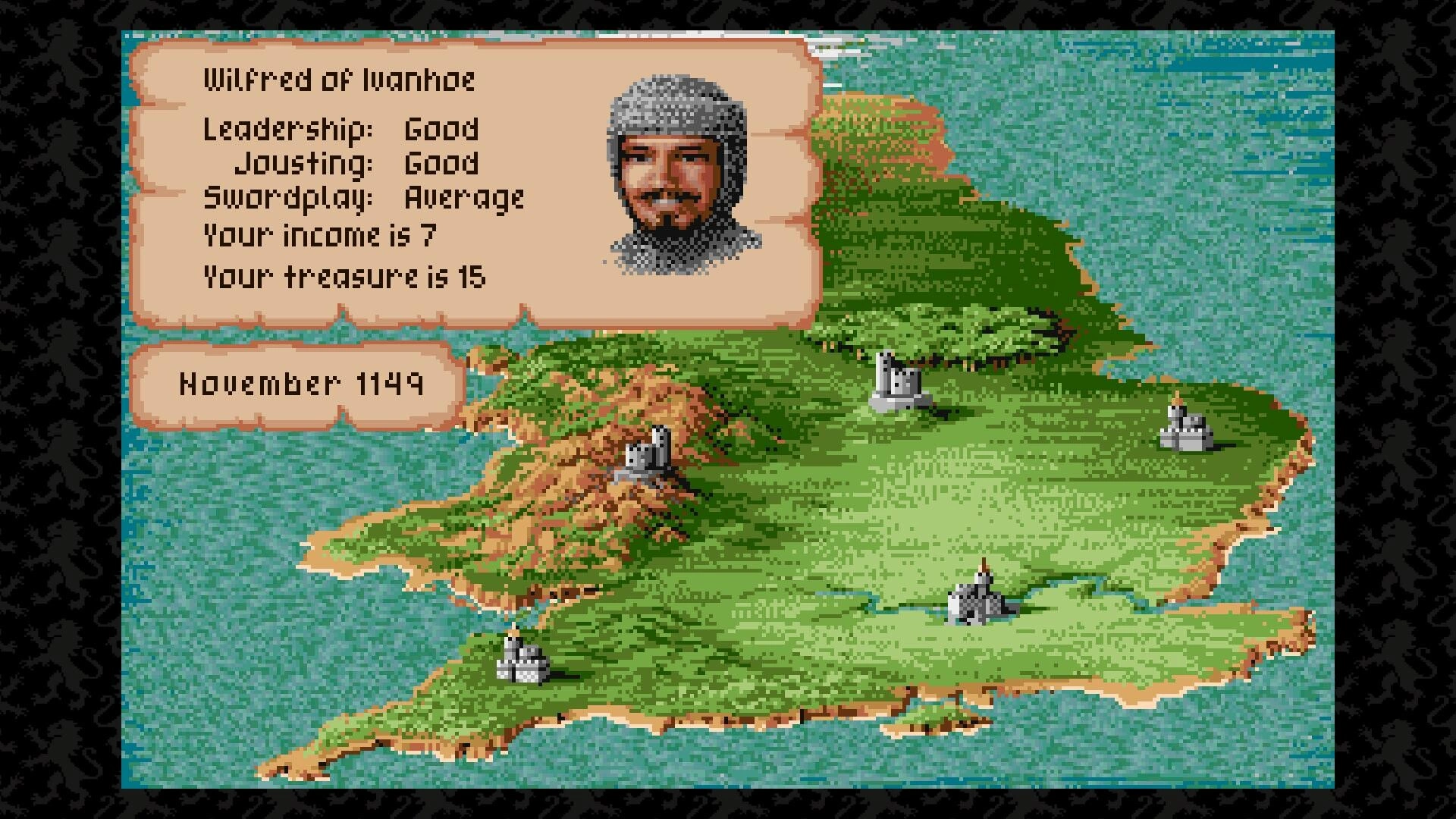
The premise remains wonderfully economical. England’s king has been assassinated in 1149, the crown has vanished, and rival Saxon and Norman lords are fighting for control. You choose a leader, collect income from territories, recruit troops, invade neighboring lands, raid castles, enter tournaments, and work toward eliminating every serious claimant to the throne.
It still plays like a digital board game, which explains both its durability and several of its problems. Every action has weight because turns are limited resources. Recruiting soldiers, launching an attack, or entering a tournament means giving something else up. That simple economy is why the original design can still produce tense campaigns four decades later.
Old Battles, New Armor
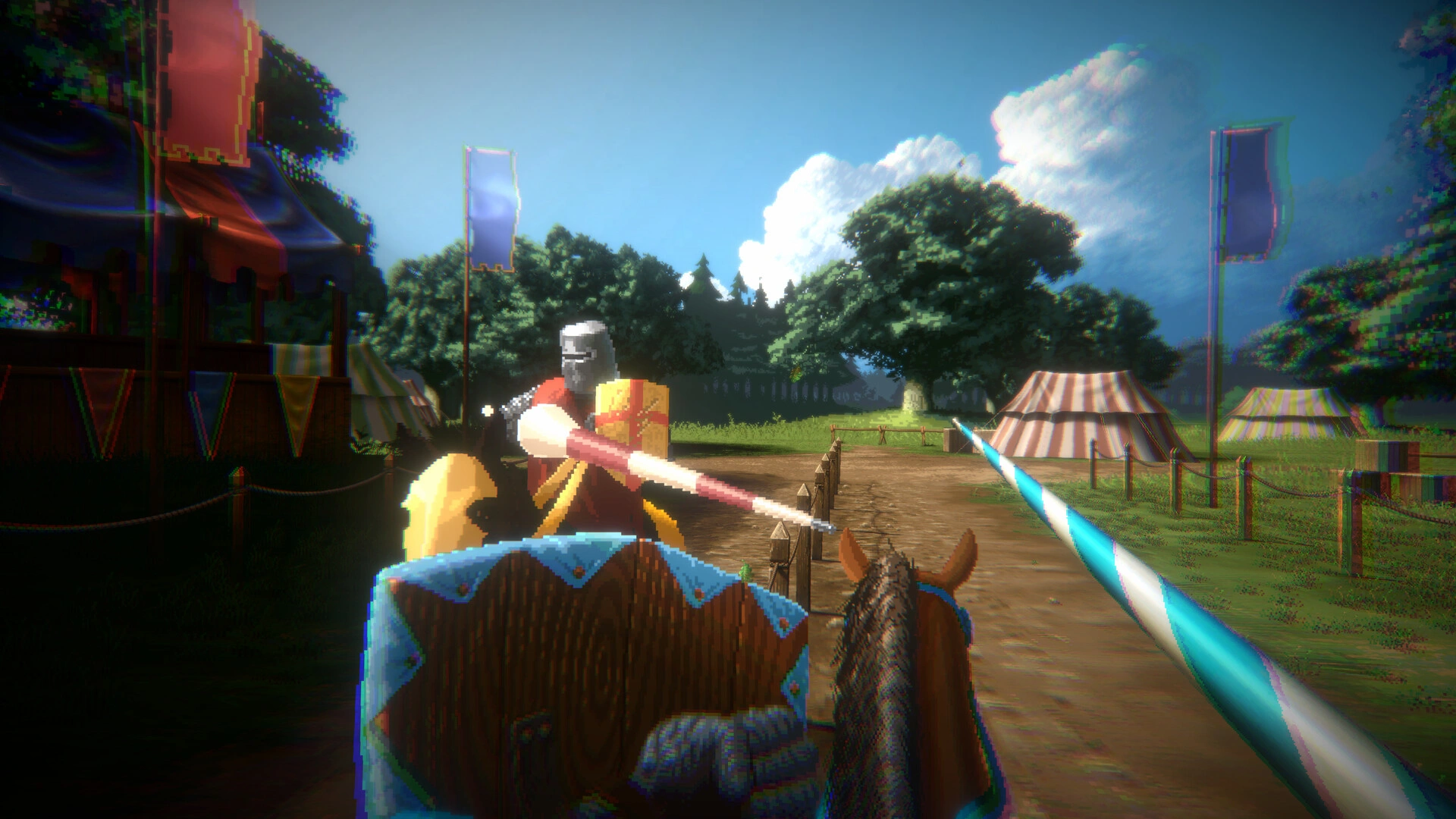
Retro mode preserves enough of the original’s roughness to function almost like an interactive archive. Jousting asks you to steady a lance and connect with an opponent’s shield, yet feedback remains thin enough that a failed run can leave you wondering which part of the attempt actually went wrong.
Catapult attacks require similar experimentation. Sword fights can end without clearly communicating how close either combatant was to defeat. Once you know the rules, some of that opacity becomes manageable. Getting there is the problem.
Classic makes the strongest case for preserving the original campaign structure. Saves remove much of the old punishment, turns can be skipped, sieges gain expanded ammunition, and sword fighting receives a meaningful redesign. Blocking, thrusting, parrying, and visible energy information turn rescue missions and castle raids into systems you can actually read while playing. That last part matters. Good combat feedback tells you what happened, then gives you enough information to change your next decision.
Territorial warfare never gets the same treatment. Battles present commands for holding position, attacking aggressively, bombarding, or flanking, yet troop totals still seem to carry far greater influence than tactical input. Watching arrows indicate a maneuver is less satisfying when the outcome feels largely predetermined by the numbers already on screen.
Classic improves the interface surrounding the strategy without fully exposing the strategy underneath it. Stagger mechanics remain poorly explained, jousting failures can still seem abrupt, and recruiting an army now consumes the turn immediately. The design frequently offers one extra piece of information when two would have solved the problem.
Rolling for the Throne
Kingdom is where the package becomes genuinely interesting from a systems perspective. Armies now feed into a pool of dice. Both sides roll, draw cards, and spend a limited supply of orders or energy manipulating those results. One card may increase a friendly die. Another lowers an opponent’s value. Others can add dice, remove enemy dice, or transform every roll of a particular number. Once both players have exhausted their tactical options, the totals are compared.
The beauty of the system is its legibility. If you lose, you can usually trace the defeat backward. Perhaps you spent an order too early, discarded the wrong card, or failed to protect a high-value die. The old battles could feel like two armies disappearing into a calculation. Kingdom puts the calculation directly on the table.
That tabletop structure fits Defender of the Crown remarkably well. Territory control, discrete turns, armies represented by quantities, and side activities were already halfway toward a physical strategy game. Cards and dice clarify a structure that had been there since 1986.
Kingdom also converts familiar activities rather than discarding them. Jousting becomes a timed dice challenge in which rolling a 1 can erase your accumulated score. Sieges involve guessing hidden die values to weaken defenders before the main confrontation. Hearts act as lives, and losing all of them ends the run, while failed attempts can unlock bonuses that improve later campaigns.
The roguelike structure has a rough edge of its own. One boss encounter can arrive with a superior resource pool and an exhausting stream of card-generated dice, while the game itself recommends a Catapult card that may never have appeared on your route. A difficult run can be exciting. A run that appears mathematically doomed before the fight begins feels like the system has stopped asking for decisions.
There are smaller irritations too. Editing troop-related dice requires too much menu travel, battles cannot be accelerated once the outcome is obvious, and the lack of local or online multiplayer feels like a missed opportunity for a turn-based card system already built around direct opposition.
Pixels That Still Hold the Castle
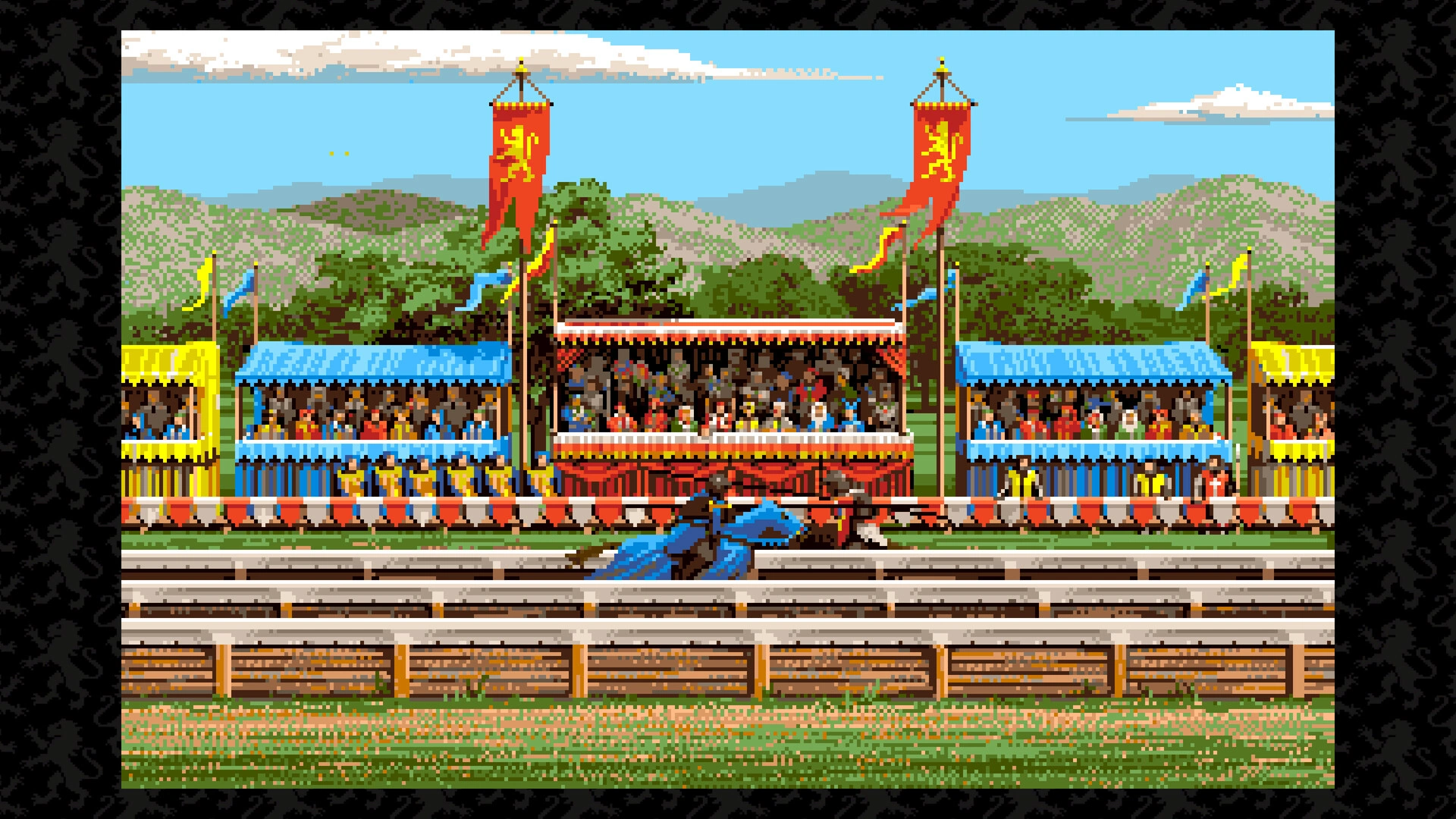
Retro’s artwork remains striking because the original relied on carefully composed scenes rather than animation density. Castle interiors, mounted knights, portraits, and landscapes still carry enough color and pixel detail to sell the medieval fantasy.
Classic sharpens that language instead of replacing it. Character models and environments gain cleaner detail, stronger lighting, and richer effects while retaining the illustrated quality of the old presentation. Some animation remains stiff, yet the visual continuity between versions makes switching modes feel like comparing interpretations of the same design rather than unrelated remakes.
Audio receives a quieter treatment. Later modes use fuller medieval music and crisp effects, while Retro preserves the original’s sparse use of music. Combat lacks voice work and even simple vocal reactions, which can make enhanced sword fights feel strangely restrained beside their updated visuals.
Steam Deck support is technically strong, with solid performance and controls, though Kingdom exposes the handheld’s weakest fit. Card descriptions can become uncomfortably small, and slight cropping at the top and bottom makes an interface-heavy mode harder to parse than it should be.
The three modes finally reveal what each version values. Retro preserves history. Classic repairs the parts players touch most often. Kingdom takes the oldest idea in the package, turning armies and territory into visible game pieces, and builds the clearest strategy system here from it.
The Review
Defender of the Crown: The Legend Returns
Defender of the Crown: The Legend Returns works best when it stops treating the 1986 design as something untouchable. Retro preserves the historical artifact, while Classic improves swordplay, saves, sieges, and feedback without fully solving battles that still lean too heavily on hidden rules and army totals. Kingdom is the real success. Its cards, dice, hearts, and run-based progression turn vague outcomes into readable decisions, even if boss balance can occasionally corner the player unfairly. It is an uneven preservation project, but one with a smart new strategy game hiding inside it.
PROS
- Excellent three-mode structure
- Kingdom's readable card-and-dice combat
- Strong Classic swordplay improvements
- Faithful visual modernization
- Satisfying territorial strategy loop
CONS
- Poorly explained legacy mechanics
- Army battles remain simplistic
- Occasional Kingdom balance problems
- Cumbersome dice-pool management
- No multiplayer for Kingdom