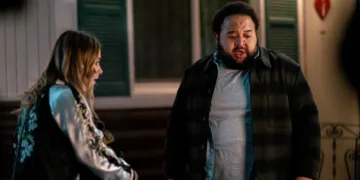




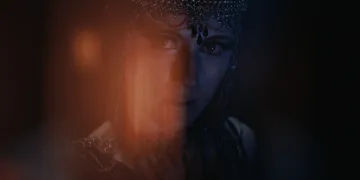
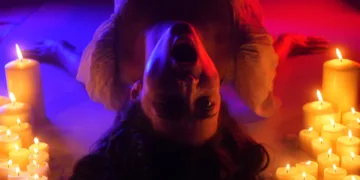
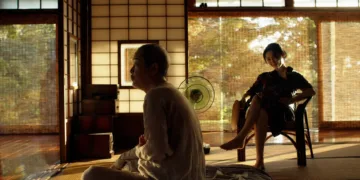
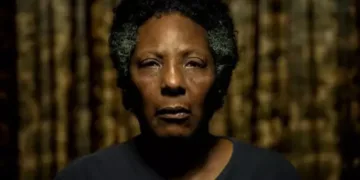



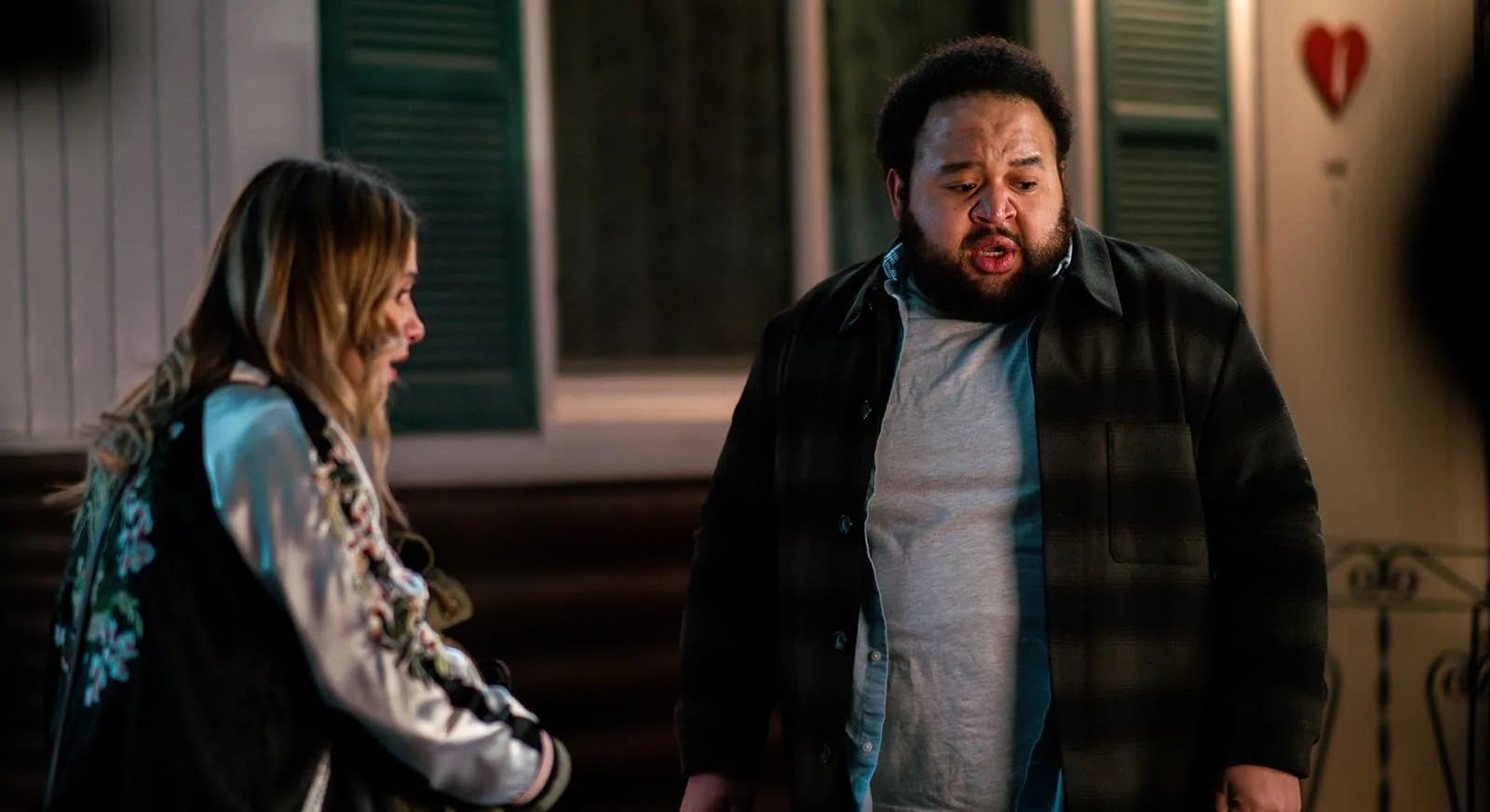

Gary Clark spends the early stretch of All Night Wrong trying to understand why Ell wants anything to do with him. Zach Cherry plays the forty-something Gary with the posture of a man bracing for rejection before anyone has offered it, and Maria Bakalova answers that nervousness by making Ell almost aggressively willing to have a good time. Their mismatch gives Jason James’ film its first useful comic rhythm. Gary hesitates. Ell pushes. Then they book a motel room that looks like a location scout actively searched for somewhere murder could happen. Murder has, inconveniently, already happened.
Burke, played by Tyler Labine, has killed motel manager Toby and assumed his identity when Gary and Ell arrive. After he demands cash, the couple takes Toby’s car to find an ATM. Ell treats the theft as temporary borrowing. Gary looks uncomfortable enough to suggest he knows the distinction will not impress a judge. Neither knows Toby’s body is in the trunk beside a bag of money.
Screenwriter Jason Filiatrault is working in familiar “night from hell” territory here. After Hours and Into the Night needed elaborate circumstances to throw strangers together. A dating app handles that job in seconds now. The modernization is simple, and it works. The harder part is keeping two reasonably functional adults inside the nightmare once calling the police becomes an option.
Please Stop Touching the Evidence
Ell discovers the corpse and immediately does nearly everything a murder suspect should avoid doing. She pulls the knife out, examines the situation, then puts the weapon back into the body. Gary gets blood on his hand, leaves a print behind, and joins her in handling evidence with the confidence of people determined to make forensic investigators very happy.
I enjoy comedies built around bad decisions. The pleasure usually comes from understanding exactly why somebody makes the wrong choice, then watching the consequences multiply. All Night Wrong sometimes gets that equation right. Ell has been craving a night where she can stop behaving responsibly, so stealing the car fits the reckless version of herself she is trying on.
Gary has a darker concern. As a Black man discovered beside a murdered stranger, he fears police suspicion could become dangerous long before anyone sorts out the facts. That fear gives his panic real weight. The screenplay then makes it harder to sustain.
Gary and Ell consider taking the body into the forest, continue driving a car that does not belong to them, and accumulate so much incriminating evidence that their original innocence becomes almost academic. A later police encounter weakens Gary’s reasoning further. The officers are suspicious, but Gary and Ell are arguing loudly in a parking lot, telling questionable stories, and carrying a corpse in the trunk. Suspicion has stopped being an irrational threat by then.
The movie could have used this absurdity as the joke. Instead, it frequently asks us to accept each new complication as necessary. An anonymous motel phone call or another rideshare would end several problems instantly. Comedy needs characters to miss obvious exits sometimes. Here, the emergency exits are glowing.
Two People Worth Following
Cherry and Bakalova keep rescuing scenes from the mechanics around them. Their pairing works because they approach embarrassment from opposite directions. Gary internalizes everything. Ell externalizes nearly everything.
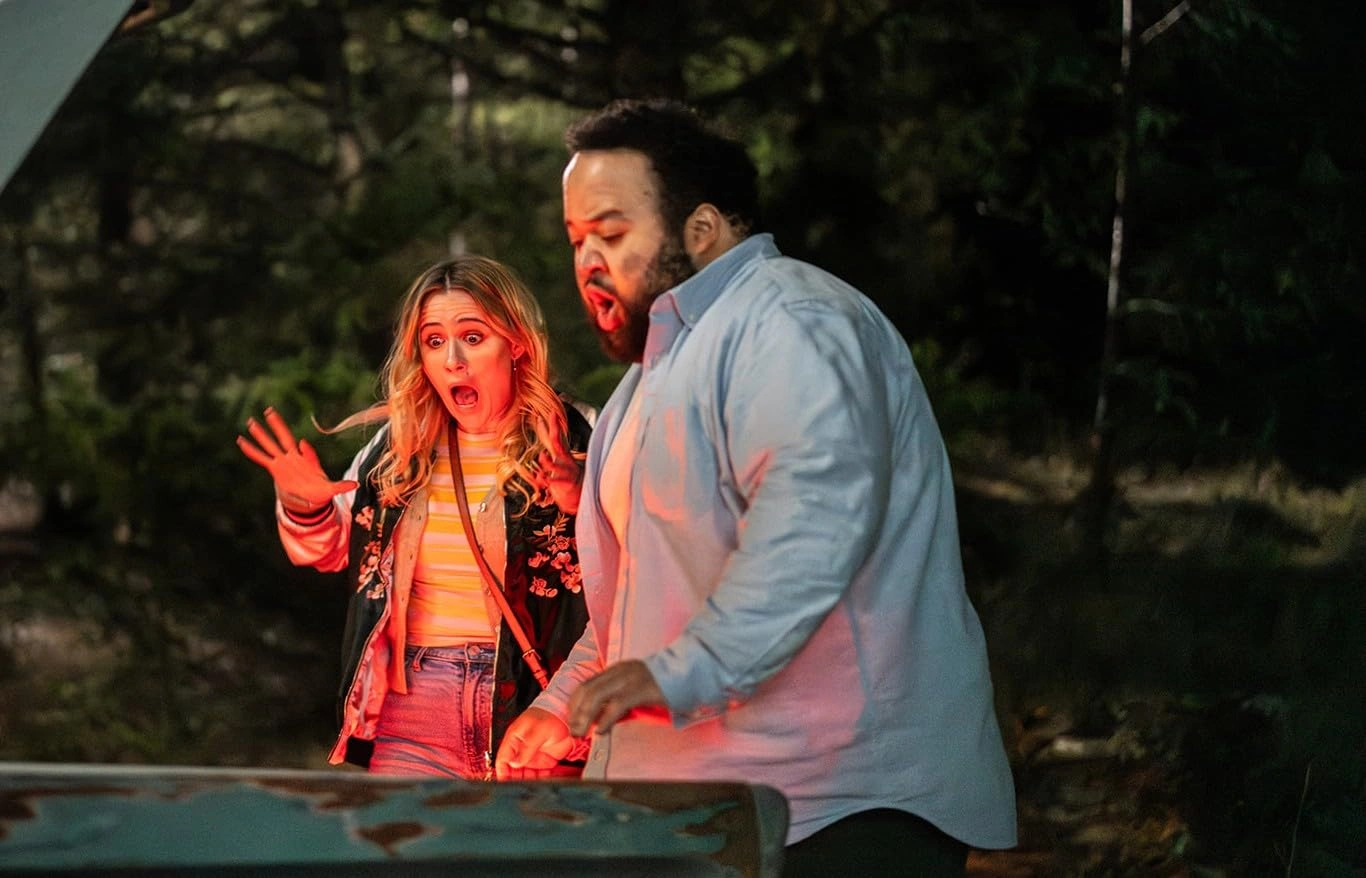
Watch Cherry during Gary’s early attempts to question Ell’s attraction to him. He does not deliver those exchanges like setup-punchline comedy. His pauses and slightly defensive tone make Gary seem genuinely baffled by his own luck, which turns the joke into character information. Bakalova answers him with impatient momentum. Ell wants the evening to happen, and every hesitation from Gary feels like another obstacle she intends to shove aside.
Their best scenes arrive once the murder plot briefly loosens its grip. When Gary and Ell begin admitting personal insecurities and disappointments, their terrible choices start revealing something useful about them. Gary’s resentment has been sitting underneath his politeness. Ell’s impulsiveness carries a sense of escape. Suddenly, the date itself becomes interesting again.
James directs most of the cast at a surprisingly restrained register. That choice helps Cherry because his dry delivery depends on underplaying panic. It can limit Bakalova, whose comic energy becomes sharpest when Ell reacts before she has time to filter herself. With the plot growing increasingly ridiculous, I occasionally wanted the performances to meet it halfway.
Labine comes closest. Burke’s grim pursuit of the missing money and his rehearsed killer speech give him the flavor of a criminal who has spent too much time imagining his own menace. He fits the movie’s sillier instincts better than its attempts at credibility.
Chaos With the Brakes On
James keeps the story moving efficiently across its single night. The body, cash, motel, police encounter, forest plan, and Burke’s pursuit arrive quickly enough that the film rarely feels stalled. That pace gives All Night Wrong the scrappy texture of a small crime comedy from the late 1990s, where limited locations could become an advantage if the characters kept finding new ways to worsen the same problem.
The tension comes from tone. The filmmaking treats Gary and Ell’s danger seriously enough that the blood, corpse, and pursuit retain some threat. Filiatrault’s script keeps reaching for broader absurdity. Emily Hampshire’s involvement in the wider criminal mess adds another turn to a story already carrying plenty of machinery, and every added complication increases the pressure on the screenplay to explain why Gary and Ell still have not found a sensible escape.
The funniest material requires much less engineering. Ell putting the knife back into the body is funny because the mistake is immediate, visual, and horrifyingly understandable. Gary realizing how guilty they now look gets funnier because Cherry plays the realization quietly. Their awkward confessions work because the crime plot finally stops moving pieces long enough to let two strangers study each other.
All Night Wrong keeps trying to make its chaos credible when the chaos itself is where the fun lives. Cherry and Bakalova understand that contradiction better than the script does. Every time Gary looks exhausted by Ell’s next idea and Ell treats catastrophe like another obstacle between her and a decent night, the movie finds the comedy it has been chasing.
All Night Wrong premiered at SXSW London in 2026. The film blends rom-com elements with neo-noir as two strangers on a blind date find themselves in a dangerous situation involving a dead body, a stolen car, and a mysterious killer.
Where to Watch All Night Wrong (2026) Online





Full Credits
Title: All Night Wrong
Release date: 2026 (SXSW London)
Running time: 94 minutes
Director: Jason James
Writers: Jason James, Tyler Labine
Producers and Executive Producers: Tyler Labine, Jason James, Kirk Shaw
Cast: Zach Cherry, Maria Bakalova, Tyler Labine, Emily Hampshire, David Koechner, Julian Richings
The Review
All Night Wrong
All Night Wrong gets its best laughs when Gary and Ell make one terrible decision and have to improvise around the damage, especially after the knife, bloody handprint, corpse-filled trunk, and stolen car leave them looking spectacularly guilty. Jason James keeps the night moving, while Zach Cherry and Maria Bakalova give the chaos an unexpectedly sweet center through Gary’s insecurity and Ell’s reckless enthusiasm. The screenplay strains credibility each time another contrivance arrives, yet the leads remain funny enough to keep the disaster alive.
PROS
- Cherry and Bakalova’s chemistry
- Strong comic character pairing
- Punchy single-night pacing
- Effective vulnerable confession scenes
- Tyler Labine’s eccentric villain
CONS
- Increasingly contrived plotting
- Characters make implausible choices
- Restrained tone limits some jokes
- Police sequence weakens Gary’s motivation