























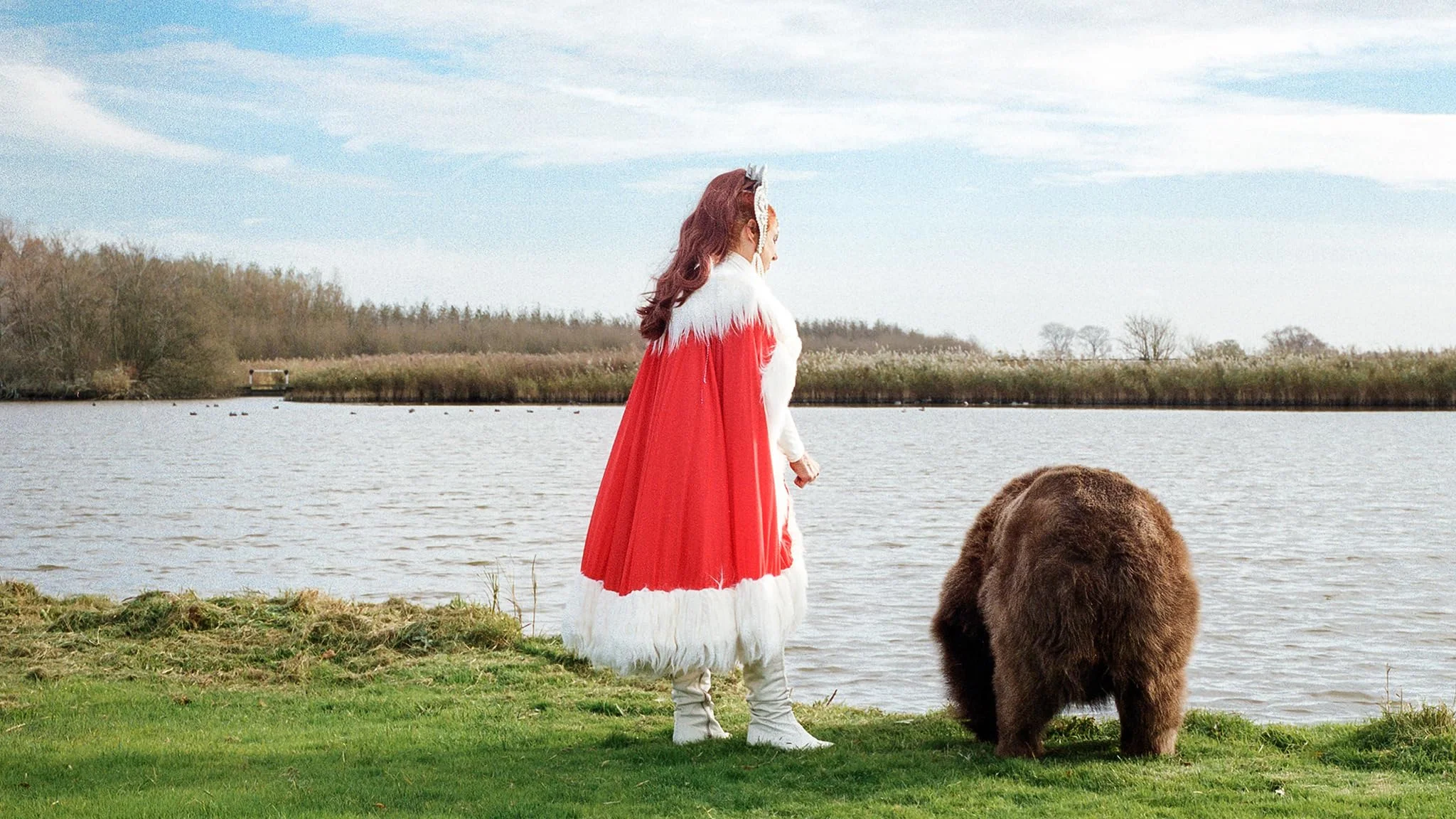

Hoenderdaell Zoo expected the arrangement to be temporary. Maxy Niedermeyer would live in a caravan in its car park, beside the enclosure of her elderly bear, Natasha, and care for her until she died. Separation was considered unsuitable for an animal so old and so attached to her trainer. Six years later, Maxy is still there. Martin Genovski’s documentary catches up with a retirement plan whose temporary residents have settled into the business of keeping each other company.
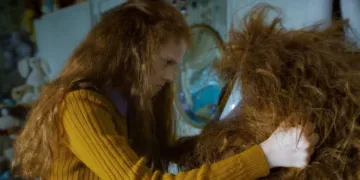
The practical sense of this accommodation is persuasive. Maxy feeds Natasha, washes her, combs her fur, kisses her. The bear’s preference for cabbage belongs to the familiar inventory of looking after someone: knowing what they like, repeating what they need. Yet the exemption contains a difficult question. Natasha’s dependence helps justify keeping them together; that dependence was formed during a life in captivity. An appropriate decision about her old age cannot settle the ethics of the career that brought her here. Genovski has found a relationship in which both questions remain physically present, on opposite sides of an enclosure.
Bear with Me is strongest when it allows that awkwardness to persist. Maxy, around eighty, and Natasha, forty-three, have spent four decades together. Their performing career has ended, but Maxy continues to organize her home around the animal. Whatever else we think of the circus, the devotion has survived the disappearance of paying customers. There is an obligation here that she has chosen to keep meeting.

The archives make that obligation harder to detach from its history. German television footage shows Maxy at six with her father and a bear named Charlie. Later recordings preserve a public life in which her familiarity with wild animals was a marketable skill. Bears ride a tram.
A tiger rides on a horse’s back. These images retain the peculiar appeal of the circus: the pleasure of watching an animal do something outside its ordinary existence, with a human directing the terms. Watching the tiger, I can understand the spectacle’s attraction and feel uncomfortable about the arrangement that makes it possible. The footage permits both responses without resolving the second through the first.
Maxy moved to Bulgaria in the 1970s, heading east while the familiar Cold War story points west. Her profession offered reasons to make that choice. Genovski’s use of television appearances, news reports, and protest material shows how a skill can pass from celebrated entertainment into a practice people campaign to abolish. Maxy’s working life continues across that change in public permission. The person who built an identity around the work has to live through its rejection.
She insists that trainers who use violence are cowards. Her conviction deserves to be heard, and the daily care gives it personal credibility. It still leaves the long effects of performing life largely unexamined. Familiarity between an animal and its keeper cannot tell us everything about the animal’s welfare. The film’s affectionate portrait sometimes encourages that familiarity to carry an argument it cannot establish by itself.
I catch myself asking for a different documentary at this point. An investigation into training practices would need evidence this intimate portrait does not supply. That absence places a limit on its authority; it need not invalidate the attention Genovski gives Maxy. The sharper objection concerns the moments when evidence of her kindness begins to function as a defense of the profession. We can recognize the care recorded beside Natasha’s enclosure without granting it jurisdiction over every circus ring in Maxy’s past.
Genovski’s explanatory devices are less comfortable with ambiguity. Intertitles offer definitions, including “cringe” and “Wirtschaftswunder,” while the double meaning of the title receives an explanation before the opening credits. There is a playful impulse behind this approach, a wish to keep the historical material conversational. But “cringe” supplies a ready response to images that already produce several conflicting ones. The title explanation is similarly overhelpful. A woman spending her retirement beside her bear gives the phrase plenty to do without a preliminary briefing.
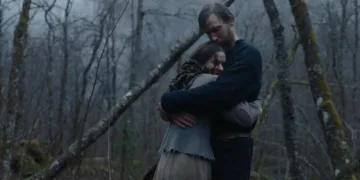
The reenactments featuring Martina Troanska as young Maxy have a related problem. A somber young woman in a dark setting provides an immediately legible impression of unhappiness. The archives offer something less tidy and far richer: Maxy as a child already sharing the frame with a bear, then as a performer whose skills attract public attention. Those records allow us to consider the life she inherited and the one she pursued. The staged sadness narrows that work to an emotional instruction. Genovski’s voiceover can usefully supply historical bearings; these illustrations struggle to contribute an equally specific understanding.
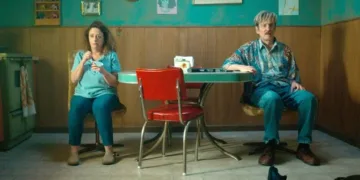
Maxy’s description of her animals as children carries the film back into the household. Her inability to have children helps explain the language, while Marcello, her younger Italian husband, acknowledges his second place in her affections. His remark gives the tenderness an inconvenient human dimension. Natasha occupies space in their marriage as surely as her enclosure determines where they live. Affection has an allocation problem (Marcello appears to know the arithmetic).
A friend suggests that Maxy, born in another period, might have become an animal-rights activist. It is an affecting possibility, though a friend’s imagined alternative life cannot absolve the actual one. What interests me is the continuity the remark proposes: the same absorption in animals might have found a different occupation under different social expectations.
Retirement offers a smaller change that the film can actually observe. Maxy no longer needs Natasha to perform. She still needs to feed her, wash her, and be nearby. At an age when the demands of a working life might reasonably loosen, she has kept her home beside the enclosure, with Marcello sharing the accommodation that choice requires.
Bear with Me had its world premiere at the Sarajevo Film Festival on August 18, 2026, in competition for the Heart of Sarajevo award. Co-written and directed by Martin Genovski, the moving Bulgarian documentary follows retired circus trainer Maxy Niedermeyer and her last living bear, Natasha, chronicling their extraordinary bond and quiet resilience as they navigate life together in a parking lot near Amsterdam after society rejects animal entertainment.
Full Credits
Title: Bear with Me
Distributor: Movies for Festivals, AGITPROP, ZDF/Arte
Release date: August 18, 2026 (Sarajevo Film Festival)
Running time: 1 hour 24 minutes (84 minutes)
Director: Martin Genovski
Writers: Mikhail Veshim, Martin Genovski
Producers and Executive Producers: Patrick Hörl, Andreas Martin, Julia Göring, Martichka Bozhilova
Cast: Maxy Niedermeyer, Natasha the Bear, Marcello Martino, Bilyana Kirilov, Kiril Kirilov, Robert Kruijff, Dragomir Draganov, Martina Troanska
Director of Photography (Cinematographer): Vladimir Trifonov
Editors: Bohos Topakbashian
Composer: Alexander Kostov
The Review
Bear with Me
The audience has gone, and Maxy is still caring for Natasha. That persistence gives Bear with Me its emotional authority. Genovski’s archives complicate the tenderness, preserving the spectacle that created this dependence. I find the retirement arrangement persuasive; the implied defense of circus training needs evidence affection cannot supply. Overhelpful intertitles and thin reenactments occasionally reduce the room for thought. Yet the daily care sustains a moving portrait of devotion, with its ethical difficulties still attached.
PROS
- Daily care makes Maxy’s devotion tangible.
- Archival footage connects private attachment with changing public attitudes.
- Marcello’s perspective complicates the portrait of family life.
CONS
- Affection sometimes substitutes for scrutiny of circus practices.
- Explanatory intertitles narrow the film’s ambiguities.
- Reenactments contribute little beside the specific archival material.