




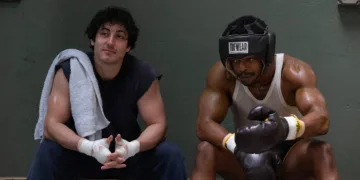


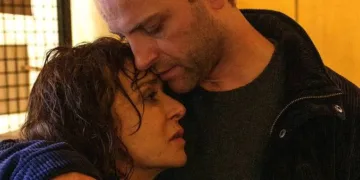




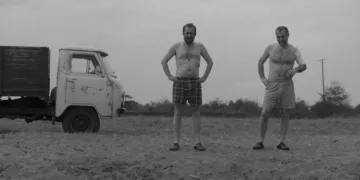
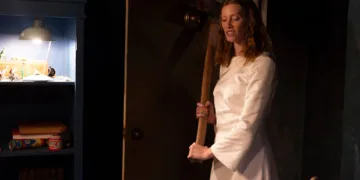





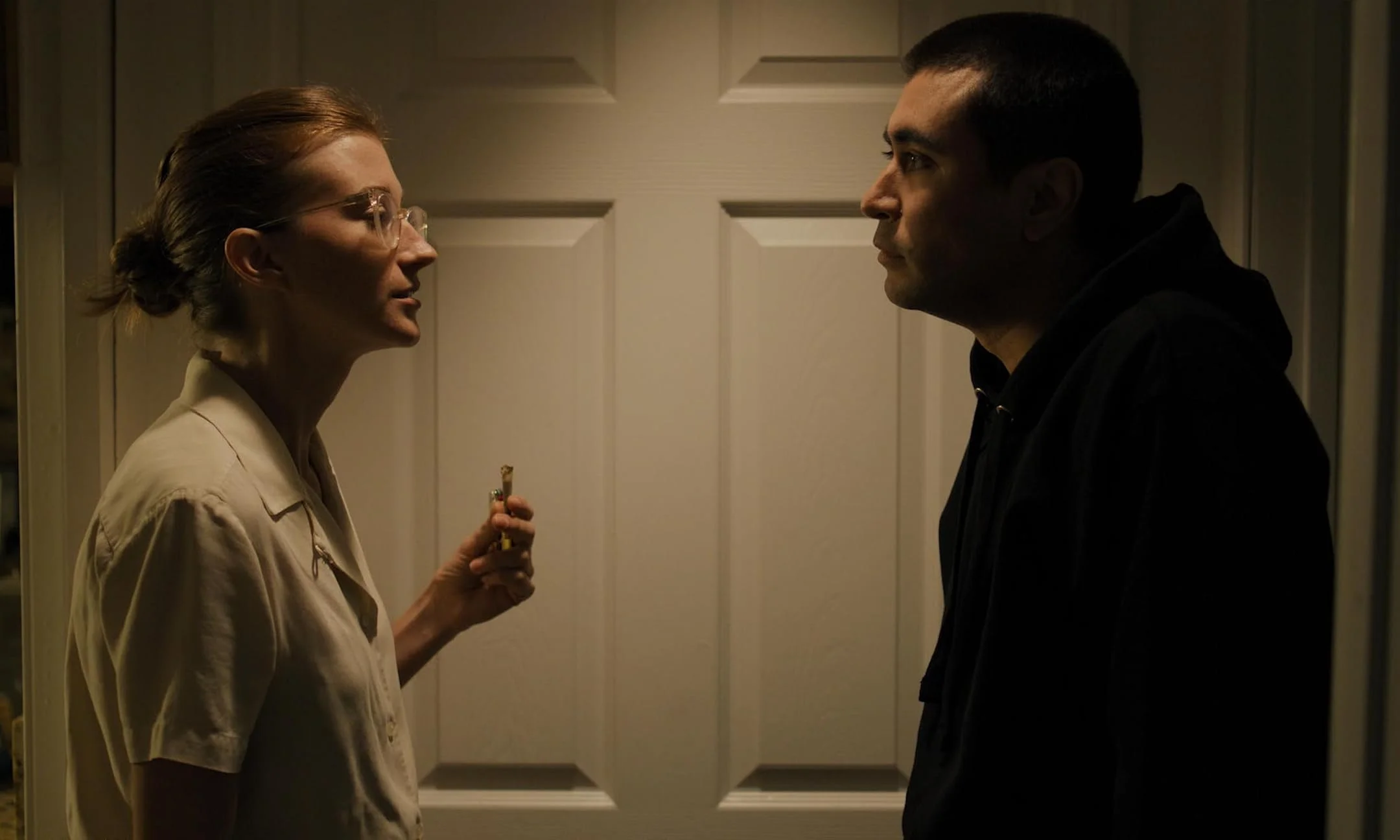

Haley and Chas speak the language of a theater circle in which being entertaining can become an obligation. Their sarcastic exchanges carry the assurance of people who know each other’s habits, and the less comfortable assumption that familiarity grants permission.
In Tomorrow, You Pretty Ghost, a prank undertaken before high-school graduation grows out of this culture of mutual performance. Co-writers and co-directors Alex Morand and Rocky Pajarito take seriously the difficulty of finding a sincere voice when friends have become accustomed to hearing everything as part of an act.
This is a recognizable corner of American independent cinema: a small social world made substantial through conversation. Shot for a reported $20,000 over eleven days, much of it at lead actress Abigail Sims’s father’s Burbank home, the film belongs to a production culture built around available people and places.
Its affinity with microbudget hangout cinema lies in the weight it places on interpersonal knowledge. We are asked to spend enough time with these people to understand their shorthand. For viewers outside the theater-kid milieu, that entails learning which forms of mockery express affection and which allow someone to dominate the company.
Chas makes that distinction difficult. Everardo Barriga gives him the charisma necessary to explain his social pull, while his tendency to keep going makes the attraction uncomfortable. Someone can be exhausting and still determine the temperature of a group. Sims’s Haley participates in that atmosphere rather than simply observing it from a safe moral distance.
Their believable interaction gives the film something that a cautionary account of a destructive prank could easily lose: a reason these two people would remain involved with each other before the damage became obvious. Disliking their behavior does not make their friendship implausible.
The reverse-moving narrative then changes the conditions under which we hear them. Exchanges from the friendship’s past arrive under pressure from our knowledge of its deterioration. Small verbal repetitions, including a reference to wearing glasses, acquire sadness through their placement across different periods.
The device works at the scale of remembered conversation. An ordinary remark can survive a relationship and become painful without acquiring any grand symbolic meaning. Here, the contrast between past and present dialogue makes the group’s shared language a record of something its speakers could not yet recognize.
That arrangement also complicates responsibility. Returning to earlier familiarity after seeing estrangement makes it harder to draw a clean line between a healthy friendship and its corruption. The prank supplies an event around which consequences gather, but the banter gives those consequences a social history.
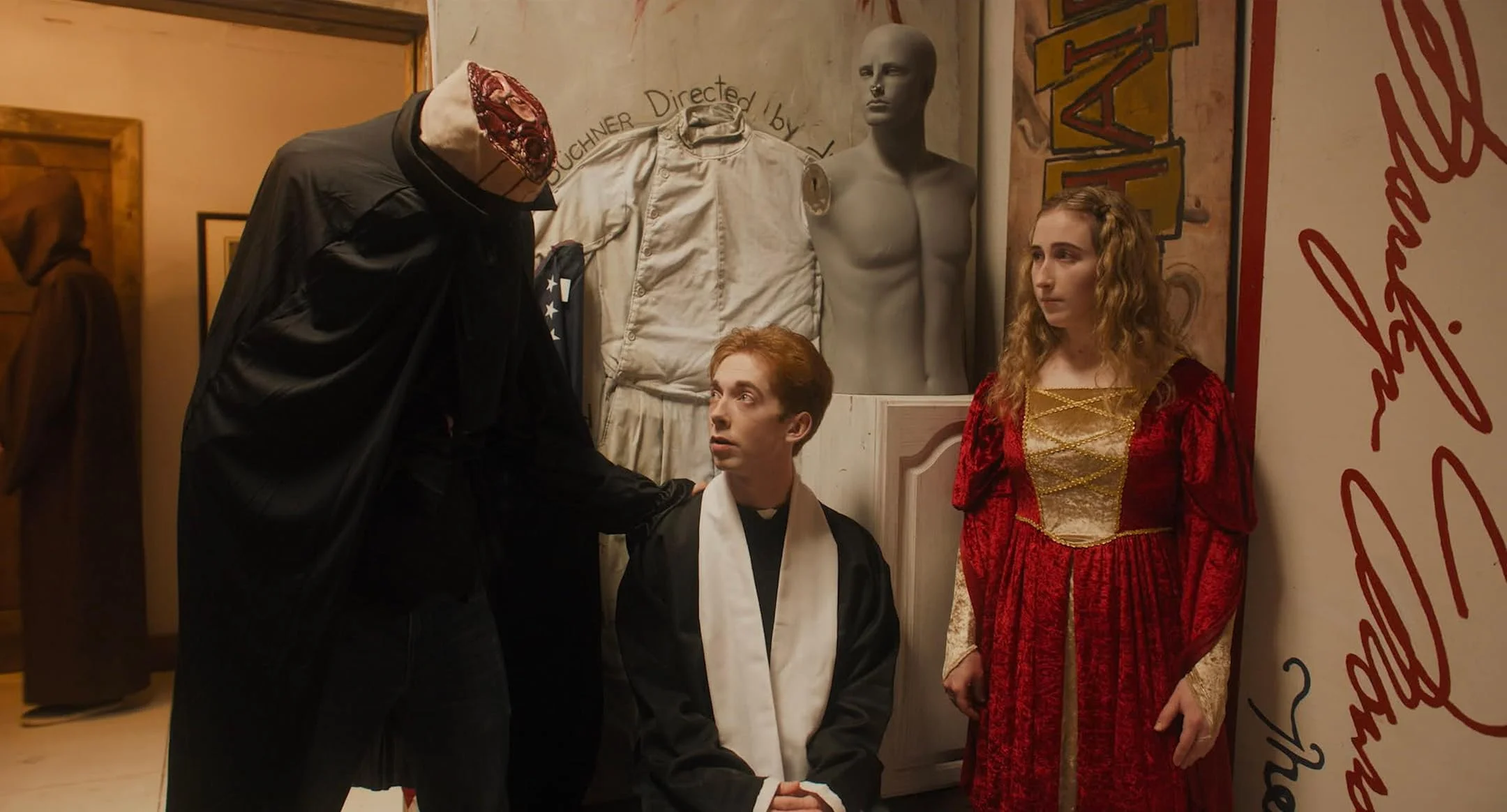
Chas’s inability to stop and Haley’s involvement belong to an existing way of relating. The film’s most productive question concerns how people recognize harm when the behavior producing it has previously helped them feel close. Affection can explain their participation without settling what they owe each other afterward.
The conversations do not always sustain that inquiry at the same intensity. Once the group’s sarcastic habits are established, extended exchanges can keep demonstrating a dynamic we already understand. Even a moment of someone standing up for themselves is followed by a return to the conversational flow, with limited dramatic movement to distinguish persistence from repetition.
Spending time inside a social pattern can reveal its force; it can also leave the viewer waiting for another aspect of the relationship to emerge. The temporal structure gives repeated language a purpose that the length of individual scenes does not consistently earn.
This matters particularly for a film whose social detail must communicate beyond its immediate circle. Private jokes often contain a history that outsiders cannot access, and reproducing their duration does not automatically reproduce their intimacy. Sims and Barriga help make the relationship credible, but credibility and interest can part company during the longer stretches of talk.
The horror framework offers another way into the same material. Morand and Pajarito’s conception of a dramatic comedy wearing horror’s outward identity makes sense alongside a narrative in which earlier encounters become disturbing through later knowledge. Sarcasm, once heard as companionship, becomes difficult to separate from cruelty.
The late passage from emotional tragedy toward nightmare extends that change in register. Its interest lies in bringing regret into the experience of the film, without requiring the friendship to resolve into a tidy lesson about being kinder. The tonal movement is easier to grasp than some of the prolonged exchanges that precede it.
Forgiveness remains difficult within the habits Haley and Chas have established. A shared comic language permits evasion because another entertaining reply can postpone an admission of hurt. Their predicament becomes legible outside this particular American theater circle through that practical difficulty: sincerity requires changing how they speak to each other, and their familiarity gives them ample means to avoid doing so. The backward movement leaves the viewer listening to earlier banter with knowledge the speakers lack, attending to the vulnerability their habitual sarcasm keeps making difficult to acknowledge.
Tomorrow, You Pretty Ghost was released on North American VOD platforms, including Amazon Prime Video and Apple TV, on August 25, 2026, through Freestyle Digital Media. Written and directed by Alex Morand and Rocky Pajarito, the horror-comedy drama centers on two high school theater kids prone to elaborate hoaxes who orchestrate one final prank before graduation, only for it to unravel with terrifying and unexpected consequences.
Where to Watch Tomorrow, You Pretty Ghost (2026) Online



Full Credits
Title: Tomorrow, You Pretty Ghost
Distributor: Freestyle Digital Media
Release date: August 25, 2026
Running time: 1 hour 55 minutes (115 minutes)
Director: Alex Morand, Rocky Pajarito
Writers: Alex Morand, Rocky Pajarito
Producers and Executive Producers: Alex Morand, Rocky Pajarito, Abigail Sims, Vincent Wang
Cast: Abigail Sims, Everardo Barriga, David Brown, Cricket Arrison, Robert Schultz, Alyssa Blair, Grant Crater, Chris Vanderhorst
Director of Photography (Cinematographer): Lance Haoyuan Li
Editors: Yi Yang
Composer: Alex Morand
The Review
Tomorrow You Pretty Ghost
Tomorrow, You Pretty Ghost finds an unsettling social history inside a damaged friendship. Its American theater-kid milieu becomes accessible through believable performances and a backward-moving narrative that turns familiar banter into evidence of hurt. The conversations sometimes repeat what the relationships have already revealed, and private shorthand does not always produce intimacy for the viewer. Still, the connection between performance, cruelty, and regret gives its horror framework emotional purpose.
PROS
- Sims and Barriga make the difficult friendship believable.
- Reverse chronology gives verbal callbacks emotional weight.
- Sarcasm exposes the overlap between affection and cruelty.
- Horror gives regret a persuasive tonal expression.
CONS
- Extended conversations repeat established dynamics.
- Private shorthand can leave the viewer outside the intimacy.