















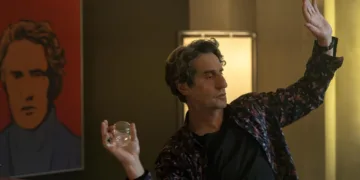












As archived footage shows, Robbie Williams first rose to fame as the cheeky, charming member of British boy band Take That in the early 1990s. Practically overnight, the group skyrocketed from aspiring artistes to achieving a level of adulation “bigger than the Beatles” in the UK pop scene. A fresh-faced, teenaged Williams is seen in interviews playfully mugging his way through questions, still getting his bearings in the limelight. However, the whirlwind of success soon proved disorienting for someone thrust into stardom at such a young age.
The relentless recording and touring schedule took a toll on Williams, who turned to partying and drugs as a coping mechanism. Backstage footage captures his spiraling reliance on substances like cocaine and alcohol. Jealousies also emerged within Take That’s ranks, particularly between Williams and lead songwriter Gary Barlow, the golden boy of the group. By 1995, these tensions and addictions had reached a boiling point, culminating in Williams’ departure from Take That while still in his early 20s. As Williams notes while viewing the archival clips, he was far from ready for the “grown-up world” of fame and fortune, a toxic combination that fueled his desire to go off the rails.
The unvarnished footage from this formative period in Williams’ career reveals how even the headiest triumphs of pop stardom can conceal much darker realities. For those vaulted to celebrity at such an early age, the glittering prizes of success often extract a high psychological price.
The Heavy Burden of Early Fame
The archival footage in Robbie Williams offers a revealing window into the megastar’s formative years, showcasing both his infectious charm as a teenager and the destabilizing effects of wealth and celebrity foisted upon him at such a tender age. As a member of Take That, Williams won over fans with his cheeky charisma and humor during interviews. The camera captures his youthful exuberance and early showmanship, mugging his way through questions with a mix of bravado and goofiness. However, behind the scenes, the teenager from Stoke-on-Trent struggled to find solid footing in the adult world of stardom he had so rapidly entered.
Almost overnight, Take That had skyrocketed from aspiring boy band to the heights of Beatlemania, performing before deafening crowds of adoring fans. For a 16-year-old, the relentless recording sessions, tours, and media attention proved disorienting. To cope, Williams turned increasingly to partying and drinking. Backstage footage shows his spiraling reliance on drugs and alcohol as addictions began to take hold. Resentments also brewed between Williams and lead songwriter Gary Barlow, the polished golden boy of the group, stoking jealousy and friction. By the age of 21, the turbulence of fame had ruptured Williams’ relationship with Take That, driven by the intoxicating mix of youth, inexperience, and phenomenal success.
While the old clips capture Williams’ innate likeability, they also reveal the jarring downsides of adolescent celebrity. Wealth and adoration arrive as a package deal with profound dislocation. However infectious his charisma, the footage underscores how ill-prepared Williams was at 16 to handle the rewards and trappings of stardom showered upon Take That. Far from glamorous, his departure from the band marked an adolescent robbed of the nurturing only years could provide.
The Rollercoaster of Solo Stardom
After departing Take That, Robbie Williams struggled to gain traction as a solo artist, his initial musical efforts faltering. However, his fortunes turned around dramatically in 1997 with the release of Life Thru a Lens and its massively successful first single “Angels.” This kickstarted a hot streak of albums and tours that cemented Williams as a singular talent of British pop. Propelling this new phase was his creative partnership with songwriter Guy Chambers, who brought focus and flair to Williams’ talents. Their studio footage reveals a symbiotic relationship, with Chambers acting as a steadying hand and patient mentor.
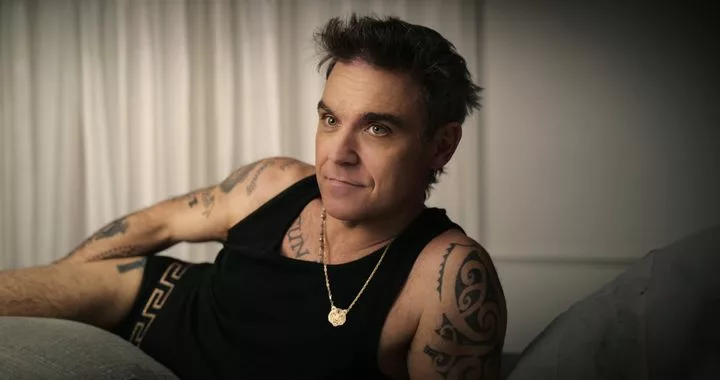
“Angels” and subsequent smash hits like “Millennium” and “Rock DJ” underscored Williams’ skill as a performer with smarts, humor, and pathos. Throughout the 90s and early 2000s, he embarked on a series of spectacularly staged global tours featuring pyrotechnics and dazzling costumes. Much of it orbited around machismo, mischief, and a refugee’s sense of liberation. Footage captures the freewheeling extravagance of this period, with Williams likening himself to “a pig in clover.”
However, his ankles were tied. Behind the scenes, ongoing substance abuse, insecurities, and mood disorders continued to haunt the star. Around 2006, following disappointments like the album Rudebox, Williams’ mental state went into freefall. Tour footage shows Williams nearly paralyzed by anxiety before taking the stage, his face frozen in distress. He describes these moments as “having a nervous mental breakdown,” the on-stage panic attacks agonizing to witness. By his own admission, Williams basically ceased functioning, caught in the vortex of addiction, depression, and crushed self-esteem.
Only after meeting his future wife Ayda Field in 2006 and committing to rehab did Williams slowly begin lifting himself out of the pit. Her and others’ support helped stabilize a man who had essentially collapsed under the weight of his own celebrity. The harrowing behind-the-scenes footage provides an unfiltered glimpse into the real toll that superstardom extracted from Williams even at his peak. It lays bare the anguish that can accompany enormous success and the comforts it provides, a stark reminder that fame alone fails to inoculate against struggles of the psyche.
Embark on a Cultural Adventure: “Get ready for a unique blend of humor and life lessons with our Brits Down Under review. Discover how British youths adapt to life on an Australian farm in this engaging reality TV show. Dive into our review for a glimpse of this cultural journey!”
Myopic Lens, Muddled Tone
One limitation of the Robbie Williams docuseries is its exceedingly narrow perspective, with Williams being the sole contemporary talking head throughout all four episodes. While this intimate approach allows him to control the narrative, it also restricts the audience’s understanding. We gain no insight from bandmates, collaborators, family or friends, resulting in a claustrophobic, one-man echo chamber.

This singular view heavily skews the tone as well. The series focuses intensely on Williams’ struggles with mental health and addiction, rarely pausing to celebrate his artistic accomplishments. His insecurity about his work borders on self-flagellation at times. He dismisses songs like “Rock DJ” as “end-of-the pier nonsense” unworthy of respect, craving credibility over his pop ubiquity.
Williams’ tendency towards brutal self-criticism makes his seriousness regarding perceived failures seem unintentionally comic. For instance, he remains deeply troubled by the poor reception for 2006’s “Rudebox,” a track whose kitschy ridiculousness undercuts his grave reaction. It’s unclear whether the audience should laugh or cry at these moments of emotional dissonance.
Ultimately, seeing only Williams’ unhappiness on continuous loop engenders more pity than empathy. He fixates on the trauma dealt him by fame, but shows little joy derived from success. With no counterbalancing voices speaking to rewards or silver linings, the series fosters a mood of brooding navel-gazing.
Robbie Williams would benefit greatly from widening its scope. Chambers, Take That members, and music journalists could offer invaluable alternate angles on Williams’ gifts and demons. Even fleeting glimpses of his children displaying his paternal warmth would provide relieving contrasts. As assembled, the claustrophobic production design too often isolates rather than draws in the audience. Williams may have found the experience cathartic, but the limited palette blunts the viewer’s emotional connection.
“Discover the Untold Story of June Carter Cash”: Step into the life of a country music legend. Read our in-depth review of ‘June’ and explore the journey of June Carter Cash, beyond her role as Johnny Cash’s wife.
The Road to Redemption?
Later episodes of the docuseries highlight Williams’ gradual efforts to achieve stability and perspective after hitting rock bottom. His 2010 reunion with Take That proves a professionally satisfying full circle moment, while renewed collaboration with songwriter Guy Chambers also appears emotionally grounding. As a recovering addict and new father, glimpses of williams bonding with his children capture a man discovering new purpose.

Performing again with Take That provides a poignant bookend to Williams’ story. Footage of their joint stadium shows and recording sessions portray warmer camaraderie between Williams and his former bandmates, especially Gary Barlow. Williams speaks of taping into “pop star Robbie Williams” again, perhaps accessing a part of himself he feared lost forever. Despite past acrimony, this eventual brotherhood seems to anchor Williams.
His recapitulated partnership with Chambers also exudes mutual affection and creative stimulation. Williams credits Chambers with organizing his disarrayed mind into hitmaking shape earlier in their careers. Their easy, generation-spanning friendship offers Williams a link to his prior, successful self—a self who found fulfillment in music absent so much torment.
Quieter moments with his young children display Williams’ growing paternal joy and hard-won comfort with domesticity. Constant touring wreaked havoc throughout his life, so his new role as a father anchors him to something beyond his own roving ego. Scenes of playing in the backyard with his kids capture a man discovering happiness in simplicity rather than stadium excess.
But has Williams truly made peace with his past demons? At times, his participation in the very documentary picking at old scabs hints more navel-gazing than closure. And the series ends with Williams leaving his crying children to embark on another major tour. It remains ambiguous whether his drive to perform can ever be truly reconciled with the rich stillness of family life he now treasures. Ultimately, Williams appears a work in progress, still oscillating between past and present, contentment and compulsion.
Final Thoughts on Robbie Williams
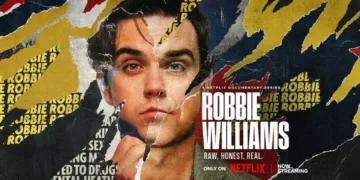
The Robbie Williams docuseries offers intimate, unfiltered access to the pop icon’s psychological battles with the double-edged sword of fame. Through extensive archival footage and present-day commentary, Williams reckons with his rocket-like teen stardom, messy solo career, and the addictions, insecurities, and panic attacks celebrity fueled. For devoted fans, it’s a revealing portal into the complex man behind the cheeky entertainer’s persona.

However, the claustrophobic perspective leaves the audience disconnected at times. Williams’ solo narration, sans outside voices, narrows the picture. The unyielding focus on tribulations also muddies the tone, making light of his genuine pain. Widening the lens to showcase more balancing forces—his artistic gifts, the uplift music provides—could grant this navel-gazing endeavor more purpose.
But within its tight framework, the series still evokes the high costs of public life. The raw backstage access pierces fame’s glittering facade, confronting its searing psychological impacts. Whatever its limitations, Robbie Williams maps an unfiltered topography of the volatility and anguish swirling behind one pop star’s massive success. Its willingness to probe darkness casts light upon the exorbitant toll that stardom extracted from Williams and his psyche—a cautionary tale rendered in stark intimacy.
The Review
Robbie Williams
Robbie Williams offers unprecedented access to the tortured psyche lurking behind this pop icon's charming public facade. Its unflinching autopsy of celebrity's damage makes for an absorbing character study. But the claustrophobic perspective hinders wider understanding, leaving the audience more spectator than participant in Williams' journey.
PROS
- Unprecedented access to Williams' personal archives of footage spanning decades
- Williams is very candid about his struggles with substance abuse, anxiety, depression
- Illuminates the extreme pressures and downsides of teen stardom
- Humanizes Williams beyond just his public persona
- Interesting look at his creative relationships with Take That and Guy Chambers
- Moments of redemption and reflection with his children are touching
CONS
- Perspective is too limited, with no outside voices beyond Williams
- Tone can be off-puttingly dour, focused only on hardships
- Errors towards navel-gazing self-indulgence at times
- Music and performance achievements given short shrift
- Pacing feels rushed in trying to cram career into 4 episodes
- Ending is ambiguous about whether reflections provide closure
- Myopic viewpoint makes it hard to fully emotionally connect