


























Yance Ford pulls no punches with his hard-hitting documentary exposé Power. As both director and narrator, Ford guides us on an unflinching tour through the dark underbelly of American policing. Think you understand the thin blue line? Think again.
In just under 90 tight minutes, Ford systematically dismantles the notion that cops exist to “serve and protect.” Through archival footage and interviews with academics and journalists, he constructs an ironclad case against law enforcement as an institution built to control and oppress.
The opening shots set the tone, as Ford’s somber voiceover warns “this film requires curiosity, or at least suspicion.” From there, he connects the dots between the earliest origins of American policing – slave patrols, militant removal of natives, union busting – to the brazen acts of brutality that dominate headlines today. The through line is crystal clear: from the beginning, police have never been about public safety or service. Their true purpose is maintaining the social hierarchy by any means necessary, especially violence.
It’s a tough pill to swallow. But Ford administers the medicine with care, guiding viewers through confrontation to revelation. The result is a viewing experience that’s as cerebral as it is visceral. Audiences may feel uneasy at times, but Ford’s confident direction ensures we keep watching until the credits roll. Because he knows the real crime here isn’t exposing ugly truths—it’s turning a blind eye.
Hard Evidence, Organized for Impact
Rather than a chronological timeline, Ford structures Power thematically. This allows him to hammer home the film’s central arguments from multiple angles.
Ford leans heavily on academic experts to provide historical context around policing’s roots in oppression. Their credentialed commentary lays a firm factual foundation. Firsthand accounts from journalists and community advocates offer additional on-the-ground perspective.
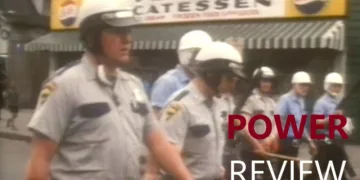
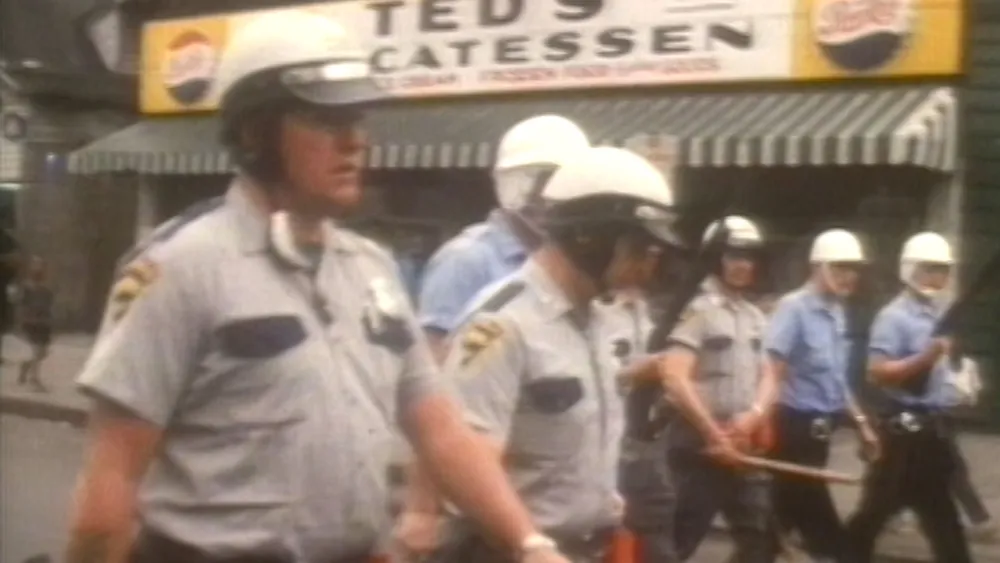
But the real star here is the visual evidence. Ford bolsters every point with a barrage of archival footage that’s both convincing and deeply disturbing. We see clips ranging from police brutality caught on tape to snippets of Hollywood propaganda films that glorify law enforcement. It’s a damning montage that uphold the power hierarchies still in play today.
Voiceover narration binds the visuals and interviews into a tight, focused package. Ford guides us through confrontation to revelation, using his experts’ hard facts as supporting pillars. There’s an underlying ruthlessness to Ford’s organization. This is an essay film on a mission – to systematically dismantle the mythology of American police through cold, hard, perfectly sequenced evidence.
“Dive into the dark underbelly of children’s television with our Quiet on Set: The Dark Side of Kids TV review. Explore the troubling revelations and systemic failures that have marred the industry.”
Truth Bombs Drop Hard
Through meticulous evidence and clear-eyed analysis, Power reveals the institution’s oppressive foundations – foundations that snaked their tendrils into modern times.
It starts with the colonial origins. Ford traces policing back to the institutions that paved its way: slave patrols, frontier militias forcibly removing natives, and strikebreaking goons. These set precedents of controlling marginalized groups through state-sanctioned violence.
Fast forward to today, and the rotten roots remain alive and thriving. Ford’s montage of police brutality caught on tape makes this stomach-churningly clear. The through line is consistent – violence and oppression have always been the point. Despite the slick PR, cops exist to brutalize dissidents and reinforce the social hierarchy. Protecting the marginalized? Get real. Modern police carry on the proud tradition of pounding down anyone challenging the status quo.
This brings us to Ford’s most explosive argument – these legally-sanctioned shock troops wield near-absolute power. Unlike politicians, a beat cop can end your life in a split second without accountability. As experts highlight, this ability to play judge, jury and executioner with impunity makes policing criminally undemocratic.
Sure, some “good cops” exist – Ford profiles one Minneapolis officer with the best intentions. But it almost doesn’t matter. Since its inception, the policing institution itself has been rotten. And poisoned fruit, no matter how you slice it, remains fatally toxic.
As Ford concludes, real change demands an informed public and sustained pressure. Power delivers on the former in devastating detail. The latter falls on our shoulders. Leaving the theater, we spectators now bear witness to the horrific truths exposed in living color. The question is – what will we do?
Beyond the Ivory Tower
There’s no doubt Ford’s legal brief against policing hits hard overall. But the analytical approach does have its shortcomings. Namely, the film often feels confined to the ivory tower, lacking ground-level perspectives.
Make no mistake – the experts provide devastating historical context and incisive commentary. But some audiences may crave more intimacy. Where are the lived experiences of police brutality victims? The voices of grieved families and communities? Widening the spotlight to those directly impacted could spark more empathy and outrage.
The same goes for the reform debate. Ford only briefly touches on the practical complexities around transforming law enforcement. While Minneapolis officer Charlie Adams provides thoughtful on-the-ground analysis, we only glimpse officers grappling with hard trade-offs.
This narrow angle weakens Power’s ability to change minds and policy. Abstract oppression, no matter how meticulously presented, can still feel remote for skeptics and moderates. Zooming the lens to feature reformers inside the system could better highlight the human dynamics in play. And catalyze more pragmatic action steps.
Of course, Ford likely made an intentional choice here. He constructed an academic argument, not an appeal to pathos. But the cerebral approach has disadvantages—namely in accessibility and actionability for the average viewer. Supplementing the bird’s-eye historical view with worms-eye testimony could broaden this film into a true mass movement builder. Until then, it remains confined within the halls of the informed and the allies. Those are worthy walls to breach, without a doubt. But the houses beyond still await a wake-up call.
Compelling Yet Clinical Imagery
Visually speaking, Power delivers a devastating gut punch. The archival collage provides an indispensable backdrop for the film’s arguments about institutional oppression. Newsreels, movies clips, body cams – this montage of footage spanning decades hammers home the through line of violence and control.
At times, Ford’s image curation borders on poetic. Take the recurring motif of the mushroom cloud. As police power grows exponentially, these billowing explosions echo in the background – a visual metaphor for the institution’s swelling threat.
That said, the imagery always plays second fiddle to the voiceover and interviews. Instead of complementary storytelling, the visuals function as Exhibit A in the legal argument. This clinical approach has advantages; the footage provides concrete evidence without sensationalism.
Yet it also holds Power back from its emotional potential. We rarely glimpse the human stories behind the statistics and explosions. Yes, Ford blacks out and blurs some widely-publicized acts of brutality, like George Floyd’s murder. This shows restraint to prevent desensitization. But it results in a safer, more sterile viewing experience.
Make no mistake – the images still disturb, disgust, and enrage. However, they do so intellectually rather than viscerally. We react to the injustice these clips represent rather than immerse ourselves in the agony of these decisive moments. In this sense, Power mirrors a court case when it could have reflected lived reality. The visuals convict the system. But they stop short of capturing its human toll.
A Call to Action
There’s no shaking Power once the credits roll. Through nearly 90 minutes of relentless evidence, Ford builds an airtight case against American policing as an inherently oppressive institution. One rooted in control of marginalized groups and preservation of the social hierarchy – not public safety or service.
The film resoundingly debunks the mythology of kind beat cops just trying to “protect and serve.” From slave patrols through anti-organized labor goons all the way to modern militarized forces, the through line is crystal clear: state-sanctioned violence targeting dissent to maintain colonialist power structures. Stamped from the beginning with this corrupt DNA, the policing cancer has only metastasized over time.
Ford lays the ugly past and present bare through historical breadth over emotional depth. Make no mistake, the facts presented will leave any conscientious viewer unsettled about the rotten foundation we’ve built public safety upon. The question is, where do we go from here?
While it convincingly dismantles the what and why of the policing travesty, Power offers less guidance on next steps. The routes forward remain complicated, from internal reform efforts to external abolition movements. Ford only hints at debates happening in communities nationwide.
Yet perhaps shaking foundations is enough. The film pulls no punches stripping away law enforcement’s PR sheen. For many previously comfortable Americans, this will provide their first true reckoning with the police state’s sordid heritage. And as Netflix launches global distribution, Power now sits primed to provoke millions.
The rest is up to us. Ford and his experts lay down a thorough indictment, backed by undeniable proof. Now we spectators must carry this newly refined sight beyond the theater, into streets, homes and halls of power. Too often truth dies behind closed doors. But truth spread widely burns silently – until the fuel of public outrage ignites unstoppable change.
The Review
Power
Power packs a mean punch for such a slim film. In just 86 minutes, Yance Ford systematically dismantles the institution of American policing and its mythology. Through historical breadth and clinical precision, he builds an ironclad case against law enforcement as inherently oppressive rather than protective. Is it an emotionally resonant viewing experience? Not quite - the analytical approach rarely glimpses the human stories behind the facts and footage. But theArguments resonate loud and clear regardless. Like a prosecuting attorney, Ford wields academic experts and visual evidence to utterly demolish police PR platitudes. The result is a reckoning that refuses to be ignored or forgotten. Power delivers grim truths about state violence that many Americans can no longer deny. What they do next is up to them. But there is no unseeing this unflinching exposé. Insight and urgency outweigh intimacy here to deliver serious impact. All told, a ruthless and reckoning piece of documentary journalism.
PROS
- Methodically builds an irrefutable case against oppressive roots of policing
- Impactful use of archival footage and imagery to support arguments
- Structured logically and thematically for clarity and focus
- Gives helpful historical context around origins of policing
- Distribution on Netflix could educate wide audience
CONS
- Analytical approach lacks emotional resonance
- Could benefit from more perspectives of impacted communities
- Doesn't deeply explore reform debates and public opinion
- Visuals always secondary to verbal arguments
- Leaves questions around feasible solutions unaddressed