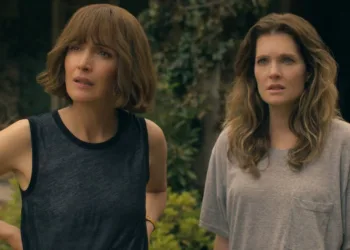


























Yui Katakura hears that she has cancer and asks how long she has left. She declines treatment, receives an estimate of roughly a year, and begins thinking about expenses. Ko Shibasaki makes this practicality uncomfortable to watch without turning Yui into an emotional blank. Her contained manner suggests someone reaching for a familiar tool in an unfamiliar situation. Planning has helped her feel secure for years. Now she applies it to dying, and the absence of an obvious breakdown leaves us waiting for a response she seems determined to manage privately.
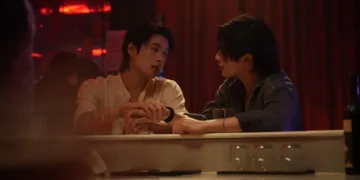
In the same hospital, Yoshitaka Sena has a financial emergency of his own: his father’s medical bills. The pink-haired host asks Yui for ¥720,000, and she agrees to lend it in exchange for his company. An IOU gives their connection a clear starting point. For Yui, who has little interest in depending on anyone, this arrangement offers an appealing degree of certainty. She can specify what another person owes her. For Sena, played by Eiji Akaso, the agreement answers an immediate need, leaving his time available to someone who can afford it.
Hiroki Kazama’s One Year to Live, Buy a Man, adapted from Toriko Yoshikawa’s novel, finds its most affecting material in the distance between those two positions. Yui has spent years preparing for an independent retirement, waiting for food discounts and freezing meals in batches. These habits make her recognizable before they make her eccentric. There is effort and competence in sustaining that life. Learning that she may never reach the future she has funded gives her decision to spend an underlying sadness, even when the film lets shopping become a source of fun.
Shibasaki is particularly good at making enjoyment look like something Yui needs practice accepting. Her sparse delivery and reserve give the eventual smiles and laughter room to register. The pleasure comes from noticing a person become easier in another person’s company, with some of her awkwardness still intact.
Akaso helps by keeping Sena’s charm relatively unforced. His presence gives her room to respond; he avoids making every exchange feel like an energetic campaign to improve her life. Their growing ease supplies a reason to care about the arrangement beyond the novelty of its terms.
The film’s romantic restraint suits this gradual attachment. Yui accepts Sena’s work without treating him as someone who needs to be rescued from it, and the pair never receive the conventional reassurance of an onscreen kiss. That leaves their company with more emotional work to do.
The shopping and shared activities matter because Yui starts allowing pleasure into routines previously organized around postponement. Watching her relax is satisfying, though the transaction remains present beneath that satisfaction. Sena’s livelihood already involves providing attention, so warmth can be felt before its meaning becomes certain.

Then the spending starts to look different. Sena exchanges his pink hair for black and wears suits Yui has chosen. What seemed like permission for Yui to enjoy herself becomes influence over how someone else appears. His sister Naomi objects, giving voice to a discomfort the visible changes have already introduced. This is a useful disturbance in the film’s gentle rhythm. We have been encouraged to enjoy Yui’s loosening restrictions on herself; now we have to consider the restrictions she may be placing on Sena. He is the one wearing the purchases she has chosen.
Naomi’s concern deserves the weight the film gives it, especially alongside Sena’s family’s financial reliance on him. His agreement carries obligations that Yui’s new freedom does little to remove. Akaso’s vulnerability helps preserve our interest in him as someone with needs beyond making her happy.
Still, the film is clearer about Yui’s growing capacity for enjoyment than about her readiness to relinquish control. Her smiles provide persuasive evidence of change in her own life. They offer less reassurance about the freedom available to the person helping her change, and the hopeful mood sometimes moves past that distinction too easily.
Yui’s unfinished business with her family gives her guardedness a longer history. Her mother died when she was twelve, leaving behind an interest in quilting and an unfinished quilt that Yui continues. Here the film creates tenderness through an activity she can sustain. Working on something her mother began allows continuity without requiring a speech about recovering from loss. It also makes her distance from her father and stepmother, Tomomi, feel particularly sad. She can keep attending to a relationship preserved in fabric while leaving living relationships largely unattended.
Tomomi’s conversation with Sena changes the emotional meaning of that distance. Her account of an old incident involving the quilt revises an understanding Yui has carried for years. The disclosure gives the family material a necessary shift: we are asked to reconsider the certainty with which an old hurt has been preserved. There is a different kind of intimacy in allowing another person’s account to disturb a settled memory. The conversation earns its explanatory role because it supplies something missing, rather than simply telling us that Yui should open herself to affection.
The quilt’s continuing work allows a quieter response. Yui has inherited something incomplete, and her attention can extend it toward someone else. That possibility gives the film an emotional reach its purchased companionship cannot supply on its own. Receiving care has left her with something she can work on and pass along, without fixing its value in yen or deciding how much affection it entitles her to receive. As she continues her mother’s quilt, she participates in a relationship whose unfinished portion has become hers to make.
One Year to Live, Buy a Man premiered globally on Netflix on November 5, 2026. Directed by Hiroki Kazama, the Japanese romantic drama follows a cautious 40-year-old woman who, upon receiving a terminal cancer diagnosis, decides to spend her remaining savings hiring a young pink-haired host, sparking an unconventional and transformative bond.
Where to Watch One Year to Live, Buy a Man (2026) Online


Full Credits
Title: One Year to Live, Buy a Man
Distributor: Netflix
Release date: November 5, 2026
Rating: TV-MA / Not Rated
Running time: 1 hour 49 minutes (109 minutes)
Director: Hiroki Kazama
Writers: Yoshikazu Okada, Toriko Yoshikawa (novel)
Producers and Executive Producers: Netflix
Cast: Kou Shibasaki, Eiji Akaso, Michitaka Tsutsui, Naomi Nishida, Mari Hamada, Yui Narumi, Yoko Moriguchi, Ryubi Miyase
The Review
One Year to Live, Buy a Man
Watching Yui grow comfortable in another person’s company is quietly moving, thanks to Ko Shibasaki’s guarded warmth and Eiji Akaso’s gentle presence. The quilt and Tomomi’s account of an old hurt give that tenderness a life beyond the paid arrangement. The hopeful tone offers less convincing reassurance about Yui’s control over Sena, leaving their affection on uncertain ground. Still, their gradually relaxing exchanges make this an affecting drama about accepting care.
PROS
- Shibasaki makes Yui’s gradual openness feel earned.
- Akaso’s restrained charm supports their growing ease.
- The quilt gives grief a tender, physical expression.
- Tomomi’s disclosure deepens the family relationships.
CONS
- The hopeful tone softens scrutiny of Yui’s financial control over Sena.