
























![Kingdom Hearts Collection [I-III] Review](https://gazettely.com/wp-content/uploads/2026/10/Kingdom-Hearts-Collection-I-III-1-360x180.webp "Kingdom Hearts Collection [I-III] Review: KHII Holds Steady as Newer Entries Fluctuate 37")



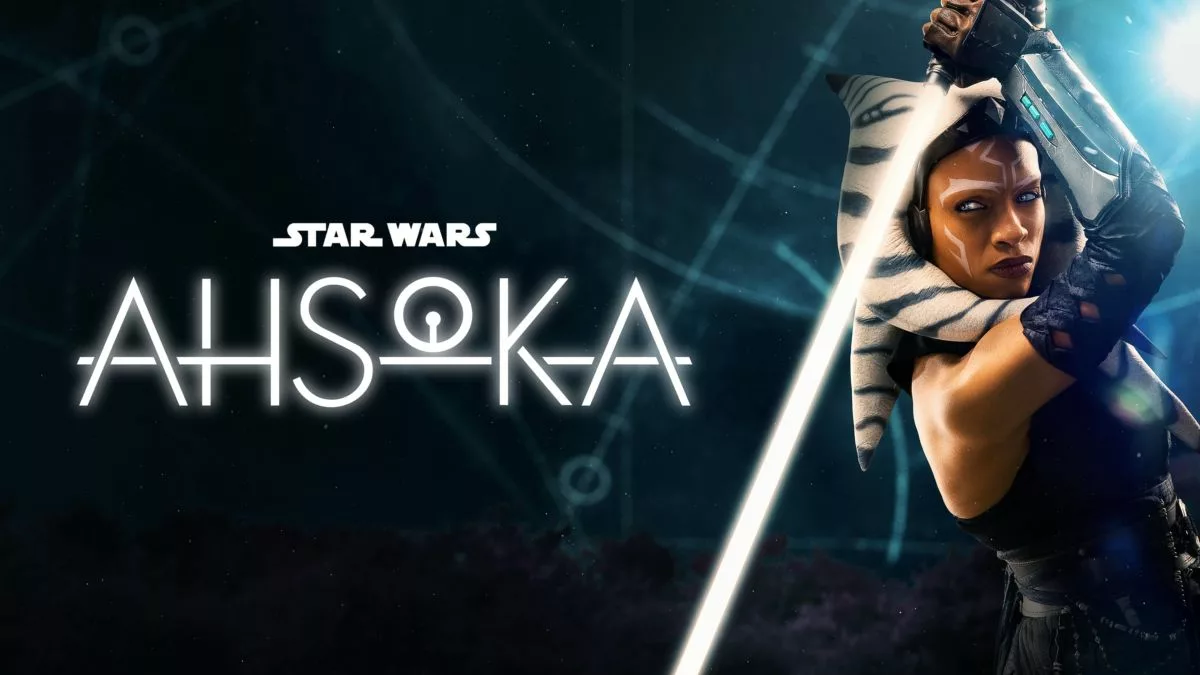

Ahsoka arrives as a live-action reckoning for a character who began life in animation and matured into something else entirely. The show traces a throughline that began with Ahsoka Tano as Anakin Skywalker’s Padawan in the 2008 animated film Star Wars: The Clone Wars and continued through Star Wars Rebels. Rosario Dawson embodies the role on screen after a first live-action turn in The Mandalorian. Dave Filoni guides the project from concept to execution. The series opens with a clear mission: find Admiral Thrawn and resolve the loose threads around Ezra Bridger.
A Galaxy-Spanning Quest
The initial episodes establish a single, urgent objective: locate Thrawn before his tactical genius can enable a renewed Imperial threat. The map that points to Thrawn occupies the plot’s gravitational center. It last belonged to Morgan Elsbeth, whom Ahsoka once apprehended on Corvus. Elsbeth escapes custody, and that escape forces Ahsoka into uneasy partnerships with Hera Syndulla and Sabine Wren. Sabine carries visible resentment, which the show uses to seed interpersonal friction.
Jarring entrances accelerate the action. Jedi hunter Baylan Skoll stages a dramatic prison break (a speeder chase opens the series) and demonstrates a lethal skill set that places him in opposition to Ahsoka and her allies. A fragment of the map projects an image of Ezra Bridger, which converts a technical clue into an emotional trigger for Sabine. The result is a race: Ahsoka, Sabine and Hera move through Lothal and Raada pursuing fragments and answers while Skoll and his allies follow a parallel vector.
The plot deploys mystery in modular pieces: secret maps, fragmented loyalties, and characters with unresolved histories. Those elements form a scaffold that promises exploration of the Unknown Regions and the map’s implications for fate and agency. Action sequences punctuate the investigation with visceral set pieces and lightsaber duels (some of which register as cinematographic highlights). The first two episodes set the coordinates for a quest that mixes procedural beats with mythic stakes.
Characters and Performances
Ahsoka remains the narrative fulcrum. Rosario Dawson’s performance trades youthful exuberance for measured reserve. The restraint reads as experience earned in combat and loss; the performance suggests inward motion more than constant outward expression. That choice foregrounds mood over banter and makes Ahsoka feel like a veteran who has recalibrated what combat and compassion mean.
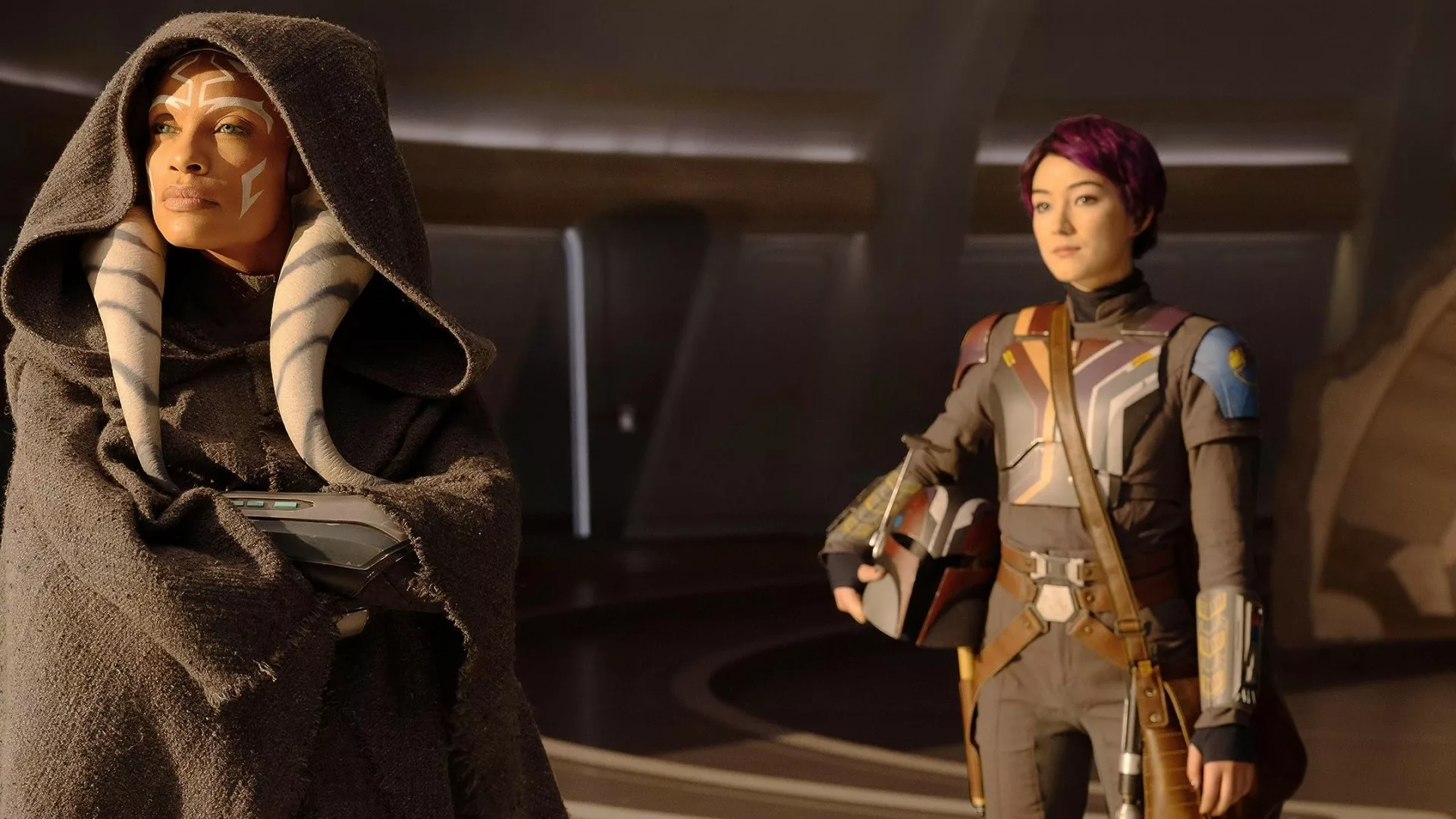
Sabine, played by Natasha Liu Bordizzo, is portrayed as a creative, impulsive force. Costume and weapon design signal her artistic temperament (graffiti, customized gear) and her guilt over Ezra functions as a psychological driver. Their mentor-protégé dynamic is rough-edged; friction replaces automatic trust. That conflict is central because it supplies emotional momentum beyond the hunt for a map.
Baylan Skoll registers as a chilling new antagonist (Ray Stevenson supplies presence and physicality). He reads as a remnant of Jedi discipline repurposed into a mercenary ethic. The show hints at a textured backstory without closing the book on his motivations, which keeps him usefully opaque.
Hera Syndulla returns as an anchor figure, offering direction and context consistent with previous appearances. David Tennant’s Huyang supplies levity and expository clarity at key moments. Secondary players such as Ryder Azadi and Chopper provide lived-in texture; their returns make the universe feel continuous rather than patched.
The acting occasionally encounters friction with the script. Lines carry a somber, elliptical quality that can flatten exchanges into atmosphere rather than character revelation. That tonal choice amplifies mystery but sometimes sacrifices immediacy in interpersonal chemistry. Still, cast members create moments of tension and tenderness that suggest richer veins to mine in subsequent episodes.
Craft, Flaws, and Cultural Reach
Production values approach cinematic scale. Locations from Lothal to Raada move from animated concept to tactile reality with convincing textures and world-building detail. Lighting and framing underscore mood; cinematography often privileges shadow and composition to create a brooding aesthetic. Sound design and score swell at decisive moments and retreat during quieter passages, allowing silence to register as a tactical device.
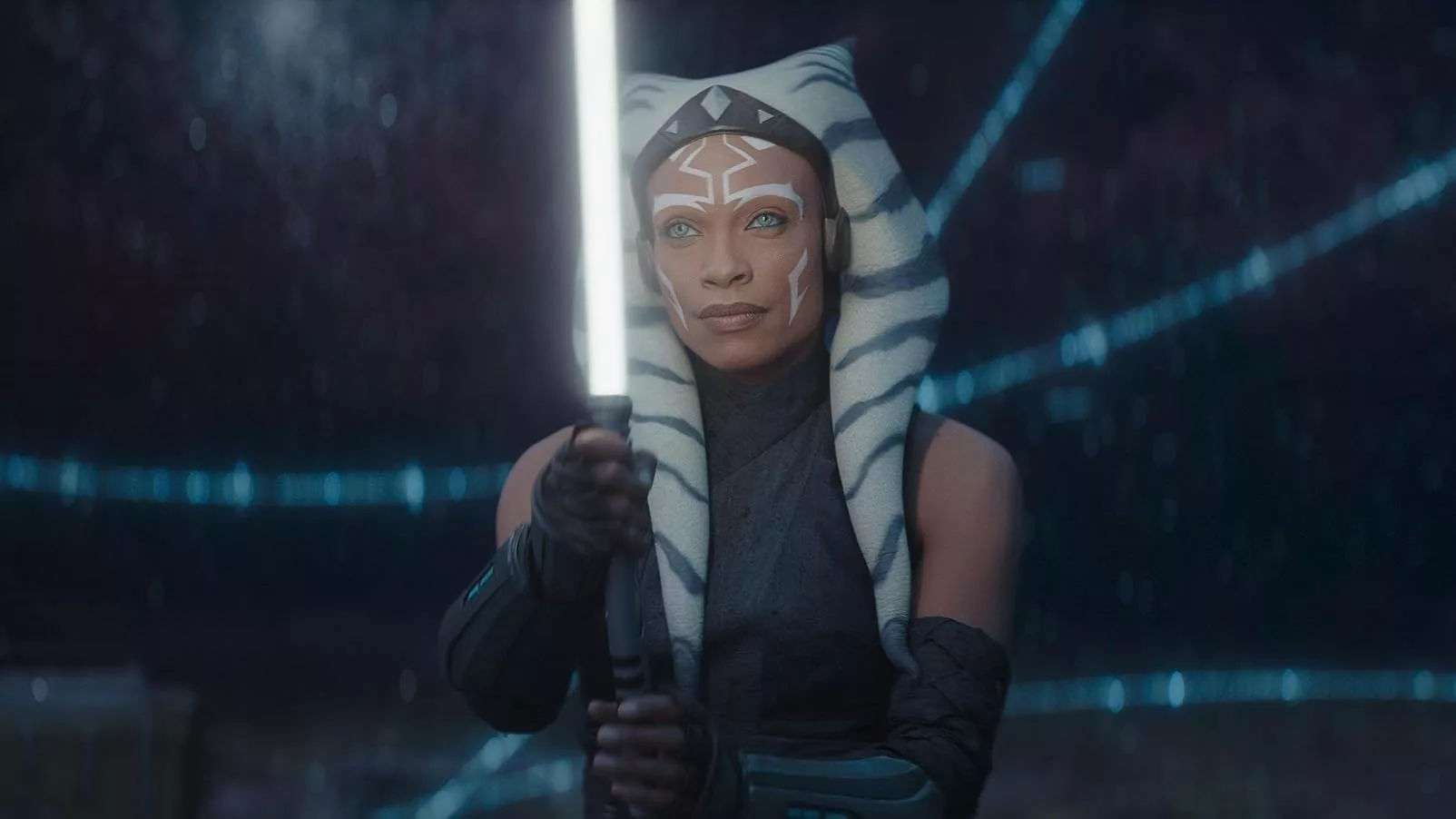
Action choreography blends practical stunt work and effects into readable combat. Dual-blade techniques and acrobatic movement keep swordplay legible. Visual effects help rather than dominate, which is important when the script asks the audience to invest in character stakes as much as spectacle.
The series’ shortcomings are primarily structural. Pacing sags in stretches. Scenes that aim for contemplative weight sometimes elongate into repetition. Exposition arrives in fragments that require prior knowledge for full effect. That approach can reward long-term devotees of the animated shows while imposing a steeper entry cost on casual viewers. Dialogue often favors implication over clarity, which cultivates an atmosphere of mystery but weakens narrative propulsion.
Thematically, the show raises questions about institutional failure, mentorship, and moral realignment after large-scale political collapse. Ahsoka’s withdrawal from formal Jedi structures and her subsequent role in a post-Imperial galaxy suggest reflections on personal responsibility and the limits of ideology. Sabine’s guilt over Ezra and the map’s role as a contested object invite commentary on memory, obligation, and the bureaucratic traces left by empire. Those motifs give the series potential cultural resonance beyond franchise fandom.
If the show sharpens its narrative economy and offers clearer connective tissue for newcomers, its blend of technical excellence and thematic ambition could shift how serialized Star Wars stories approach canonical continuity. For now, the work shows a deliberate attempt to honor earlier character development while moving events into live-action register.
Final Observations
The first two episodes present a high-fidelity translation of animated lore into live-action form. The result is a show that looks and sounds like a major cinematic project and that carries weight in its themes and character commitments. The tradeoff lies in pacing and exposition: mystery is preserved at the cost of momentum in places. Performances tilt toward introspection, which suits the material’s reflective moments but sometimes dulls interpersonal spark.
Ahsoka’s premiere functions as an invitation and a challenge. It invites viewers back into complex histories, and it challenges the series to convert reverence for those histories into forward motion. The map is the plot’s machine; relationships are its emotional engine. If the writers tighten narrative focus and give the actors sharper beats to play, the series could become a sustained meditation on power, allegiance, and moral repair that also delivers the thrills expected of Star Wars. For now, the show plants seeds that are worth watching to see how they grow.
Ahsoka is a live-action Star Wars series that serves as both a spin-off from The Mandalorian and a spiritual successor to the animated series Star Wars Rebels. The story follows the former Jedi Padawan Ahsoka Tano as she investigates an emerging threat to the vulnerable New Republic: the potential return of the exiled Grand Admiral Thrawn. Accompanied by her estranged apprentice Sabine Wren, Ahsoka embarks on a journey across galaxies that delves deep into the lore of the Force. The series premiered on Disney+ with a two-episode debut on August 22, 2023, and is available to stream exclusively on that platform.
Where to Watch Ahsoka Season 1 Online

Full Credits
Title: Ahsoka (also marketed as Star Wars: Ahsoka)
Distributor: Disney+
Release date: August 22, 2023
Rating: TV-14
Running time: 37–57 minutes per episode
Director: Dave Filoni, Steph Green, Peter Ramsey, Jennifer Getzinger, Geeta Vasant Patel, Rick Famuyiwa
Writers: Dave Filoni
Producers and Executive Producers: Dave Filoni, Jon Favreau, Kathleen Kennedy, Colin Wilson, Carrie Beck, Karen Gilchrist, John Bartnicki
Cast: Rosario Dawson, Natasha Liu Bordizzo, Mary Elizabeth Winstead, Ray Stevenson, Ivanna Sakhno, Diana Lee Inosanto, David Tennant, Eman Esfandi, Lars Mikkelsen, Hayden Christensen
Director of Photography (Cinematographer): Eric Steelberg, Quyen Tran
Editors: James D. Wilcox, Dana E. Glauberman, Mick Mahon, Andrew S. Eisen
Composer: Kevin Kiner
The Review
Ahsoka
While showing glimmers of potential, the premiere of Ahsoka ultimately falls short with uneven pacing, stilted dialogue, and performances that lack the vitality of the animated source material. More dynamic storytelling is needed to fully realize a beloved character's live-action promise.
PROS
- Strong production values and visuals
- Rewards longtime fans of the animated shows
- Rosario Dawson's portrayal hints at deeper characterization
- Intriguing new villain in Baylan Skoll
- Expands mystical elements of Star Wars lore
CONS
- Uneven pacing hampers narrative momentum
- Stiff, cryptic dialogue limits character chemistry
- Acting lacks dynamism of animated counterparts
- Relies heavily on pre-existing fan knowledge
- Fails to make new viewers invested in stakes







