

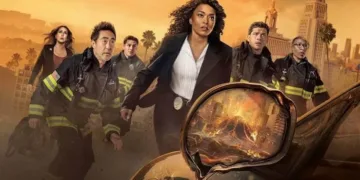









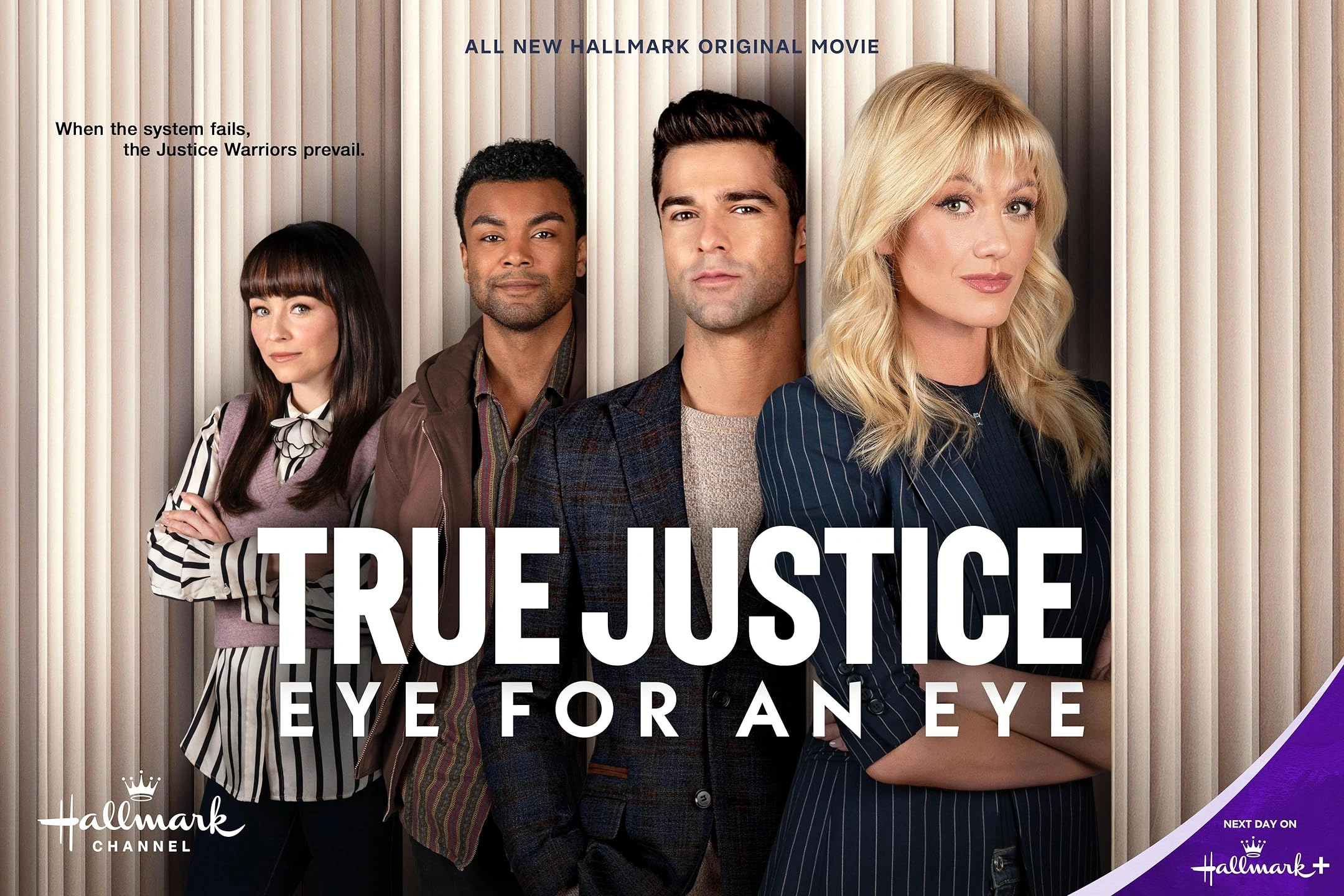

True Justice 2: Eye for an Eye brings back the Justice Warriors, a group of second-year law students juggling coursework with independent legal investigations. Co-written by network mainstay Nikki DeLoach, this second installment sends the amateur sleuths into a case built around institutional failure and suburban malice. The main story begins with their effort to exonerate Sharon Warner, a mother accused of murdering Katherine Harris.
Harris, the wealthy president of a prestigious private school Parent School Coalition, has left behind enough enemies to keep any murder board pleasantly crowded. The film aims to combine the fixed rhythms of a television legal procedural with the reassurance of a cozy network mystery.
Its drama stays accessible, leaning on audience familiarity with the returning cast. Katherine McNamara and Markian Tarasiuk lead the younger ensemble again, with DeLoach and Benjamin Ayres giving the story a steadier adult frame. The result is a light investigative drama shaped by a polished, idealized network model.
Dissecting the Case File
The mystery is constructed on a chain of circumstantial evidence so thin that one good sneeze might scatter it. The crime occurs near a snowy family cabin, and the local police arrest Sharon Warner on the strength of a stray hair and neighborhood gossip. That fragile case gives the Justice Warriors an immediate narrative purpose.
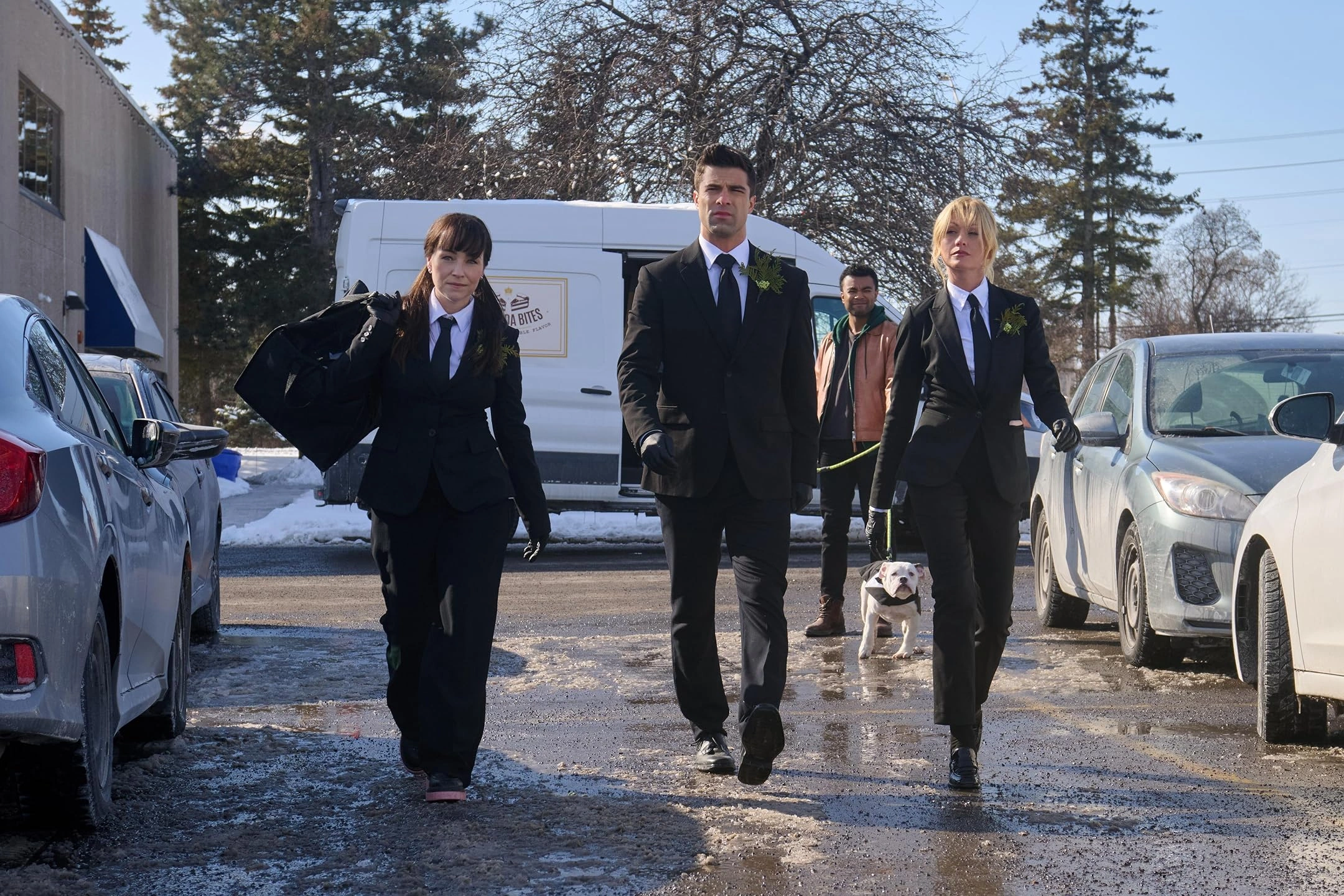
The screenplay frames them as the correction the system needs, sending them into high-tech surveillance, forensic review of overlooked crime scene objects, and assertive field research. This method keeps the plot moving and gives the students agency, yet it also places the story at a noticeable distance from recognizable legal procedure.
The second act strains the film’s internal logic. The viewer is asked to accept that the original defense attorney failed to present a camera alibi that placed Warner miles from the crime scene during the initial trial. The student detectives then locate vital murder weapons sitting in plain sight at a location the police supposedly processed. These choices reveal the film’s priorities with admirable honesty. Speed wins. Procedural rigor takes the bus home early. The screenplay depends on brisk momentum, and that momentum often arrives by cutting past legal questions that deserved a longer beat.
The film is liveliest within the social world of Penn Park private school. The writers build a sharp portrait of wealthy parents performing grief in public while private scandals gather behind the polished gates. This is familiar cozy mystery territory, and the film uses it well. Each suspect carries a readable motive for wanting the powerful victim gone, which gives the investigation a clean rotation of suspicion. Financial secrets and personal betrayals keep the case active, moving attention from one affluent archetype to the next without letting the central question sit idle for long.
Classroom Alliances and Corporate Attire
Katherine McNamara leads the investigative thread as Casey Barlow, giving the group a composed and earnest focal point. Her performance keeps Casey’s determination clear without hardening the character into a miniature courtroom machine. Casey reads as a student learning how to carry authority, which suits a story about young investigators trying to act inside systems that barely make room for them.
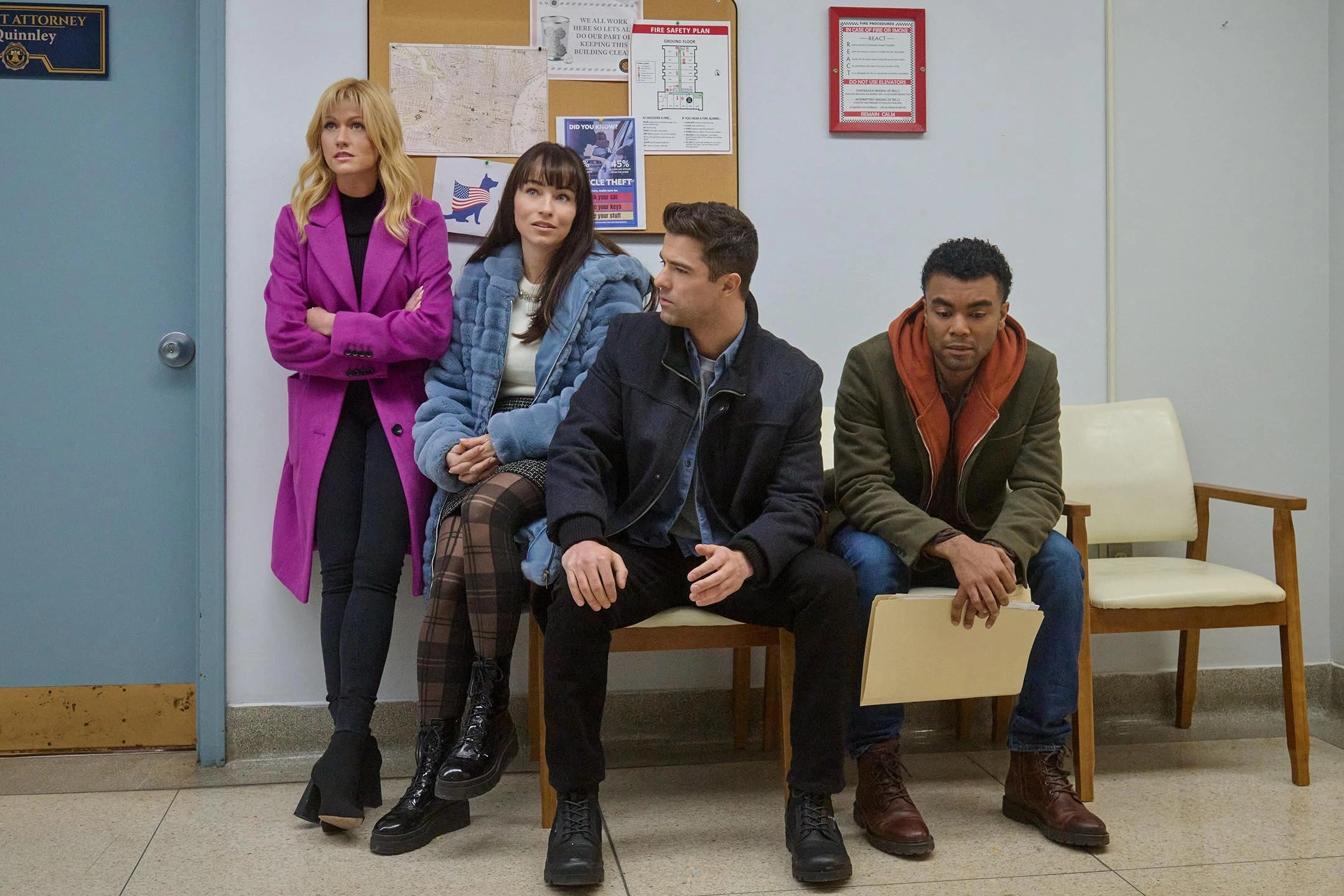
The ensemble around her functions in a familiar support pattern. Markian Tarasiuk’s Eli and Alexander Nunez’s Liam handle the lighter story beats, and their comic rhythm gives the film welcome energy. Their timing works especially well during the early breaking-and-entering sequence, where the danger of the situation bumps amusingly against their student-sleuth confidence. The exchange between them keeps the procedural material from drying out into exposition, a useful service in any mystery that requires people to explain hairs, cameras, and alibis at regular intervals.
The veteran performers give the younger cast a necessary dramatic frame. Nikki DeLoach plays Professor Ambrose as an encouraging intellectual anchor for the students, and Benjamin Ayres appears as a dedicated legal ally. Their characters create an ideal institutional support system, guiding the amateurs without taking command of the story. The screenplay also keeps a slow romantic tension among the law students. Glances and study sessions point toward later developments, and the subplot follows a familiar network path. It supplies personal texture while leaving the murder investigation in control of the film’s structure.
Style, Subtext, and Suburban Espionage
The film’s visual storytelling is clearest in the wardrobe choices for the law students. Their sharp professional clothing signals confidence and ambition, announcing their readiness for the legal establishment long before graduation. The direction favors clarity, bright lighting, and straightforward camera work. This approach fits the accessible tone, though the editing sometimes moves so quickly that it draws attention to unresolved legal gaps. A cut can hide many sins. Here, a few sins wave from the rear window.
A tonal shift arrives when the characters take on undercover identities. The wigs, fake mustaches, and casual trespassing push the procedural mode into overt comedy. For viewers tuned to the film’s lighter register, these theatrical bits add charm and keep the investigation playful. For viewers invested in the murder case as a serious legal matter, the disguises risk cracking the story’s reality. The film is most convincing when it treats absurdity as seasoning, then returns to the case before the joke starts steering the plot.
The script also plants continuity details for returning viewers. Casey’s past case from the first movie receives a reference, giving her growth a continuing line from one installment to the next. A specific Easter egg cameo links this case to a larger network mystery universe. That world-building works as a signal of franchise awareness. True Justice 2 understands the television tradition it occupies: comfortable, orderly, lightly self-referential, and confident that a capable group of law students can solve what trained adults somehow left sitting in plain sight.
True Justice: Eye for an Eye premiered on the Hallmark Channel on May 23, 2026, serving as the second movie in the legal mystery franchise. The film follows the student investigative group known as the Justice Warriors as they look into a murder mystery surrounding a wealthy parent to free an innocent woman. Viewers can watch the television movie live or on-demand through the Hallmark Channel, the network’s streaming platform Hallmark+, or various live TV streaming services that carry the network.
Where to Watch True Justice 2: Eye for an Eye (2026) Online




Full Credits
Title: True Justice: Eye for an Eye
Distributor: Hallmark Channel
Release date: May 23, 2026
Rating: TV-PG
Running time: 84 minutes
Director: Lisa Soper
Writers: Nikki DeLoach, Megan McNulty
Producers and Executive Producers: Nikki DeLoach, Megan McNulty, Stan Spry, Eric Woods
Cast: Katherine McNamara, Markian Tarasiuk, Nikki DeLoach, Benjamin Ayres, Marisa McIntyre, Alexander Nunez
Director of Photography (Cinematographer): Ron Stannett
Editors: Christopher A. Smith
Composer: Sean William
The Review
True Justice 2: Eye for an Eye
True Justice 2: Eye for an Eye succeeds as a cozy, low-stakes procedural that values character chemistry over watertight legal logic. While the narrative suffers from massive plausibility gaps, incompetent police work, and highly improbable investigative shortcuts, the charming rapport of its young ensemble and the presence of seasoned network veterans keep the production watchable. It functions perfectly fine as breezy comfort food for franchise fans but falters under serious critical scrutiny.
PROS
- Genuine, entertaining screen chemistry and comic timing within the student ensemble.
- Engaging look at wealthy suburban hypocrisy and private school politics.
- Strong anchoring performances from veteran leads Nikki DeLoach and Benjamin Ayres.
- Fun continuity nods and shared-universe Easter eggs for dedicated viewers.
CONS
- Severe logical leaps, including an absurdly overlooked video alibi.
- Highly unrealistic investigative tactics, like finding crucial evidence left in plain sight.
- The use of unconvincing disguises and wigs saps the gravity of the murder mystery.
- Lacks the deeper emotional stakes that grounded the first installment.