
























![Kingdom Hearts Collection [I-III] Review](https://gazettely.com/wp-content/uploads/2026/10/Kingdom-Hearts-Collection-I-III-1-360x180.webp "Kingdom Hearts Collection [I-III] Review: KHII Holds Steady as Newer Entries Fluctuate 37")



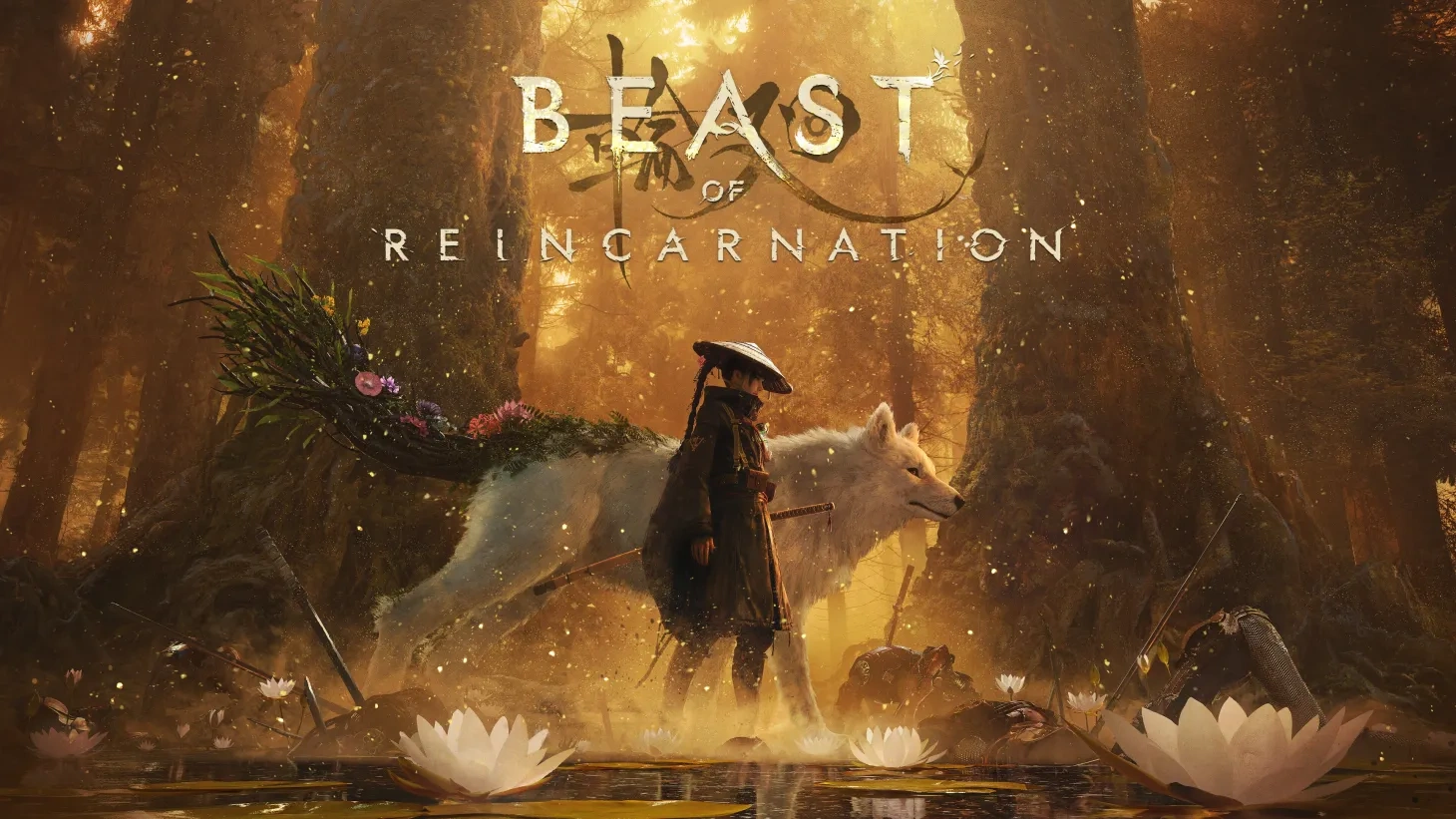

Every successful parry pays into three systems at once. Emma preserves her guard, refills the Entanglement gauge, and generates the Bloom resource used to command Koo. That compact exchange explains why Beast of Reincarnation can feel so sharp before its surrounding structure starts to wear it down.
Game Freak’s action RPG takes place in Japan in 4026, long after the Blight turned cities, animals, and artificial bodies into overgrown threats. Emma carries the same infection. It erased her memories and emotions, yet gave her control over violent plant growth and a ponytail that can become a weapon, bridge, or grapple line.
She travels with Koo, a massive wolf, while a small crew shelters inside a military walker. Their route crosses semi-open regions ruled by Nushi, giant creatures whose powers Emma must claim before the Beast of Reincarnation returns.
The setup recalls Sekiro, Final Fantasy VII Remake, Nier, Horizon Zero Dawn, and Stellar Blade. Its identity arrives through the way those familiar parts interact, especially when Koo’s commands interrupt real-time swordplay and turn a frantic duel into a tactical decision.
The Combat Engine
Emma’s katana establishes a familiar rhythm: read the enemy, parry at impact, counter during the recovery window. Blocking is temporary because each guarded strike drains Entanglement. Let that meter empty and Emma staggers, usually one hit away from death. Perfect parries and dodges reverse the pressure. They restore the gauge, create Bloom for Koo, and move Emma closer to a slow-time state that opens a safer attack window.
A clean defensive sequence creates offense, healing, and companion access. Koo’s special moves restore a small amount of Emma’s health, so recovery comes from engaging with the intended rhythm instead of retreating to drink a potion. Binding an enemy with Koo’s vines creates room for an aerial bow shot. A bite command can finish a staggered target while Emma turns toward a second attacker. The pause used to select Koo’s action gives combat a readable decision point without halting its momentum.
The game builds an expressive player kit, then feeds it enemies with two or three attacks. Common automatons repeat the same sword swings until their timing becomes automatic. Large beasts often rely on one slow charge or sweeping limb attack. The opening giant elk makes the issue plain: its scale promises a duel built around spacing and reaction, but repeated versions of the same move reduce the encounter to waiting for a cue mastered minutes earlier.
Forgiving parry windows help players who found Sekiro too strict, yet enemy design rarely compensates with feints, delayed strings, positioning traps, or coordinated groups. Stealth can thin a small encounter before it starts. Campsites appear so frequently that death carries little friction. No meaningful resource is lost, and the run back is usually brief.
Ranged builds expose another imbalance. Emma’s bow and crossbow support elemental ammunition, replenish at campsites, and become extremely strong after targeted upgrades. Aiming in midair slows the world while Emma keeps moving, making explosive bolts a safe answer to enemies that struggle to pressure her vertically. The system is fun, yet it can bypass the parry loop connecting Emma, Koo, healing, and Entanglement. The strongest build may engage with fewer of the game’s best ideas.
Progression Without Transformation
The shared skill-point pool between Emma and Koo creates a real allocation choice. Investing in Emma improves sword arts, ranged attacks, or hair techniques. Investing in Koo expands his command list, damage, control effects, and combat behavior. Koo is powerful enough to deserve resources, while Emma’s upgrades offer immediate control over every encounter.
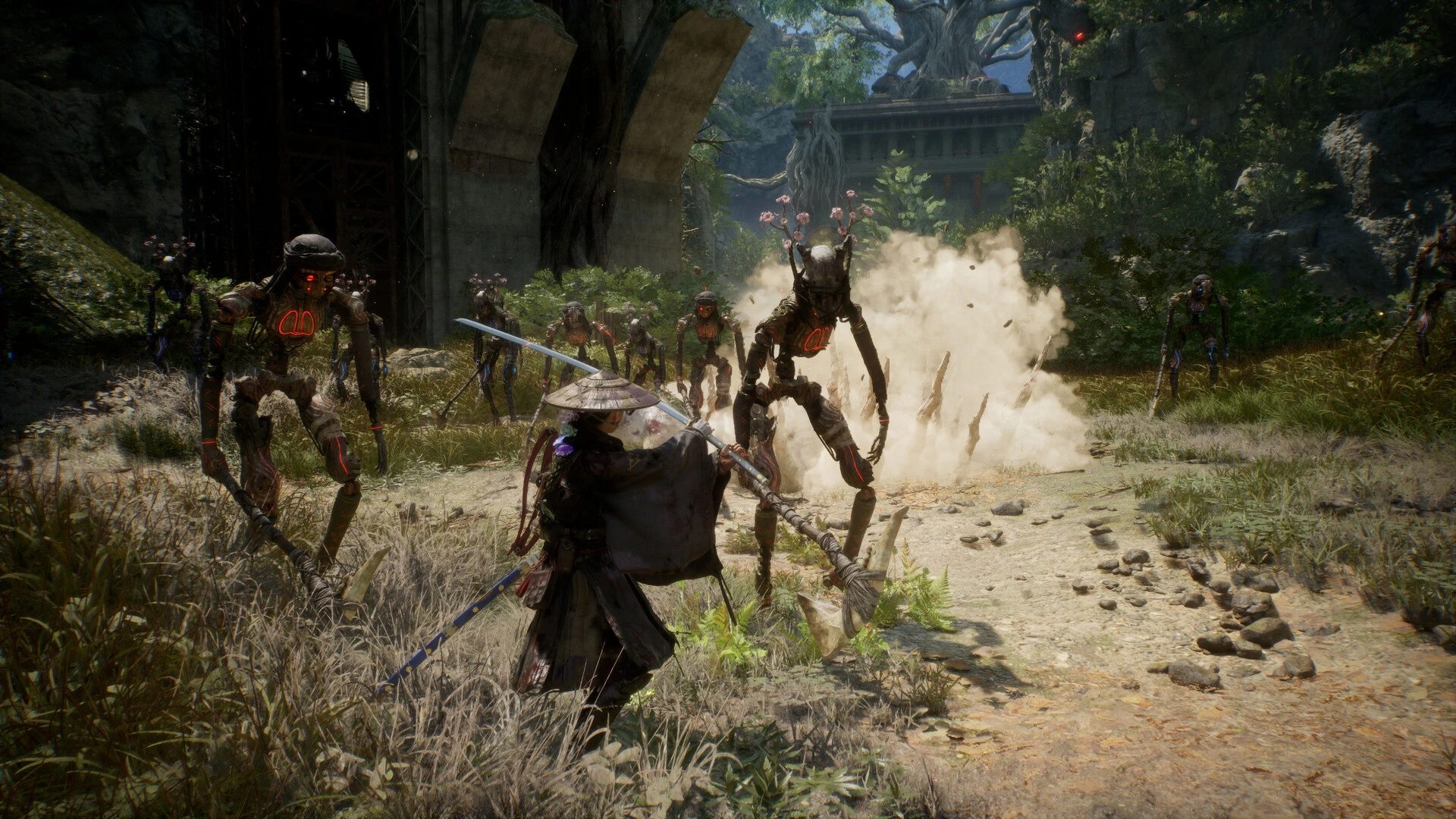
The choice loses force because the campaign rarely changes the questions it asks. New Bloom Arts add flashy combos and faster crowd clearing, but most fights still revolve around the same telegraphed attacks. Koo gains stronger spells and binding effects, yet standard encounters seldom require a planned sequence between his abilities and Emma’s. Shared points suggest two interconnected builds. Encounter design usually treats Koo as an optional damage accelerator.
Weapon progression has a similar problem. Katanas carry passive bonuses, elements, and status effects, but rarely feel distinct in motion. An early blade can remain useful through the campaign because later weapons do not establish clear identities through reach, speed, stance, or combo structure. Upgrading becomes a matter of improving numbers and selecting a preferred effect.
Traversal comes closer to meaningful progression because Emma’s hair changes how she reads space. Holding jump sends her upward on a column of blighted strands. Another input forms a winding bridge across a gap. Grapple points let her ponytail pull her forward at speed. These abilities give semi-open maps vertical routes, especially inside the rotating cube structure where Emma climbs through abandoned experiments while the architecture shifts around her.
The toolkit arrives early and barely develops. Later regions rearrange the same lift, bridge, and grapple functions without introducing fresh movement demands. Optional paths tend to end in minor loot, consumables, or upgrades that are easy to ignore.
Repetition Across the Regions
Each region follows a production line. Emma enters a ruined zone, searches for its Nushi, crosses platforming routes, fights scattered enemies, and reaches an introductory confrontation. The Nushi escapes. A short objective chain follows. Emma meets the same creature again, often before a transformed final phase that retains much of the original moveset. She absorbs its power, returns to the walker, and the cycle resets somewhere greener.
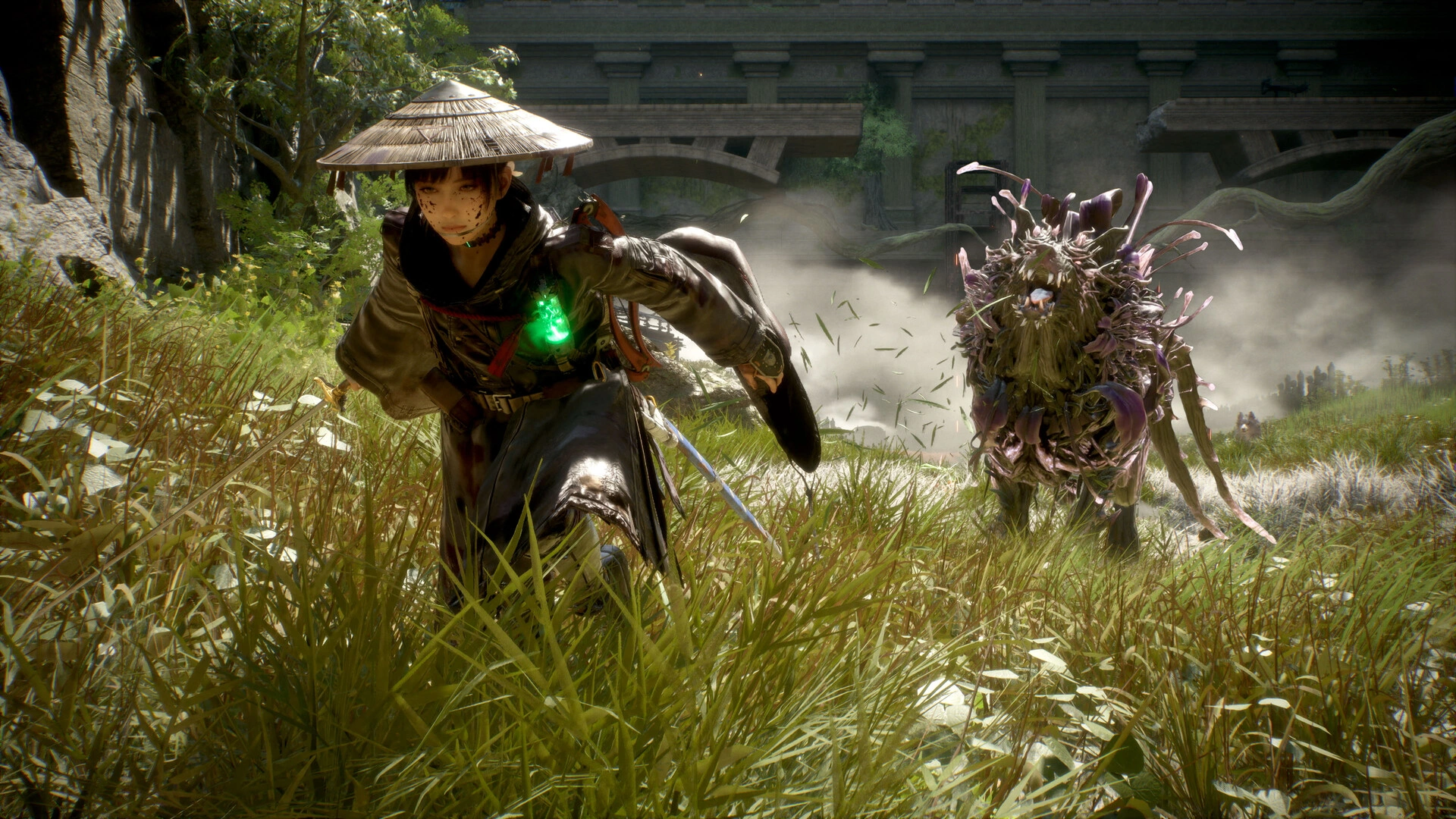
Flooded subways, rural ruins, mountain temples, and vine-covered towers offer different silhouettes, yet dense vegetation and similar materials blur them together. Visual noise also interferes with combat. Particle effects, foliage, and dark geometry can hide the wind-up that a parry system expects the player to read.
The rotating cube level stands out because its architecture produces a specific play pattern. Climbing through the machine, fighting abandoned experiments, and tracking routes through shifting interior space gives traversal a purpose beyond collecting loot. Many other areas place enemies in open stretches with limited environmental pressure. Few ledges, hazards, formations, or mixed enemy roles change how Emma should use her kit.
Nushi rematches should force the player to revise the solution learned during the first fight. Too often, the second encounter asks for the same answer across a longer health bar, then adds a visual transformation without a matching mechanical escalation. Later boss recycling turns supposed apex encounters into familiar maintenance work.
The Walker Holds the Story Together
Emma’s emotional absence gives the combat systems a thematic shape. She survives by responding correctly, generating resources, and issuing commands through measured inputs. Koo supplies the spontaneity she lacks. He attacks on his own, reacts with visible energy, and pulls warmth into scenes where Emma’s face and voice remain controlled. Their bond works because the game expresses it during play. Every Koo command is an act of coordination, and every sliver of health he restores makes companionship mechanically protective.
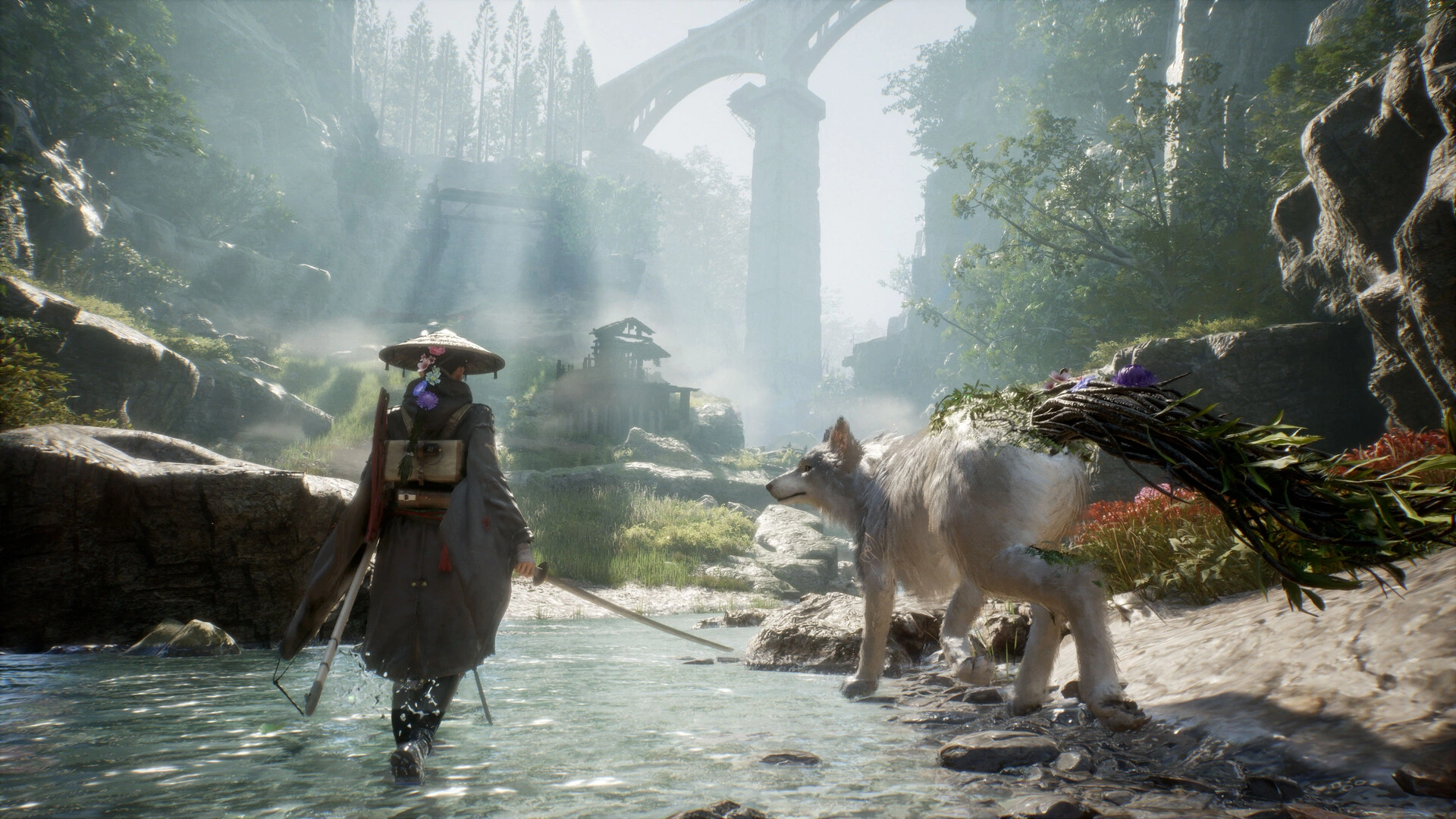
The walker extends that idea into routine. Emma returns from a Nushi hunt covered in gore, washes, tends crops, improves equipment, speaks with the crew, and pets Koo. These actions turn a military machine into a home assembled from repeated maintenance. The heavy focus on meals can become excessive when conversations circle eating without connecting the subject to a character decision. Still, the domestic loop gives the crew a life outside exposition.
The narrative surrounding them is less precise. Emma has amnesia, receives further memory loss, encounters a mysterious child, and moves through a prophecy tied to humanity’s conflict with nature and technology. Flashbacks sometimes replay events seen only minutes earlier. Reveals are signposted long before the story confirms them. Several supporting characters share Emma’s restrained delivery, so long conversations can flatten into pauses between people who appear equally distant from the scene.
Game Freak’s direction finds stronger material in silence. Long shots linger after dialogue. Characters speak sincerely without quips cutting through the mood. The Japanese voice performance gives Emma’s emptiness a haunting quality when the animation supports it, especially in quieter exchanges with Koo or the crew. The lilting electronic score strengthens that mournful tone, though extended reuse of the same music across large regions makes a strong track feel like a limited soundtrack.
Technical problems strike at the exact systems that require trust. The camera can lose control during large Nushi fights, the lock-on may jump between targets, and offscreen attacks punish a player who cannot see the cue. Reports of dodges, healing, and slow-time inputs failing on PlayStation 5 are especially damaging because combat is built around precise responses.
PC performance can fall below 60 frames per second even with reduced settings and FSR 3 enabled. When a missed parry comes from a readable mistake, the system teaches. When it comes from the camera, frame pacing, or an ignored input, the system breaks its contract.
The Review
Beast of Reincarnation
Beast of Reincarnation builds an expressive combat framework from parries, Entanglement management, ranged attacks, hair abilities, and Koo’s tactical commands. The trouble is what that framework has to process. Recycled enemies, narrow boss movesets, weak exploration rewards, and technical instability drain tension from a campaign that repeats its regional loop for roughly 35 hours. Game Freak’s mournful direction and tender companion dynamic keep the experience alive, especially when every combat system clicks during a Nushi battle. Its machinery is fascinating. The production line feeding it needs work.
PROS
- Layered combat systems
- Fluid hair-based traversal
- Koo’s tactical abilities
- Distinctive melancholy atmosphere
- Spectacular Nushi encounters
CONS
- Repetitive enemy patterns
- Recycled boss encounters
- Shallow weapon progression
- Weak exploration rewards
- Camera and input issues