

























![Kingdom Hearts Collection [I-III] Review](https://gazettely.com/wp-content/uploads/2026/10/Kingdom-Hearts-Collection-I-III-1-360x180.webp "Kingdom Hearts Collection [I-III] Review: KHII Holds Steady as Newer Entries Fluctuate 37")



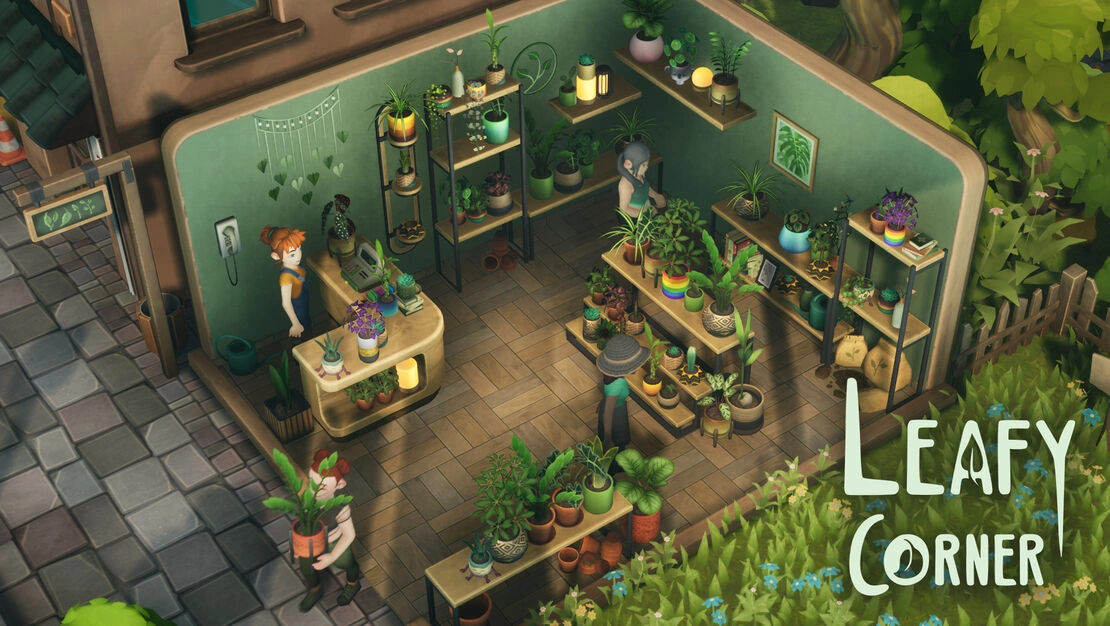

Watering in Leafy Corner asks you to stop at exactly the right shade of blue. Hold the button too long and the meter creeps toward red, leaving the roots waterlogged. Stop early and little goes wrong beyond having to return sooner. That tiny interaction explains Fireline Games’ approach to management: give the player a system to understand, then make failure gentle enough that understanding it never becomes stressful.
You begin with a modest plant shop, a created character, three available species, and a tutorial covering pots, seeds, watering, customers, and furniture placement. From there, the shop expands according to your appetite rather than a schedule. Customers have no timers. You can flip the door sign to Closed when restocking becomes inconvenient, and anyone already inside will continue waiting while you move shelves around.
Compared with management games built around escalating queues and efficiency puzzles, Leafy Corner treats pressure almost like an optional setting. You can even change rules governing plant death, watering frequency, hints, and other management elements. The game wants you comfortable before it wants you clever.
Seeds, Water, Patience
The plant system gives that relaxed structure enough moving parts to remain engaging. Growing stock requires an empty pot, a seed, water, and time. Plants progress through several growth stages, increasing in value as they mature, so selling immediately is rarely the most profitable choice. Marking a plant as not for sale lets you protect a valuable specimen or simply keep one because it looks good beside the counter.
Mature plants introduce propagation. Taking a cutting produces a new seedling while slowing the parent plant’s growth, creating a small tradeoff between present value and future inventory. Special color or pattern variations can appear, and propagated offspring retain those traits. It is a modest breeding system, yet it turns certain plants from anonymous stock into something worth preserving.
Plant information matters outside cultivation too. Each unlocked species has an entry listing details such as watering requirements, pet friendliness, common and scientific names, and changes in sale value across maturity stages. Those tags become practical knowledge when a customer asks for a plant matching particular conditions.
The weakness is the interface built around that information. Once dozens of species are unlocked, the plant book becomes cumbersome because its organization relies heavily on size. A customer requesting a pet-friendly specimen should create a knowledge problem. Instead, the later game can turn it into a scrolling problem because there are no useful filters for traits the database already tracks.
Finding the Right Plant
Customers provide the clearest test of the systems you have learned. Some walk in, choose a plant, and head to the register. Others approach with a specific request. A shopper might name the exact species they want, while another describes qualities that force you to match their needs against your catalogue.
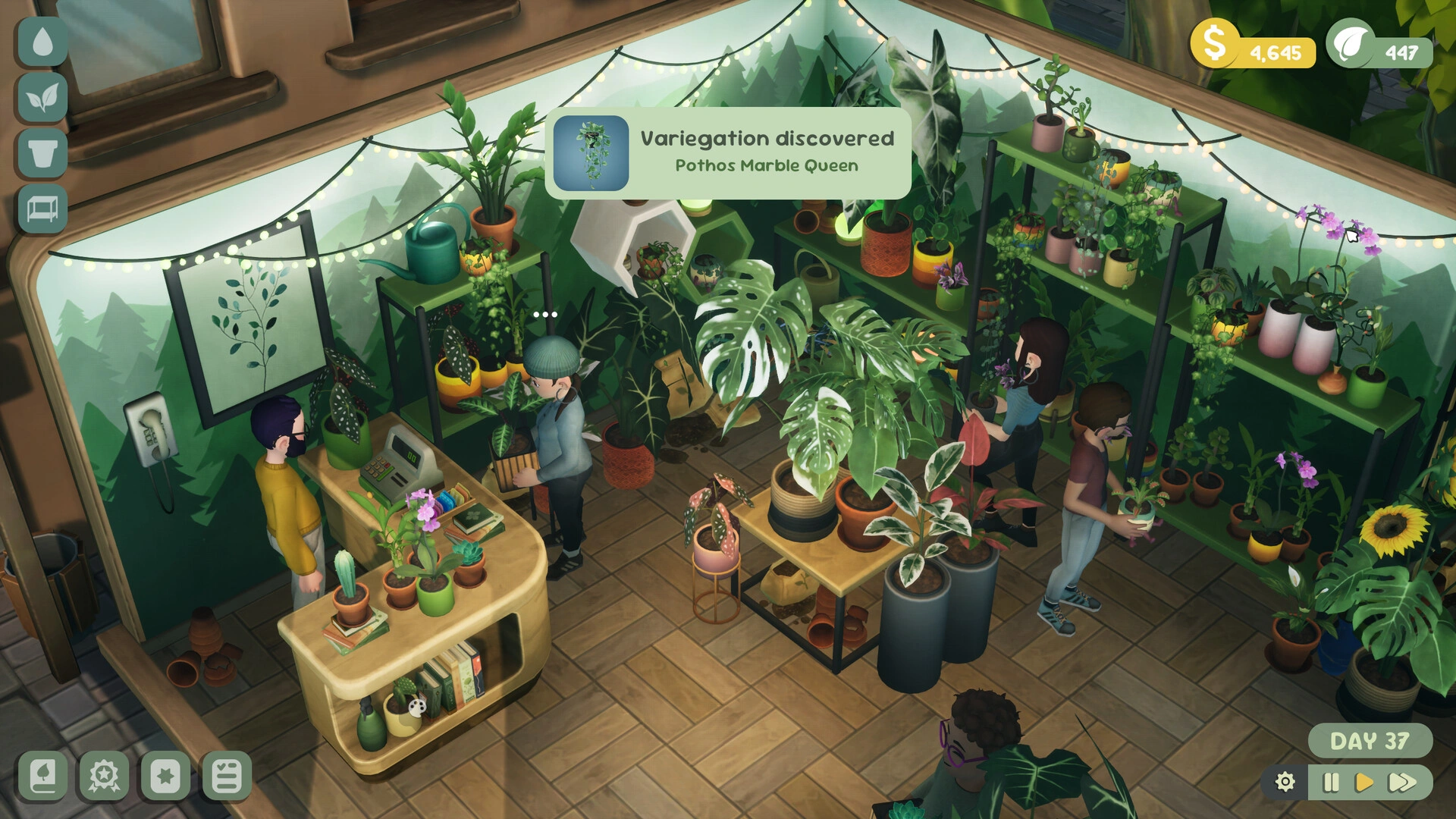
Choose incorrectly and they leave without buying. The consequence is deliberately mild, which keeps mistakes from damaging a peaceful session. It also reveals the limit of Leafy Corner as a management game. There is little reason to optimize customer flow when shoppers happily wait, and a bad recommendation carries no lasting financial or reputation penalty.
Progression supplies the motivation that difficulty does not. Cash buys seeds, pots, furniture, and decorations, while a separate point currency unlocks new species and shop items. Goals such as selling plants, raising specimens to maturity, earning money, or completing a sale involving a pet-friendly plant award those points.
Most goals overlap with actions you already perform, so the task system nudges experimentation without turning the shop into a checklist factory. Reputation rises alongside this activity, increasing customer traffic and opening new features.
Reputation Level 3 is an important threshold because it introduces the first expansion and telephone orders. Larger orders give inventory planning a clearer purpose, particularly when several requested specimens need to be grown ahead of time. The expansion itself is oddly hidden, with the relevant guidance tucked into the pause menu’s Tips section instead of being clearly presented when the upgrade becomes available.
Cottagecore Without the Clutter
Decoration works because the management systems leave space for it. Closing the shop stops new customers from arriving, letting you reposition displays, recolor furniture, change walls and flooring, or use the grid-lock option to keep everything aligned.
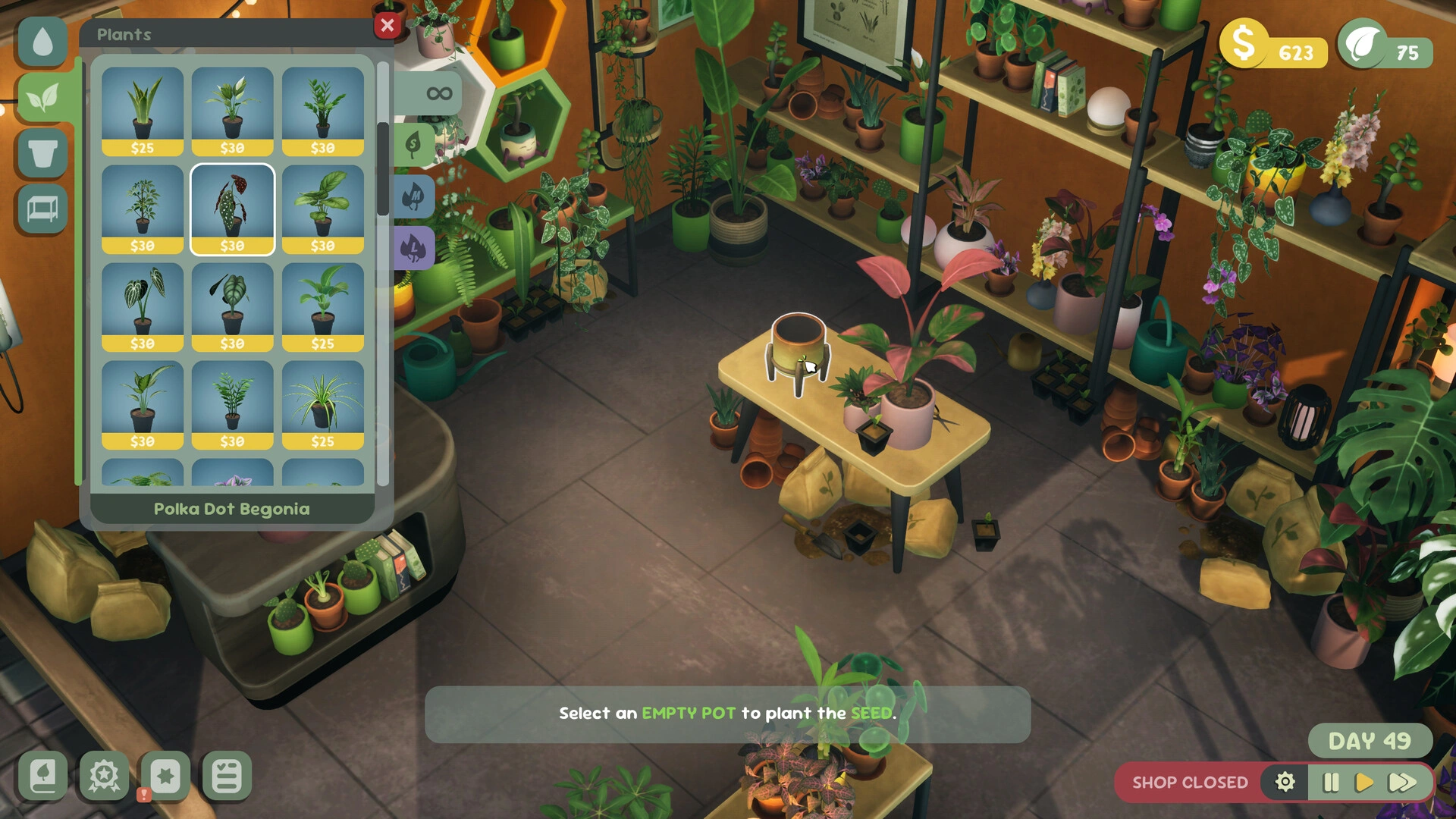
The catalogue leans heavily on wood, black metal, greens, and browns. That restraint suits the low-poly presentation, though repeated furniture styles can make larger shops feel less distinctive than the plant collection itself. Weather never changes and daylight remains fixed, leaving the shop visually static across long sessions.
The audio follows the same restrained philosophy. Soft instrumental music and birdsong sit behind the sounds of watering, purchasing, and reorganizing without demanding attention. Even the occasional cat on the windowsill understands the assignment: pet it, hear a meow, watch it leave.
Remappable controls, multiple save slots, adjustable gameplay rules, and extensive audio and video settings make the simulation unusually accommodating. Those options matter because Leafy Corner succeeds less through demanding mastery than through letting players decide what kind of management experience they want. Its best systems give you enough information to make a choice, enough freedom to make the shop yours, and enough restraint to let a plant take its time growing.
The Review
Leafy Corner
Leafy Corner builds its calm around systems that cooperate instead of competing for attention. Watering, propagation, maturity values, customer traits, reputation, and shop expansion all feed the same gentle loop, while adjustable plant-care rules let players decide how demanding that loop becomes. The tradeoff is mechanical tension. Wrong recommendations carry little cost, customers happily wait, and progression can become passive between unlocks. The poorly filtered plant book creates friction where the game needs clarity most, yet growing a tiny stock into a shop packed with specialized plants remains deeply satisfying.
PROS
- Satisfying plant-growth loop
- Flexible difficulty settings
- Meaningful propagation system
- Strong plant variety
- Relaxed shop customization
CONS
- Limited management challenge
- Weak plant-book filtering
- Expansion poorly signposted
- Repetitive furniture selection







