











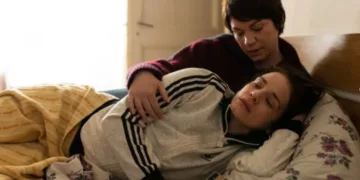











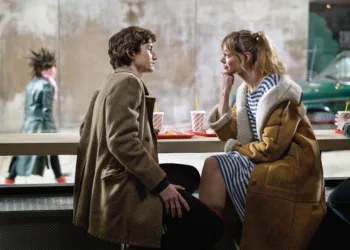
Olya and Oleh resemble each other so closely that the similarity begins to feel cruel. Short hair, glasses, matching shades of green and blue in their eyes. At a New Year’s gathering in Kyiv, Isabelle Stever’s camera studies them as two people who have spent years learning the shape of one another, then quietly reveals that recognition has become difficult. Oleh has transitioned. Olya still loves him. Love, unfortunately, does not freeze identity in place.
Their conversation moves through a narrow reflection, their bodies close while the composition keeps them strangely separate. Olya once understood their relationship as queer and now finds herself publicly read as a woman with a male partner. Oleh has fought for that male identity. Neither position cancels the other. The wound exists precisely because both are real. Then February 24, 2022 arrives.
Explosions wake them. Russia has invaded Ukraine, and a private uncertainty suddenly exists inside a national catastrophe. Oleh’s transition, previously a question of selfhood and intimacy, acquires a legal consequence. The state recognizes him as a man. Men of military age cannot simply leave.
A Man on Paper
The film finds its most painful irony at the border, where identity becomes paperwork and paperwork becomes destiny. Oleh and Olya encounter male officers who appear genuinely baffled by his documents. Their response is almost comic: pass the problem elsewhere. Female officers inherit him, and the comedy dies inside a room crowded with women and crying children.

Oleh must explain his transition and psychiatric diagnosis to officials who cannot reconcile two ideas they hold simultaneously. They doubt the legitimacy of his identity, yet they resent the possibility that this man might escape the military responsibility assigned to men.
Also Read





There is something spiritually exhausting about the scene. Oleh has spent years asking the world to acknowledge who he is, only to discover that recognition can become another locked door. Olya’s anger carries a different desperation. Her rebuke of the officers exposes the uneasy distance between the European values Ukraine is defending and prejudices that still survive inside its institutions. Stever never turns this contradiction into a lecture. She leaves it sitting in the room beside the crying children.
Family offers no clean refuge either. Olya’s parents welcome Oleh because they assume he is cisgender, then almost immediately begin imagining marriage and children. Safety requires concealment. Home becomes another checkpoint, softer than the border and possibly harder to escape.
Seen Through Glass
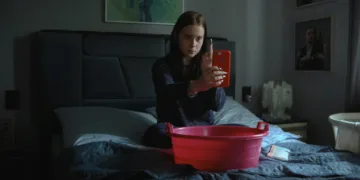
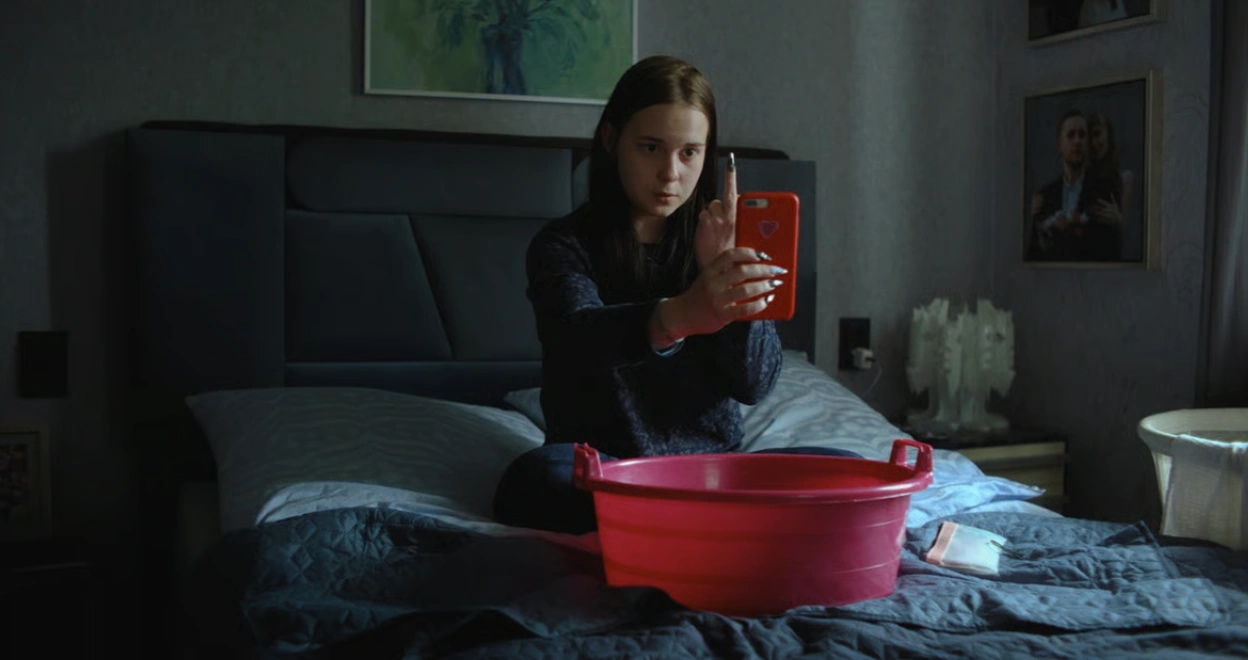
Stever and cinematographer Volodymyr Usyk rarely offer the easy mercy of an unobstructed face. Olya and Oleh appear through windows, mirrors, shoulders and doorways. Their bodies are constantly divided by architecture. The technique could have become a mannerism. Here it feels inseparable from the characters. Everyone is looking at them through some frame: family, law, gender, nationality, obligation. Even they struggle to see each other without those structures intervening.
One long early shot catches the pair talking through a strip of mirror while news of troops gathering near Ukraine hangs over the room. Their physical closeness becomes almost abstract. Two bodies occupy the same domestic space while fear seems to stretch the distance between them.
The soundscape performs similar work. There is no score guiding the audience toward grief. Explosions, radio reports and the thin noise of interiors are allowed to exist without emotional instruction. War often remains outside the frame, which makes its presence stranger. It has entered the air.
Usyk also turns ordinary gestures faintly unbearable. A market worker struggles with a slick piece of fatty liver. A manicure drill presses beneath a cuticle. Neither image carries obvious narrative significance, yet each acquires an abrasive intensity. The world continues touching flesh while people wonder how much of their former lives still exists.
The border tracking shot expands that unease into a crowd. Women, children, luggage, uniformed officials and red-blue lights move through the frame with the terrible rhythm of temporary lives. Nobody looks entirely stationary because nobody knows where permanence has gone.
Bodies Under Pressure
Tania Myronyshena and Markus Bright are non-professional actors, and Stever wisely refuses to polish away the slight hesitations that make their exchanges feel exposed. Bright gives Oleh a guarded physicality. During the phone call with his father, he must refer to himself using feminine language he has tried to leave behind.
The moment barely needs explanation. His discomfort lives in the awkward return to words that no longer fit. Later, before the border officials, that discomfort hardens into humiliation as he is forced to translate himself into medical and bureaucratic vocabulary.
Myronyshena gives Olya a different exhaustion. Her frustration with the changing meaning of their relationship arrives through pauses, clipped exchanges and the subtle amount of space she puts between herself and Oleh. She can defend him fiercely before strangers while remaining uncertain about the life they share. Affection and resentment occupy the same gesture.
Their similar appearance deepens the sadness. At moments they almost mirror each other, two people whose bodies suggest harmony while their identities are moving along different lines.
The screenplay falters when its late development pushes the couple toward a new relationship with conventional family structures too quickly. Earlier scenes are allowed to breathe until embarrassment, tenderness or fear becomes physically uncomfortable. Here, the film hurries. Melodrama enters where silence had been sufficient.
That impatience feels particularly strange after a film so attentive to waiting: waiting at borders, waiting for documents, waiting for parents to understand, waiting for a lover to become familiar again. Olya and Oleh spend much of their lives suspended between what they were and whatever the next morning permits them to be.
I Rarely Wake Up Dreaming celebrated its world premiere at the Locarno Film Festival in August 2026, with distribution handled by X Verleih. The drama explores the relationship of a young queer Ukrainian couple whose lives are upended when a gender transition coincides with the outbreak of war.
Full Credits
Title: I Rarely Wake Up Dreaming
Distributor: X Verleih
Release date: August 2026 (World Premiere at the Locarno Film Festival)
Running time: 100 minutes
Director: Isabelle Stever
Writers: Anna Melikova
Producers and Executive Producers: Not Available
Cast: Tania Myronyshena, Markus Bright, Iryna Mak, Viktor Zhdanov, Maiia Sobolevskaya, Mary Myronyshena, Oleksandr Rudynskyi
Director of Photography (Cinematographer): Not Available
Editors: Paul Gröbel, Laura Lauzemis
The Review
I Rarely Wake Up Dreaming
I Rarely Wake Up Dreaming finds its deepest pain in the moment when a hard-won identity becomes another instrument of confinement. The border interrogation, Oleh’s forced explanations, and Olya’s quiet estrangement turn war into something frighteningly intimate. Isabelle Stever’s distant framing and abrasive everyday sounds make safety feel permanently out of reach, while Tania Myronyshena and Markus Bright give silence the weight of argument. The rushed late turn weakens the film’s patience, yet its strongest images linger like memories one would rather lose.
PROS
- Exceptional border sequence
- Precise, distancing cinematography
- Naturalistic lead performances
- Haunting sound design
- Complex treatment of gender and war
CONS
- Rushed third act
- Late melodrama feels compressed
- Formal distance may alienate some viewers