















![Kingdom Hearts Collection [I-III] Review](https://gazettely.com/wp-content/uploads/2026/10/Kingdom-Hearts-Collection-I-III-1-360x180.webp "Kingdom Hearts Collection [I-III] Review: KHII Holds Steady as Newer Entries Fluctuate 35")





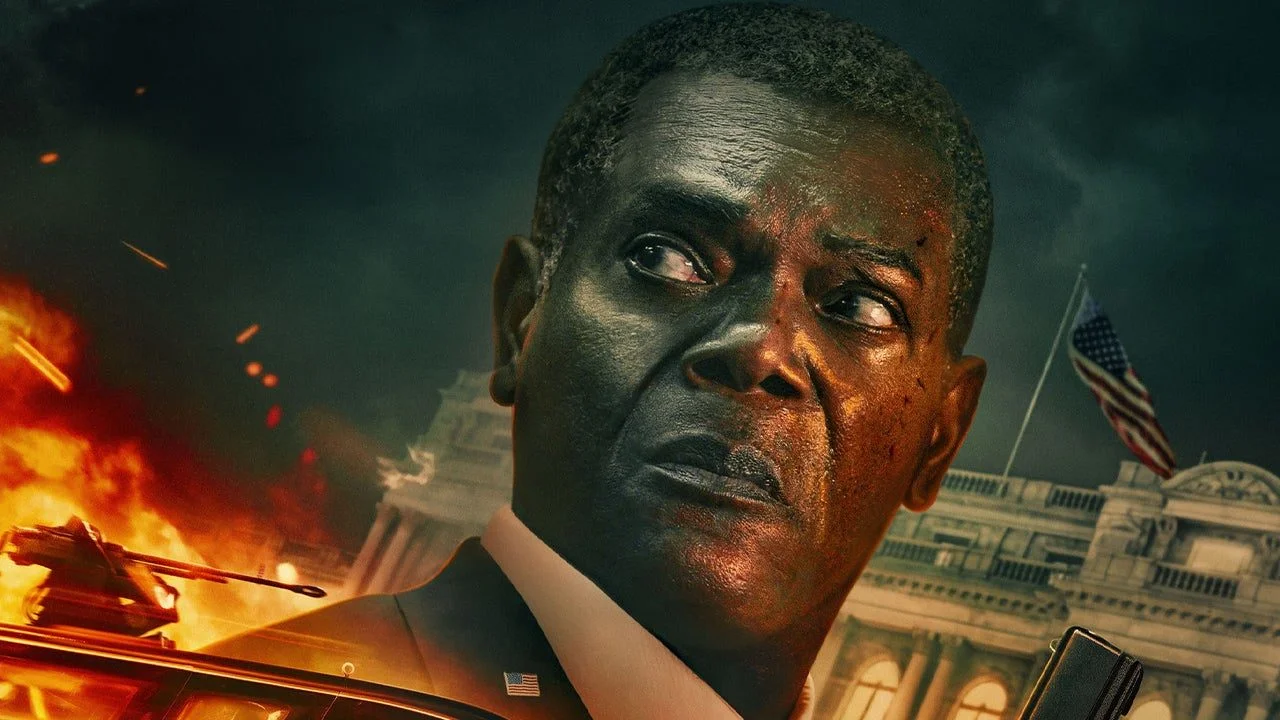

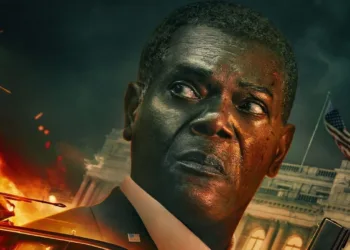
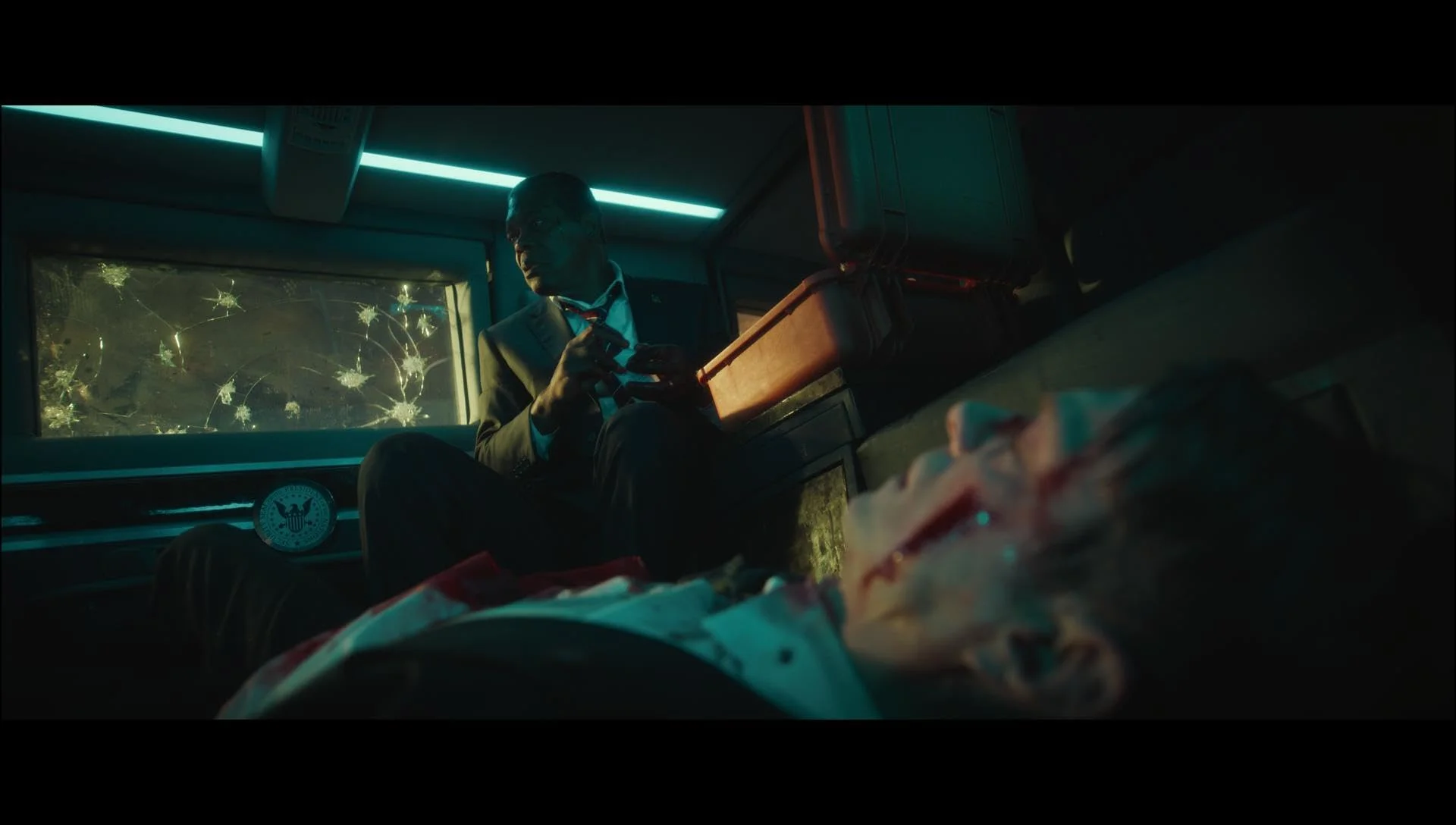
Samuel L. Jackson has two minutes to work on a bleeding man before he must return to the steering wheel. The presidential limousine in The Beast can drive itself, but it requires a touch from its human operator every 120 seconds. Its passenger needs sutures; its computer needs reassurance. Renny Harlin builds a neatly awkward situation out of that mismatch, keeping the president’s hands in demand at opposite ends of the vehicle. You understand the problem without needing to understand the technology, and each trip back to the wheel leaves a necessary job unfinished.
The injured passenger is Taft, a Secret Service agent played by Joel Kinnaman, whose assignment has effectively reversed. The person he was protecting now has to keep him alive. That gives the medical interruptions a weight the surrounding gunfire cannot supply on its own. Presidential security protocol puts the chief executive first, yet Jackson’s president refuses to treat Taft as an expendable part of that protection. While the car carries them away from danger, the effort to save its passenger keeps pulling the driver out of his safest position.
Harlin and screenwriter Umair Aleem drop us into an attack already underway, with Taft fighting an intruder in the backseat and the president handling the escape. Much of the machinery meant to protect him has collapsed. What remains is an armored vehicle equipped with weapons, drones, medical supplies, and a connection to Command.
Jackson’s impatience with incomplete instructions makes learning its capabilities entertaining. There is pleasure in watching a man accustomed to issuing orders discover that the equipment requires rather specific ones. His trouble supplying security codes also gives official procedure a comic friction: holding the highest office does not automatically make him a competent user.
The limousine’s capabilities create a harder problem for the action. New attackers arrive, and another defensive option becomes available to meet them. Armed drones and heavy firepower provide satisfying bursts of retaliation, but the encounters do not consistently change the president’s predicament.
The treatment sequence has a clear conflict between two necessary tasks; successive waves of gunmen often offer another target. Exiting to deal with material tangled around the tires helps because it removes him from the protection the vehicle otherwise supplies. I wanted that sort of practical complication to govern more of the escape.
Keeping the audience close to the occupants is a useful decision. Fires, armed blockades, and injured civilians appear through windows rather than receiving a separate account of the catastrophe. The characters cannot identify their attackers, and the audience shares that uncertainty.
Reports of coordinated attacks elsewhere suggest a crisis too large to comprehend from this seat. That restricted knowledge supports immediate anxiety, though it leaves the enemy’s purpose thin. The film can make us understand the next threat without making the larger attack feel like anything beyond a supply of threats.
Inside the car, Harlin uses rotating camera movements to survey the confined space. A 360-degree move takes the viewer around the cabin, making the relationship between driver and wounded passenger visible while giving the enclosure some visual activity. The distinction between knowing the cabin and knowing the escape route matters here. We can grasp why moving from the wheel to Taft costs time, yet the succession of hostile streets offers a weaker sense of progress. Camera movement keeps the image busy without necessarily telling us how far safety remains.
The interior was filmed on an LED stage, with screens providing the moving surroundings around the performers. That setup lets Jackson and Kinnaman respond to visible mayhem while the cabin stays physically consistent. Harlin also keeps close to Jackson’s face during excursions into the darkness, preserving the president as our reference point outside the vehicle.
The violence has a much less restrained register: a gunshot exposes an attacker’s intestines, and another assailant is sliced open. Alongside Tuomas Kantelinen’s synthesizer textures, those excesses announce an affection for blunt, extravagant action entertainment. The film is happiest letting the president answer a threat with something outrageously destructive.
Jackson’s verbal energy sometimes does the same job as the weapons. His arguments with Command give frustration a rhythm, and his efforts to keep Taft talking connect that energy to a person in need. A conversation about the actor’s signature profanity is less useful. Taft admires the president’s pronunciation, and Jackson explains the sound.
The exchange asks us to step outside the emergency and enjoy recognition of the star. It is an amiable invitation, but it also temporarily turns the wounded man into an appreciative audience. Kinnaman has a stronger function when his condition makes Jackson’s confidence answerable to someone else’s survival.
The first lady’s danger extends that concern beyond the backseat. Heard by telephone and voiced by LaTanya Richardson Jackson, she also belongs to the president’s account of managing his wartime trauma. The role requires Jackson to move between command, reassurance, and the fear of losing people he cannot fully protect. His Vietnam memories complicate the fantasy of a leader who can perform every practical task after the institutions around him have failed. His competence has a history, and that history keeps entering the vehicle with him.
Harlin makes those intrusions literal through the younger soldier who appears in the backseat. Extreme wide-angle close-ups push facial features out of familiar proportion, giving the disturbance a visual force different from the attacks outside. The car’s organized space becomes somewhere the president cannot keep past and present separate.
This is a promising extension of the confined viewpoint, but the screenplay also treats the returning soldier as preparation for renewed lethal skill. The survivor’s guilt and his wife’s help suggest a man who has worked to live with what combat left behind. The emergency rewards access to the violent self that work was meant to contain, even while Taft’s bleeding body keeps asking him to remain a caregiver.
The Beast arrives in theaters via Aura Entertainment on October 9, 2026. The high-concept action thriller follows the President of the United States as he fights back against a coordinated coup by utilizing the highly classified offensive capabilities of his armored limousine.
Where to Watch The Beast (2026) Online
Full Credits
Title: The Beast
Distributor: Aura Entertainment
Release date: October 9, 2026
Rating: R
Running time: 1 hour 39 minutes (99 minutes)
Director: Renny Harlin
Writers: Umair Aleem
Producers and Executive Producers: Keith Kjarval, John Logan Pierson, Wayne Marc Godfrey, Nicki Cortese, Robert Van Norden
Cast: Samuel L. Jackson, Joel Kinnaman, Guy Burnet, Colin Morgan
The Review
The Beast
The Beast finds its best suspense in a simple conflict: the president cannot tend to his wounded protector and keep touching the steering wheel at the same time. Jackson makes that divided responsibility engaging, and Harlin gives the confined space useful visual energy. Repeated attacks offer less dramatic development, while celebrity banter sometimes interrupts the urgency. The resulting action thriller has enough personality and practical ingenuity to entertain, but its larger escape remains loosely defined.
PROS
- Inventive suspense from the self-driving deadline.
- Jackson’s commanding energy and concern for Taft.
- Confined viewpoint makes the crisis immediate.
CONS
- Repeated attacks provide uneven escalation.
- Exterior geography weakens the sense of progress.
- Star-focused banter interrupts the emergency.