
















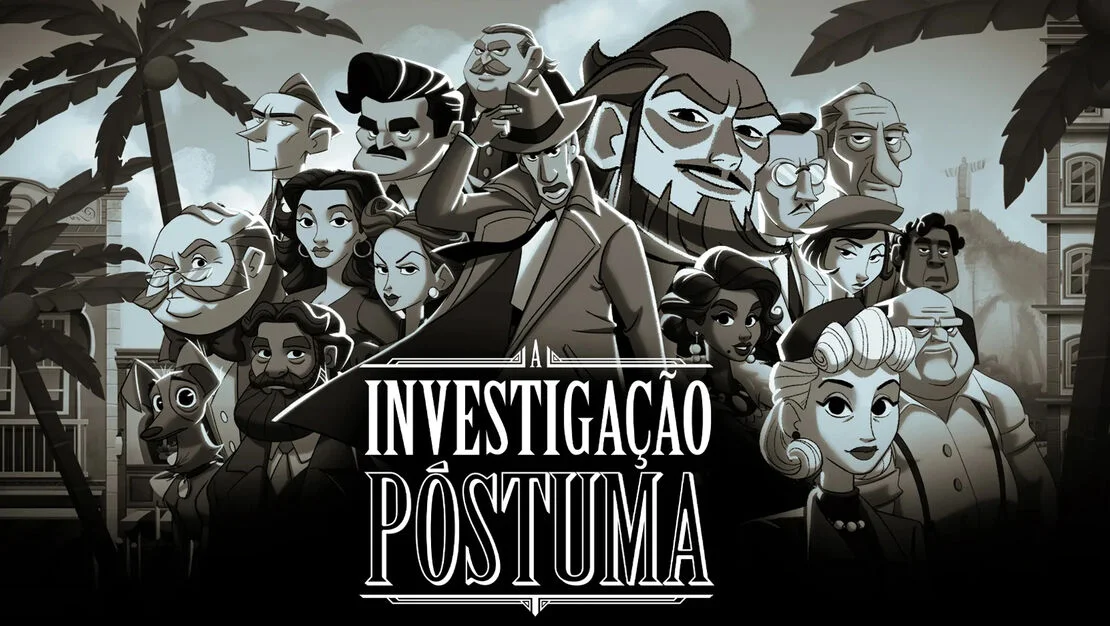

Returning to the same conversation can feel surprisingly exciting when you have something new to ask. In The Posthumous Investigation, an encounter that yielded little yesterday might become useful today because you followed someone, learned about a relationship, or found a clue worth presenting. The day resets, taking your collected items with it, while your knowledge survives. Early on, that arrangement makes another cycle feel like an opportunity. You begin recognizing routines and planning visits, approaching familiar people with an increasingly informed curiosity about what they have left out.
The ticking clock gives that curiosity a practical urgency. Suspects have appointments, and they will cut you off to keep them. Following someone can consume time you might have spent questioning another person, so learning the day means accepting that you cannot investigate everything at once. There is welcome room for experimentation here. A choice that seems mistaken can expose useful information, and the reset lets you return with that discovery. Failure becomes easier to accept when it changes your next attempt. You missed the conversation, but now you know when to arrive.
Your reason for becoming so acquainted with this stretch of 1930s Rio de Janeiro is Brás Cubas, a wealthy dead man who commissioned the investigation into his own murder through a letter written before his death. The detective needs work; Cubas supplies a case with fourteen potential suspects and an unusually persistent client. At midnight, you meet him in a mysterious room, discuss what you have learned, and prepare for another repetition. Those meetings establish a comfortable rhythm, which becomes stranger as his personality emerges. He is helpful, entertaining, and someone whose account deserves scrutiny.
Cubas has an appealing ability to occupy your attention even when you are supposedly investigating other people. Reconstructions of his final day resemble old camera footage, while he describes himself in the third person. The presentation puts a little distance between the man and his account of the man, encouraging you to notice the performance involved in telling a life story. His remarks suggest that useful guidance and complete honesty are separate matters. Meeting him regularly builds familiarity without removing that suspicion. You can enjoy his company and still wonder what he wants you to believe.
The living give you their own reasons to stay curious. Sabina, Cubas’s sister, arguing in the street invites questions about relationships already under strain. The pharmacist’s expanding involvement makes an apparently straightforward acquaintance worth another visit.
These discoveries help the cast escape the feeling of a checklist: a new conversation can change your sense of someone you thought you understood. The game draws its characters from Machado de Assis’s writing, particularly The Posthumous Memoirs of Brás Cubas, yet the encounters work without literary homework. Their evasions provide an immediate reason to care, leaving recognition of the books as an additional pleasure.
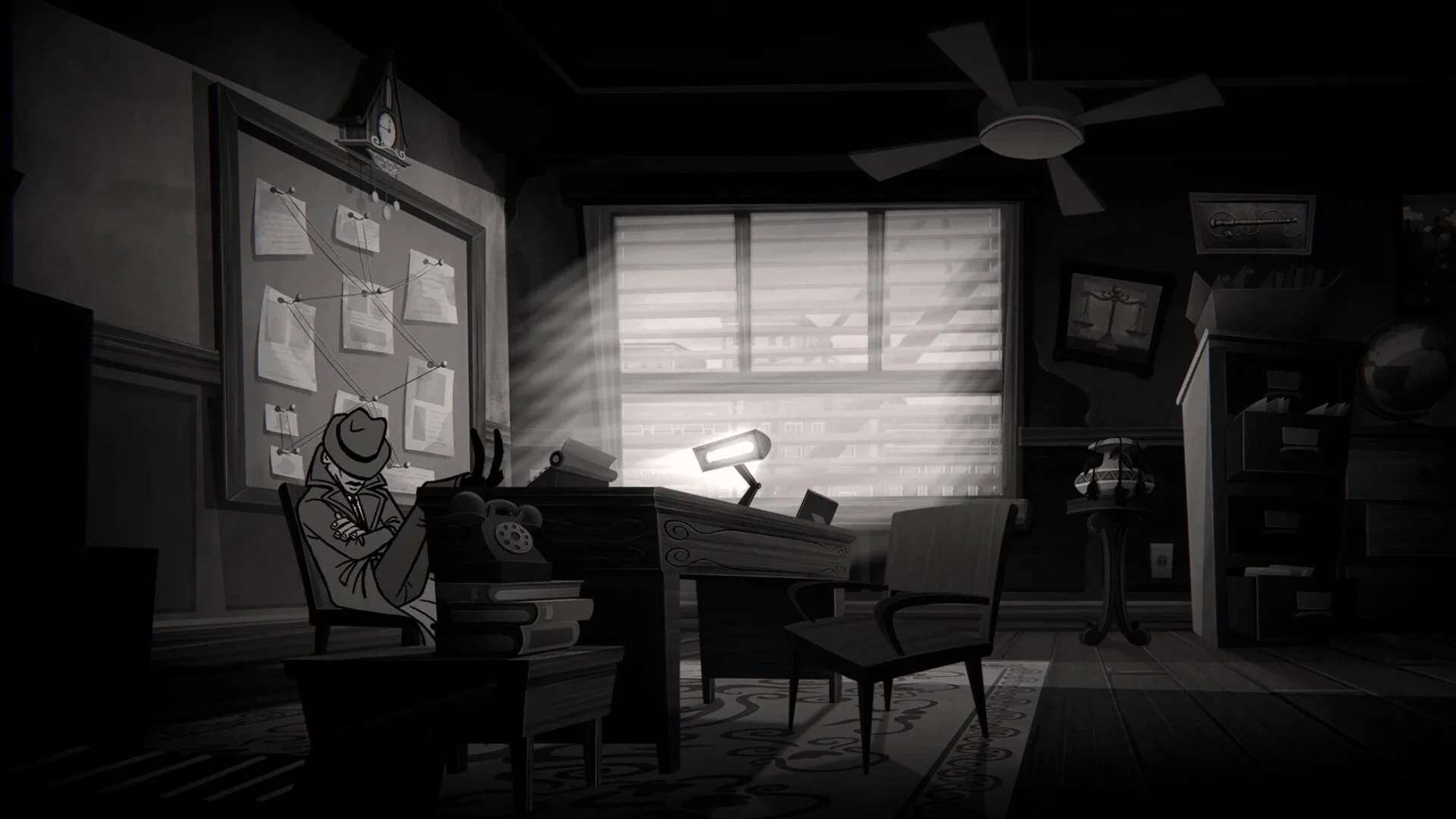
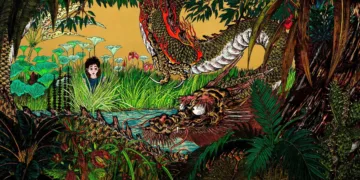
Mother Gaia’s monochrome art makes those encounters readable without making them emotionally simple. When an interrogation intensifies, the lighting changes, concentrating attention on the person under pressure. Sophia closing her eyes, holding a hand against her face, or looking away gives the words a visible discomfort.
You are watching someone respond to being questioned, which matters in an adventure so dependent on conversation. The harbor and industrial areas, set against the elegant park, also give your repeated walks a sense of movement between different social spaces. Music, stretches of silence, and traffic, rain, and footsteps make the city pleasant to inhabit across successive visits.
That pleasure is tested when revisiting stops producing discovery. Getting into the crime scene requires bringing Sergeant Meganha cheese bread from Helena’s Café, conveniently charged to the deceased client’s tab. The first exchange is a funny introduction to the obstacles of this investigation.
A hungry officer can be persuaded, and Cubas can apparently continue funding refreshments from beyond the grave. Repeating the access procedure on later cycles drains the joke. You already understand the transaction; you want to reach the part of the day where your new information matters. Familiarity begins to feel like waiting for permission to continue.
The option to move time forward helps with scheduled encounters, but repeated conversations and errands remain. Later stretches involve considerable travel between people, presenting clues to find the exchange that opens the next stage. There is still pleasure when a new response changes your understanding. The weariness comes from rebuilding a known route around that discovery.
A time loop earns its repetitions when returning lets you perceive something differently. Here, too much of the preparation survives after its purpose has become obvious, interrupting the curiosity that made another cycle attractive.

Guidance creates a separate frustration. The notebook and Thinking Board keep information organized, sparing you the clerical burden of maintaining an external dossier. That is useful support. Cubas’s midnight explanations sometimes go further, supplying connections or directing your next move so clearly that the satisfaction of inference shrinks.
You remain responsible for finding people at the right time and bringing them relevant information, but important deductions can feel prearranged. I wanted the space to hold a mistaken theory for a while, to experience uncertainty as part of investigating. His assistance keeps the story moving while making that movement feel less personally earned.
This makes the ending’s openness a difficult bargain. Cubas’s partial account and self-conscious narration prepare you for a story whose meaning cannot be reduced to naming a killer. Leaving room for interpretation suits a man who keeps helping shape the account of his own life.
Yet the commission that brought you here still creates an appetite for a clear explanation, and the ending leaves that appetite incompletely satisfied. After receiving such direct help through parts of the investigation, being asked to interpret the destination can feel abrupt. The freedom would carry greater emotional weight if the preceding deductions had given you longer to practice trusting your own judgment.
The Review
The Posthumous Investigation
The Posthumous Investigation makes its people worth another day of questioning. Cubas’s slippery companionship, expressive monochrome art, and changing encounters sustain curiosity even as repeated errands wear it down. I wanted greater freedom to connect the evidence myself, especially before an ending that asks for interpretation after supplying so much guidance. There is real affection to be found in this strange Rio, alongside frustration at how often discovery becomes following instructions.
PROS
- Learning suspects’ routines makes early loops rewarding.
- Learning suspects’ routines makes early loops rewarding.
- Cubas is an entertaining, unreliable companion.
- Interconnected characters sustain curiosity.
- Expressive art and atmospheric sound enrich repeated visits.
CONS
- Repeated access errands and conversations create fatigue.
- Direct guidance weakens the satisfaction of deduction.
- - Open ending feels abrupt after heavily guided investigation.