




























Resident Evil’s ink ribbons put a price on recording your progress. Silver Pines makes that price compete with the rest of your shopping. Saving at a payphone requires a dollar coin and the right number, while ammunition, healing supplies, and weapon repairs draw on the same cash reserve. Spending before a dangerous stretch leaves less money for preserving what happens afterward. A coin retrieved from a cash register or a payphone return becomes something you have to allocate, rather than automatically pocket for the next save.
That shared budget sits alongside familiar survival-horror housekeeping. Limited inventory space encourages visits to storage containers; deteriorating melee weapons need repairs; a flashlight needs batteries. Reloading and repairing equipment involve short minigames, adding execution demands to decisions already made about supplies. The option to disable those minigames is sensible. The significant choice is still how much equipment to carry and maintain, and players can retain that pressure without performing every small task. There is enough friction in preparing for the next street without insisting everyone experience it through identical inputs.
Wych Elm gives these restrictions an appropriate protagonist. Private investigator Red Walker wakes in an empty diner, uncertain how he arrived, and receives a mysterious telephone instruction to find missing musician Eddie Velvet. The surrounding town is largely deserted, with storms and a threatened flood making departure an uncertain prospect. Walker’s slow movement and limited stamina fit that precarious position. He has the tools of a survival-horror protagonist without the physical assurance of an action hero, and the 2D layout makes the distance between him and an approaching enemy easy to appreciate.
His progression follows the Metroidvania tradition, though its vocabulary belongs to the hardware cupboard. A box cutter opens fabric barriers, a crowbar deals with wooden obstructions, and a sledgehammer breaks cracked masonry. Where Metroid expands Samus’s ability to move through space, Silver Pines largely expands Walker’s ability to dismantle what blocks it.
The familiar pleasure of remembering an inaccessible route survives this change. Shooting rusty padlocks adds a particularly useful complication: ammunition can open the town, so a bullet’s value extends beyond the damage it might inflict on a monster.
The optional routes give that progression a satisfying physical scale. From an upper floor of the motel, Walker can cross to the adjacent laundry roof, climb over a fence, and reach a backyard containing an inventory-expansion pouch. A modest leap produces a meaningful discovery.
Map fragments and marked obstructions help keep these possibilities legible, while photographs let players preserve codes, clues, and reasons to revisit a location. The camera gives the detective premise a practical expression. Attention becomes useful equipment, helping connect an earlier discovery with something newly acquired.
This geography also explains the Silent Hill comparison better than a list of visual influences could. Diners, motels, shops, alleys, and sewers retain recognizable purposes while becoming places you approach cautiously. Painted and manipulated photographic environments give them detail without pursuing photorealism, and heavy black shading lets dynamic lighting change how clearly their surfaces read.
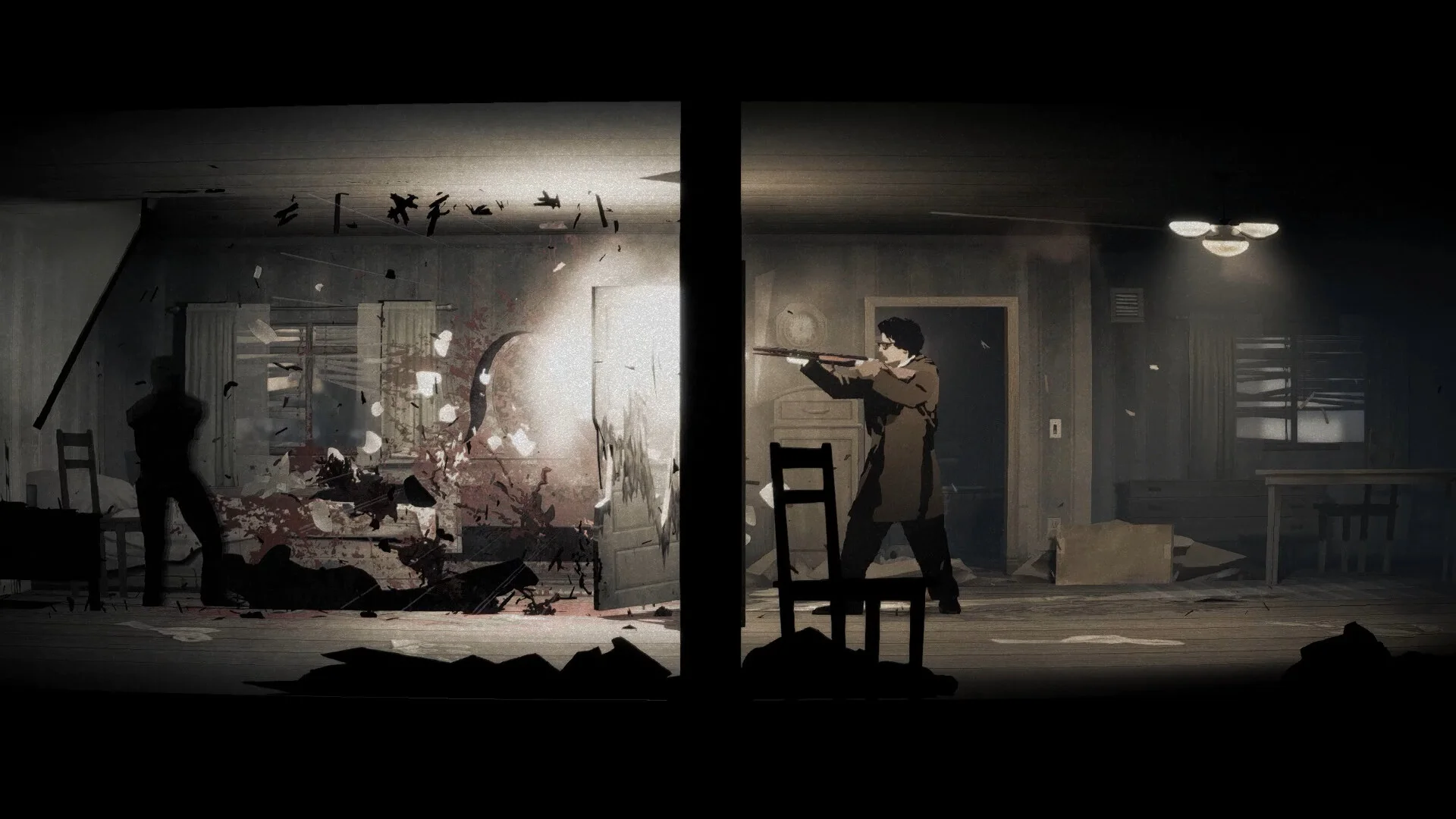
Rotoscoped animation brings a human weight to movement that sits uneasily against the stylized surroundings. Repeated visits establish familiarity with a building’s entrances and exits, yet its dark interior can still withhold information from the eye.
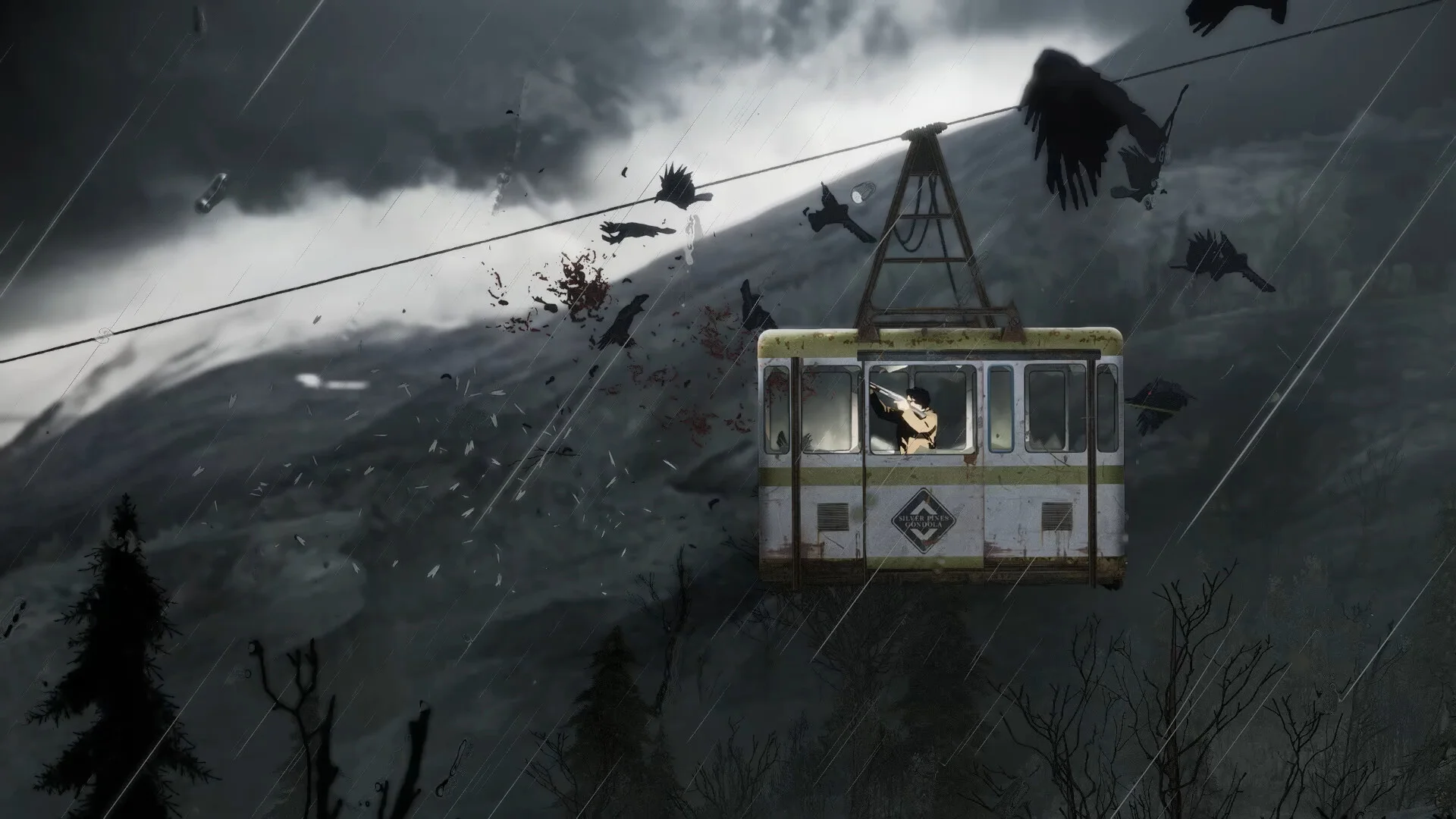
Learning the town has a less welcome effect on some of its inhabitants. Early shambling humanoids and leaping arthropod-like enemies have behaviors that can be understood and avoided. Once their timing becomes familiar, saving ammunition through evasion is often practical, and straightforward boss patterns can similarly reduce uncertainty.
The four difficulty settings adjust pressures such as enemy numbers and melee durability, so scarcity will not land equally for everyone. Mementos that improve stamina, reloading, or damage resistance further reward exploration. Those rewards are useful, but they contribute to an experience in which preparation can outgrow the threat posed by individual enemies.
Walker’s handling complicates this balance. Deliberate movement supports encounters built around stamina and timing, keeping him consistent with the vulnerable figure established at the diner. Awkward platforming and cumbersome changes between melee and ranged weapons are harder to defend on the same grounds.
They interfere with carrying out a decision rather than making the decision interesting. Bosses without visible health bars preserve some uncertainty about how long a fight will last, but that uncertainty has limited force once the pattern of attacking and retreating becomes comfortable.
Avoiding combat does retain a consequence across the map. An enemy left alive can remain on a route Walker later needs to cross, making a saved bullet today potentially cost time or health on the return trip. That is a good fit for exploration organized around revisiting places. Scripted arrivals work less cleanly: large insects appearing after a puzzle is solved in a previously cleared room weaken the value of clearing it beforehand. The encounter restores immediate danger, but makes the player’s earlier preparation feel less dependable.
The investigation initially gives that preparation a clear direction. Eddie’s disappearance, Walker’s uncertain arrival, and the caller’s unexplained authority make each new location seem capable of changing the case. Notes and objects provide local traces, while radios, televisions, and telephone conversations allow information to arrive without another face-to-face exchange.
Twin Peaks is the useful reference here: routine communication carries unsettling implications, and the sheriff’s efforts to discourage Walker make the town’s few direct encounters uneasy. The detective framework makes returning to a location feel motivated while new information continues to alter its significance.
Melancholy music and stretches of quiet help maintain that unease between discoveries. Together with the shadowed interiors and occasional dreamlike departures from ordinary geography, they sustain an atmosphere that does not depend on every enemy being difficult.
The story has a separate pacing problem, however. A later requirement to collect five items extends the search while meaningful contact with the investigation becomes intermittent. Unlocking another route still rewards memory and observation, but it does not necessarily answer a question about Eddie or Walker. During that stretch, occasional calls and sheriff encounters begin to feel like brief visits from the case while the collection task occupies the player’s attention.
The Review
Silver Pines
Silver Pines earns its place beside familiar survival-horror games through practical tool progression, rewarding town exploration, and a saving system that competes directly with supply purchases. Its painted streets and uneasy movement sustain atmosphere even as enemy patterns become familiar. Awkward handling and scripted encounters weaken the precision of its survival mechanics, while the later collection stretch leaves the investigation waiting on exploration. The town rewards careful attention more consistently than its monsters sustain uncertainty.
PROS
- Paid saves create meaningful spending decisions.
- Practical tools make revisiting locations rewarding.
- Maps and photographs support attentive exploration.
- Distinctive visuals sustain an unsettling sense of place.
CONS
- Familiar enemy patterns reduce combat tension.
- Platforming and weapon switching can feel cumbersome.
- Scripted enemy arrivals undermine preparation.
- Later item collection interrupts the mystery’s momentum.