




















![Kingdom Hearts Collection [I-III] Review](https://gazettely.com/wp-content/uploads/2026/10/Kingdom-Hearts-Collection-I-III-1-360x180.webp "Kingdom Hearts Collection [I-III] Review: KHII Holds Steady as Newer Entries Fluctuate 35")




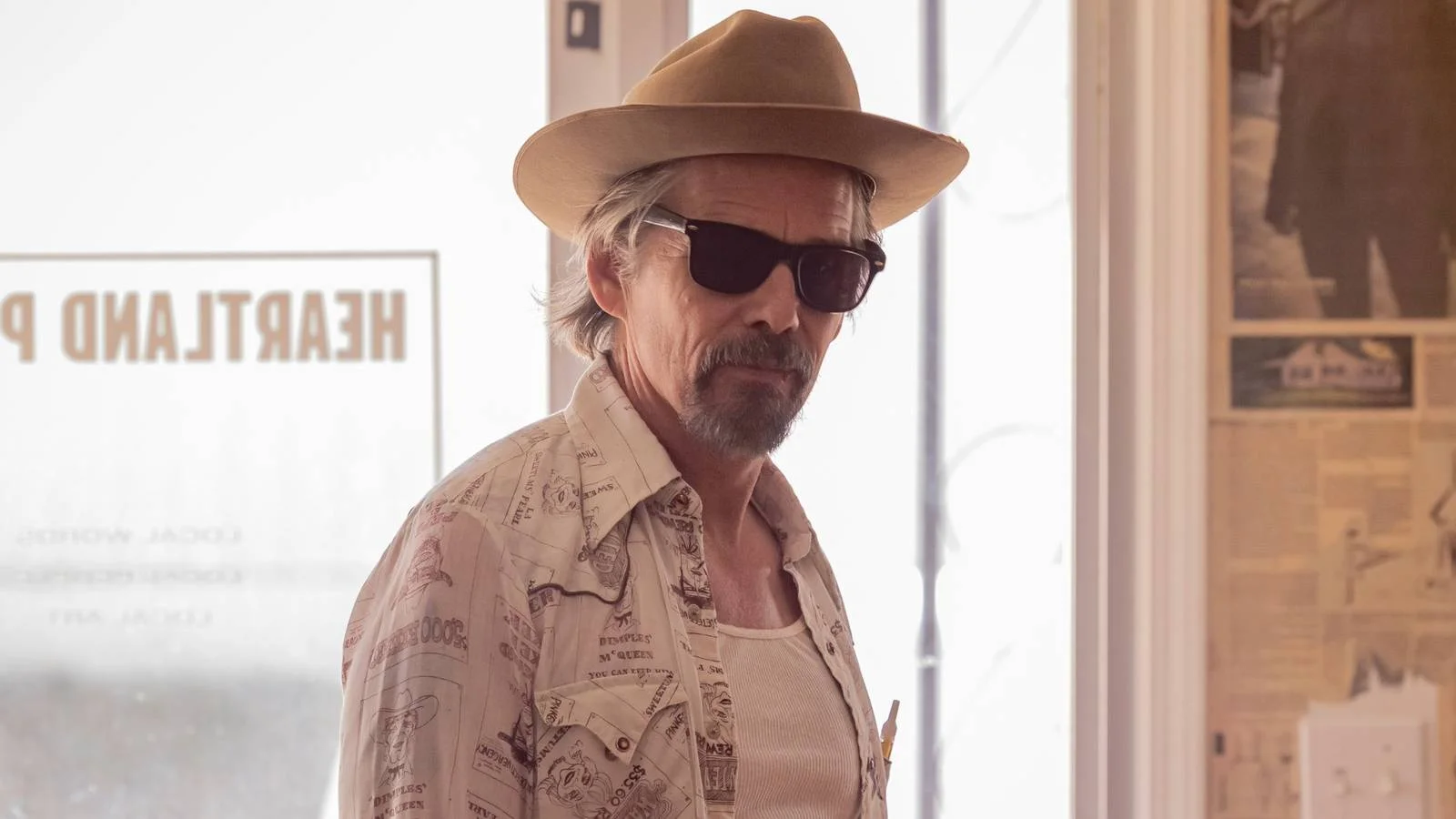

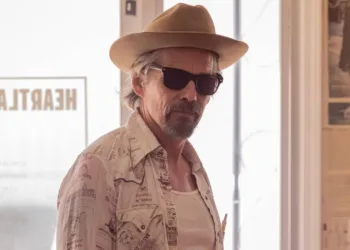
Lee Raybon has told his daughter that her grandfather is dead. The grandfather, inconveniently, turns up alive. For a journalist whose identity rests on retrieving facts other people would prefer to bury, this is an awkward development. Ethan Hawke’s Lee has built a public vocation around disclosure and a private arrangement around making one troublesome person disappear.
His Citizen Journalist of the Year award makes the discrepancy harder to ignore. Honored for exposing the Washbergs, Lee manages to turn the ceremony into another embarrassing occasion for his daughter, Francis. Hawke plays his pride and discomfort together: recognition gratifies Lee, but accepting it gracefully would require inhabiting a respectable identity he has spent considerable energy resisting. He wants the award. He also wants everyone to understand that he remains the sort of person who should never receive one.
Sterlin Harjo’s The Lowdown finds fertile comic territory in that contradiction throughout the first six episodes of its eight-episode second season. Its Tulsa bookstore owner and self-appointed “truthstorian” has a new investigation, an unwelcome family reunion, and very little capacity to keep either from consuming everybody else’s afternoon. The crucial distinction is between the truths Lee pursues and the authority he assumes that pursuit grants him.
Ginger Lafferty gives that distinction practical stakes. Played by Betty Gilpin, the public defender is trying to locate her incarcerated client, Mekko Dean. She cannot contact him or secure permission to see him at the prison. Two men are following her. Lee encounters her at the awards event, helps establish that her suspicions are justified, and becomes romantically invested after a kiss used during her escape. Professional assistance acquires a hopeful personal interpretation. Lee is quite available for both.
Gilpin keeps Ginger’s competence independent of his enthusiasm. Her accommodation of an informant’s fetish to obtain information establishes someone prepared to do uncomfortable, peculiar work for a concrete purpose. Her fear does not cancel that resourcefulness. Nor does resourcefulness make being stalked any less frightening. Gilpin’s expressions and muttered responses give Ginger room to register the absurdity of her helper while remaining caught in a situation that genuinely requires help.
Hawke’s physical comedy makes Lee’s contribution particularly difficult to assess. During questioning, he attempts to spin a basketball and sends it onto Ginger’s head. His quiet apology is beautifully judged. The gag needs no extravagant declaration of incompetence; a little display intended to suggest ease has interrupted someone doing the work. Hawke lets embarrassment briefly puncture Lee’s ceaseless self-presentation. The man can investigate corruption. The basketball remains a problem.
I initially took Lee’s appetite for the story as evidence against his moral seriousness. Ginger’s blocked access to Mekko makes that judgment feel self-satisfied. A prisoner has become inaccessible to his lawyer, and the inquiry leads toward guards, a crooked sheriff, and a judge. Insisting on a reporter with immaculate motives would leave a rather important question unanswered. Lee’s vanity does not make the disappearance imaginary. Harjo gives his protagonist a useful ethical difficulty: the work can matter even when the person doing it is also enjoying his starring role.
That difficulty extends into the surrounding community. Keith David’s Marty, now managing editor at the Heartland Press, tries to get Lee to attend to assigned stories. His dry impatience supplies an institutional perspective missing from Lee’s heroic account of himself. Somebody has to run the paper while the truthstorian follows his latest fascination. David makes the irritation funny without suggesting that editorial responsibility is an obstacle invented by boring people.
The season also gives Marty an artifact-hunting excursion with Lee’s father, Frog, and antique dealer Ray. These departures help Tulsa feel inhabited by people with interests beyond servicing the central investigation. Harjo’s transitional fades, country songs, and glimpses of local human and animal life extend that impression. The city continues between clues. Its inhabitants have other things to do, including things a tightly economical detective story might decline to accommodate.
There is a tension here that the six episodes do not entirely dissolve. The artifact expedition offers sociable comic pleasure while Mekko’s disappearance establishes a different urgency. My attention shifts willingly, but the case’s pressure becomes intermittent. The question is how much space these diversions need, rather than a demand that they vanish. Their value lies in the relationships they permit; their cost is the ease with which an endangered client can recede behind the entertaining people looking for him. The mystery’s eventual resolution remains outside the scope of these episodes.
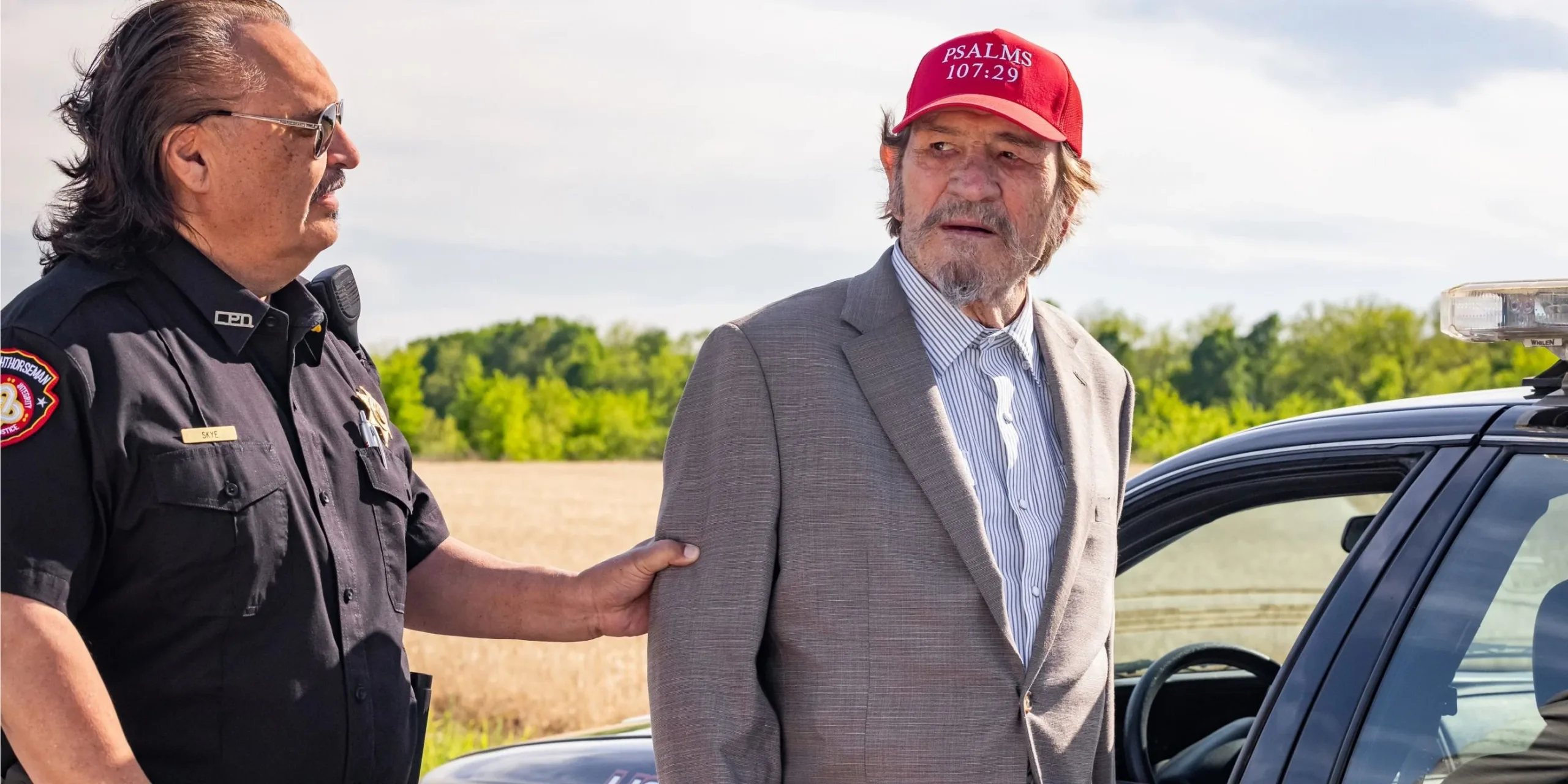
Frog’s arrival earns its space because it changes how Lee’s behavior can be understood. Tommy Lee Jones plays the estranged father with a composure that makes Hawke’s agitation look excessive before we have properly considered its cause. Other people encounter an amusing, charming older man. Lee encounters nearly twenty years of absence wearing that man’s face.
This is where the early suspicion of hypocrisy needs another correction. Lee’s account to Francis is false, but his hostility toward Frog has a history. Jones makes charm operate as a kind of social credit: people who enjoy Frog’s company are inclined to receive him generously. His explanation of abandonment and return as ordinary behavior quietly shrinks Lee’s grievance into an unfortunate misunderstanding about how life works. It is an excellent performance because the minimization arrives so calmly. Lee gets the noisy reaction; Frog gets to look reasonable.
Ryan Kiera Armstrong’s restrained anger gives Francis a position neither man can comfortably absorb. Her growing warmth toward her grandfather does not oblige her to dismiss her father’s experience. Equally, Lee’s experience does not entitle him to determine hers through a fabricated death. She wants time with Lee, and now she has a relationship with Frog that Lee cannot supervise simply by repeating what happened to him.
The Lowdown Season 2 premieres on FX and Hulu on October 14, 2026. The acclaimed crime comedy-drama returns as Tulsa citizen journalist Lee Raybon dives into another chaotic mystery while dealing with the fallout of his newfound local recognition.
Where to Watch The Lowdown Season 2 Online







Full Credits
Title: The Lowdown Season 2
Distributor: FX, Hulu
Release date: October 14, 2026
Rating: TV-MA
Running time: 45–55 minutes per episode
Director: Sterlin Harjo
Writers: Sterlin Harjo
Producers and Executive Producers: Sterlin Harjo, Garrett Basch, Ethan Hawke
Cast: Ethan Hawke, Tommy Lee Jones, Betty Gilpin, Martha Plimpton, Keith David, Tim Blake Nelson, Zahn McClarnon
The Review
The Lowdown Season 2
The Lowdown makes Lee’s contradictions productive: his vanity complicates useful reporting, while his father’s return exposes the limits of his authority at home. Hawke, Gilpin, and Jones give those tensions comic precision and emotional weight. Across six episodes, Tulsa’s busy social life sometimes lets the missing-prisoner investigation lose urgency, but the character work earns considerable room to wander. Lee can expose corruption without becoming trustworthy in every other relationship. The season understands the difference.
PROS
- Hawke’s physical comedy punctures Lee’s self-importance.
- Gilpin balances professional competence with credible fear.
- Jones makes paternal charm ethically uncomfortable.
- Francis gives the family conflict independent stakes.
CONS
- The artifact-hunting detour disperses attention and weakens the missing-prisoner case’s urgency.