





















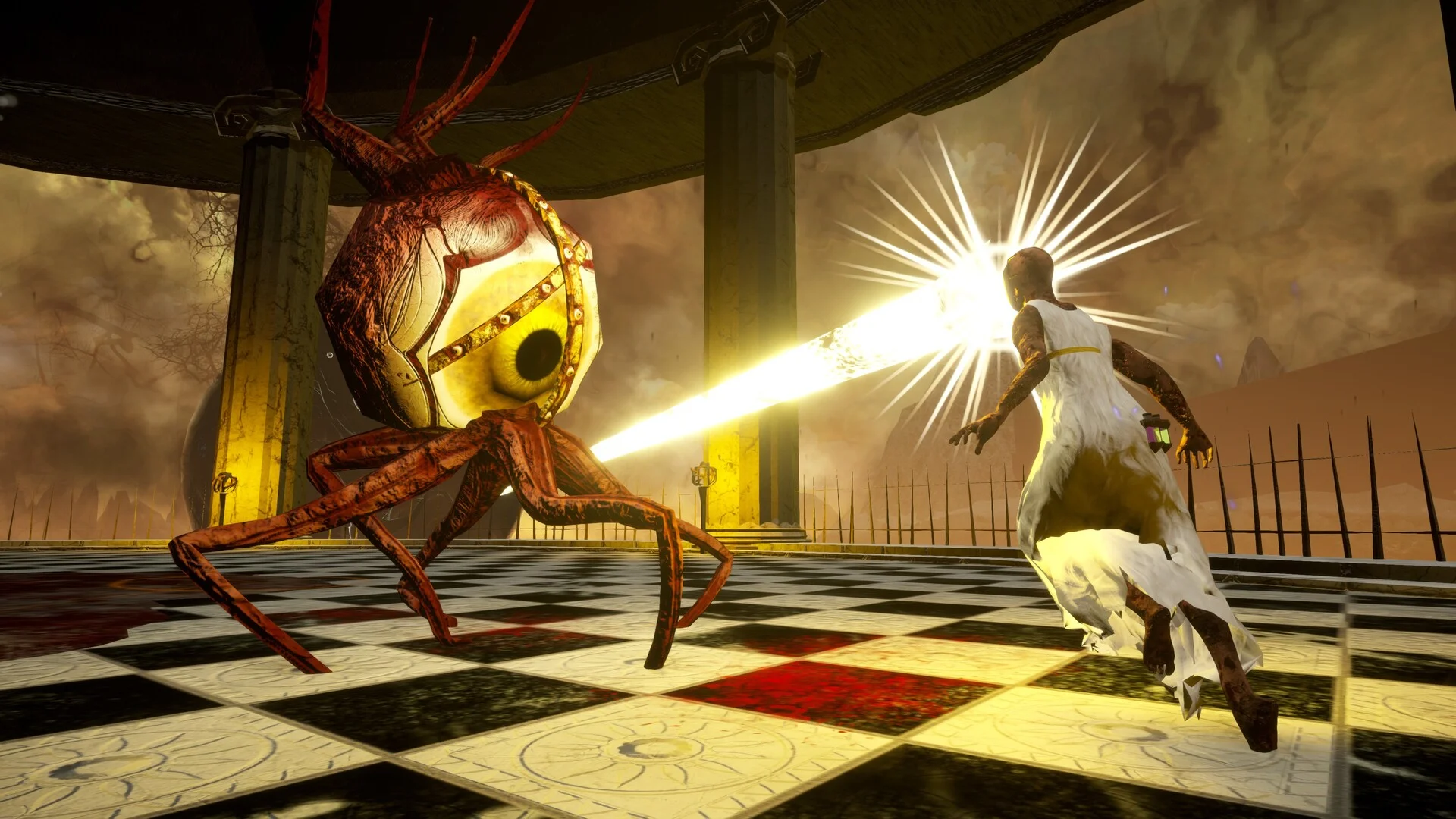

Repeating your strongest attack is an inefficient way to fight in False Hero. Switching from a sword strike to a stolen ability, then to another ability, produces faster sequences than pressing the same input again. The sword spends stamina and restores focus; combat arts consume that focus. Every return to the basic attack therefore funds another part of your moveset, giving the player a reason to stay engaged even when the sword’s damage is unimpressive. Choosing the next move involves its cost, reach, and place in the sequence.
Those sequences can change who controls an encounter. The right combination of attacks repeatedly staggers a boss, allowing you to extend an opening through further hits until it breaks away. Waiting for permission to attack becomes only one available approach. Yet generating that first opening is another matter. Abilities have startup animations, enemies can interrupt them, and a combination that promises control on paper may never get past its first move. The combat’s appeal rests on finding the distance and timing at which a chosen sequence becomes possible.
The five combat-art slots give that problem useful breadth. You can assemble a set that closes gaps, reaches distant enemies, sweeps across groups, or delivers a heavier blow. A thrown book and a tentacle strike belong to the same arsenal because its owner is a former scholar wearing a mask that lets him learn from defeated opponents. His limited sword technique makes sense within that identity. Expertise is something collected from the creatures he encounters, and learning a new attack changes what the player can attempt.
The early greatsword sweep exposes the limits of that freedom. Its broad reach looks suited to taking control of a fight, but its slow execution leaves time for quick enemies to interrupt it. Mobile bosses can move outside an art’s effective range before it lands. Chaining encourages sustained offense while enemy behavior often requires the patience of a traditional Souls fight. These demands can coexist, particularly when a successful combination creates its own stagger windows. The adjustment becomes frustrating when the game encourages a rhythm that the current opponent rarely permits.
Some encounters make that adjustment harder to judge. Dodging is the main defense, with certain red attacks allowing a counter through a dash into the attack. In tight spaces, camera coverage, wide swings, and off-screen projectiles can leave the player trapped in successive knockdowns. Projectiles passing through other enemies also weaken the value of using bodies to shelter from ranged threats. Muddy textures occasionally make creatures difficult to separate from their surroundings. Together, these restrictions can obscure the information needed to recover, so failure stops providing a clear instruction for the next attempt.
Progression offers a different limit on recovery. Combat arts replace conventional attribute leveling, and acquiring them requires defeating eligible enemies. Respawning and killing the same individual again does not keep supplying the learning resource, though finding other enemies of its type can contribute toward unlocking the attack. Increasing an art’s damage then requires physical upgrade materials, including inks distributed through the areas. Discovering a new move and strengthening an existing one are separate forms of preparation, both tied to what the world makes available.
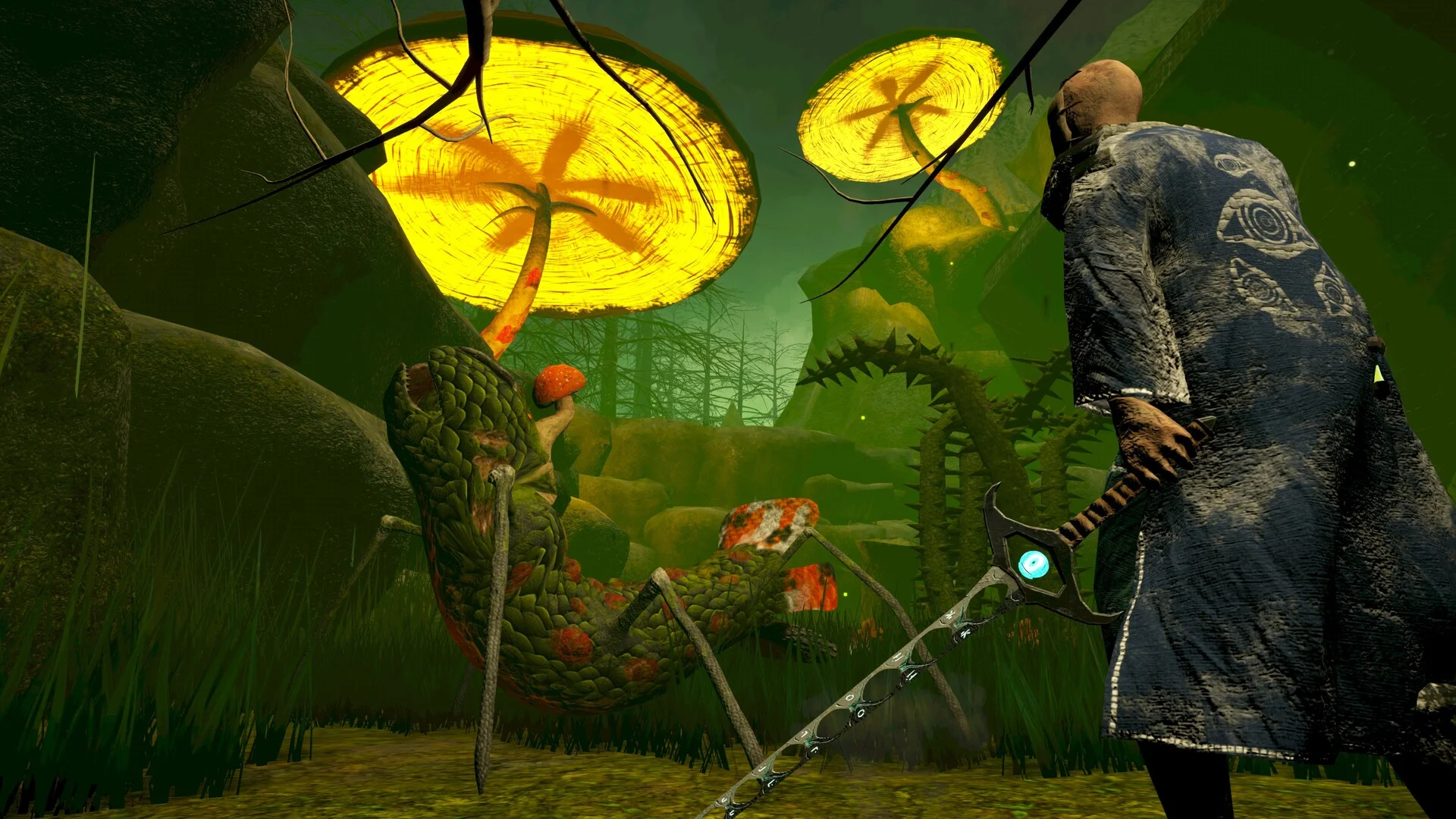
That structure encourages experimentation instead of treating every obstacle as an invitation to grind. It also removes a useful compensation for repeated failure. In Dark Souls, returning through familiar enemies can accumulate currency toward higher attributes. Here, another trip through a cleared stretch need not improve your numerical strength. Practice may still help, but the enemies are demanding time without consistently providing a new tool or upgrade. The restriction preserves pressure on execution while making compulsory repetition less productive.
Optional exploration suffers from a related problem. Branches, shortcuts, and secret walls create opportunities to investigate, but the rewards often return to familiar upgrade materials. Cosmetic armor cannot alter an encounter, and scarce consumables give the loot pool little variety. Passive scrolls offer a stronger reason to reconsider a build: with three equip slots, their value depends on how they fit the chosen setup. Still, finding another material behind a concealed wall rarely creates the anticipation that comes from discovering an unfamiliar attack. Combat receives the most consequential discoveries, leaving some corners of the map short of surprises.
The realms can supply reasons to explore beyond their pickups. Four goddesses of Life govern territories damaged by Death, and each region keeps its discoveries connected to its ruler and people. Wisdom’s domain has fallen into ignorance; Birth’s into decay. These inversions give the player an organizing idea for what they find, making the setting easier to understand without requiring every fragment of information to be carried across unrelated locations. The scholar’s habit of learning from his opponents fits a world whose damaged virtues must be understood through its inhabitants.
Spatial pacing determines how effectively that understanding accumulates. The opening poison swamp repeatedly moves between corrosive marshland and dilapidated interiors, spending too long on a narrow range of environments. A later region first reveals its wider shape, then leads the player through lower quarters and upward. Traversal develops the initial view into knowledge of how the region’s affliction reaches different parts of its population. The ascent changes the player’s understanding of the place as it changes their position within it.
That knowledge gives the choice to support Life or become an apostle of Death some thematic weight. After a major encounter, Wisdom can be revived or killed, directing the path and ending pursued. Victory becomes a decision about what deserves to continue. Preserving a goddess in a visibly damaged realm carries a different meaning from selecting an allegiance before seeing its territory. Linking that decision to the route and ending gives the encounter a role in shaping the story alongside the combat knowledge the player collects.
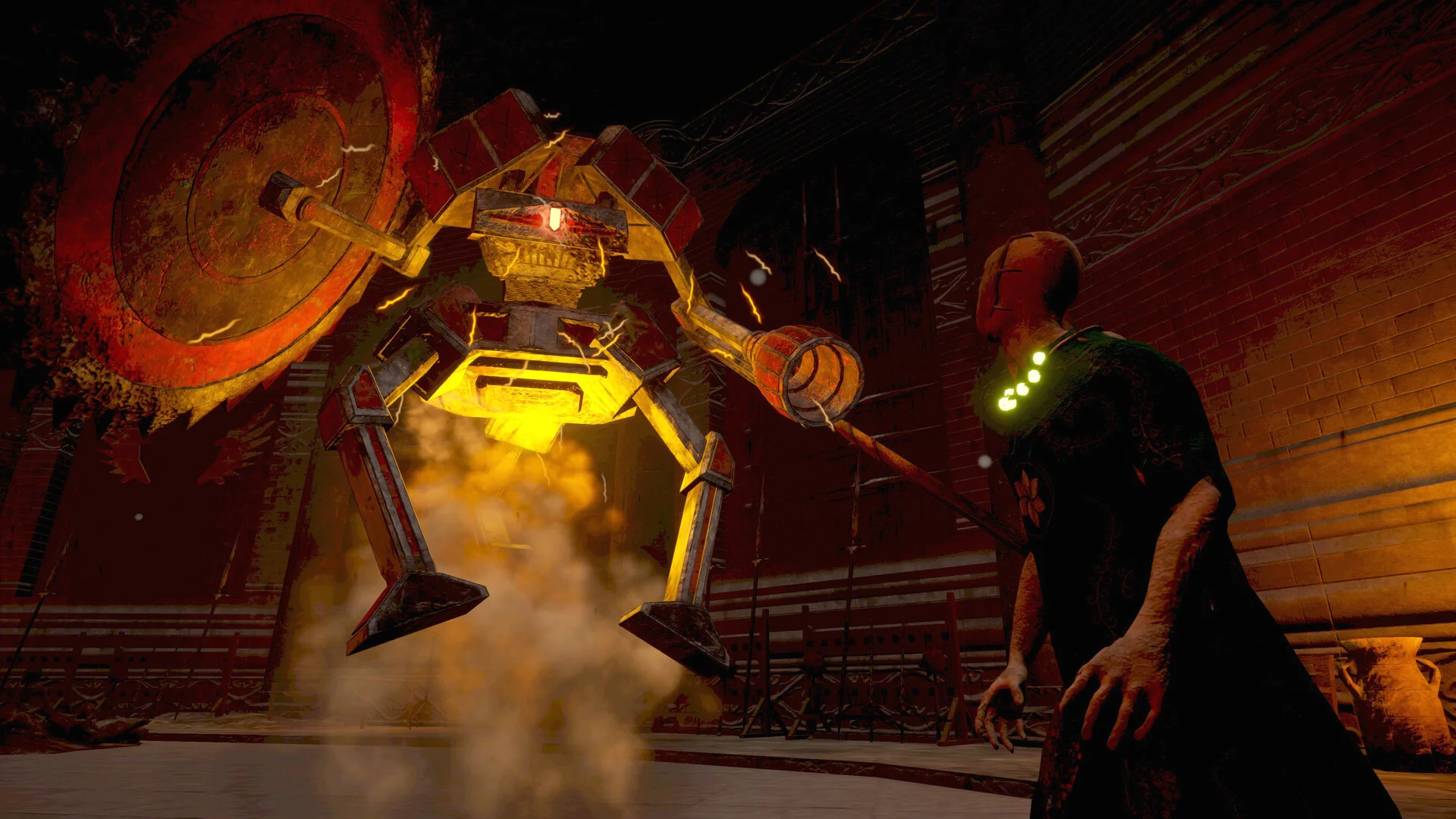
Sound frequently helps encounters communicate their changing state. Enemy cues signal attacks, while ambient music swells as combat starts, distinguishing practical warnings from dramatic escalation. Solo developer Florian of Torchlight Games also composed the score, and its coordination with encounter staging is especially effective in the dragon sequence. A huge ballista fired from a temple first brings the creature down. Approaching the apparent corpse then triggers its revival: it pulls out the bolt and roars as an organ enters. The player’s preparation has become the first stage of a fight rather than its solution.
Once airborne, the dragon attacks with lightning before descending, accompanied by a pause in the music and the return of strings. The score gives that interval a shape: upward movement, suspended expectation, then renewed impact. Its dramatic timing cannot resolve every difficulty of controlling the fight, but it makes the creature’s movement perceptible through sound and motion together. The moment asks the player to recognize an attack while staging that same attack as the creature’s emphatic return to the ground.
The Review
False Hero
False Hero makes learning enemy attacks a practical form of character building. Its stamina-and-focus cycle rewards thoughtful combinations, but slow combat arts, fast opposition, and cramped encounters can obstruct the freedom those combinations promise. Limited gains from repeat kills and predictable loot weaken the rewards for persistence. Locally organized lore and carefully staged boss spectacle supply other reasons to keep playing, giving this uneven Soulslike an identity built through its rules and encounters.
PROS
- Stolen abilities support adaptable, personalized movesets.
- Resource cycling and stagger combinations reward tactical planning.
- Realm-specific lore gives narrative choices useful context.
- - Boss staging and music coordinate dramatic escalation.
CONS
- Slow combat arts clash with fast, mobile enemies.
- Tight spaces, camera restrictions, and projectiles hinder recovery.
- Repeated traversal offers limited progression rewards.
- - Predictable loot weakens optional exploration.