
























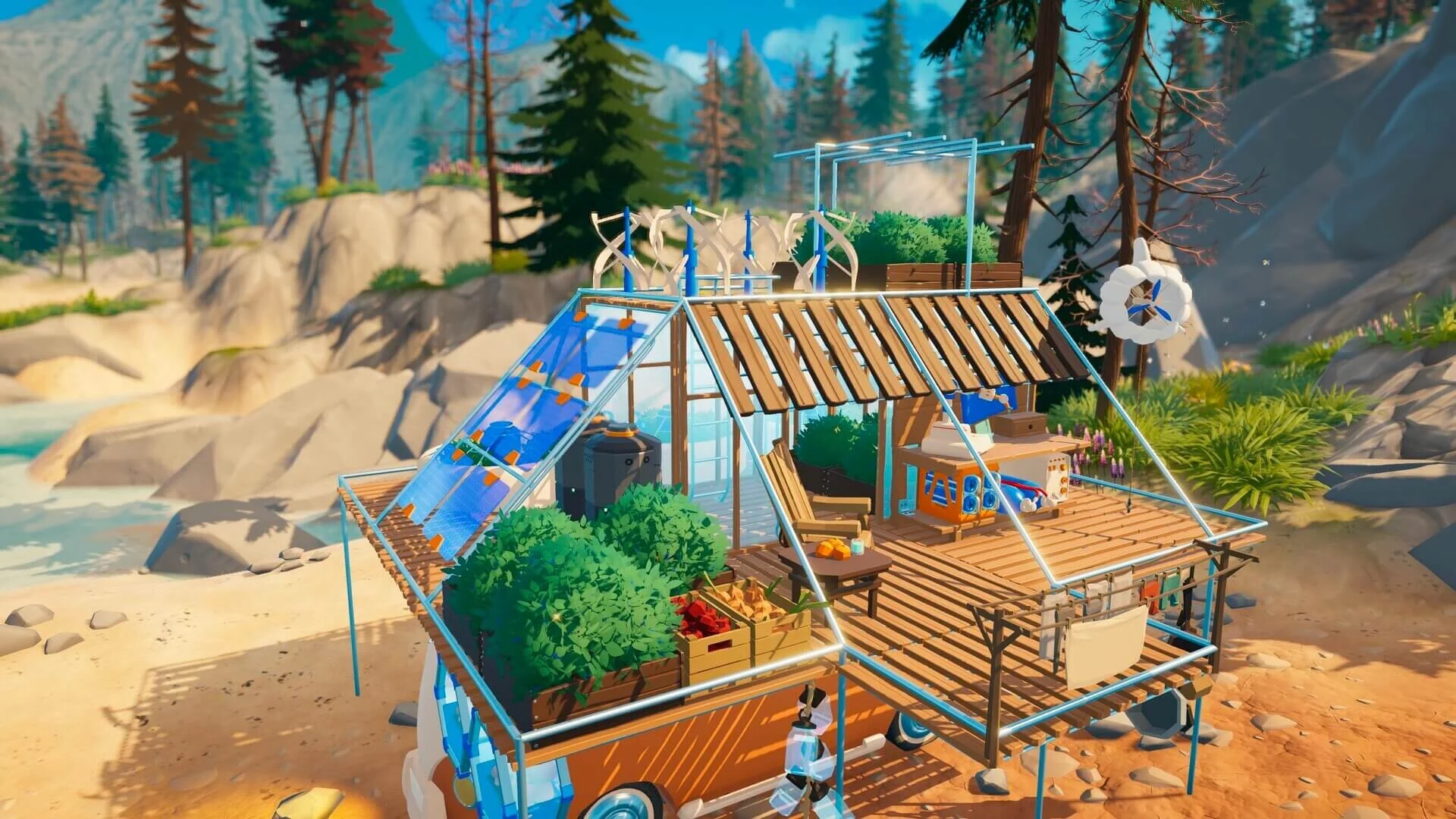
Packing up camp in Outbound means closing a door on a building that has no business fitting inside a van. Open it again and your expanded living space returns, ready for another stop. Square Glade Games gives its electric camper room for balconies, windows, furniture, and a rooftop terrace, then lets you drive the whole arrangement between forests, canyons, and beaches. The practical benefit is continuity. Gathering supplies on foot and taking the wheel belong to the same project because the place you are improving travels with you.
That space has two competing uses. Colors, lights, and shelving let you decide what living there should look like. Processing equipment determines what you can make next. Raw materials go into machines, finished products become ingredients for other machines, and the growing workshop takes up room in your carefully arranged accommodation.
Building becomes interesting where those demands meet: fitting useful equipment into somewhere you still want to inhabit. A balcony serves a personal preference; another processor serves the next recipe. Outbound gives both ambitions a physical presence, making expansion satisfying even before considering what it unlocks.
Obtaining those additions introduces a less flexible sequence. Collect litter, recycle it into download vouchers, spend those vouchers on blueprints at signal towers, then gather and process the ingredients needed to construct the unlocked item.
The environmental premise has a sensible mechanical expression here. Cleaning up a campsite contributes directly to your ability to live in the landscape. Fallen wood supplies material without requiring a forest to disappear around the camper. The sustainable setting becomes something your hands participate in, rather than a message delivered between unrelated tasks.
The upgrades also have consequences worth distinguishing. A better motor lets the van tackle steeper roads and carry equipment; repairing a bridge opens access; an improved tool lets you harvest tougher resources. Progress exists, and some of it changes where you can go.
The limitation is how frequently those changes return you to the same actions. Another resource tier creates another reason to gather, process, and build, while the most appealing construction options remain tied to discoveries in later biomes. For players interested chiefly in decorating, the creative freedom arrives in installments determined by the production chain. You can plan the home you want well before the game supplies its materials.
Travel makes that delay particularly noticeable. Slow driving gives a new landscape time to register, but a return trip to a distant tower has a different purpose. You already know the destination and need its unlock. Sparse resource respawns can leave the intervening route with little useful gathering, so the minutes between decisions become conspicuous. Improving access does not consistently improve the activity of getting there. Outbound is much better at giving you another item to pursue than at changing the demands of the pursuit.
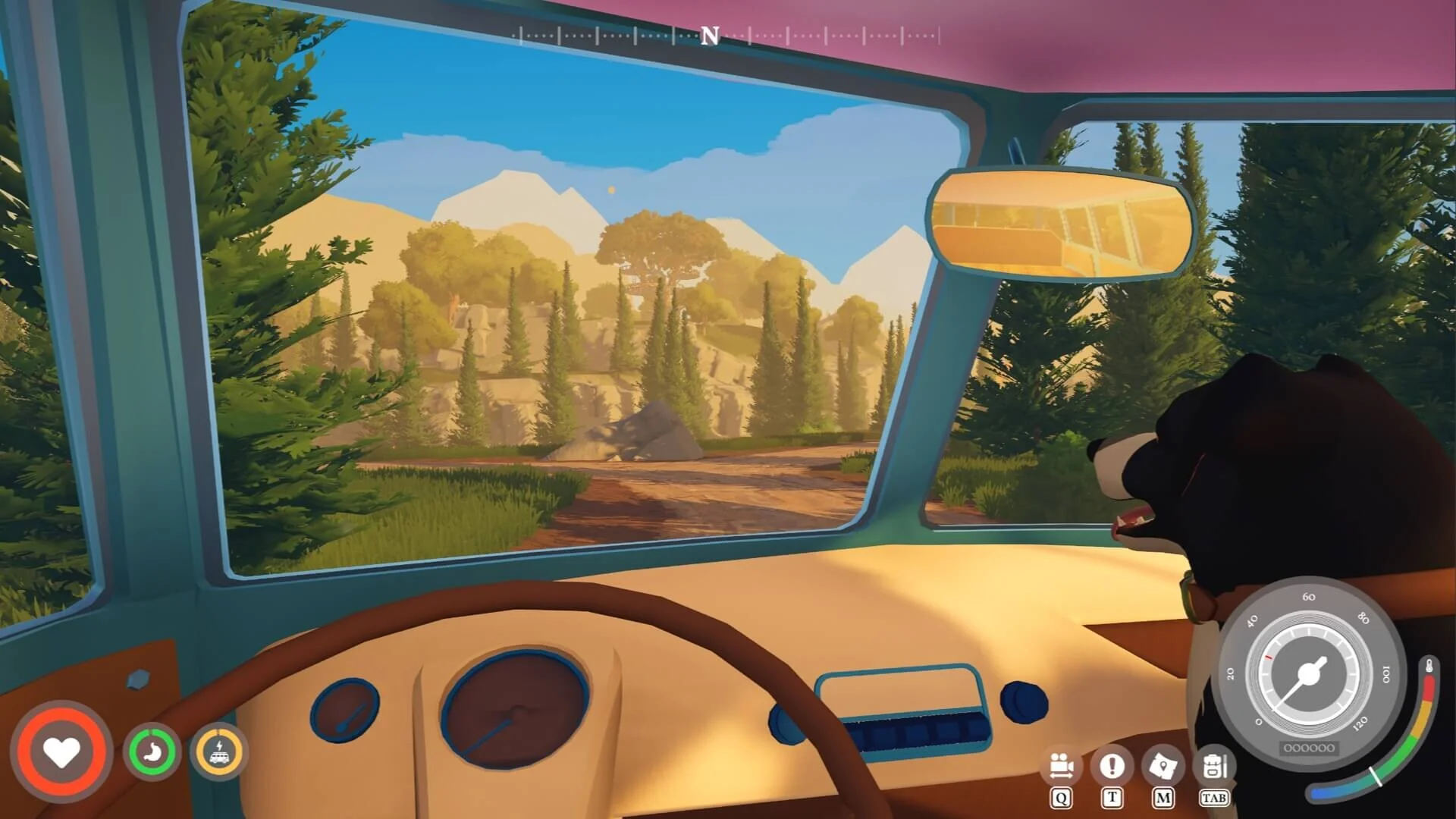
Carrying limits complicate the routine without simply closing the inventory. A heavy backpack prevents sprinting, while too much cargo slows the camper. Taking everything has a cost you experience through movement, which gives an otherwise automatic gathering habit a consequence.
Nighttime fatigue removes sprinting too, creating a less comfortable restriction. A hike that invites you to linger can become a slow return to bed because you stayed out enjoying it. These systems make planning relevant, but their penalties accumulate in the part of the game already most vulnerable to repetition: moving between the interesting bits.
Food and power gradually become easier to manage. Early foraging gives way to processing equipment and recipes, while the van’s appetite for logs and plant fibre can be eased by better energy options and free charging stations. Hunger drains health when neglected, and fainting sends you back to the camper.
With no combat, these demands function mainly as maintenance. That gentleness suits the experience. The useful question is how much attention maintenance continues to claim after its solution is understood. Later equipment provides welcome relief, though relief from refuelling cannot make a familiar drive newly interesting.
Destinations offer several kinds of reward, with uneven staying power. A cabin or windmill can provide a small puzzle and another blueprint. Gnomes and paintings supply collection targets; bottle caps buy camper trinkets from Cap-N-Snap machines.
Decorations have an obvious relationship to the home you are making, giving a roadside find a possible use beyond the map. Tracking collectibles makes searches manageable, but repeated location and reward patterns narrow the range of things a detour might contain. The satisfaction of completing a task remains available after the uncertainty has faded. How much that satisfies depends heavily on having a building project waiting back at the van.
The landscape supplies a quieter incentive. Blue skies shift toward yellow and pink, and a different parking spot gives your windows or balcony another view. Birds, rustling leaves, weather, and intermittent piano leave room to pause without demanding an interaction.
Yet cabins containing notes and laundry suggest a population the game never lets you meet. There are no passing motorists or NPC conversations, and wildlife is sparse. This does not require an elaborate plot to fix, but it leaves places with fewer ways to acquire significance. Once a location has yielded its resources and collectible, returning largely depends on liking the view.
Online co-op changes the company and distribution of work. Up to four players share one camper and its equipment, giving gathering and repeated drives a social purpose beyond the next unlock. The blueprint requirements and familiar routes remain, so the benefit comes from sharing the routine.
Solo play has a smaller, mechanically useful companion in the dog, which can follow you or wait and carries its own backpack. That extra storage connects companionship to one of the game’s persistent choices: how much to bring back. Handing supplies to the dog can preserve room in your own load, letting a hike continue without immediately accepting the slower walk that another armful would impose.
The Review
Outbound
Outbound makes carrying your home a satisfying design choice: decoration, production, and exploration all feed the same growing camper. Its upgrades unlock routes and resources, but too often leave the gathering routine intact. Slow return trips and movement penalties stretch familiar work, while sparse inhabitants give destinations little lasting pull. Building enthusiasts have room to express themselves, provided they enjoy the supply runs that ration that freedom. The camper develops faster than the decisions surrounding it.
PROS
- Expressive construction in a portable home.
- Upgrades meaningfully expand access.
- Recycling and gathering support the sustainable setting.
- Changing scenery rewards scenic campsites.
CONS
- Resource tiers repeat familiar gathering and processing.
- Slow travel compounds weight and fatigue penalties.
- Sparse inhabitants limit reasons to revisit destinations.