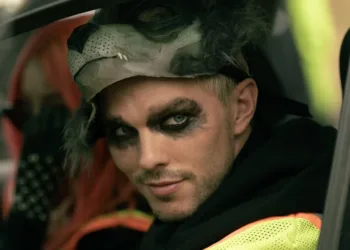




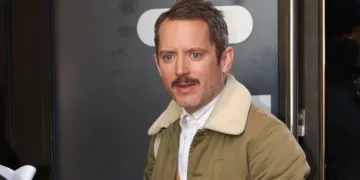


























Tim Booth is dancing when three future bandmates steal his drink. Chris Atkins reconstructs the student-union encounter in James: Getting Away with It, supplying a visible scene for a story that already belongs to the group’s private mythology. Jim, Gavan Whelan and Paul Gilbertson enter Booth’s life through an act of cheerful trespass. The reconstruction gives their meeting comic clarity, while allowing hindsight to do some quiet organizing. These people will spend years negotiating incompatible habits. Here, they can still be enjoyed as strangers with questionable manners.
Gavan’s recollections prevent that enjoyment from becoming too comfortable. His irritation at the others’ abstinence gives the band’s involvement in a meditation sect an earthbound countervoice. Spiritual discipline can look rather different to the person who has lost his drinking companions. The rejected opportunity to support the Smiths in America, explained through a clash with the bassist’s anticipated enlightenment, is an excellent absurdity. Atkins gets considerable mileage from the discrepancy between professional opportunity and private conviction. Gavan supplies the friction of someone who had to live beside that conviction.
This authorized portrait of the Manchester band draws much of its energy from such differences in recollection. Current and former members, including Larry and Gavan, make the interview material less uniform than a reunion photograph might suggest. Former manager Peter Rudge contributes the perspective of someone tasked with making these personalities function professionally. Brian Eno, Chris Martin and Jo Whiley extend the circle, though the film remains chiefly interested in life inside it. Its intimacy is productive and restrictive: the witnesses have distinct grievances, yet their shared history largely determines which questions receive attention.
The archive becomes particularly valuable when it gives those recollections a resistant physical presence. Lollapalooza footage shows Booth wearing a neck brace after an injury, separated from bandmates enjoying the tour’s excesses. His body interrupts the familiar iconography of touring freedom.
Someone is hurt, and membership of the same band has ceased to guarantee participation in the same experience. Booth and Saul Davies revisit the period in interviews, allowing the footage to carry emotional meaning without making visible separation a complete explanation of their estrangement. Saul’s perspective, informed by years of sobriety, also changes the terms on which the past can be entertaining. The image establishes distance; their accounts begin to describe its consequences.
At the Acropolis, that unevenness takes a painfully practical form. Repeated setlist changes leave Saul holding the wrong version. The incident punctures the attractive idea that permanent uncertainty is simply the price of artistic freedom. A collective can embrace unpredictability while leaving one person to experience its consequences in public. Atkins’s access matters here because the mistake remains awkward, resistant to conversion into a charming anecdote. The band’s fondness for disorder acquires a specific human scale through the musician who lacks the information everyone else appears to have.
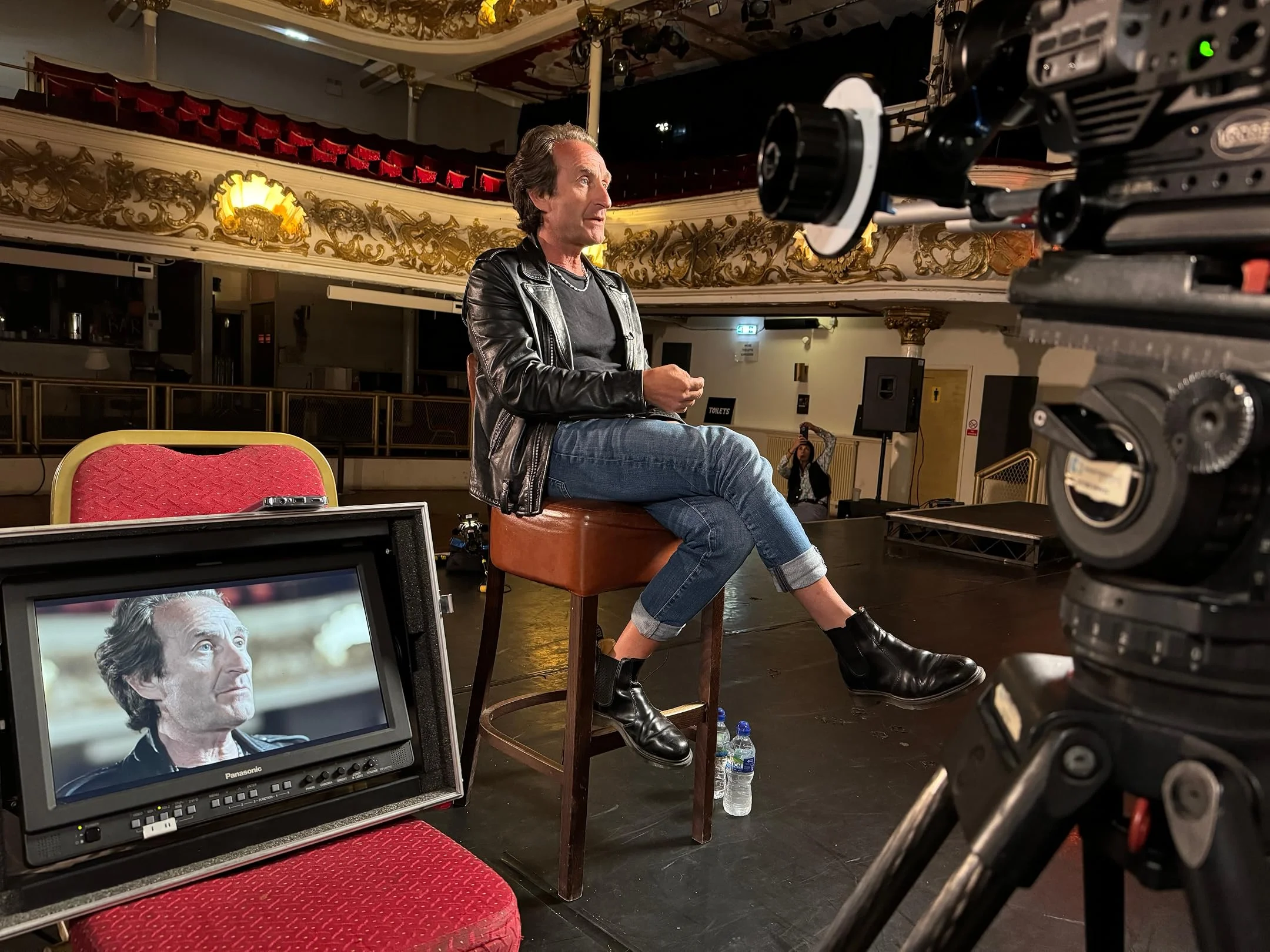
Backstage observation supplies a quieter variation. Management worries about the missing setlist as performance time approaches; Booth sleeps behind a “Do Not Disturb” sign. The situation is funny without requiring the film to establish anyone as irresponsible. What becomes visible is the uneven distribution of attention. One person can rest while others remain alert to an unresolved task. By including the people managing that uncertainty, Atkins gives the band’s independence some practical substance. Their freedom requires work, including work performed by people who will remain outside the concert spotlight.
The film is less searching about the decisions through which that freedom becomes music. Debbie’s account of suggesting that a song receive some polish, only to meet Andy’s silent resistance, is revealing as a description of internal custom. It offers limited insight into the song itself. We understand the social meaning of the suggestion before we understand what changing the music would entail. This emphasis recurs across a portrait much better equipped to explain the group’s coexistence than the construction of its records. The anecdotes are vivid enough to make the missing musical detail noticeable.
Atkins’s soundtrack selection partly answers that limitation through the quality of its listening. “Laid” and “Sit Down” occupy their expected places, while “Pressure’s On,” “The Lake” and “Space” broaden the musical field beyond the songs most likely to arrive with ready-made recognition. The selection resists reducing four decades to a procession of familiar commercial peaks. It also exercises a persuasive power of its own. Music makes continued affection easy to understand, sometimes more immediately than the interviews explain continued collaboration. Hearing the catalogue’s breadth is a pleasure; the film leaves relatively little room to examine how that breadth was achieved.
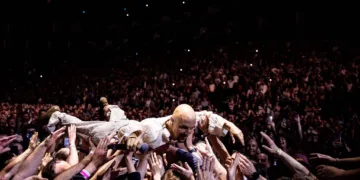
The contemporary performance footage, including the O2 Arena during the 2024 Yummy tour, benefits from the film’s decision to begin in the present before returning to the band’s origins. Survival is established early, so the archive need not function as suspense about their eventual fate.
The live material can instead hold our attention as present activity. Its scale is moving, though a crowded arena cannot retrospectively vindicate a missed opportunity or an unhappy tour. Onstage, the musicians still have to make their separate contributions work together, in time, before an audience. The documentary is most persuasive when it lets us feel the pleasure of that coordination while leaving its difficulty visible.
James: Getting Away with It premiered in UK cinemas on August 17, 2026, accompanied by a live-broadcast performance from Aviva Studios. Directed by Chris Atkins, the authorized documentary explores the turbulent history, creative evolution, and enduring legacy of the iconic British alternative rock band James.
Where to Watch James: Getting Away with It (2026) Online
Full Credits
Title: James: Getting Away with It
Distributor: Mercury Studios / UK Cinemas
Release date: August 17, 2026
Rating: 15
Running time: 1 hour 37 minutes (97 minutes)
Director: Chris Atkins
Writers: Chris Atkins
Producers and Executive Producers: Marc Robinson, Adam Barker, Neil Hughes, Peter Rudge, Charles Auty, Ian Neil
Cast: Jim Glennie, Tim Booth, Dave Baynton-Power, Saul Davies, Larry Gott, Mark Hunter
The Review
James: Getting Away with It
Chris Atkins finds a rich documentary subject in the distance between James’s affectionate recollections and the less accommodating evidence of their archive. Booth’s injured isolation and Saul’s setlist predicament give the band’s celebrated disorder a human cost. The humor survives that scrutiny, helped by candid disagreements and a soundtrack reaching beyond the hits. Musical construction receives thinner attention, and the historical perspective remains inward. Yet this warm, observant portrait earns its affection by allowing discomfort into the picture.
PROS
- Archive footage complicates the band’s recollections.
- Candid disagreements produce sharp, natural humor.
- Backstage access reveals the work sustaining artistic freedom.
- Soundtrack selections extend beyond familiar hits.
CONS
- Limited examination of how the music was made.
- Historical perspective stays close to the band’s own circle.