













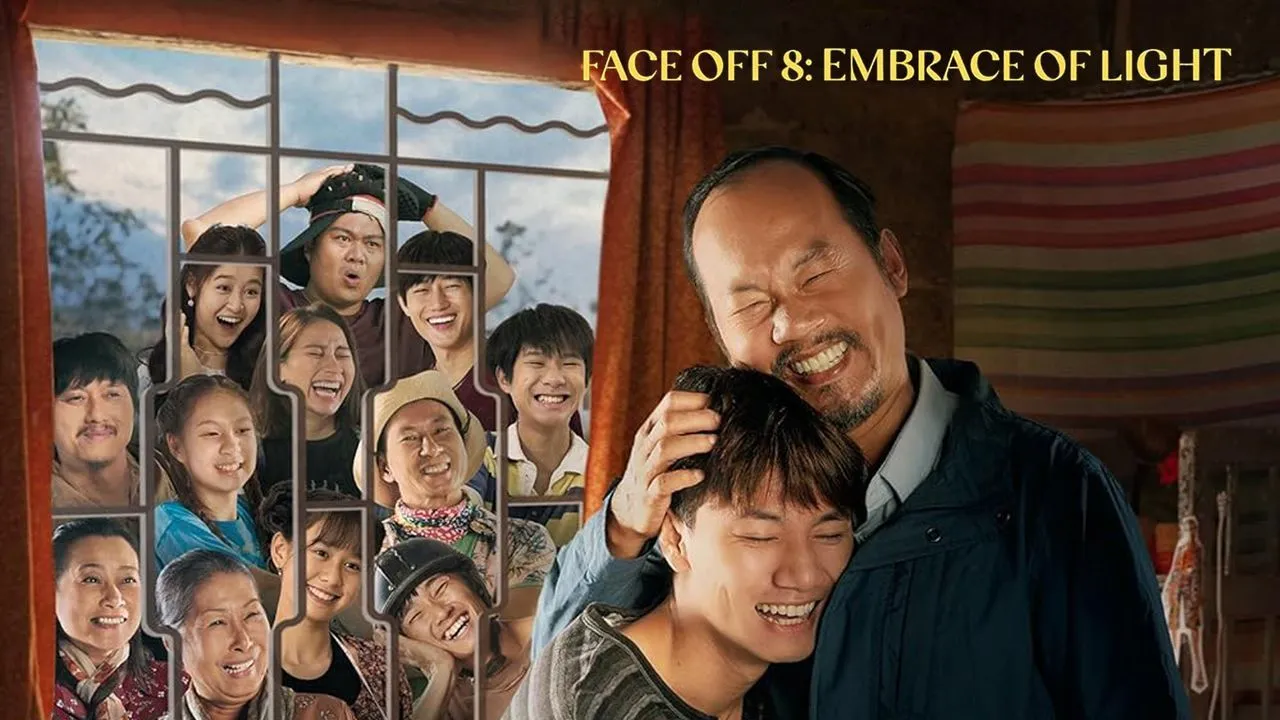

Every choice to pursue a dream is also a choice to forsake a world. Face Off 8: Embrace of Light positions itself within this fundamental schism, examining the space between a life of obligation and a life of self-creation. The film’s title suggests illumination and triumph, yet its narrative is more concerned with the shadows cast by such a pursuit. The central story follows a young band’s effort to achieve stardom, but its true subject is the existential weight of ambition.
We are presented with a conflict not of good versus evil, but of two incompatible, deeply held truths. The friction between the band’s leader, Tam, and his father, Ong Phuoc, is a precise rendering of a generational and philosophical impasse. It asks a disquieting question: what is the moral cost of defying the world that made you in order to build one of your own? The film’s bright, pop-infused surface conceals a starker inquiry into the nature of identity, duty, and the lonely path of the artist.
The Geometry of Opposition
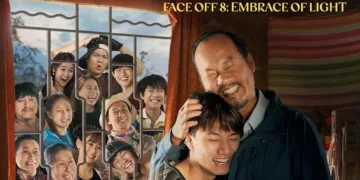
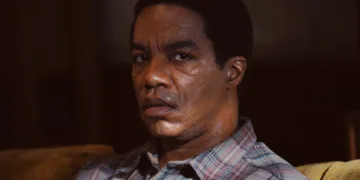
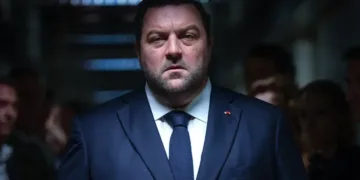
The film’s emotional architecture is built on the stark, unyielding lines of the father-son conflict, a visual and philosophical study in opposition. Ong Phuoc’s perspective is one of rigid pragmatism, a deterministic worldview shaped by labor and scarcity where survival is the highest virtue. For him, a stable future is found through formal education, a predictable and secure path that nullifies risk.
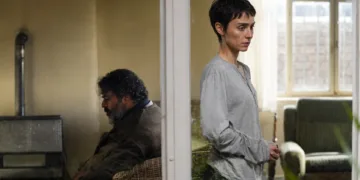
Tam’s dedication to music is therefore not just a hobby but a direct refutation of this logic, an existential leap into the frivolous and the uncertain. Their inability to communicate is a collision of two irreconcilable realities, often emphasized through framing that places them in separate spaces within the same shot or cuts between them in isolation. This visual separation underscores their emotional distance. The film wisely refrains from painting the father as a simple villain.
He is a man acting out of a fierce, if misguided, protective instinct, trapping the narrative in a compelling ethical gray zone. This primary opposition is then placed within the familiar framework of an underdog story. The band’s humble origins are a constant presence, their limited resources shaping every decision.
The story uses their journey to offer a cynical commentary on the modern entertainment industry. It is presented as a formidable, almost predatory system, a lottery that feeds on the hopes of the disenfranchised. The visual language reinforces this, contrasting the cramped, naturalistically lit spaces of their home with the artificial, high-key glare of the television studio, a manufactured heaven that feels worlds away.
A Cacophony of Subplots
The script populates its world with an admirable number of lives, yet it struggles to conduct them into a coherent symphony, resulting in a narrative that feels cluttered and unfocused. The central, compelling story is frequently interrupted by tangential plotlines that add little thematic resonance and actively dilute the film’s primary conflict.

A romantic rivalry between two band members, Phuc and Me, unfolds with prescribed, predictable beats that feel imported from a lesser teen drama. A separate family crisis involving another member, Thu, appears with little warning and is resolved with a mechanical efficiency that robs it of any emotional impact. These side stories are structural liabilities. They operate in their own orbits, rarely intersecting with the primary father-son drama in a meaningful way and ultimately functioning as narrative dead ends. The diffusion of focus means few characters receive the attention needed for their arcs to land with any weight.
The script introduces figures with potential, only to abandon them with a startling lack of ceremony. The wealthy rival, Me, is a one-dimensional caricature of jealousy whose abrupt departure from the film leaves a narrative void, making all the time spent on her preceding conflict feel wasted.
Thu’s parents reconcile in a scene so sudden it feels less like an organic resolution and more like a narrative sleight of hand, a trick to tie up a loose end without doing the requisite emotional work. This pattern of shallow setup and unearned resolution prevents genuine audience investment, repeatedly breaking the film’s verisimilitude for the sake of manufactured drama.
A Polished Surface, A Faltering Core
Technically, the production is proficient, which makes its narrative shortcomings all the more apparent. The cinematography by Nguyen Ngoc Cuong is clean and effective, capturing the dusty rural landscapes and the high-key gloss of the performance sequences with equal skill. The camera’s observational stillness in the domestic scenes provides a strong contrast to its kinetic dynamism during the band’s rehearsals and final performance.

This formal control, however, cannot salvage the script’s third-act collapse. The story’s momentum comes to a complete halt with the introduction of a contrived obstacle involving missing costumes, a plot point so illogical it strains all credibility and feels entirely disconnected from the character-driven conflicts that came before it. The film spends an inordinate amount of time on this sequence, sacrificing pacing for a manufactured crisis that generates no authentic tension.
While the finale attempts to recover the film’s initial energy with its climactic television performance, the emotional resolutions feel hollow and unconvincing. The central relationship between father and son, so carefully established as a complex philosophical divide, is given a simplistic resolution that feels both rushed and unearned. The film concludes with an image of success, yet it is a victory that feels emotionally and thematically vacant.
Face Off 8: Embrace of Light (Vietnamese title: Lật Mặt 8: Vòng Tay Nắng) is a Vietnamese comedy-drama, and the eighth installment in the popular Face Off film series directed and written by Lý Hải. The film was scheduled for a theatrical release starting on September 18, 2025, in various international markets, including North America, the UK, and Australia. The story centers on a conflict between a son’s dream to be a dancer and his father’s opposing expectations, which causes family strife to boil over. As the film received a wide international cinema rollout, you could watch it at major theater chains like AMC upon its release, and it may eventually become available for streaming on digital platforms.
Full Credits
Director: Lý Hải
Writers: Lý Hải
Producers and Executive Producers: Lý Hải, Minh Hà
Cast: Anh Tu, Yuno Bigboi, Kim Phương, Tuyết Thu, Đoàn Thế Vinh, Long Đẹp Trai, Quách Ngọc Tuyên, Hồ Đông Quân, Tín Nguyễn
Director of Photography (Cinematographer): Nguyễn Ngọc Cường
Composer: Nguyễn Hoàng Anh, Trần Hữu Tuấn Bách, Khuất Duy Minh
The Review
Face Off 8: Embrace of Light
Despite a polished production and a compelling philosophical conflict at its center, Face Off 8: Embrace of Light is undone by a fundamentally weak script. The narrative is cluttered with underdeveloped subplots that dilute its focus, while a bafflingly illogical third act derails any momentum. The film introduces potent ideas about family and ambition but fails to deliver a satisfying or emotionally earned resolution. What remains is a technically proficient yet hollow experience—a film with a strong premise that ultimately collapses under the weight of its own narrative shortcomings.
PROS
- A strong central theme exploring generational conflict and ambition.
- High-quality production values, with proficient cinematography and editing.
- Effectively builds a compelling father-son dynamic as its emotional core.
- Successfully balances comedic and dramatic tones in its first half.
CONS
- An overcrowded script with numerous underdeveloped subplots and characters.
- A contrived and illogical plot device severely damages the third act.
- The emotional resolutions for its central conflicts feel rushed and unearned.
- Fails to provide satisfying or complete arcs for most of its supporting cast.