



















Nick Kringle picks an excellent moment to play Santa. Mark Severson’s Christmas presents haven’t arrived, and the neighbor turns up in costume to rescue the occasion. For Julie and her son Bobby, he supplies the attention their own household keeps promising and failing to deliver. It’s an uncomfortable little transaction in Christmas at the Kringles: you can recognize the intrusion and still understand the relief. A stranger has noticed what the family needs. Accepting his help means accepting that he noticed before Mark did.
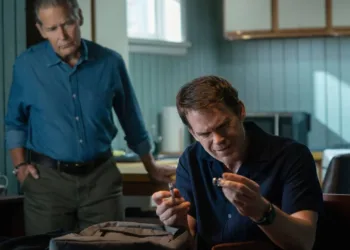
Ron Livingston makes Mark’s irritation easy to read, though being right about the neighbors does little to make him good company. His absorption in financial work and habit of lying have already landed his marriage in couples therapy. The move from the city to the suburbs gives those problems a new address, and Nick arrives ready to occupy the space Mark leaves unattended. Livingston’s withholding manner helps this dynamic. His suspicion carries the frustration of a man watching someone else receive credit for a responsibility he has neglected.
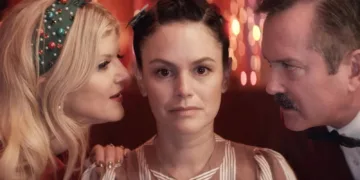
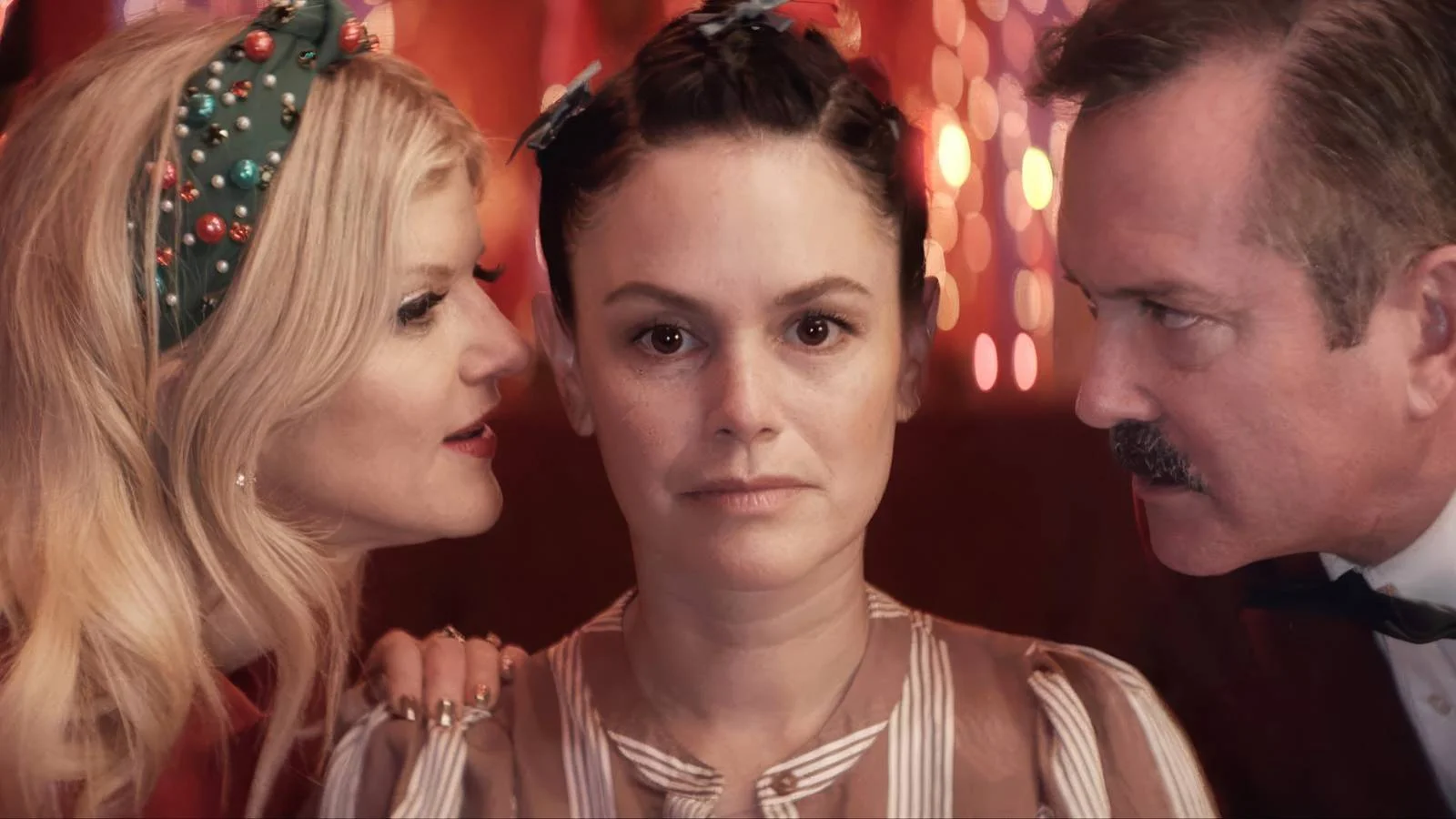
Rachel Bilson gives Julie’s hope for a happier family life a strained eagerness. You can understand why she wants the move to work, and why Bobby might prefer the house where Christmas never ends. Director Kevin Lewis and writer Zack Imbrogno have the beginnings of a painful trap here: the people you love find comfort somewhere you distrust.
Yet Julie and Bobby’s continued involvement gets far less persuasive development than their initial attraction. The Kringles announce themselves with a decorated car, coordinated festive clothing, carols, and a recorder. Warnings from other neighbors pile onto behavior that already demands caution. Understanding Julie’s loneliness becomes a poor substitute for understanding her next decision.
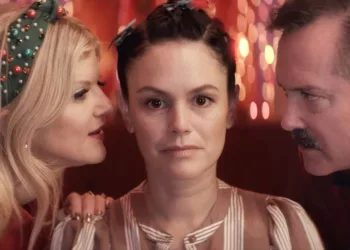
Thomas Lennon and Arden Myrin provide the strongest reason to keep accepting invitations. As Nick and Carol, they share an aggressively cheerful manner that makes ordinary hospitality feel like something you have agreed to participate in. Lennon pushes Nick’s friendliness toward a refusal to acknowledge anyone else’s discomfort.
Myrin meets him with the same fervent commitment, so the couple feel convincingly united in their exhausting domestic project. Their pleasure in these roles is infectious in patches. Even an awkward exchange can become amusing through their shared certainty that everyone should be enjoying it.
The calendar supplies a useful complication. When the action reaches Valentine’s Day and the Kringles are still celebrating Christmas, their cheer starts to feel possessive. A holiday usually offers a temporary permission to behave differently; this family refuses to let that permission expire.
The difficulty is that the film spends so much of its early stretch repeating their excess. We have already seen a woman murdered in the opening, so the suspense depends on watching their influence grow. Too often, another display of festive eccentricity tells us something we already understand while Julie and Bobby move closer to danger.
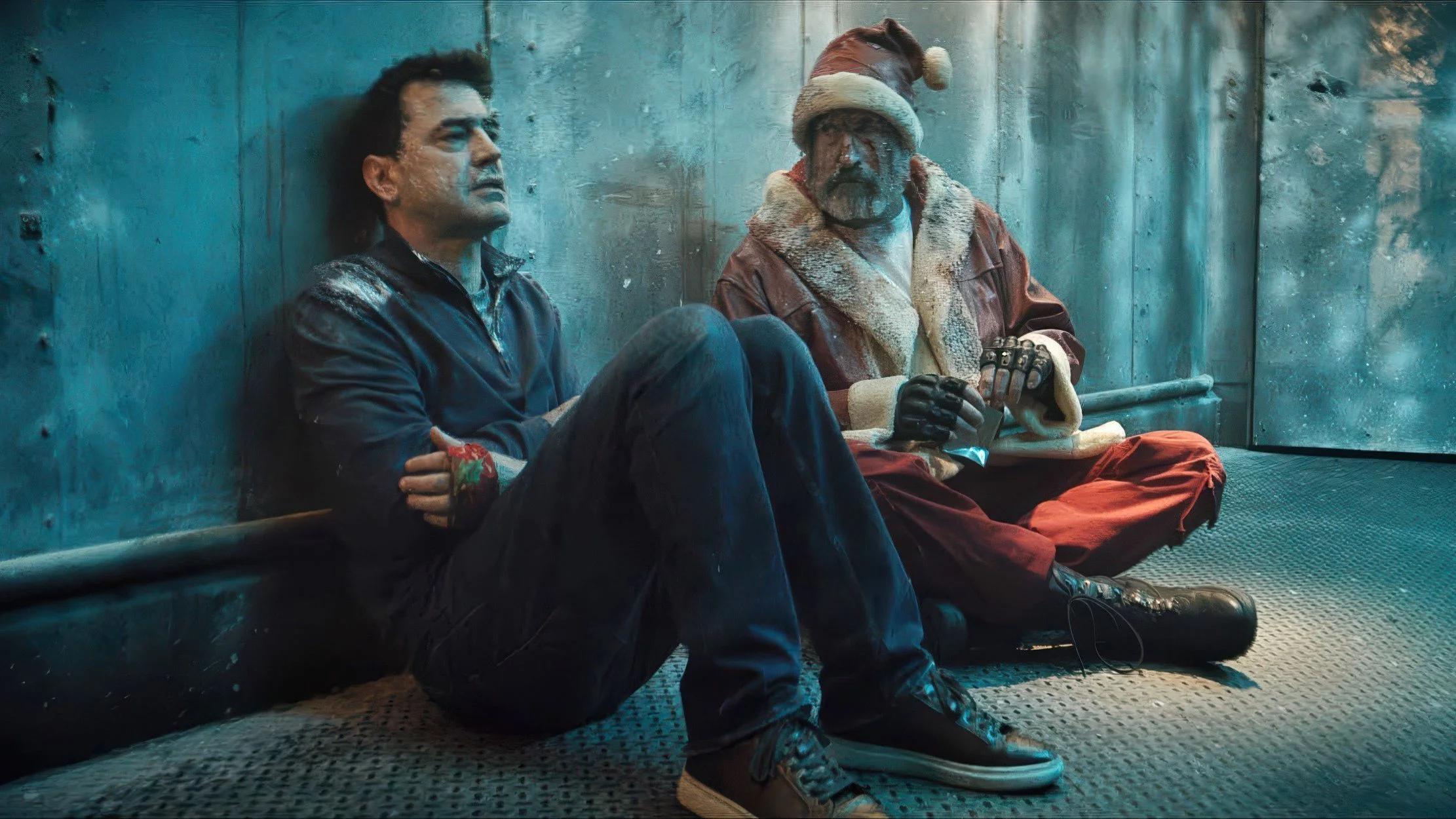
The cult material briefly gives that influence a sharper shape. David Wain appears as leader Noel Tannenbaum in a recruitment video, and spiked Yule tea makes the household’s coercion literal. The repeated insistence on “joy” acquires an ugly condition: happiness means submitting to the people supplying it.
This is a strong extension of Nick’s Santa intervention, turning his helpfulness into an offer with concealed obligations. But the explanatory material spends its energy identifying the organization and its weirdness. It does less to deepen our anxiety about Julie and Bobby surrendering their judgment to it.
Mark’s eventual allies pull the experience in another direction. Donald Faison’s Daryl and Rob Riggle’s abrasive mall Santa could have made his isolation funny while giving the rescue an unruly energy. Riggle’s membership in a secret society of mall Santas certainly fits the film’s appetite for seasonal absurdity. His assault on an elderly woman, though, makes the company around Mark feel unpleasant without developing the threat next door. The detour asks for a laugh while the family predicament waits.
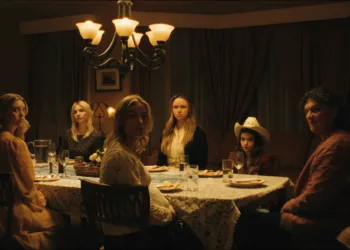
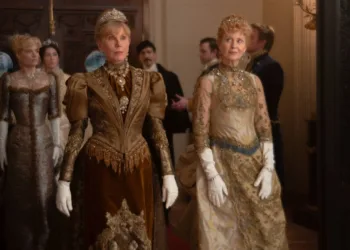
The Kringle house remains worth looking at. Stockings, large gingerbread constructions, and the sprawling decorated tree give the interior a density that can make an invitation feel enclosing. There is visible care in furnishing this festive excess. Lewis adds smoke, red and green neon, and tilted compositions, treating the space as hostile long before Mark enters it on his rescue mission. These choices create an appealingly lurid environment. The decorations give the danger a specific texture, although the film’s overt visual warnings leave little room for the house to feel reassuring before it becomes threatening.
Its opening also establishes a difficult promise to keep. A pursuit through the Christmas décor ends with a woman impaled on a tree and her head replacing its topper, joining seasonal imagery to violence with immediate, nasty clarity. Later deaths sometimes happen offscreen, and the film reserves much of its bloody activity for the chaotic final stretch. The issue is the uneven satisfaction of that initial promise. Chainsaws, threatening elf masks, and a Christmas gimp bring fresh visual absurdity into the house, but their arrival supplies bursts of activity after a long stretch of waiting for the danger to develop.
Inside that rescue lies the film’s most unsettling possibility: Mark cannot assume his own family will welcome him. Indoctrination makes Julie and Bobby potential threats, turning the people he has failed to attend to into people whose responses he can no longer trust.
The action has an emotional complication ready to carry it, yet the chainsaws and grotesque costumes keep drawing attention toward the next obstacle. Mark’s task becomes physically urgent while its intimate difficulty receives less space. Recovering his family should require him to recognize what drew them away; fighting his way through the Kringle house gives him something much easier to act upon.
Christmas at the Kringles arrives exclusively in theaters on October 30, 2026. Directed by Kevin Lewis, the dark comedy horror film follows a family that moves next door to neighbors who celebrate Christmas year-round, only to uncover sinister intentions to hypnotize and indoctrinate them.
Where to Watch Christmas at the Kringles (2026) Online
Full Credits
Title: Christmas at the Kringles
Distributor: Briarcliff Entertainment
Release date: October 30, 2026
Rating: R
Running time: 1 hour 38 minutes (98 minutes)
Director: Kevin Lewis
Writers: Zack Imbrogno
Cast: Ron Livingston, Rachel Bilson, Rob Riggle, Arden Myrin, Beverly D’Angelo, Thomas Lennon, Donald Faison, David Wain
The Review
Christmas at the Kringles
Christmas at the Kringles briefly understands how dangerous it can feel when someone else gives your family the attention you withhold. Lennon and Myrin make that invitation entertaining, and the crowded festive interiors give their hospitality an enclosing menace. But repetitive eccentricity and unconvincing decisions weaken the growing unease. By the time the chainsaws arrive, the film has given its rescue plenty of physical obstacles and too little emotional weight.
PROS
- Lennon and Myrin’s infectious comic partnership.
- Densely decorated, sinister festive interiors.
- A promising emotional hook built around neglected affection.
CONS
- Julie and Bobby’s continued trust lacks persuasive development.
- Repeated festive excess stalls the mounting danger.
- Abrasive supporting comedy distracts from the family.
- Seasonal violence delivers unevenly on the opening’s promise.