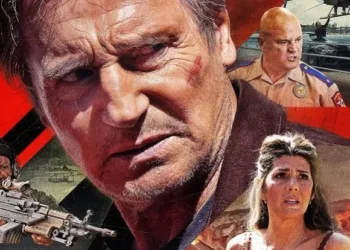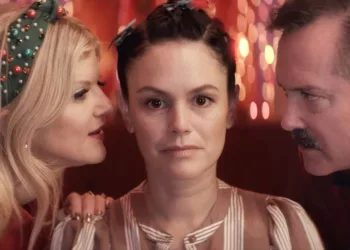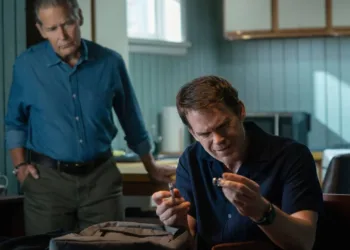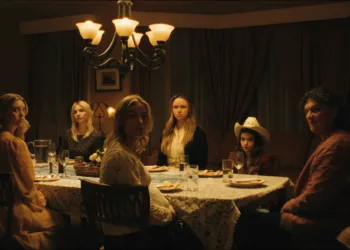






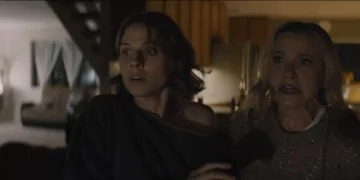
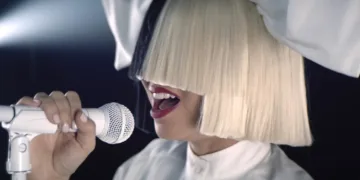
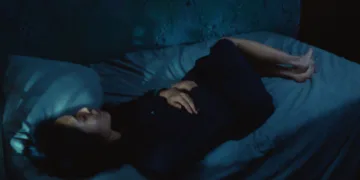


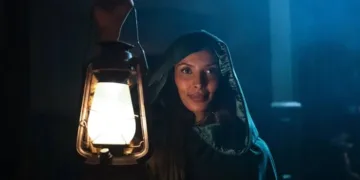

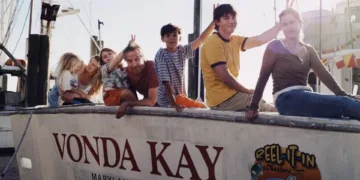



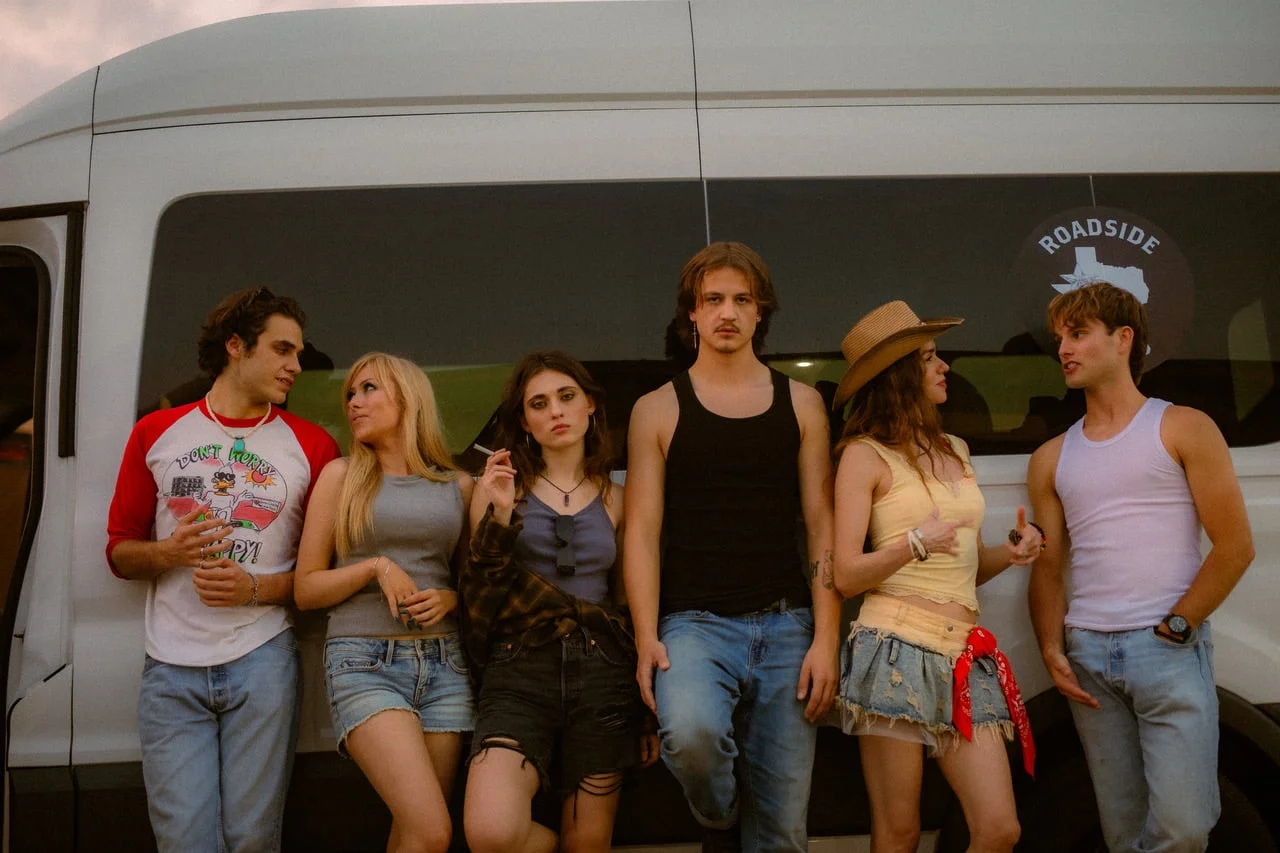

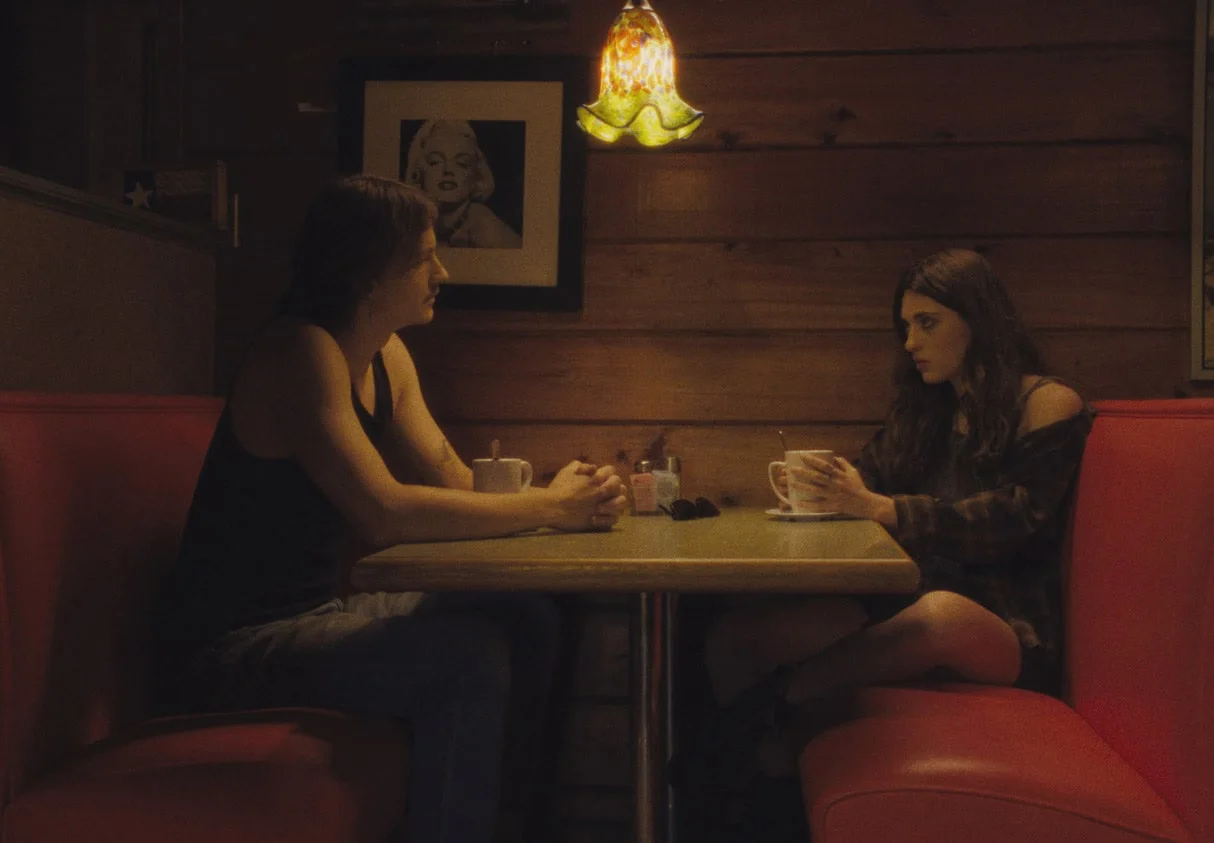
The people talking in Kill Trip often seem to have misplaced the person they are talking to. Kristian McKay frames their faces toward the lens, cuts between them, and leaves the viewer occupying an uncomfortable conversational vacancy. We receive the looks that should belong to somebody else. Even before the film’s travelers have much reason to fear one another, the simple business of holding a conversation feels suspect.
I initially gave this arrangement considerable credit. A horror film that makes human contact feel wrong has found something useful. Yet I was also doing a little unpaid script development, supplying an argument about spectatorship that the images themselves had scarcely begun to establish. Those fixed looks interrupt the exchanges. They make the speakers uncomfortable to watch. Their purpose beyond that remains much less certain, especially when the dialogue already struggles to suggest a friendship.
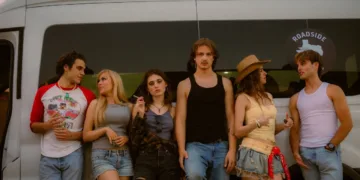
The friends are heading to an Austin music festival when their car breaks down. Dallas, a young van driver played by Tate Christensen, offers a lift; an isolated motel eventually replaces the promised destination. Accepting his help is the familiar decision on which this sort of film feeds. I find the decision itself easy enough to accept. Stranded people need transport. The harder sell is the group’s existing connection: their stiff exchanges give us little sense of the shared ease that this encounter with a stranger should disturb. McKay makes everyone look displaced before Dallas has done much displacing.
That does produce a particular kind of suspicion. Dallas’s quiet manner, Corin Nemec’s conspicuously disreputable conman Levi, and the local figure known as the Glove Man offer different places to direct it. Danger might also reside among the travelers. With so many people presented as possible threats, awkwardness becomes potential evidence. We start inspecting a pause for concealed intention because the film has made ordinary social behavior difficult to locate.
For a while, this is an effective trap for the attention. The close-ups deny the comfort of watching an easy exchange between people who understand each other. The long silences leave room for an unpleasant interpretation to settle. Then the blood arrives, abruptly returning the film to bodies and physical damage.
McKay can make the shift jolt. His difficulty is sustaining a developing threat between those interruptions. Conversation repeatedly stretches without giving suspicion much new direction, and the next eruption has to restore an urgency that the preceding stretch has allowed to dissipate. Patience begins to feel like a task assigned to the audience.
The film’s other storytelling devices make that task stranger. Its opening graphic-novel imagery depicts events that the live-action story will enact, lending the detour a sense of having already been determined. Later, Midnight Misty, the radio host played by Samaire Armstrong, tells stories of violence that slip into warnings and dread. Murder reaches us through pictures and broadcasting as well as through the travelers’ experience. The suggestion of a world already busy turning suffering into entertainment is available here, although the film gives it little development.
Misty is particularly frustrating because the broadcasts can make menace feel ambient, something circulating beyond the motel and the van. Her voice expands the space of the horror. Her relationship to the unfolding action remains hazier, and the warnings do limited work beyond reinforcing the expectation that something terrible is coming.
The graphic novel and radio offer two frames around the violence, with too little friction between the act of telling and the event being told. They announce the film’s awareness of its own construction. I wanted that awareness to change what the construction allowed us to see.
The attraction between Dallas and Katy, played by Diletta Guglielmi, comes closest to doing so. As Katy becomes the principal figure, the apparent slasher mystery gives ground to a romance whose interest in connection has an increasingly possessive edge. The shift is worth making. Sexual jealousy can turn the people around a couple into obstacles, and a horror film can make that private distortion horribly literal. Kill Trip finds a reason for its romantic and murderous interests to occupy the same space.
Guglielmi also gives the direct looks a charge that the ensemble’s exchanges frequently lack. Her gaze can solicit attention rather than merely interrupt the illusion of conversation. The camera’s awkward intimacy becomes seductive, and looking acquires a temptation alongside its discomfort. This complicates my suspicion that the framing is an empty mannerism. The same device does different work around Katy. Its strongest use makes the viewer’s attention feel like something a character might want to possess.
Still, the pull of an image does considerable work that the relationship itself leaves unfinished. Katy and Dallas’s sexual tension is easier to register than the emotional connection the romantic turn asks us to follow. The eventual explanation of the killings supplies motive and rearranges suspicion, but the disclosure cannot retrospectively furnish all the human texture missing from those earlier exchanges. Knowing what somebody wants leaves the question of how they experience that desire open.
Katy’s prominence creates a further problem for the figures around her. As attraction increasingly organizes the film, the other travelers lose ground to the question of what they mean to this attachment. That narrowing could make possessiveness frightening: another person’s life reduced to an inconvenience. Yet the friends’ thin conversational existence has already done some of that reducing. Guglielmi holds the camera’s attention while the people outside the romance struggle to become substantial enough for their exclusion to hurt.
Kill Trip was released digitally and on demand by Quiver Distribution on July 17, 2026. Directed by Kristian McKay, the horror thriller follows a group of friends heading to a Texas music festival who hitch a ride with a stranger, only for their trip to turn into a fight for survival as passengers begin to vanish.
Where to Watch Kill Trip (2026) Online







Full Credits
Title: Kill Trip
Distributor: Quiver Distribution
Release date: July 17, 2026 (Digital and On Demand)
Rating: Not Rated
Running time: 1 hour 34 minutes (94 minutes)
Director: Kristian McKay
Writers: Kristian McKay
Producers and Executive Producers: Daunesh Alcott, Kristian McKay, Gustavo Oliveira, Stelio Savante
Cast: Tate Christensen, Diletta Guglielmi, Stelio Savante, Corin Nemec, Samaire Armstrong, Brittany McVicker, Todd Jenkins, John Ford Coley
The Review
Kill Trip
Kill Trip makes looking uncomfortable, then struggles to decide what that discomfort means. Diletta Guglielmi’s magnetic presence gives its camera-facing exchanges a seductive purpose, and the violence can jolt. I wanted to credit the surrounding awkwardness with equal intention. The thin relationships and stalled conversations make that generosity difficult to sustain. Its turn toward possessive romance offers a disturbing idea, but too little emotional substance for the people caught inside it.
PROS
- Guglielmi’s seductive, unsettling screen presence.
- Close framing creates genuine social unease.
- Abrupt violence delivers effective jolts.
CONS
- Stretched conversations repeatedly dissipate tension.
- Thin relationships weaken both friendship and romance.
- - Radio and graphic-novel framing remain underdeveloped.