





















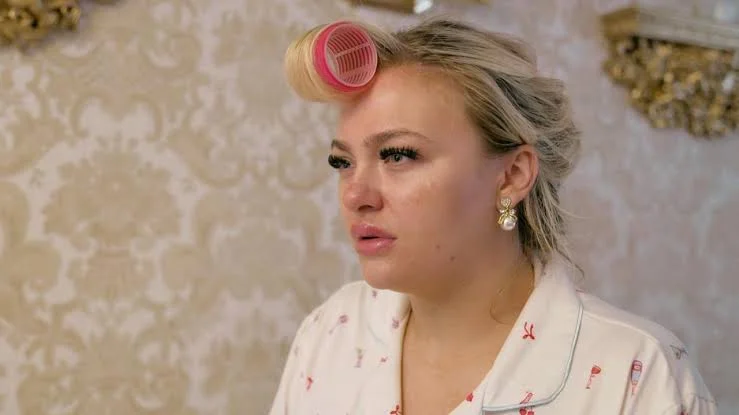

For Tina’s birthday, Trewley Precious writes a message in the voice of her late father, Sidney. He thanks Tina for looking after their children and promises love beyond death. The family gathering in Channel 4’s Secret Lives of Gypsy Wives falls quiet. Tina cries. Trewley’s brother Jamie acknowledges the tenderness of the gesture, then observes that she has ruined the whole day. Everyone laughs. Within a single exchange, the family has moved from celebration to bereavement and found a way back without requiring anyone to pretend the loss has stopped hurting.
The joke works because Jamie knows exactly what he is interrupting. His approval comes first; the teasing gives everyone permission to resume being themselves. The programme’s movement between collective bustle and individual interviews develops that relationship between grief and ordinary behaviour.
Alone before the camera, Trewley struggles to describe Sidney’s death and says she feels as though she occupies a different world. The interviews give language to distress that family banter briefly makes manageable. Neither account cancels the other, and the series benefits from allowing both to remain present.
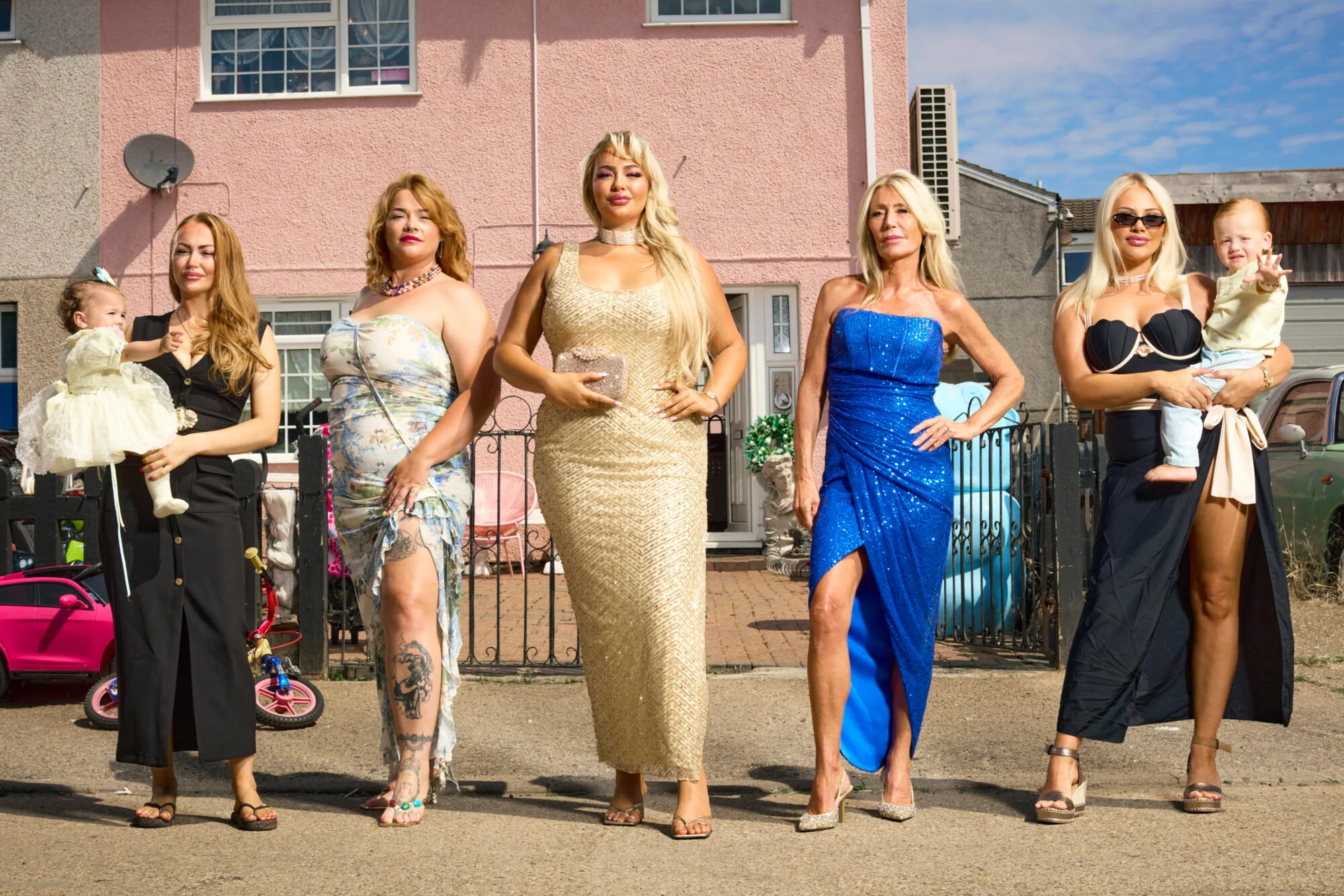
Trewley is a social-media influencer living on Clacton-on-Sea’s Percy King Estate, with her mother and four siblings close by. Her pink chalet sits in the family garden, a useful geographical qualification to any story about striking out alone.
She wants to build a business and has little current interest in marriage or motherhood. Conversations pressing her to settle down supply an obvious source of friction. Her sisters married young, which gives the programme’s title its technical defence. Its principal narrative investment, however, is in a woman trying to establish a different sequence of adult milestones.
The belly-button piercing dispute gives this conflict a clear, immediate shape. Trewley’s friend Robyn predicts Tina’s reaction; Tina then bars her daughter from the house until the piercing is removed. An apparently small decision about appearance becomes a test of who possesses authority over Trewley’s choices.
Her confidence online offers little protection against a mother who can enforce a rule at the door. This is effective reality storytelling because the disagreement has an observable consequence. The business ambition operates on a longer timescale, but the piercing establishes the resistance Trewley can meet while pursuing even a modest degree of autonomy.
Tina’s own history makes her an awkward fit for the role of immovable traditionalist. She is not a Traveller, and her insecure childhood led her to insist that Sidney, her Traveller husband, settle in one place to raise their children. She has already negotiated a substantial departure from her husband’s preferred way of living.
Jamie, meanwhile, became an estate agent despite his father’s disapproval and remains embedded in the family. These details complicate the division between conformity and departure. They also give Trewley’s changing circumstances an emotional difficulty: she can mourn Sidney intensely while recognising that his absence may leave her freer to make decisions he would have resisted.
The programme is less precise when it uses these household conflicts to explain Traveller womanhood. Its repeated emphasis on early marriage, domestic obligations and restrictions on women’s appearance encourages a reading in which Trewley supplies the progress and everyone around her supplies the past. Yet Tina’s insistence on a settled home and Jamie’s occupational choice have already introduced exceptions within this one family.
A domestic portrait can legitimately concentrate on its participants’ experience. The difficulty arises when their rules acquire the authority of a community-wide explanation. The series needs firmer distinctions between what this family expects, what its members describe as tradition and what the programme can establish about people beyond the household. Trewley’s frustrations remain credible without that larger explanatory claim.
Her ambitions gain weight from the family’s financial circumstances. Car boot sales help make ends meet, and a substantial online audience has not produced obvious security. The most telling detail comes from Trewley’s recollection of Sidney’s death: neighbours waited for their benefit payments so they could buy the family milk. The act conveys care, while the delay identifies the limits within which that care had to operate. Placed beside the business aspirations, it gives earning money a practical urgency. An empire may be Trewley’s preferred description, but the household has immediate uses for an income.
Her bleak assessment of the estate introduces a further complication. She describes staying there as a future of decline or prison, an appraisal that belongs to her and carries the force of her dissatisfaction. The neighbours who helped after Sidney’s death inhabit that same place. The series contains evidence of attachment and a desire to leave, and neither requires correction into a tidier attitude. What matters for Trewley’s story is that affection for people has not made the available prospects acceptable to her. The milk and the car boot sales give that dissatisfaction substance.
The cosmetics pitch offers a concrete step beyond declarations. With her business manager beside her, Trewley sells a manufacturer on a lash range through the council-estate identity she has cultivated online. The scene makes her self-presentation functional: her familiarity with an audience becomes part of a commercial proposition. There is an agreement to name lashes after her sisters, enough to establish movement without certifying a profitable future. The programme has something tangible to follow here, a negotiation in which being recognisable might become a means of earning.
Those names also complicate the independence plot. Honey, Ruby-Anne and Pearlygirl belong to the family whose expectations Trewley is resisting, and now they are being incorporated into the business through which she hopes to gain freedom. Family identity is part of what she has to sell. That leaves a practical question inside the agreement: how much distance can a career provide when its appeal depends on keeping the household close?
Secret Lives of Gypsy Wives premiered on Channel 4 on July 20, 2026. The reality documentary series follows social media influencer Trewley Precious as she balances a burgeoning digital career with the traditional expectations of her close-knit Traveller family.
Full Credits
Title: Secret Lives of Gypsy Wives
Distributor: Channel 4
Release date: July 20, 2026
Rating: TV-PG
Running time: 45 minutes per episode
Director: Alex Reynolds
Producers and Executive Producers: Annabelle Draper
Cast: Trewley Precious, Tina Bowina Temple, Ruby-Anne Temple, Honey Peaches Temple, Pearlygirl Temple, Jamie John Temple
The Review
Secret Lives of Gypsy Wives
Secret Lives of Gypsy Wives finds strong television in the family’s ability to move between grief, teasing and disagreement. Trewley’s business ambitions acquire practical stakes through financial hardship and tangible negotiations. The storytelling becomes less convincing when household restrictions stand in for an explanation of Traveller womanhood. Its participants supply complications that the programme’s framing sometimes struggles to accommodate.
PROS
- Family exchanges combine humour and grief without cancelling either.
- Individual interviews deepen Trewley’s emotional account.
- The piercing dispute gives family authority concrete consequences.
- Financial pressures lend substance to the business storyline.
CONS
- Household expectations receive insufficient cultural qualification.
- - Wife-focused packaging poorly fits the central character’s ambitions.